


More news on this day
Thailand has set an ambitious 2030 target to complete the first 250-kilometre section of a high-speed rail corridor that will ultimately connect Bangkok with China via Laos, signalling a renewed push to anchor the kingdom in a growing north–south transport network across mainland Southeast Asia.
Get the latest news straight to your inbox!
New Timeline for a Long-Delayed Flagship Project
According to recent government statements reported by international and regional media, Thai authorities now expect to finish construction of the initial high-speed rail segment between Bangkok and the northeastern province of Nakhon Ratchasima by 2030. The section forms part of a larger 609-kilometre Thai alignment that will eventually extend to Nong Khai on the Mekong River, linking with Laos’ existing railway and onward to China’s network.
The new target follows years of delays, renegotiations and design changes that pushed the opening date back by almost a decade from early projections. Published coverage indicates that Bangkok is using the revised timetable to underline its commitment to a cross-border rail corridor viewed as central to its role in regional trade and tourism.
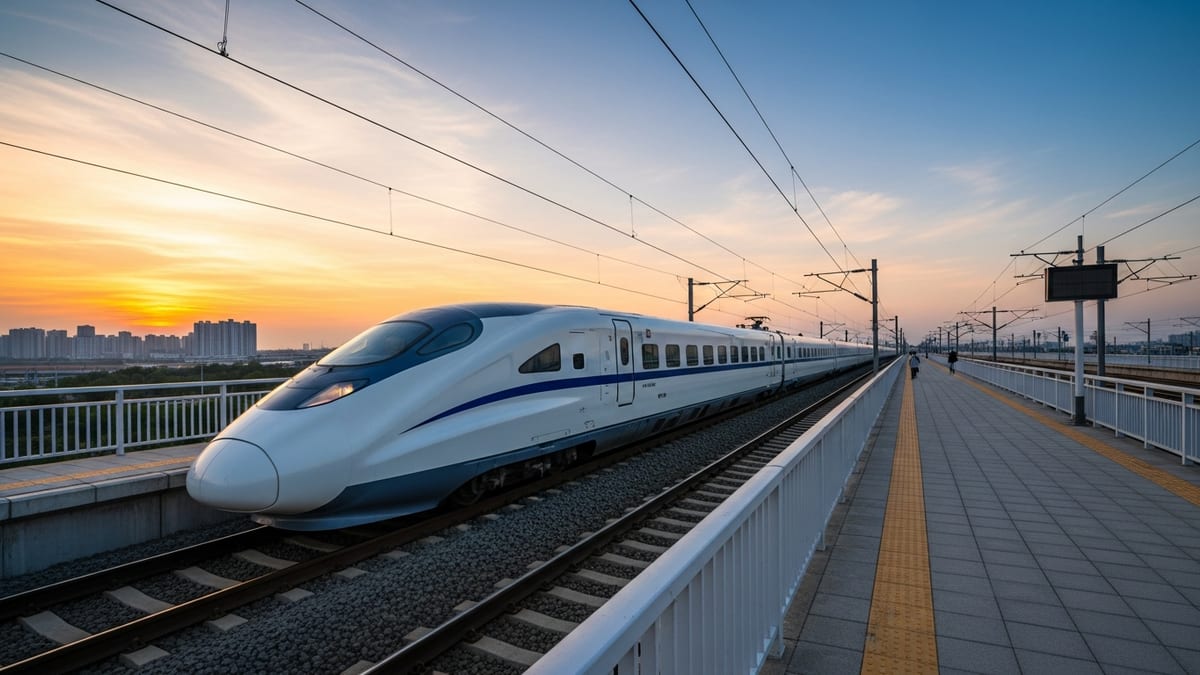
Reports describe the 250 to 253 kilometre first phase as Thailand’s inaugural true high-speed line, designed for passenger trains running at up to 250 kilometres per hour. Once operational, the route is expected to cut travel time between the capital and Nakhon Ratchasima to around 90 minutes, compared with three to four hours on existing roads and conventional rail.
Government planning documents and project briefings suggest the Bangkok–Nakhon Ratchasima section carries an investment price tag close to 180 billion baht, financed through a mix of domestic borrowing and budget allocations, with Chinese partners providing key engineering and systems support.
Progress on the Ground and Persistent Bottlenecks
Publicly available project updates show that construction of the first phase has now passed the halfway point, with some reports citing civil works progress at just over 50 to 60 percent. Sections of viaduct, tunnels and station structures are visibly advancing along the corridor north of Bangkok, including at Ayutthaya, Saraburi and Pak Chong.
At the same time, local media coverage highlights continued challenges around land expropriation, contract renegotiations and technical coordination between Thai and Chinese partners. Several work packages have reportedly fallen behind schedule, prompting concerns that the new 2030 target could still come under pressure without faster problem-solving.
The State Railway of Thailand, the project’s main domestic implementing agency, has been tasked with steering multiple construction contracts while also planning future operations and integrating the high-speed line with existing stations such as Krung Thep Aphiwat Central Terminal in Bangkok. Analysts note that this dual role adds complexity to an already demanding infrastructure build.
Engineering and environmental considerations are also shaping the pace of works. The alignment passes near historic sites and urban areas, particularly around Ayutthaya, requiring adjustments to limit land impact and address local community concerns, while still meeting technical standards for high-speed operation.
From Bangkok to Beijing via Laos
The Thai section is conceived as the central link in a wider high-speed corridor stretching from Bangkok through northeastern Thailand to the Lao border, where it will connect with the China–Laos railway that opened in 2021. From there, passengers and freight will be able to travel north into China’s expansive high-speed network.
Official planning material frames the Bangkok–Nong Khai route as part of a broader strategy to deepen overland connectivity between China and mainland Southeast Asia. By plugging into the regional grid, Thailand aims to position itself as both a logistics hub and a gateway for Chinese visitors heading to beach destinations and southern cities.
Travel industry observers expect that once the first Thai section is operating, it will encourage new itineraries that combine Bangkok stays with rail-based journeys into Isan, Thailand’s northeast, and onward into Laos. For cross-border travelers, the corridor promises an alternative to short-haul flights, with smoother city-to-city connections and potential through-ticketing once systems are integrated.
The second phase from Nakhon Ratchasima to Nong Khai remains at an earlier stage, with government documents outlining construction and financing plans that extend into the next decade. Current timelines in public sources point to the full Bangkok–Nong Khai high-speed route entering service in the early 2030s, after the first phase has already begun operations.
Economic Stakes for Tourism, Trade and Regional Hubs
Economic assessments prepared for the project argue that high-speed connectivity will lower logistics costs and stimulate investment along the corridor, particularly in provinces such as Nakhon Ratchasima, Khon Kaen and Nong Khai. Industrial estates, dry ports and logistics parks are being discussed or planned near future stations to capture new trade flows.
For tourism, Thailand is betting that faster rail links will make it easier for visitors to combine multiple destinations within a single trip. Northeastern cities that have traditionally seen fewer international arrivals could benefit from improved access, while Bangkok’s position as a regional air hub may be reinforced if more travelers opt to connect onwards by high-speed train instead of domestic flights.
Business groups in Bangkok and the northeast have highlighted potential gains from closer integration with the economic zones developing along the China–Laos railway. Easier cross-border movement of goods and people could support new supply chains in agriculture, manufacturing and services, particularly if customs procedures and rail freight services are upgraded alongside passenger operations.
At the macro level, Thailand’s transport and climate strategies describe high-speed rail as part of a shift toward lower-carbon mobility. By providing a competitive alternative to short-haul aviation and long-distance road travel, the north–south line is expected to play a role in the country’s greenhouse gas reduction goals through 2030 and beyond.
Risks, Criticism and the Road to 2030
Despite the renewed 2030 timeline, analysts and local commentators note that the Thai–Chinese high-speed rail remains exposed to risks. Cost overruns, delays in tendering for remaining civil works, and uncertainties about projected ridership are among the most frequently cited concerns in public debates.
Opposition politicians and some civil society groups have questioned whether the scale of investment is justified, especially given competing demands on the national budget for healthcare, education and conventional rail upgrades. Others have raised issues around transparency in contract awards and the long-term implications of borrowing to finance the project.
Supporters counter that major rail infrastructure often requires long payback periods and that the strategic value of being hardwired into a regional high-speed network outweighs short-term fiscal pressures. They also point to the rapid expansion of China’s high-speed system and the growing popularity of fast intercity trains across Asia and Europe as indicators of where regional travel demand is heading.
Between now and 2030, the project’s trajectory will hinge on whether construction obstacles can be cleared and whether planning for operations, ticketing, and cross-border coordination keeps pace with physical works. For travelers watching from abroad, the next few years will reveal whether Thailand can turn its long-discussed China-linked high-speed rail dream into a working railway within the newly announced timeframe.