


More news on this day
JetBlue has surged to the top of JD Power’s 2026 North America Airline Satisfaction Study for first and business class, with analysts pointing to the carrier’s evolving Mint premium cabins as a key factor in redefining what travelers expect from a modern first-class experience.
Get the latest news straight to your inbox!
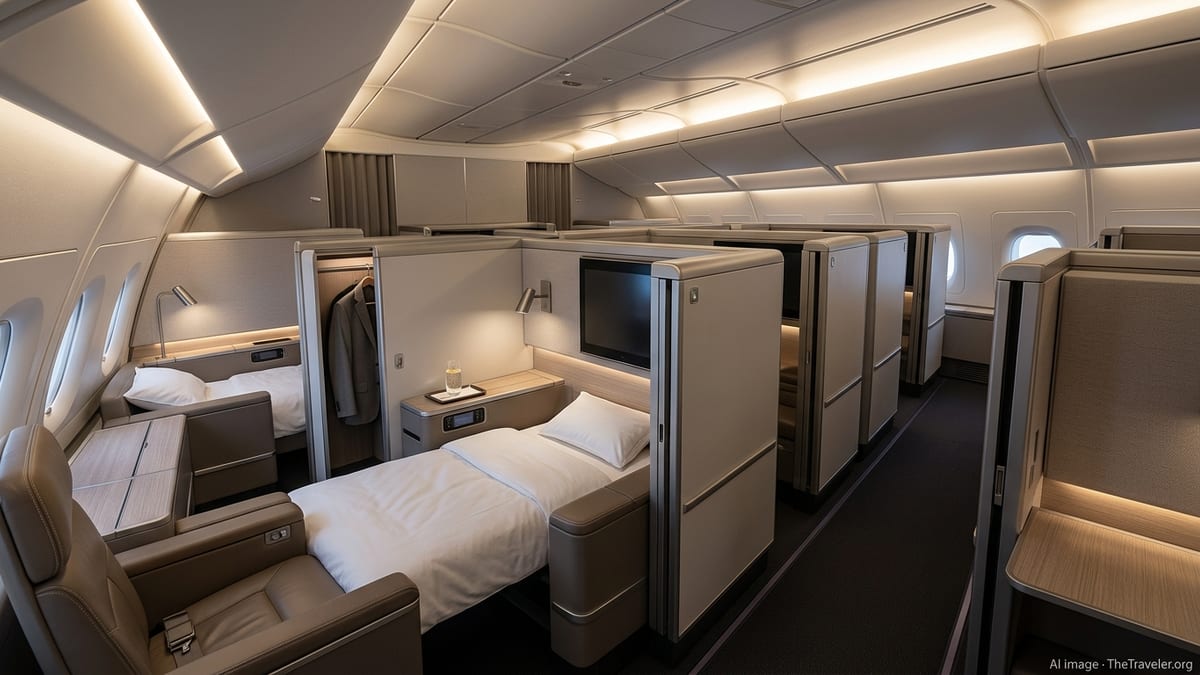
JetBlue Scores Highest for First and Business Class in 2026 Study
According to the 2026 North America Airline Satisfaction Study from JD Power, JetBlue ranks highest in the first and business class segment for a second consecutive year, posting a score of 759 on the 1,000-point scale and edging out larger legacy rivals. The study, released on May 6, 2026, shows that overall satisfaction with North American airlines has risen year over year, but the most dramatic gains are concentrated among travelers in the front of the cabin.
JD Power’s latest data indicates that satisfaction among first and business class customers increased by 17 points compared with 2025, outpacing improvements in premium economy and economy. Industry coverage notes that on-board experience, value for money and the day-of-travel journey were the primary drivers of better scores, suggesting that passengers are rewarding airlines that combine comfort and thoughtful service with transparent pricing.
Within that context, JetBlue’s performance in the premium segment stands out. While Delta and Alaska also posted strong results, reports highlight that JetBlue’s differentiated product strategy, centered on its Mint suites and refreshed service touches, helped propel it to the top of the rankings in a year marked by higher fares and operational strains across the industry.
The JD Power study is based on responses from more than ten thousand passengers who flew on major North American carriers between March 2025 and March 2026. Travelers rated airlines across seven dimensions, including staff, digital tools, ease of travel, trust, on-board experience, pre and post-flight experience and value for price paid.
How Mint Became a Benchmark for Modern First Class
Since its launch, JetBlue’s Mint has sought to blur the lines between traditional first class and boutique business class. Aviation analyses describe Mint as a flagship product built around lie-flat seats, privacy doors on many routes, curated dining and an emphasis on a more residential, less corporate design aesthetic. Over the past decade the airline has steadily expanded Mint beyond its initial transcontinental focus to select routes in the Caribbean, Latin America and Europe.
By 2026, travel features and product reviews routinely position Mint as one of the most competitive premium offerings in North America, particularly when fares are compared with rival lie-flat products on similar routes. Commentators frequently note that JetBlue has used Mint to anchor its presence in high-yield leisure markets such as New York to London or Boston to Amsterdam, where premium leisure travelers are willing to pay more for comfort but remain price sensitive.
Recent consumer guides published in early 2026 describe Mint cabins as feeling closer to an intimate boutique hotel than a conventional business class, highlighting mood lighting, high-touch soft products and the ability on many aircraft to reserve single “throne” suites. These product elements appear closely aligned with the factors JD Power identifies as central to higher satisfaction scores, including perceived comfort, seat quality and the in-flight environment.
Industry observers also point out that JetBlue’s decision to keep Mint relatively simple, without a separate international-style premium economy cabin, has allowed the airline to concentrate resources on one hero premium product. That focus may be helping the carrier stand out in JD Power’s first and business class rankings against competitors managing more complex cabin hierarchies.
Mini Mint and BlueHouse Lounges Extend the Premium Footprint
JetBlue’s strong showing in the 2026 rankings comes as the airline accelerates a broader premium strategy that reaches beyond its original Mint routes. Company announcements and specialist outlet reporting describe a networkwide retrofit program introducing a new “Mini Mint” domestic first class cabin on aircraft that previously offered only standard economy and extra-legroom seating.
Mini Mint, based on Collins MiQ-style recliner seats, is designed to give the airline a consistent front-cabin product on high-demand domestic routes that do not justify full lie-flat suites. Reports indicate that the new cabin will roll out across most non-Mint Airbus jets by mid-2026, trading a modest reduction in economy legroom for a larger number of premium seats that can be sold or monetized through upgrades.
Parallel to the in-flight changes, JetBlue is also building its first dedicated lounge network under the BlueHouse brand. Published coverage points to an initial lounge opening at New York JFK’s Terminal 5 in late 2025, followed by a Boston Logan location in 2026 and potential additional outposts in key focus cities. These lounges are expected to offer Mint and Mini Mint customers a more seamless premium journey from curb to gate, strengthening the airline’s appeal to frequent travelers who value ground amenities as part of the overall experience.
Together, Mini Mint and BlueHouse represent a shift in JetBlue’s identity from a primarily value-focused carrier to one that competes more directly with legacy airlines for high-yield travelers. Analysts suggest that this strategic repositioning is beginning to show up in satisfaction metrics, particularly among customers who now encounter a consistent premium product on more routes.
Premium Travel Demand Rises Amid Industry Headwinds
The backdrop to JetBlue’s 2026 recognition is an industry facing rising costs, capacity constraints and persistent operational challenges. JD Power’s study notes that overall satisfaction improved even as many passengers endured crowded airports, schedule disruptions and higher fares. Consumer research cited in news coverage indicates that travelers who continued to fly during this period were increasingly willing to pay for extra comfort and predictability, driving stronger demand for premium cabins across North America.
Analysts describe this shift as part of a longer-term trend in which airlines derive a growing share of revenue from premium seats and ancillary products rather than basic economy fares. JetBlue’s focus on an aspirational but comparatively accessible premium experience positions it to capture customers who might previously have flown economy on full-service rivals.
At the same time, observers caution that the same factors boosting JetBlue’s premium demand may also test its ability to sustain high satisfaction scores. Higher fuel prices, tight aircraft availability and competitive pressure from larger carriers expanding their own business class products could all influence customer perceptions in future JD Power studies.
For now, the 2026 results suggest that travelers are rewarding airlines that invest in comfort and service even as prices climb. JetBlue’s leadership in the first and business class rankings illustrates how a focused premium strategy, anchored by a distinctive product like Mint and broadened by initiatives such as Mini Mint and BlueHouse lounges, can resonate with passengers navigating an increasingly complex air travel landscape.
What the 2026 Rankings Signal for First-Class Flyers
For first-class and business-class customers, JetBlue’s latest accolade underscores a broader redefinition of what “premium” means in North American aviation. Rather than relying solely on legacy notions of status and formality, newer products like Mint emphasize privacy, relaxed design and a more individualized experience, while still delivering the essentials of space, quiet and attentive service.
Travel industry commentary notes that JetBlue’s strong JD Power performance could spur competitors to accelerate upgrades to their own front cabins, particularly on transcontinental and transatlantic routes where Mint has proven popular. Features such as fully closing doors, more intimate cabin layouts and better soft products are increasingly seen as baseline expectations rather than optional extras for top-tier fares.
For travelers, the 2026 rankings offer a data-backed snapshot of how these evolving products are being received. Frequent flyers weighing where to invest their travel budget may view JetBlue’s position at the top of the first and business class satisfaction charts as validation that its premium strategy is delivering tangible benefits in comfort and overall experience.
As airlines across the region look ahead to 2027 and beyond, JetBlue’s ascent in JD Power’s study highlights how a mid-sized carrier can compete at the very top of the market by concentrating on a clear, differentiated premium proposition. Whether the airline can maintain that edge as rivals respond will be closely watched by both industry analysts and travelers seeking the next generation of first-class flying.