


The first time most travelers see the Julian Alps, it is usually from the shore of Lake Bled or the winding road to Vršič Pass. Jagged limestone peaks rise behind forests and mirrored lakes, the mountains close enough to feel within reach. What surprises many visitors is not just how beautiful this corner of Slovenia is, but how quickly it becomes the kind of place they plan to return to, season after season and year after year.
Get the latest updates straight to your inbox!
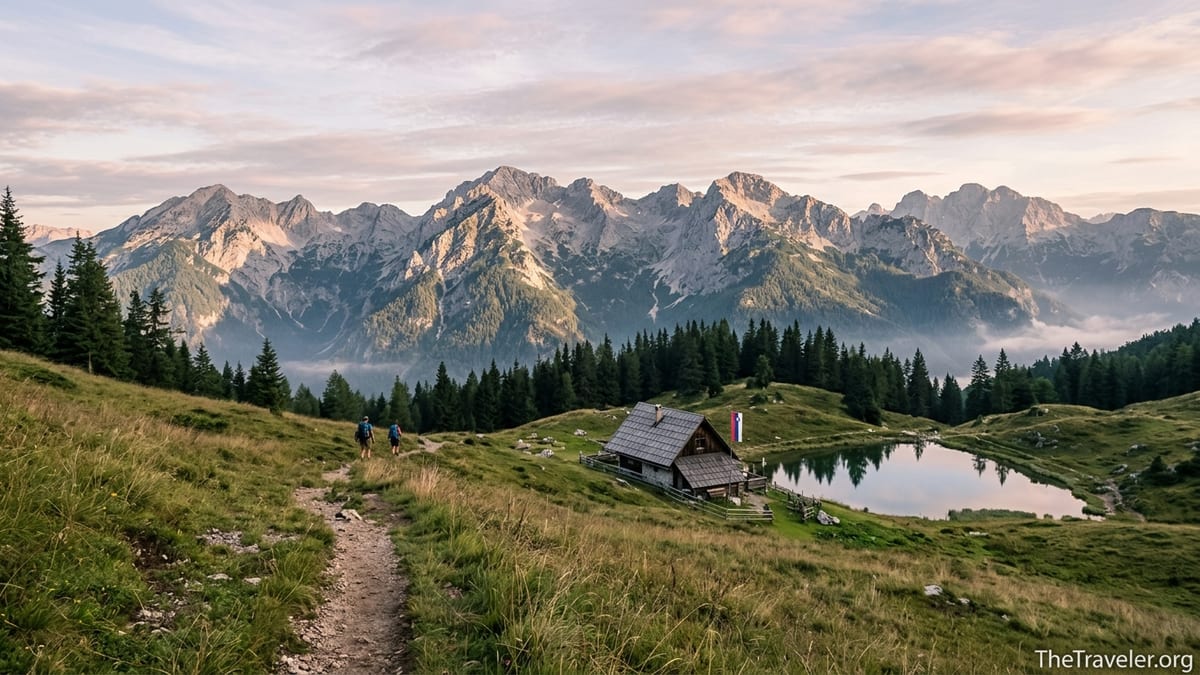
A Compact Alpine World That Feels Wild Yet Accessible
Part of the Julian Alps’ pull lies in how much varied mountain country is compressed into a remarkably small area. The range spreads across northwestern Slovenia, with a large section protected by Triglav National Park, yet distances between valleys, trailheads and villages remain short enough that you can change scenery completely in under an hour’s drive. One morning you might sip coffee on the lakeside promenade in Bled, and an hour later be standing at the foot of sheer north walls in Vrata Valley below Slovenia’s highest peak, Triglav.
In practical terms, this compactness means you can base yourself in one place and still have access to very different landscapes. Travelers staying three nights in Kranjska Gora often report hiking one day to the turquoise pools at Jasna Lake, another day among larch forests on the Tamar Valley trail, then driving over the Vršič Pass the next morning for a completely different panorama of bare limestone. For visitors used to the long transfers required in the larger Swiss or French Alps, the way Slovenia’s mountains are “stacked” so close together feels like a discovery.
At the same time, the Julian Alps retain a sense of wildness that keeps experienced hikers coming back. Much of the high country is roadless and only reachable on foot. Above popular entry points such as Bohinj’s Planina Blato or the Pokljuka plateau, trails quickly leave the sound of cowbells and climb into a stark, rocky world with few signs of modern infrastructure apart from red-and-white waymarks. It is this balance between easy access and genuine backcountry that many travelers say they only appreciate fully on their second or third visit.
Infrastructure adds another layer of comfort without erasing the mountains’ character. Trailheads are marked, summer bus lines connect major valleys, and the ubiquitous mountain huts offer shelter, a hot meal and a simple bed. Visitors who first came a decade ago often comment on subtle improvements, from clearer information boards at parking areas to better-organized shuttle systems around Lake Bohinj, while the underlying feel of the landscape has stayed much the same.
Iconic Lakes and Valleys That Reward Repeat Visits
Most trips to the Julian Alps start around water. Lake Bled, with its island church and clifftop castle, draws the headlines, but returning travelers quickly realize that the region’s appeal deepens once you move beyond the postcard views. Many base their second or third trip around Lake Bohinj instead, where the mountains press in more closely and the shoreline feels wilder. Here, it is common to meet German or Dutch families who have been returning every July for ten years, booking the same guesthouse in Ribčev Laz and timing their days around the sun’s arc over the Komna plateau.
Bohinj in particular shows how the same landscape can feel new in different seasons. In June, the meadows along the shore are filled with wildflowers and the cable car to Vogel ski area carries hikers instead of skiers, offering easy access to high trails above the lake. By late September, larch trees turn orange and the mornings can start with mist on the water, a time that photographers and quieter travelers have learned to target. Many visitors who first came for a hot August swim find themselves returning for shoulder-season hikes when the atmosphere is calmer.
The Soča Valley on the western side of the Julian Alps tells a similar story. Bovec, once a small alpine town, has grown into a major outdoor hub, yet the essential appeal remains the emerald river that carves its way between high peaks. Travelers who tried white water rafting on their first trip often come back to explore deeper, booking kayaking courses or canyoning in narrower tributaries. Local outfitters in Bovec and Kobarid offer half-day rafting trips that usually cost somewhere in the range of 60 to 80 euros per person, and repeat guests frequently mention specific guides by name when they return to the same companies year after year.
Further north, around Kranjska Gora, the pattern repeats. Families who discovered the area in winter for its beginner-friendly ski slopes now come back in summer for cycling on the paved rail-trail toward Italy, or to picnic beside the reflective waters of Lake Jasna. The short detour into the Krnica valley, beginning at a gravel road near the village of Krnica, has become a classic for visitors who want a less crowded alternative to more famous spots. Many say it is on these “second-tier” trails that they first start to feel they really know the Julian Alps beyond the brochure images.
Hut-to-Hut Trails That Turn Trips Into Traditions
Ask repeat visitors why they keep booking flights back to Slovenia and the words “hut-to-hut” come up quickly. The network of mountain huts in the Julian Alps gives travelers a way to turn a one-off hike into a multi-day journey, and for many, that journey becomes a tradition. Routes linking Dom na Komni, Koča pri Triglavskih jezerih in the Valley of the Seven Lakes, and Zasavska koča na Prehodavcih are now classic introductions to the high country. Hikers often describe the first sight of Double Lake beside Koča pri Triglavskih jezerih as the moment they understood the region’s magic.
Staying in these huts also makes the Julian Alps more approachable. Instead of carrying a heavy tent and cooking gear, walkers can travel with a small backpack, knowing that dinner, breakfast and a bed await at the next stop. A night in a standard dormitory in a popular hut might cost somewhere in the region of 30 to 45 euros per person, with half-board (dinner and breakfast) usually adding another 25 to 35 euros depending on the hut and room type. For many travelers from North America or northern Europe, those prices feel competitive compared to guided treks in the Western Alps, encouraging them to return and try longer or more ambitious routes.
Reservations are increasingly important, and this has subtly changed how people plan repeat visits. Popular huts like Koča pri Triglavskih jezerih typically open from late June into late September and now accept bookings for entire seasons well in advance. Travelers who fell in love with a particular route often log on in winter to secure the same sequence of huts for the following summer, turning the process of planning into a yearly ritual. Many also tweak itineraries based on past experience, adding an extra night at a favorite hut or shifting a long day to make room for an afternoon swim in Lake Bohinj at the end of the trek.
For some, the draw is the chance to gradually “complete” the range. One visit might focus on the Seven Lakes Valley, another on traversing ridgelines near the Italian border, and a third on the approach to Triglav itself via Aljaž Lodge in Vrata Valley. Local guiding companies in towns like Bled, Bohinj and Mojstrana offer multi-day Julian Alps traverses that often include a climb of Triglav, and it is not uncommon for guests who first joined a guided group to return independently a few years later, using what they learned to design their own routes.
Adventure for Every Season and Every Traveler
The Julian Alps are not just for peak-baggers and long-distance hikers. Part of the region’s enduring appeal is how easily it caters to travelers with different comfort levels and interests, often within the same traveling party. On a single August morning, you might see a guided group roped up on a via ferrata route near the Vršič Pass, families walking a gentle loop around Zelenci Nature Reserve with strollers, and road cyclists tackling the hairpins of the pass itself.
For soft-adventure travelers, there is a long and growing list of accessible experiences. A classic summer day in the Soča Valley might start with a beginner-friendly rafting trip, continue with a short walk to the pools at Velika Korita, and end at a campsite near Bovec where food trucks serve grilled trout and local craft beer. In winter, the same valley slows down but stays active, with ski tourers climbing into side valleys and a handful of operators offering guided snowshoe tours among silent forests.
Families and older travelers often find that the Julian Alps let them test their limits without feeling exposed. The cable cars at Vogel above Bohinj or at Kanin above Bovec carry visitors quickly to viewpoints that would otherwise require many hours on foot. From the top station at Vogel, for example, a well-marked path leads in under an hour to simple panoramic viewpoints above the lake, letting less experienced hikers share in high-mountain drama while more ambitious companions continue onto longer circuits.
Seasonality adds another layer of reasons to return. In January and February, Kranjska Gora is busy with ski races and families learning to ski on gentle slopes. By May, wildflowers carpet the meadows of Pokljuka plateau, and by late October, photographers return for larch season when entire hillsides turn gold. Travelers who have seen the Julian Alps only in high summer are often surprised at how different the same village feels when they return in quiet spring or early winter, when woodsmoke carries from chimneys and the peaks are freshly dusted with snow.
A Culture of Sustainability That Rewards Slower Travel
Many visitors find themselves returning to the Julian Alps because the region’s approach to tourism encourages a slower, more sustainable style of travel. Triglav National Park has long placed limits on new construction and on certain types of development inside its boundaries. In practice, this means that much of the accommodation growth has focused on renovating existing farmhouses and guesthouses rather than building large new resorts, especially in valleys like Bohinj, Trenta and upper Soča.
Transport policy is evolving in the same direction. Seasonal shuttle buses around Lake Bohinj, restrictions on parking at certain high-altitude meadows, and pilot schemes for limiting private car access over popular passes are all designed to nudge visitors toward public or shared transport. Local authorities have already announced tighter traffic management on the Vršič Pass in coming summers, with more emphasis on park-and-ride systems from Kranjska Gora and the Soča Valley. For travelers, this may require a bit more advance planning, but it also reduces congestion and restores some of the mountain road’s original charm.
Food culture reinforces the incentive to slow down. Mountain huts commonly serve hearty, simple dishes such as barley stews, jota (sauerkraut and bean soup) or buckwheat žganci, alongside plates of local cheese and cured meats. In the valleys, family-run gostilnas highlight trout from the Soča, Tolminc cheese from the hills above Tolmin, and seasonal produce from nearby farms. Many repeat visitors plan their days around favorite stops, such as a particular dairy farm on the road to Pokljuka or a bakery in Mojstrana that they discovered by chance on their first trip.
This emphasis on local character has also shaped the accommodation scene. Rather than standardized hotels, many travelers return year after year to the same farmhouse B&B or small pension, often forming informal friendships with owners. It is not unusual to meet guests in Bohinj or Kobarid who can point to photos on the wall showing their children growing up across a decade of visits. In an era when many mountain resorts feel interchangeable, that personal continuity adds a powerful emotional reason to keep coming back.
Practical Affordability Compared With Other Alpine Regions
While Slovenia is no longer the bargain destination it once was, the Julian Alps still tend to feel relatively affordable compared with some of the better-known corners of the Alps. Accommodation in popular hubs like Bled, Kranjska Gora or Bovec can be expensive in peak season, but travelers willing to stay slightly outside the busiest zones often find better value in nearby villages. A comfortable double room in a family-run guesthouse in places like Mojstrana, Stara Fužina or Čezsoča might run to a mid-range nightly rate rather than top-tier resort prices, especially outside August.
Food and activities display a similar pattern. A sit-down meal at a traditional restaurant in a valley town commonly costs less than in equivalent resorts in Switzerland or parts of Austria, especially if you stick to daily specials and local dishes. Outdoor activities such as canyoning, via ferrata guided tours or half-day rafting generally fall in a price band that many travelers from Western Europe or North America consider reasonable for professional guiding and equipment. Some rafting companies in the Soča Valley, for example, publish price lists where standard rafting trips cluster around the lower double digits per person in euros, helping visitors budget for more than one outing.
The hut system can also make multi-day adventures more financially accessible. While you pay per night for accommodation and food, you avoid the significant cost of hiring guides for every day if you are comfortable with independent navigation on marked trails. Many repeat visitors describe a pattern where their first Julian Alps trip was a guided climb of Triglav or a package hut-to-hut tour, and subsequent journeys were self-planned, allowing them to stretch their budgets further and stay longer.
Travel logistics play a role as well. Slovenia’s small size and good road connections mean that rental cars can be shared among friends without much dead mileage, and public buses connect Ljubljana with Bled, Bohinj and Kranjska Gora at fares that are usually manageable even on a backpacker’s budget. This combination of manageable prices and easy logistics makes it psychologically simpler for travelers to say “yes” to a return visit, whether for a long weekend or a two-week hiking holiday.
The Takeaway
Visitors often arrive in the Julian Alps expecting a single highlight: a photograph of Lake Bled, perhaps, or a successful summit of Triglav. What keeps them coming back is something more layered. It is the way short distances reveal dramatically different landscapes, the comfort of mountain huts that make serious terrain accessible, and the quiet satisfaction of seeing the same valley in different seasons or from a little higher up the trail each year.
Over time, paths that were once lines on a map become personal stories: the bench above Lake Bohinj where you watched a thunderstorm roll in, the hut dining room where strangers shared route tips over bowls of stew, the familiar curve of a road up to Vršič Pass where you remember stopping, years earlier, with knees shaking from your first big hike. The Julian Alps invite this kind of long-term relationship. They reward return visits not with bigger thrills but with deeper familiarity, a sense that each trip adds another layer to your understanding of the mountains.
For travelers willing to slow down, walk a little further from the car park, and perhaps sleep a few nights under steep limestone walls, Slovenia’s high country offers a rare combination of accessibility, authenticity and evolving adventure. That is why, for so many people who have already stood on its trails, the question is no longer whether to visit the Julian Alps, but when to go back.
FAQ
Q1. When is the best time of year to visit the Julian Alps?
The main hiking season typically runs from late June to late September, when most high mountain huts are open and snow has melted from the main trails. For quieter visits with cooler temperatures, late September and early October can be rewarding, though some huts and cable cars start to close for the season.
Q2. Do I need to book mountain huts in advance?
For popular routes in July and August, advance reservations are strongly recommended, especially at well-known huts such as Koča pri Triglavskih jezerih and those near Triglav. Outside peak season or on less frequented routes, you may have more flexibility, but it is still wise to contact huts ahead of time when possible.
Q3. Is climbing Triglav suitable for beginners?
Climbing Triglav involves exposed sections and usually a via ferrata-style final ridge, so it is not a casual walk and is best for fit hikers with good head for heights. Many first-time visitors hire local guides based in Bled, Bohinj or Mojstrana, who provide equipment and choose the safest route based on conditions.
Q4. Can I explore the Julian Alps without a car?
Yes, although you may need to plan more carefully. Regular buses connect Ljubljana to Bled, Bohinj and Kranjska Gora, and seasonal shuttles serve some trailheads and lake circuits. Many hut-to-hut routes are designed so you can start and finish at places reachable by public transport or by combining buses with short taxi rides.
Q5. How expensive is it to travel in the Julian Alps?
Costs vary by season and comfort level, but many travelers find the region more affordable than major Swiss or French resorts. Simple guesthouses and farm stays, set-menu meals in local restaurants, and shared outdoor activities like rafting or canyoning usually fall in a mid-range price band rather than luxury levels.
Q6. What equipment do I need for hut-to-hut hiking?
At a minimum you will need sturdy hiking boots, a small backpack, layered clothing for changing mountain weather, and a lightweight sleeping bag liner for hut beds. Trekking poles, a waterproof jacket and basic navigation tools, whether a paper map or offline app, are highly recommended.
Q7. Are the trails well marked?
Most established routes in the Julian Alps are clearly marked with red-and-white circles and signposts at junctions. However, in early season, on less-used paths or in bad weather, markings can be harder to spot, so you should not rely solely on waymarks and should always check route descriptions and conditions in advance.
Q8. Is the Julian Alps region suitable for families with children?
Yes, many areas are very family-friendly. Lakes Bled and Bohinj offer gentle walking paths, swim spots and boat rentals, while places like Kranjska Gora provide easy cycle paths, beginner ski runs in winter and short hikes to viewpoints. For younger children, it is best to choose valley-based activities and short, well-maintained trails.
Q9. What should I know about weather in the Julian Alps?
Mountain weather can change quickly, even on clear summer days. Afternoon thunderstorms are common in July and August, and snow can linger on high passes into early summer or return unexpectedly in autumn. Always check local forecasts, start longer hikes early in the day and be prepared to adjust plans if conditions deteriorate.
Q10. Do I need travel insurance or rescue coverage for hiking here?
It is highly advisable to have travel insurance that covers mountain activities and potential rescue costs. Many hikers also purchase inexpensive membership in alpine clubs that include rescue insurance, whether through their home country’s club or a regional organization, to ensure they are covered in case of an accident.