


The Julian Alps in northwestern Slovenia feel surprisingly wild for a region that is only a couple of hours from the capital, Ljubljana. Peaks around Mount Triglav, deep glacial valleys, emerald rivers and lakes like Bled and Bohinj all sit within a compact area that is easy to reach but requires a bit of planning to visit well. Whether you want gentle lakeside walks or a multi day hut to hut trek, knowing the terrain, seasons, transport and hut system in advance will make the difference between a stressful scramble and a smooth trip.
Get the latest updates straight to your inbox!
Getting Oriented: Where and What Are the Julian Alps
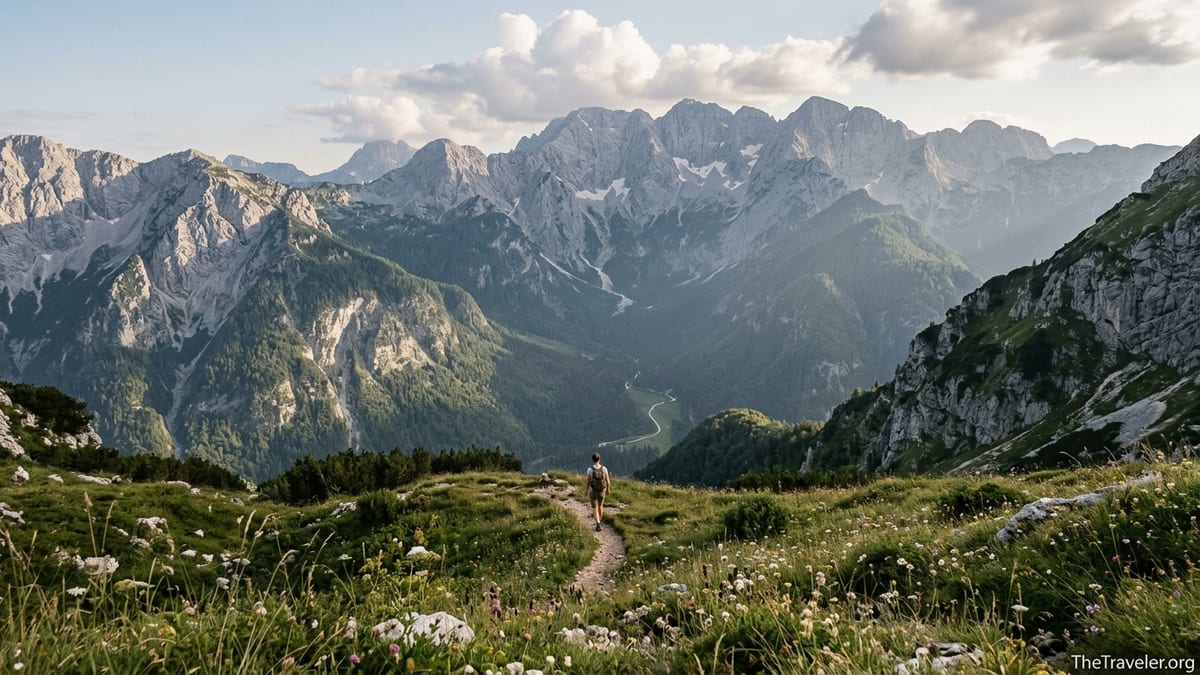
The Julian Alps form the dramatic northwestern corner of Slovenia, spilling over the border into Italy. The heart of the range on the Slovenian side is protected as Triglav National Park, the country’s only national park and the home of Mount Triglav, which rises to just under 2,900 meters. Many first time visitors only know Lake Bled from postcards, but the real mountain core lies a little farther west around Lake Bohinj, the Vrsic Pass and the Soca Valley.
For planning purposes, think in terms of bases. Bled works well if you want a mix of sightseeing and light hiking with frequent buses and plenty of hotels. Bohinj, particularly the villages of Ribcev Laz and Stara Fuzina at the eastern end of Lake Bohinj, is better if you want to wake up close to trailheads into Triglav National Park. Bovec and Kobarid on the Soca River valley side are ideal for rafting, via ferrata and road trips over the Vrsic Pass. Each base gives access to different parts of the Julian Alps, so it is common to split a week between, for example, three nights in Bohinj and three in Bovec.
A handy mental map is to picture a rough triangle: Bled and Bohinj on the southeastern side, Kranjska Gora and the Vrsic Pass to the north, Bovec and the upper Soca Valley to the southwest. Most classic trails, scenic drives and hut to hut routes connect points on this triangle. When you see photos of the turquoise Soca River, they are usually taken near Trenta or Bovec, while wide valley views with lakes are more often from the Bohinj side.
Because distances are short, you could technically day trip from Ljubljana to Bled or even Bohinj and back. In practice, though, mountain weather, bus timetables and the slower pace of hiking mean you will want to stay at least a few nights in the region itself, especially if you are considering higher routes or multi day treks.
When to Go and How Weather Shapes Your Plans
Seasonal timing is crucial in the Julian Alps. While Lake Bled and lower valley trails are walkable in most months, the higher routes and many hut to hut traverses are realistically a summer and early autumn activity. Local guiding companies and the Slovenian Alpine Association typically recommend planning serious hut based hiking between late June and late September, with the most reliable combination of open huts, long daylight and mostly snow free trails usually in July and August.
Spring looks inviting in photos, with green valleys and snow still on the peaks, but conditions can be deceptive. In May and early June it is common to have lingering snowfields on north facing slopes above about 1,800 meters. A day hike from Lake Bohinj up to a lower ridge might be entirely snow free while the final hour to a high pass is still icy enough to require at least microspikes and careful footwork. This can quickly turn an “easy” route into something unsuitable for beginners. If you only have experience on dry trails, build your plan around lower and mid altitude hikes before mid June.
Autumn, especially from early September into early October, often brings stable weather, cooler temperatures and fewer crowds. Many huts remain open until around the end of September, sometimes into early October if weather and demand allow, but closing dates can vary by year. For instance, a hut like Triglav Lodge at Kredarica may shut earlier if an early snowstorm arrives. In shoulder seasons it is important to email or call huts a week or two before you travel rather than assuming last year’s dates will repeat exactly.
Winter transforms the Julian Alps into a distinct environment suited to experienced ski tourers and mountaineers. Even in March and April avalanche risk and cornice formation are real hazards on popular slopes around Triglav. If you are not trained in winter mountain travel, keep winter visits centered on valley towns such as Kranjska Gora or Bled and consider guided snowshoe excursions rather than independent high routes. The key point is that in these mountains “summer” for higher trails is much shorter than the calendar suggests, and planning around that narrow window keeps your itinerary realistic.
Choosing Your Base and Getting Around Without Stress
American and other international visitors often underestimate how much easier Julian Alps logistics become if you are willing to drive. From Ljubljana Airport to Lake Bled is roughly a 30 to 40 minute drive, and to Bohinj about an hour. Car rental costs fluctuate, but in recent summers compact rental cars picked up at Ljubljana Airport have often run in the ballpark of 40 to 60 US dollars per day with basic insurance, sometimes less if booked well ahead and outside peak August weeks. With a car you can drive over the Vrsic Pass between Kranjska Gora and Bovec, stop at viewpoints, then continue along the Soca Valley at your own pace.
Public transport is workable, but it requires more patience and flexibility. Regular buses typically link Ljubljana with Bled and then continue to Bohinj, with more options in July and August. To reach Bovec and the Soca Valley without a car, travelers often combine a train from Ljubljana or Jesenice towards Nova Gorica or Most na Soci with a local bus up the valley. Schedules on these secondary routes can be limited outside high season. A traveler planning a rafting trip from Bovec in May, for example, might find just one or two bus options over several days, which leaves little margin if a departure is canceled. If you must rely on buses, keep your itinerary conservative and avoid tight same day connections with flights.
Within hubs like Bled and Bohinj, you can often manage entirely on foot and with local buses. In Bled, most guesthouses are a short walk from the lake and from the bus stop. Around Bohinj, staying in Ribcev Laz puts you within walking distance of the bus stop, supermarket and boat dock. From there you can ride the local bus to trailheads at Ukanc or the cable car station for Vogel ski area. In Kranjska Gora, most lodging sits along a compact main street from which trailheads, shops and bike rentals are walkable, making it a solid base if you want to avoid renting a car.
Parking in the Julian Alps deserves advance thought. Near Lake Bled and Lake Bohinj, popular car parks charge hourly or daily fees that can add up over a week. Trailhead parking in valleys like Vrata and Krma has seen tighter regulation in recent years to control crowds in Triglav National Park. Expect to pay a modest day fee at main lots and to find them full by mid morning on sunny summer weekends. Building early starts into your plan is not only safer for weather and thunderstorms but also more practical for parking.
Understanding Huts, Routes and How Difficult “Difficult” Really Is
One of the defining features of hiking in the Julian Alps is the network of mountain huts managed by the Slovenian Alpine Association and private operators. These huts are not luxury lodges but functional base camps with dorm style rooms, shared facilities and simple hot meals. A typical hut stay in recent seasons has cost somewhere in the region of 30 to 50 euros per person for half board, depending on location and room type. Members of alpine clubs that have reciprocity agreements with the Slovenian Alpine Association often receive meaningful discounts on overnight rates.
Classic hut to hut routes weave through Triglav National Park rather than bagging every summit. A well known example is a three to four day loop starting above Lake Bohinj: you might ride the cable car to Vogel or hike from the valley up to Dom na Komni, continue to Koča pri Triglavskih jezerih in the Seven Lakes Valley, then traverse to high huts such as Zasavska koča na Prehodavcih before descending towards Lake Bohinj again. Another frequent pattern links Aljaž Lodge in Vrata Valley with Kredarica and Planika huts to form a circuit around Triglav’s upper basin.
Difficulty gradings on Slovenian maps and websites can surprise visitors from flatter countries. Routes described as “demanding hiking routes” often involve steep, sometimes exposed sections with fixed cables and metal rungs, known locally as protected paths. The normal summit routes on Triglav from huts like Planika or Kredarica, for instance, require using fixed cables and passing sections where a slip would have serious consequences. Many local families tackle these with children wearing helmets and via ferrata harnesses, but that reflects a high baseline of mountain experience.
A practical way to calibrate your plans is to start with one or two day hikes on marked trails from Bohinj or Kranjska Gora. For example, a day hike from Lake Bohinj up to the panoramic vantage point of Vogar or to Mostnica Gorge gives a taste of elevation gain without exposure. If those days feel taxing, a full Triglav summit attempt might be a leap too far. Conversely, if you are comfortable with 1,000 to 1,200 meters of ascent on rocky paths and have prior experience with cable protected routes in the Alps or Dolomites, a two day ascent of Triglav with a night in a hut becomes a reasonable objective, ideally with a local guide.
Budgeting, Booking and What Things Really Cost
Overall, Slovenia remains relatively good value compared with some neighboring alpine regions, but prices in the Julian Alps have risen as demand has grown. A realistic daily budget for a mid range traveler in 2026 might fall somewhere between 80 and 150 US dollars per person, depending mainly on lodging choices and whether you rent a car. On the lower end, you might stay in a simple guesthouse or private room for around 50 to 80 euros per night in or near Bohinj, cook some of your own meals using supermarket groceries and rely on public transport. On the higher end, you might opt for a lakefront hotel in Bled, dine out each night and rent a car for greater freedom.
Mountain huts sit in their own category. Because supplies often arrive by cableway or off road vehicles, prices for food and drinks in huts are higher than in valley supermarkets but usually still reasonable compared with other European alpine areas. A hot main dish such as barley stew or pasta at a popular hut might cost in the range of 10 to 15 euros, with breakfast and dinner set menus offered for guests. Many hikers keep costs manageable by eating the hut breakfast and dinner, then carrying their own trail snacks like nuts, chocolate and dried fruit purchased in town.
Booking strategy depends on your season and style. For a July or August hut to hut trip involving popular huts like Triglav Lodge at Kredarica or Koča pri Triglavskih jezerih, reservations several months in advance are prudent, especially for weekends or larger groups. Some huts accept online booking forms, others rely on email or phone. In contrast, lower demand huts and midweek dates outside peak season might be bookable just a few weeks in advance. For valley accommodation around Bled in high summer, options with good value and parking often sell out early, so securing at least your first and last nights ahead of time is wise.
Comparing an example week can be helpful. A couple spending four nights in a mid range guesthouse near Lake Bohinj at 90 euros per night, two nights in huts averaging 45 euros per person half board, plus modest car rental and simple restaurant meals, might realistically spend in the ballpark of 1,200 to 1,500 euros all in. A solo traveler relying on buses, staying in budget guesthouses and cooking some meals might spend far less. The key is to price your big categories first lodgings, transport and huts then layer in activities like rafting or guided climbs on top.
Safety, Regulations and Respecting Triglav National Park
Slovenia is consistently rated as a very safe country in terms of crime, and the Julian Alps are no exception. The main risks for visitors come from the mountains themselves sudden storms, loose rock, slips on steep paths and, in winter or spring, avalanches. Local mountain rescue teams are well trained and active, but they respond to a growing number of avoidable incidents each year involving under equipped hikers caught by fast changing weather or attempting exposed routes in running shoes. Building conservative plans and turning back when conditions deteriorate is viewed as good judgement, not failure, by local mountaineers.
Triglav National Park has a clear code of conduct aimed at preserving the delicate alpine environment. Wild camping is generally prohibited within the park, and authorities periodically fine people sleeping in vehicles or pitching tents at lakeshores and trailheads. Official campsites and mountain huts are the appropriate places to stay overnight. Swimming is permitted in some areas such as Lake Bohinj, but jumping off boats or docks in protected stretches of rivers and gorges may be restricted. Picking flowers, disturbing wildlife and leaving marked trails in fragile high meadows are all discouraged.
Weather awareness is another aspect of safety that shapes day to day decisions. A typical summer pattern involves clear mornings, building cloud in the early afternoon and occasional thunderstorms later in the day. Planning to reach your high point around midday and be descending as clouds build is sensible. Check forecasts from the Slovenian meteorological service before setting out and pay attention to local signage at trailheads, which often includes updates about closures, washed out bridges or seasonal restrictions like quiet zones for wildlife.
Insurance is worth explicit consideration. Standard travel policies from your home country sometimes exclude mountaineering, via ferrata or activities above certain altitudes. Because even a straightforward evacuation from a hut or high valley can be expensive, many European hikers carry alpine club membership that includes rescue coverage. If you are visiting from overseas without such membership, review your policy carefully and, if necessary, purchase additional coverage that explicitly mentions hiking and mountaineering up to the heights you plan to reach.
Practical Gear, Fitness and Example Itineraries
You do not need expedition equipment for most summer trips to the Julian Alps, but you do need more than casual city clothing. At a minimum, plan on sturdy hiking shoes or light boots with good tread, a waterproof jacket, a warm mid layer such as a fleece, a sun hat, and a small backpack able to carry water, snacks and extra clothing. Even on seemingly easy trails near Lake Bohinj, afternoon showers and sudden wind can drop temperatures quickly. Many visitors who start in T shirts at 9 in the morning are glad of a warm layer by mid afternoon at 1,800 meters.
For higher routes and especially if you intend to climb Triglav, consider adding a climbing helmet and via ferrata harness with lanyards to your kit, or plan to rent them from guiding offices in towns such as Bled, Bohinj or Bovec. On normal summer days many locals carry at least a helmet as protection from rockfall on popular summit ridges. Trekking poles are not essential but can ease long descents, particularly on loose gravel typical of some passes around the Seven Lakes Valley and the Vrsic area.
Fitness requirements vary with your ambitions. A traveler comfortable with walking 10 to 12 kilometers on rolling terrain at home can enjoy many valley and mid level hikes from bases like Bohinj or Kranjska Gora. To add a day on a higher peak or a hut approach, it helps if you are used to 1,000 meters of ascent in a day and can manage some modest exposure. As a reference, the hike from the Bohinj valley up to the Komna plateau can involve roughly that amount of climbing and take several hours at an unhurried pace. Spreading your week so that harder days alternate with easier lake walks or rest days makes the experience more enjoyable.
Example itineraries show how this plays out. One popular one week plan for first timers might be to spend three nights in Bohinj, doing a boat ride and lakeside walk on the first afternoon, a moderate hike to Mostnica Gorge on the second day and a longer ascent to a hut like Dom na Komni on the third. The next day you could transfer by car or bus to Bovec via the Vrsic Pass, stopping at viewpoints and short walks, then spend two or three nights in the Soca Valley doing rafting or easier hikes. Another, more hiking focused week could center entirely on Bohinj and Triglav National Park, combining a three day hut to hut loop with two lower level day hikes and one pure rest day by the lake.
The Takeaway
Planning a trip to the Julian Alps is less about ticking off a fixed checklist of sights and more about matching your ambitions to the realities of terrain, weather and transport. The region’s compact size, dense network of marked trails and accessible bases like Bled, Bohinj, Kranjska Gora and Bovec make it welcoming even for those new to the Alps, provided you approach it with respect and preparation.
If you remember a few core principles choosing your base towns carefully, timing higher routes for the true summer window, treating difficulty grades conservatively and booking huts and key lodgings ahead of peak season you will already be ahead of the curve. From there, you can adjust for your own style, whether that means gentle valley walks, long days on ridges, or a full Triglav ascent with the support of local guides.
Most of all, give yourself enough time. A rushed day trip from Ljubljana barely scratches the surface. A well planned week, on the other hand, lets you see dawn on Lake Bohinj, hear distant cowbells on high pastures, feel the temperature drop as clouds gather on a ridge and then return to a simple meal in a warm hut. That combination of accessibility and genuine mountain atmosphere is what makes the Julian Alps so compelling for those who take the time to plan before they go.
FAQ
Q1. Do I need a car to explore the Julian Alps properly
While you can reach Bled, Bohinj and some Soca Valley towns by bus and train, having a rental car makes it much easier to link bases, reach trailheads early and cross the Vrsic Pass on your own schedule. Travelers committed to public transport should keep itineraries simple, avoid tight connections and focus on one or two bases such as Bohinj and Kranjska Gora.
Q2. How many days should I plan for the Julian Alps
A minimum of three full days allows a taste of the region from a single base like Bohinj or Bled, but five to seven days is ideal if you want to combine lower hikes, at least one hut night and a transfer between bases such as Bohinj and the Soca Valley. Those planning a full Triglav ascent or multi day hut traverse often benefit from a week or more.
Q3. Is climbing Mount Triglav suitable for beginners
Climbing Triglav is a serious alpine outing that involves long days, significant elevation gain and exposed sections with fixed cables. Fit beginners who are confident on steep, rocky terrain can sometimes manage it safely in good summer conditions with a professional guide and proper gear, but it is not a casual hike and should not be your very first mountain experience.
Q4. When is the best time of year to visit for hiking
For most hikers the best window is from late June to late September, when higher trails are mostly snow free and mountain huts are open. July and August offer the most stable access but are also the busiest, while early September can balance good conditions with slightly fewer crowds, depending on the year.
Q5. Can I camp anywhere in Triglav National Park
No. Wild camping is generally not allowed in Triglav National Park, including pitching tents near lakes, rivers or trailheads. Overnight stays are expected to be in official campsites in valley towns or in mountain huts. Sleeping in cars or vans at random roadside spots inside the park can also attract fines, so plan formal accommodation in advance.
Q6. How far in advance should I book mountain huts
For popular huts and routes in July and August, particularly weekends and huts on normal Triglav approaches, booking several months ahead is wise. In June, September and for less frequented huts, a few weeks may suffice, but it is still important to confirm opening dates and availability by email or phone shortly before your trip.
Q7. What kind of footwear is appropriate for the Julian Alps
For most day hikes and hut approaches, sturdy hiking shoes or lightweight boots with good tread are recommended. Sandals, casual sneakers or smooth soled fashion trainers are not suitable for rocky, uneven alpine paths. For more technical routes with scree or light scrambling, boots that support the ankle and grip well on rock are preferable.
Q8. Is the Julian Alps region expensive compared with other alpine areas
Costs have risen in recent years but the Julian Alps are still often slightly cheaper than some well known areas in Switzerland or parts of Austria and Italy. Mid range travelers typically budget around 80 to 150 US dollars per person per day for accommodation, food and transport, depending on lodging choices and whether they rent a car.
Q9. Are the trails well marked for independent hikers
Most established trails in Triglav National Park and around Bled, Bohinj and Kranjska Gora are well marked with the characteristic red and white circles and signposts at junctions. However, fog, late snow or rockfall can obscure markings, so carrying a paper map or offline mapping app and knowing how to use it remains important, especially on higher or longer routes.
Q10. Is it safe to hike alone in the Julian Alps
Many people hike solo in the Julian Alps, and Slovenia is generally safe, but solo hikers assume more responsibility for navigation, decision making and emergency response. If hiking alone, choose conservative routes, tell your accommodation your plans, check the forecast carefully and consider joining a guided group for more committing objectives such as Triglav.