


More news on this day
Passengers traveling through Kenya’s main airports are facing continued disruption after the Kenya Airports Authority (KAA) confirmed delays affecting a number of departing flights, prompting airlines to rework schedules and advise customers to check their status before heading to the terminal.
Get the latest news straight to your inbox!
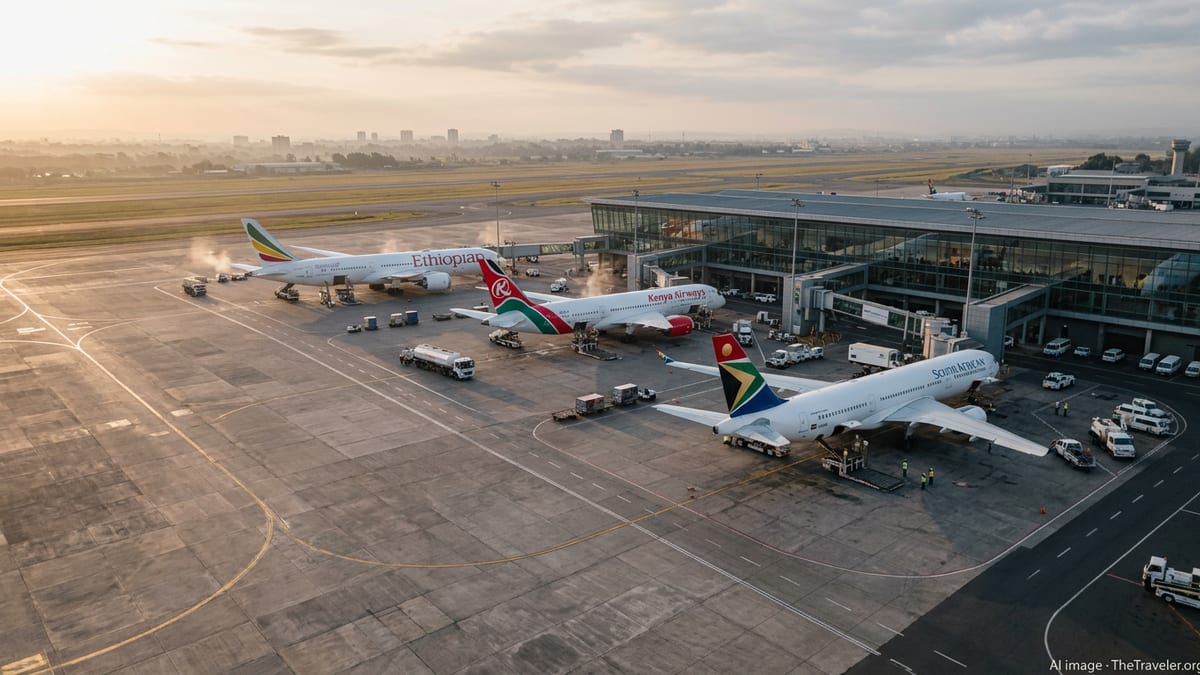
Warnings Issued as Go-Slow Hits Key Aviation Hubs
Publicly available information indicates that KAA issued a notice on August 30, 2026, confirming flight delays across several Kenyan airports, including Jomo Kenyatta International Airport (JKIA) in Nairobi and other major gateways. The advisory pointed to disruption affecting some departing services and urged travelers to verify their flight details directly with airlines before traveling to the airport.
Coverage in local media links the disruption to a go-slow involving personnel attached to Kenya Airports Authority and the Kenya Civil Aviation Authority, which reduced the pace of normal operations and created a backlog of aircraft movements. Reports describe long queues, extended waiting times at check-in and security, and aircraft held on the ground as departure slots became constrained.
According to published coverage, KAA indicated that it was coordinating with airlines, aviation agencies, and other stakeholders to manage the impact and minimize knock-on effects. However, the combination of staff action and already busy late-August traffic meant many flights experienced multi-hour delays, with some rotations rescheduled to later in the day.
Information from regional broadcasters shows that the advisory also encouraged passengers to plan additional time for airport procedures and to stay in close contact with airlines for real-time updates, acknowledging that schedules could change at short notice as the situation evolved.
Impact Felt Most Strongly at JKIA, Mombasa and Other Key Airports
East Africa’s busiest hub, JKIA in Nairobi, appears to be at the center of the disruption, with multiple outlets reporting stranded passengers sleeping in terminal seating as they waited for news on delayed or rescheduled flights. As the country’s primary international gateway, any slowdown in departures and arrivals at JKIA has immediate ripple effects on connecting traffic across the region.
Reports from outlets focusing on the industrial action describe similar challenges at Moi International Airport in Mombasa, where travelers on coastal and regional routes faced extended delays or short-notice schedule changes. With many leisure travelers connecting through Nairobi and Mombasa to safari and beach destinations, tour operators have been monitoring the situation closely due to missed transfers and shortened itineraries.
Kenya Airways and other carriers operating from JKIA have published customer updates detailing “operational constraints within Air Traffic Control services” and advising that average delays of two to three hours have been recorded on some services. Airlines have recommended that passengers use online tools and contact centers to track flight status rather than relying solely on airport departure boards during the disruption period.
Travel alerts and local broadcast coverage suggest that domestic routes to cities such as Kisumu and Eldoret, along with regional services within East and Central Africa, have also experienced knock-on delays, as aircraft and crew rotate later than planned from Nairobi.
Industrial Action and Power Problems Complicate Recovery
The confirmation from KAA comes against a wider backdrop of recent operational pressures in Kenyan aviation, including reports of industrial action involving aviation workers and air traffic control personnel. News wires describe a go-slow and strike activity by members of the Kenya Aviation Workers Union, affecting staffing levels and the smooth flow of air traffic services at JKIA and other facilities.
Published travel alerts from Kenya Airways attribute some of the recent disruption to industrial action by air traffic control workers that began on August 30, 2026, prompting a mix of delays, cancellations, and diversions. The carrier has outlined flexible rebooking and refund options for travelers whose flights were directly affected and has indicated that further updates will be issued as operations stabilize.
At the same time, recent coverage on national broadcasters has highlighted electricity supply issues and previous power interruptions at JKIA, which have raised concerns about the resilience of backup systems. While the latest KAA advisory on delays focuses on staffing and operational constraints, commentators note that power reliability remains a critical element in maintaining uninterrupted airport operations during periods of heightened strain.
The combination of industrial action and infrastructure challenges has drawn renewed attention to contingency planning across Kenya’s aviation sector, including how quickly airports can absorb flight backlogs once full staffing levels and normal power conditions are restored.
Advice for Affected Travelers and Ongoing Operational Outlook
In its public notice, KAA urged passengers to contact their respective airlines for the latest information on flight status rather than traveling to the airport on speculation. Airlines including Kenya Airways have echoed this guidance, directing customers to online flight-status tools, mobile apps, and customer service channels to obtain up-to-the-minute details on delays and schedule changes.
Travelers whose journeys are disrupted are being offered various forms of assistance depending on airline policies, ranging from complimentary rebooking within a specified window to refunds where flights are significantly delayed or canceled. Kenya Airways’ most recent customer update sets out conditions under which change fees and refund penalties are being waived for affected itineraries.
For those with upcoming trips through Nairobi, Mombasa, or other Kenyan airports, aviation advisories recommend monitoring official airline and airport communication channels closely in the coming days. Some carriers have indicated that they expect operations to normalize progressively as industrial actions are resolved and air traffic control capacity returns to normal levels, but the clearance of backlogs may extend into subsequent days.
Industry observers note that late-August and early-September travel includes a mix of regional business traffic and international tourists, making schedule reliability particularly important. Tour providers and hotels catering to safari and coastal tourism are therefore keeping a close eye on how quickly flight operations recover after KAA’s confirmation of delays across the airport network.
What the Disruptions Mean for Kenya as a Regional Hub
Kenya’s position as a key air transport hub for East and Central Africa means that operational issues at its main airports can have an outsized impact on regional connectivity. JKIA in particular serves as a vital link between African cities and long-haul destinations in Europe, the Middle East, and Asia, so extended delays there can complicate onward connections and cargo movements.
Recent statements and master plan documents describing JKIA’s role in the Northern Corridor logistics chain underscore the strategic importance of reliable airport infrastructure and air traffic services. As passenger numbers recover and grow, any prolonged operational constraints can affect airline scheduling decisions, slot coordination, and traveler confidence.
According to commentary in local business media, the current wave of delays may prompt renewed focus on staffing, training, and redundancy across airport and air navigation services, alongside continued efforts to upgrade power and IT systems. Market analysts suggest that clear communication from KAA, the civil aviation regulator, and airlines will be central to managing traveler expectations and protecting Kenya’s reputation as a dependable regional hub.
For now, KAA’s confirmation of delays has placed passengers and industry stakeholders on alert, with many watching closely for further advisories on the pace of recovery and any additional measures planned to prevent a repeat of the recent disruption.