


More news on this day
Passengers traveling through Kenyan airports on August 30, 2026 are being urged to prepare for disruption after Kenya Airports Authority issued a passenger advisory warning of delays affecting some departing flights across the country.
Get the latest news straight to your inbox!
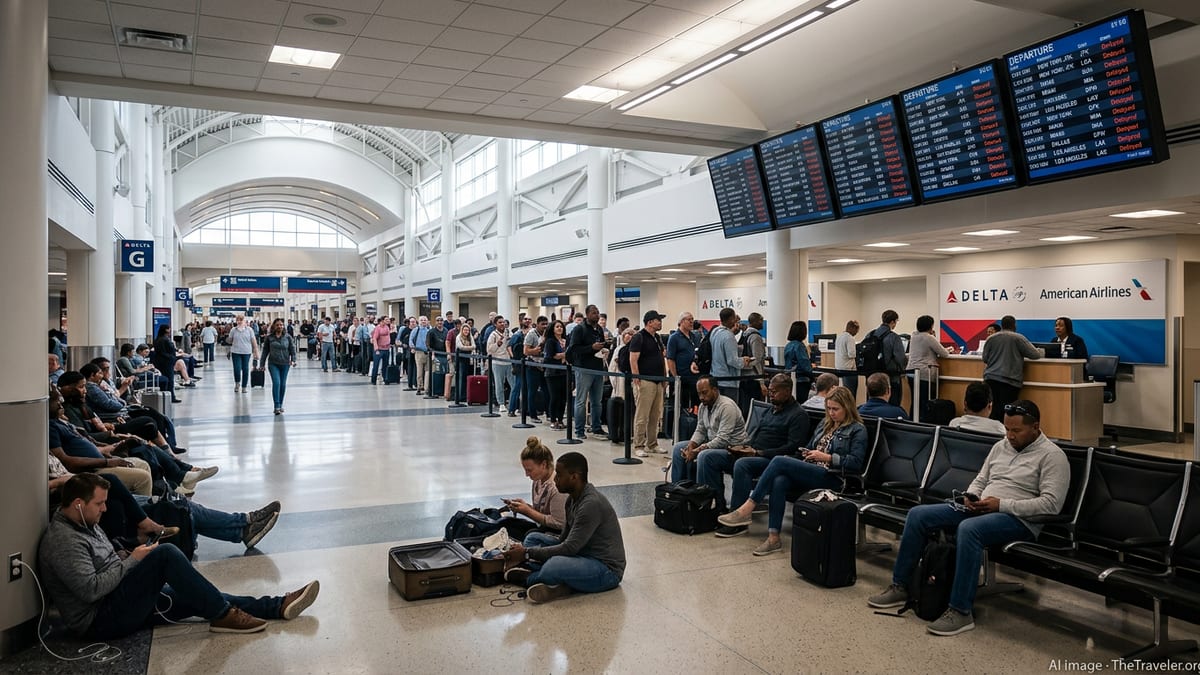
Passenger advisory highlights disruption to outbound services
Publicly available information shows that Kenya Airports Authority (KAA) has advised passengers and other airport users that selected departures are currently experiencing delays at its airports. The advisory, published on August 30, 2026, points to operational disruptions impacting the flow of outbound flights rather than a full suspension of services across the network.
Local media reports indicate that the alert applies to multiple KAA-operated airports, including Nairobi’s Jomo Kenyatta International Airport (JKIA), the country’s primary international hub. Coverage describes departure boards showing a series of delayed flights and passengers facing longer waiting times at terminals as airlines work to reset schedules.
According to published coverage, KAA’s notice emphasizes that the delays are confined to some departing flights and that arrivals are continuing, albeit in a busier-than-usual operating environment. The advisory frames the situation as a period of irregular operations that requires closer coordination between airport operators, airlines and service providers.
Reports indicate that KAA has not publicly detailed the precise trigger for the disruption, focusing instead on measures to manage the knock-on effects. The authority has signaled that updates will be shared through official channels and that operational teams are working to stabilize departure flows.
Advice for travelers using Kenyan airports today
Across multiple outlets, passengers are being urged to treat previously issued timetables as indicative rather than guaranteed while the disruption persists. KAA’s advisory, as summarized in local reporting, recommends that travelers contact their airlines directly for the latest information on specific flights before setting out for the airport.
Airlines’ mobile apps, online booking platforms and customer contact centers are highlighted in public guidance as the primary sources for real-time updates on departure times, gate changes and rebooking options. Travel industry commentary notes that these digital tools typically reflect schedule adjustments more quickly than printed itineraries or third-party summaries.
Reports also encourage passengers to allow extra time for journeys to the airport and for check-in, security screening and border controls, particularly at busy hubs such as JKIA. With some outbound services running behind schedule, queues can build rapidly as passengers for multiple flights pass through checkpoints at similar times.
Travel planners advise that passengers with tight connections at downline airports may wish to explore rebooking options where permitted by fare rules. For domestic itineraries within Kenya, publicly available information suggests that monitoring alternative routings or later services could provide additional flexibility if same-day connections become challenging.
Operational backdrop at JKIA and other key hubs
The current advisory arrives at a time when Kenya’s aviation sector is managing sustained demand alongside ongoing operational pressures. Local business and travel outlets have recently highlighted a combination of strong passenger volumes, infrastructure upgrades and evolving staffing patterns as factors that can increase the likelihood of delays, even when airports remain open.
JKIA, as the country’s main international gateway, carries a significant share of outbound traffic and tends to feel the impact of any disruption most acutely. Media coverage notes that earlier episodes of congestion and ad hoc schedule changes this year have tested airport capacity, particularly during peak morning and evening banks of regional and long-haul departures.
Industry reporting further points to the complex coordination required between airport operators, ground handlers, air traffic management and airlines to maintain smooth flows when irregular operations occur. Small timing shifts in aircraft turnaround or crew availability can cascade into longer delays during busy periods, especially if there is limited slack in schedules.
While today’s advisory does not link the current delays to a specific incident, analysts quoted in prior coverage of Kenyan aviation developments have underlined how closely connected infrastructure projects, maintenance schedules and airline fleet utilization can be when it comes to on-time performance.
What the disruption means for short-haul and regional itineraries
Short-haul and regional routes are particularly exposed to knock-on effects when departures are delayed. Flight tracking summaries cited in local media suggest that a mix of domestic and near‑regional services has been affected, including departures within East Africa and to neighboring markets that typically operate several times per day.
For travelers, this can translate into reduced flexibility if aircraft and crews are out of position for subsequent rotations. Travel analysts note that when the first sectors of the day depart late, later flights on the same route can face rolling delays while airlines work to recover their planned rotations.
Publicly available guidance underscores that passengers connecting from regional services at JKIA onto long‑haul flights should closely monitor both segments and, where possible, build buffer time into their itineraries. In some cases, airlines may proactively rebook customers to later services to protect onward connections and manage capacity.
For passengers starting and ending their journeys within Kenya, irregular operations can disrupt ground transport arrangements and hotel plans, particularly on routes that serve coastal and safari gateways. Travel advisors commonly recommend maintaining flexible transfer arrangements and ensuring that accommodation providers are informed promptly of significant schedule changes.
Next steps and where to find verified updates
Media outlets reporting on the situation note that KAA has indicated it will provide further information as developments unfold. Passengers are encouraged to rely on official airport and airline channels for verified updates, rather than informal social media posts that may not reflect the latest status of specific flights.
Publicly available contact information for KAA and major Kenyan carriers remains a key resource for travelers seeking confirmation on departure times, terminal changes or baggage arrangements. At the same time, airlines continue to push schedule modifications and disruption notices directly to customers who have provided up-to-date contact details at the time of booking.
Travel industry observers point out that, while periods of irregular operations can be frustrating, they are generally managed through established contingency plans that prioritize safety and the gradual restoration of normal schedules. The current advisory is presented in local coverage as a targeted warning about delays, rather than a signal of widespread cancellations or airport closures.
For now, passengers scheduled to depart from Kenyan airports are being advised to stay informed, allow additional time at the airport and be prepared for possible changes to departure times as KAA and airlines work to normalize operations.
Standard Media: KAA warns passengers of delays affecting departing flights
Citizen Digital: KAA issues advisory on departure delays
Capital FM: KAA issues passenger alert as flight delays hit airports
Eastleigh Voice: Kenyan airports warn of delays affecting some departing flights