


More news on this day
Flights at Ronald Reagan Washington National Airport were halted for several hours this week as heightened security measures for the visiting Iraqi prime minister triggered cascading delays and cancellations across the U.S. air network.
Get the latest news straight to your inbox!
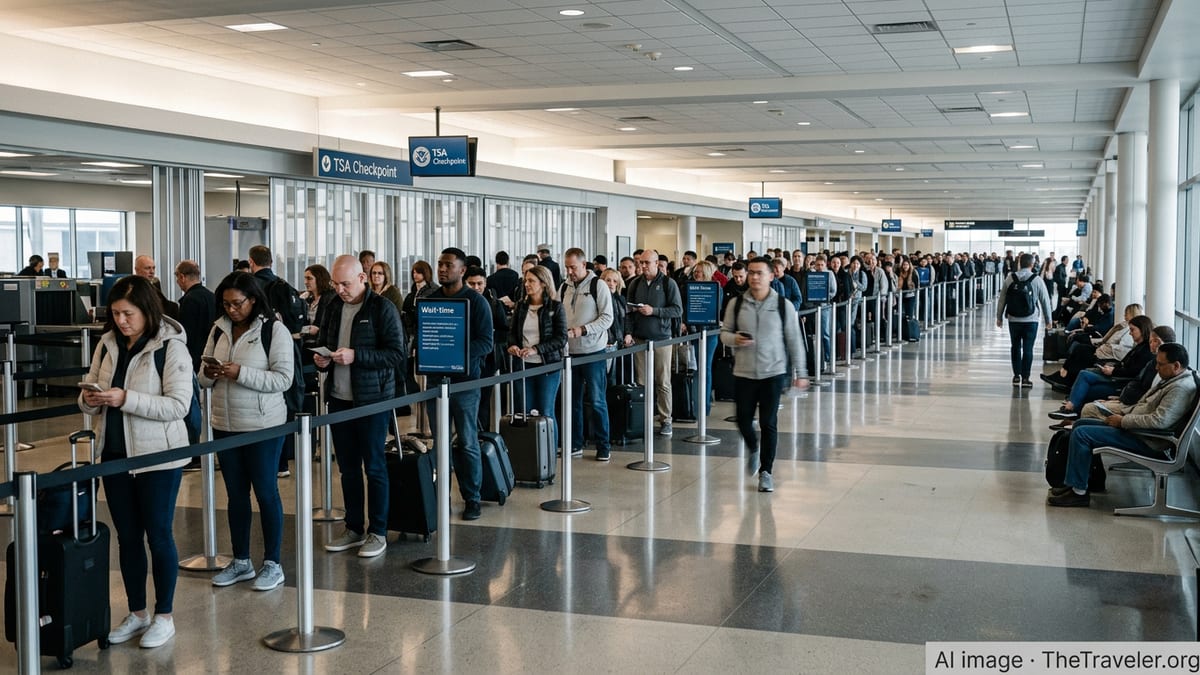
Ground stop strands travelers for hours at Reagan National
According to regional media coverage, flight operations at Ronald Reagan Washington National Airport in Arlington, Virginia, were paused for several hours on Tuesday, July 14, as airspace restrictions were put in place around Washington for the Iraqi leader’s movements. Published reports indicate that a temporary halt on arrivals, coupled with reduced departures, led to more than one hundred cancellations and hundreds of delays centered on the busy D.C. hub.
The disruption reportedly coincided with a visit by the Iraqi prime minister to the U.S. capital during a period of elevated regional tension linked to the ongoing conflict involving Iran. The stop at Reagan National formed part of a tightly controlled itinerary that required expanded protection around central Washington and the Potomac River corridor, including the flight paths most commonly used by arriving and departing aircraft.
Publicly available accounts from passengers and flight-tracking data show that aircraft bound for the airport were held at their departure gates, diverted to other airports, or left circling in holding patterns while the security measures were in effect. Within the terminal, long lines formed as travelers waited for updates on revised departure times, rebookings and missed connections.
While ground stops linked to weather or technical issues are relatively common in the Washington region, the scale and duration of this interruption drew particular attention from frequent fliers and local aviation observers, many of whom noted that operations at other nearby airports were less affected.
Security protocols tighten around VIP movements in the capital
Airspace around Washington is among the most tightly controlled in the world, with a standing Special Flight Rules Area and an inner restricted zone that severely limit noncommercial flying. When foreign heads of government travel to the city, additional layers of temporary flight restrictions are often added, concentrating traffic through narrow corridors and creating potential bottlenecks at the region’s airports.
Coverage of this week’s events indicates that the protections for the Iraqi leader went beyond routine adjustments, with a defined window during which most arrivals into Reagan National were prohibited. These measures are typically coordinated among federal security agencies and air traffic managers to limit the risk of airborne threats when VIP motorcades or helicopters are traveling between the city and nearby military installations or airports.
Historical notices from the Federal Aviation Administration show that such restrictions can involve both horizontal and vertical limits on aircraft movements, sometimes extending well beyond the city center and temporarily affecting traffic into Baltimore/Washington International Thurgood Marshall Airport and Washington Dulles International Airport as well. In this instance, reports suggest that Reagan National bore the brunt of the impact because of its proximity to central Washington and the likely route of the Iraqi delegation.
The episode comes amid a broader pattern of intermittent airspace closures over the Washington region in recent months for special events, security incidents and national celebrations, placing additional strain on a network that already operates near capacity during peak hours.
Ripple effects across airlines and connecting hubs
Once the ground stop at Reagan National was in place, the effects spread quickly across the country. Airlines with significant operations at the airport, including major legacy carriers and low cost competitors, had to hold departures at origin cities, reshuffle aircraft rotations and adjust crew schedules to remain within duty-time limits.
Travel industry tracking suggests that delays radiated into key domestic hubs, including Atlanta, Chicago, New York and Dallas, as planes that were scheduled to pass through Washington became unavailable for subsequent segments. Some routes experienced rolling delays throughout the day, while others were consolidated, leaving travelers competing for a smaller number of available seats.
For passengers already in the air when the restrictions took effect, diversions to nearby airports such as Dulles and Baltimore created additional logistical challenges. Those aircraft often had to wait on the ground until the airspace reopened or continue on to alternative destinations, requiring later repositioning flights and rebooking efforts by airline staff.
Consumer advocates note that such security-driven disruptions can complicate compensation claims, since airlines frequently classify them as events beyond their control. Travelers affected by the Reagan National ground stop faced a patchwork of options, ranging from same day rebooking and overnight hotel vouchers to minimal assistance where flights were categorized as irregular operations outside the carrier’s responsibility.
Context of regional instability and aviation security
The Iraqi leader’s visit to Washington takes place against the backdrop of an unstable security environment in the Middle East, where airspace closures and route diversions have become more common since the outbreak of war involving Iran earlier this year. Regional aviation bulletins describe repeated shutdowns of Iraqi airspace and neighboring corridors as governments respond to drone threats, missile activity and military operations.
International travel advisories for Iraq and surrounding countries currently highlight the risk of sudden changes to flight paths, temporary bans on overflights and restrictions on the use of key airports. As a result, carriers serving the region have been adjusting schedules, increasing fuel loads to accommodate longer routings and, in some cases, suspending service entirely.
The Washington disruption illustrates how such geopolitical tensions can intersect with domestic aviation systems when visiting leaders require heightened protection abroad. Although the ground stop at Reagan National was temporary and geographically limited, it underscored how events far from U.S. airspace can shape security planning and affect travelers thousands of miles away.
Aviation analysts observing the situation point out that, while temporary flight restrictions for VIP travel are standard practice, their impact is magnified when they coincide with broader global instability that is already constraining capacity and complicating airline operations worldwide.
What travelers can expect during future security closures
With the Washington area hosting frequent high level visits, major federal events and national celebrations, industry observers expect that travelers will continue to experience occasional ground stops or airspace closures tied to security needs. Recent public advisories around Independence Day festivities and other planned events already warned of extended pauses at Reagan National and nearby airports.
Travel planners recommend that passengers flying into or out of the capital build additional buffer time into connections, particularly in the afternoon and evening peaks when most VIP movements and ceremonial activities tend to occur. Choosing earlier departures, allowing extra time before international connections and monitoring airline alerts closely can help reduce the risk of significant disruption.
Experts in aviation risk also highlight the importance of flexible itineraries. Booking nonstop flights when possible, opting for tickets that allow same day changes, and keeping essential items in carry on baggage can make it easier to adapt when sudden security measures halt operations. For business travelers and those on tight schedules, contingency plans that include remote participation options or alternative transport modes may be prudent.
While the Reagan National disruption has raised new questions among travelers about transparency and coordination during security related shutdowns, it also demonstrates the complex balance between protecting visiting dignitaries and maintaining the flow of air traffic. As global tensions persist, that balance is likely to remain a central challenge for aviation planners, carriers and passengers alike.