


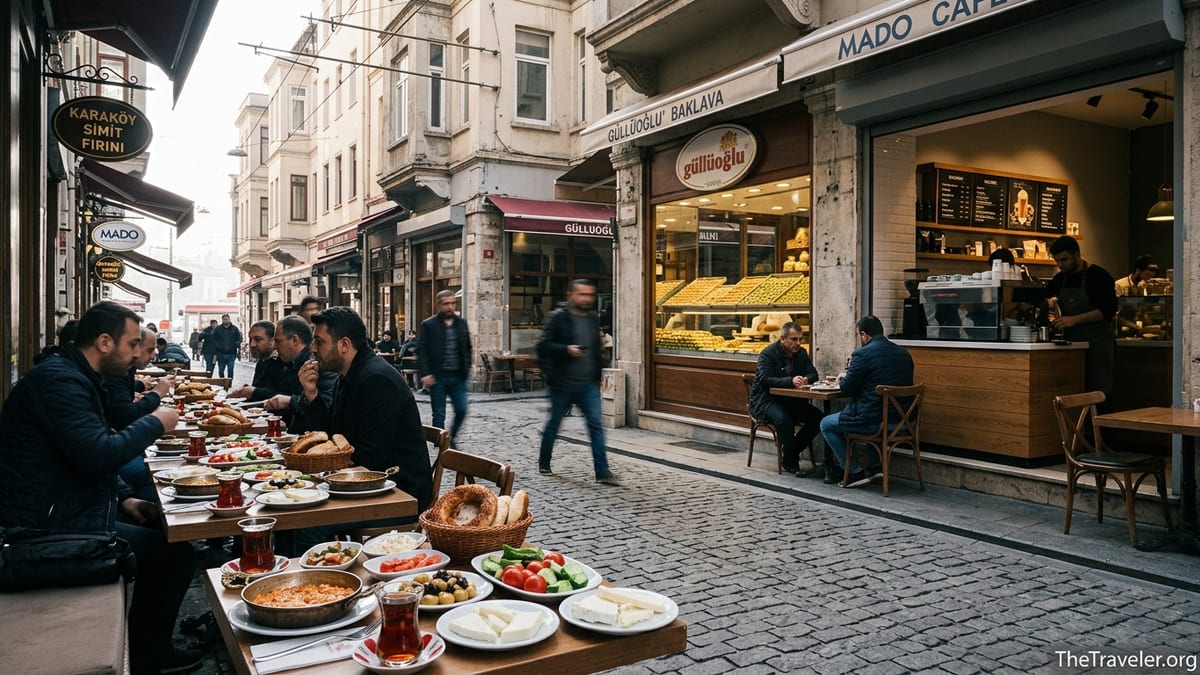
Karaköy has become one of Istanbul’s most reliable neighborhoods for a leisurely breakfast, from overflowing Turkish spreads and sizzling menemen to third-wave coffee and iconic baklava. The narrow streets between the tram line and the waterfront fill up most mornings with locals, commuters and visitors all hunting for a table, which makes it one of the liveliest places in the city to start the day. This guide walks you through what breakfast in Karaköy really looks like, which streets to focus on, what you can expect to pay, and how it stacks up against neighboring Galata.
Get the latest updates straight to your inbox!
Why Karaköy Works So Well for Breakfast
Karaköy sits at the junction of old Istanbul, Galata and the Bosphorus ferries, which makes it a natural breakfast hub. Office workers come down from Beyoğlu, commuters arrive from the Asian side by ferry, and visitors walk over the Galata Bridge from Sultanahmet. That mixed crowd supports everything from no-frills tea houses to big delicatessen-style halls and specialty coffee bars, all packed into a walkable grid of streets.
Most of the breakfast action is concentrated around Mumhane Caddesi, Kemankeş Karamustafa Paşa Caddesi and the lanes that run between them. You can sit on a tiny stool at a bakery counter for a quick simit and tea, or head into a large space like Namlı Gurme for a full serpme kahvaltı, the classic spread of cheeses, olives, eggs and pastries. Because so many places open by 08.00, you can eat early before sightseeing or linger late into the late morning like many locals do on weekends.
The neighborhood also gives you both waterfront and backstreet atmospheres. Near the tram and cruise terminal you will find bigger, newer venues with outdoor terraces facing the Bosphorus. A few minutes inland, converted warehouses and older buildings hold smaller cafés and bakeries with more character. You can easily design a morning where you start with a Turkish breakfast plate, wander through the streets with a second coffee, then finish with baklava before heading across the bridge.
Classic Turkish Breakfast: Where to Order the Full Spread
If you want the full, photogenic Turkish breakfast experience, Namlı Gurme in Karaköy is the obvious starting point. Part deli, part restaurant, it lays out counters of cheese, cured meats, olives and meze, which are then assembled into generous serpme kahvaltı spreads. A typical breakfast for two here will include several cheeses, olives, tomatoes, cucumber, eggs, honey and clotted cream, jams, sucuk sausage and baskets of fresh bread, and travelers report paying in the region of 700 to 800 Turkish lira per person in 2025 and 2026, depending on how much extra they order.
Because Namlı Gurme is so well known, it is also one of the most crowded places in the area. On Saturdays and Sundays it can be packed from around 10.00 onward, with short queues to be seated. If you want the experience but dislike crowds, go on a weekday morning or aim to arrive shortly after opening. The space is large, bright and busy rather than intimate, so think of it more as a bustling food hall than a quiet café.
Smaller venues scattered through Karaköy also offer set kahvaltı plates at lower prices than the big names. Many cafés on Mumhane Caddesi and the surrounding alleys serve a standard “kahvaltı tabağı” with cheese, olives, tomatoes, cucumber, an egg, jam, honey and bread for a more modest price that can still feel like good value given the variety. While they may not have the spectacle of a delicatessen counter, they attract a more local crowd and often let you sit as long as you like over several glasses of tea.
Menemen, Eggs and Savory Morning Favorites
Beyond the spreads, Karaköy is a good neighborhood to try menemen, the soft scrambled eggs cooked with tomatoes, peppers and sometimes onions. Many breakfast-oriented cafés prepare individual pans of menemen in small metal skillets, often with additions like white cheese or sucuk sausage. At places with a full menu, you can usually choose between classic menemen, cheese menemen or sucuklu menemen, and expect to pay roughly what you would for a main dish at lunch rather than a side.
Other egg dishes appear on most menus too. Sucuklu yumurta, eggs fried in a pan with rounds of spicy beef sausage, is particularly popular for people who want a heavier start to the day. Some cafés add kavurma, slow-cooked meat, to eggs for an even richer plate. These dishes are normally ordered in addition to the small plates that make up the breakfast spread, so sharing with a friend is often the most sensible approach if you plan to keep eating through the day.
For something lighter, many bakeries and cafés serve gözleme, thin hand-rolled flatbreads griddled with fillings like cheese, spinach or potato. You may also see su böreği, layers of soft pastry and cheese that feel closer to a lasagna than a typical pastry. These are commonly eaten for breakfast around Turkey and pair well with strong black tea. Ordering one portion of börek or gözleme with tea is a good plan if you want a typical local breakfast without committing to a large spread.
Bakeries, Simit and Sweet Stops
One of Karaköy’s strengths is the density of bakeries and pastry shops. You can build an entire breakfast out of simit, açma, poğaça and börek picked up from different counters as you walk. Many visitors start with a simit, the circular sesame-covered bread that functions as Istanbul’s street breakfast, bought from either a corner bakery or one of the red street carts near the tram stops. With a simit in hand and a plastic glass of tea from a nearby çay evi, you already have a very typical local start to the day.
For something more indulgent, Karaköy Güllüoğlu is widely regarded by locals as one of the must-visit baklava producers in the city, and it is located a short walk from the main breakfast streets. Even mid-morning, the shop can be busy with people ordering trays to take away or sitting down for a plate of baklava and Turkish tea. While it is better known as a dessert destination, stopping here after a lighter breakfast for a shared plate of pistachio baklava or “havuç dilimi” with ice cream is a very Istanbul way to extend your morning.
You will also find smaller patisseries that specialize in cakes, cookies and modern pastries. These are handy if you are traveling with people who prefer a sweet breakfast or good coffee and croissant over a heavy spread. Prices for individual pastries are usually moderate by European standards, although the total can climb quickly if you select several items from the counter. Most of these spots have a few outdoor tables that let you watch the neighborhood come to life while you eat.
Coffee Streets and Café Culture in Karaköy
Over the last decade Karaköy has developed one of Istanbul’s highest concentrations of specialty coffee shops, particularly in the backstreets between the waterfront and Galata. Many of these cafés roast or source high-quality beans and serve espresso-based drinks alongside V60 or other filter options. They often open by 09.00 or earlier, so you can pair a flat white or pour-over with a simple breakfast plate, a slice of cake or a pastry.
Kemankeş and Mumhane Caddesi, plus the smaller streets that branch off them, function as informal “coffee streets,” with cafés lined up door-to-door in some stretches. On a sunny weekend morning you will see tables spilling into the street, laptops out and groups of friends ordering second or third rounds of coffee. These spots tend to feel more international than traditional tea houses, and you will hear as much English as Turkish, especially around late morning.
In terms of pricing, a cappuccino or latte in Karaköy’s third-wave cafés can approach European levels, and visitors report paying the equivalent of several euros for a milk-based coffee in 2025 and 2026. Traditional Turkish tea, by contrast, remains significantly cheaper almost everywhere. One practical strategy is to enjoy your main breakfast in a more classic place where tea is included or inexpensive, then move to a specialty café afterward for a single high-quality coffee rather than ordering multiple rounds.
Weekend Crowds, Queues and How to Time Your Visit
On weekdays Karaköy’s breakfast scene feels busy but manageable, with a steady flow of office workers and visitors spread through the morning. On Saturdays and Sundays, especially from late spring through autumn, the neighborhood can feel close to capacity by late morning. Well-known spots such as Namlı Gurme and famous coffee bars often see short lines around 10.00 to 11.30, and streets around the tram stop and Galataport can become quite congested with pedestrians.
If you prefer a quieter breakfast, aim to arrive before 09.00 on weekends, or choose a weekday instead. Many of the smaller cafés off the main streets remain relatively calm even when the big names are slammed. Looking one or two blocks away from the waterfront can make a noticeable difference to both noise levels and how long you wait for food. Outdoor seating is particularly prized on mild days, so be prepared to accept an indoor table if you arrive at peak times.
It is also worth considering the rhythm of your wider itinerary. Karaköy works well as a base for an early breakfast followed by a walk over the Galata Bridge into the historic peninsula, or a slow morning that stretches into lunchtime as you poke into shops and galleries. Keep in mind that ferries departing from Karaköy and nearby piers can be crowded on weekend mornings, so build in a little extra time if you plan to travel onward after eating.
What You Can Expect to Pay in Karaköy
Prices in Karaköy vary widely depending on the style of place you choose and how indulgent you want your breakfast to be. A full serpme kahvaltı at a famous venue with multiple hot dishes, specialty items and tea included will sit at the higher end of Istanbul’s breakfast prices, sometimes reaching a few hundred lira per person or more once you add extras and drinks. Locals who visit regularly often describe these as occasional treats rather than everyday meals.
At more modest neighborhood cafés, a set Turkish breakfast plate with a couple of cheeses, olives, vegetables, an egg, jam, honey and bread generally costs significantly less than the big spreads. Ordering one such plate plus an extra dish of menemen or sucuklu yumurta to share is a cost-effective way for two people to sample a range of flavors without overspending. Tea is often charged per glass in these places, but the individual cost is typically low enough that two or three refills remain affordable.
Specialty coffee and desserts are where your bill can quietly increase. A latte or flat white in a third-wave café can cost as much or more than a basic breakfast plate in a simple lokanta, and a few slices of baklava at a famous shop can total more than an inexpensive sit-down meal elsewhere in the city. If you are on a tight budget, lean on Turkish tea, simit, börek and basic breakfast plates, and reserve high-end coffee and baklava tastings for a couple of mornings during your stay rather than daily.
Is Karaköy Better for Breakfast Than Galata?
Karaköy and Galata sit back-to-back, connected by a short uphill walk, and both have strong café cultures. The main difference for breakfast is atmosphere and concentration. Karaköy’s streets closest to the water form a dense cluster of breakfast-oriented venues, bakeries and coffee shops, so you can decide on the fly simply by wandering and seeing what looks appealing. The neighborhood also gives you easier access to the tram and ferries if you plan to move on quickly after eating.
Galata, by contrast, feels more residential and vertical, with cafés spread out along steep streets leading up toward the Galata Tower. It has excellent coffee and some very good bakeries and brunch spots, but they are more dispersed. A Galata breakfast can be quieter and more atmospheric, especially on side streets away from the main tourist flows, but it requires a bit more research or local knowledge to pinpoint specific places before you arrive.
If your priority is a high-energy morning with many visible options in a small area, Karaköy has the edge. You can easily combine a traditional Turkish breakfast, a coffee stop and a sweet treat without walking far. If you prefer a slower, more neighborhood feel and do not mind climbing hills, Galata can be more appealing, particularly for repeat visitors who have already experienced Karaköy’s bustle. Many travelers ultimately do both, starting early in Karaköy on one day and trying a quieter Galata café another morning for comparison.
The Takeaway
Karaköy earns its reputation as one of Istanbul’s breakfast centers because it offers variety, convenience and atmosphere in equal measure. Within a few blocks you can move from a classic serpme kahvaltı at a bustling deli to a third-wave coffee bar or a traditional tea house, all while staying close to the tram, ferries and the Galata Bridge. Whether you want a once-in-a-trip feast with every possible cheese and olive or a simple simit and tea at the counter, you will find a version of breakfast that fits your appetite and budget.
Understanding how the neighborhood works in practice helps you get more from your morning. Going early on weekends, exploring one or two streets back from the waterfront, and balancing big spreads with simpler café plates can all keep both crowds and costs under control. Adding a stop at a famous baklava shop or a waterfront coffee terrace turns breakfast into a wider experience of the city rather than a quick meal.
In the friendly rivalry between Karaköy and Galata, Karaköy is the better all-round choice for travelers who want many options in one compact area and an easy starting point for a day of sightseeing. Galata still rewards a second look with its quieter side streets and tower views, but for a first taste of Istanbul’s breakfast culture, Karaköy’s mix of Turkish tradition and contemporary café life is hard to beat.
FAQ
Q1. What time do Karaköy breakfast places usually open?
Most Karaköy cafés and breakfast spots open between 08.00 and 09.00 on weekdays, with some larger venues and bakeries starting slightly earlier, especially near the tram and ferry piers.
Q2. Do I need a reservation for breakfast in Karaköy?
Reservations are rarely essential on weekdays but can help at very popular spots on weekends, especially between 10.00 and midday, when walk-in queues are common.
Q3. How much should I budget for a full Turkish breakfast in Karaköy?
For a generous shared serpme kahvaltı at a famous venue plus drinks, plan on a higher mid-range budget per person, while simpler breakfast plates in smaller cafés cost noticeably less.
Q4. Is Karaköy suitable for vegetarian or vegan breakfast?
Yes. Many Turkish breakfast items are naturally vegetarian, and several modern cafés offer vegan options such as plant-based spreads, salads and dairy-free milks for coffee.
Q5. Can I find good Turkish coffee in Karaköy, or is it mostly espresso?
You can easily find both. Specialty cafés tend to focus on espresso and filter methods, while more traditional places and dessert shops serve classic Turkish coffee alongside tea.
Q6. Are Karaköy breakfast places family friendly?
Most venues in Karaköy are informal and family friendly, with flexible seating and dishes that are easy to share. High chairs are not universal, so families with very young children may want to check ahead.
Q7. What should I order if I want a light breakfast?
For a lighter start, order a simit or a piece of börek with tea, or choose a basic breakfast plate without extra hot dishes, then add fruit or a single pastry if you are still hungry.
Q8. How crowded does Karaköy get on weekends?
On Saturdays and Sundays from late morning onward, the most popular breakfast venues and coffee streets can feel very crowded, with short queues and limited outdoor seating.
Q9. Is it easy to walk from Karaköy to Galata after breakfast?
Yes. It is a short but uphill walk from Karaköy’s waterfront streets to the Galata Tower area, and many visitors combine breakfast below with a stroll up into Galata afterward.
Q10. Is Karaköy a good base to explore other parts of Istanbul after breakfast?
Very much so. From Karaköy you can cross the Galata Bridge on foot to the historic peninsula, take trams along the European shore, or use ferries to reach the Asian side.