


Karaköy sits at the foot of the Galata hill, right where the Bosphorus meets the Golden Horn. For first-time visitors, it is one of the most practical places to stay in Istanbul: you are a tram ride from Sultanahmet’s mosques, a short walk or funicular from Beyoğlu’s nightlife, and steps from ferries and the new Galataport cruise terminal. The catch is that not every street in Karaköy feels the same. Some corners buzz late into the night, others back onto steep cobbled climbs, and a few are ideal if you have a cruise to catch at dawn. This guide breaks Karaköy into distinct hotel areas, with concrete examples of where they work best and who should stay in each.
Get the latest updates straight to your inbox!
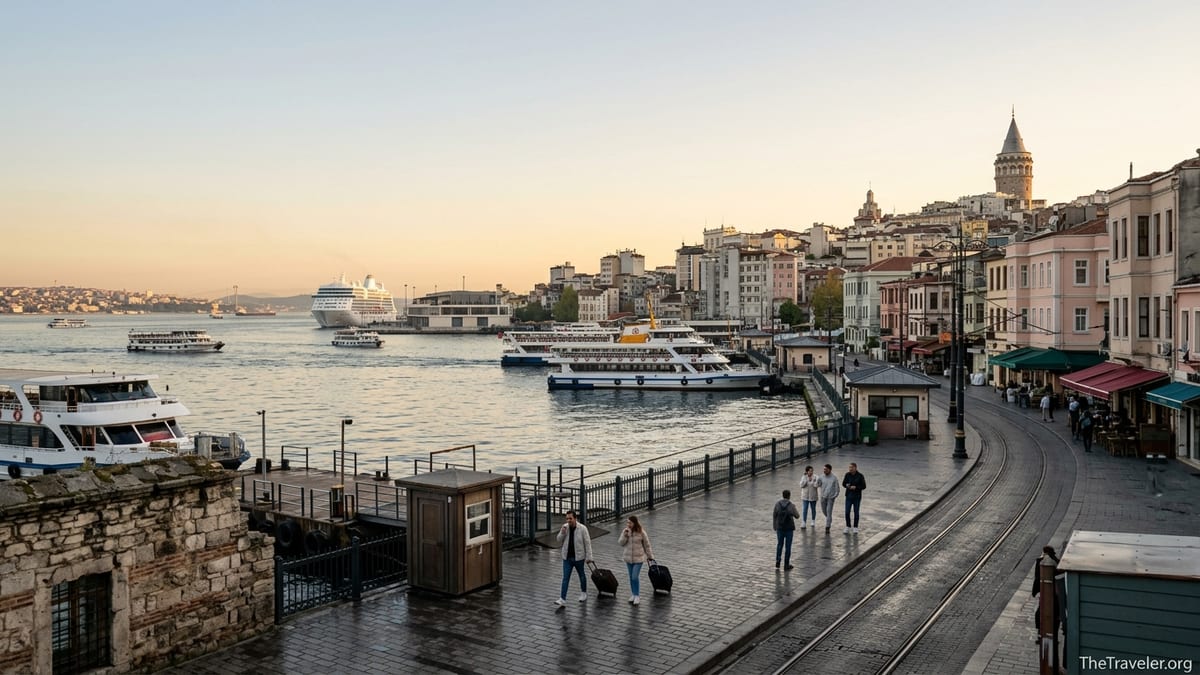
Understanding Karaköy’s Layout and Transport
Karaköy is compact, but it is shaped by two strong lines: the waterfront and the hill up toward Galata and Beyoğlu. The flat strips run along the tram line and ferry piers, while narrow streets climb sharply north to Galata Tower. For a first-time visitor, it helps to picture four loose zones: the central square and Galata Bridge end; the Galataport and cruise terminal side toward Tophane; the older banking streets around Bankalar Caddesi; and the steeper lanes heading toward Galata and the Tünel funicular. Each zone has a slightly different feel in terms of noise, convenience and hotel style.
The T1 tram runs right through Karaköy Square, linking you directly to Sultanahmet, the Grand Bazaar area, and further west toward Beyazıt and the old city markets, while also continuing northeast toward Tophane and Kabataş. That means a hotel within a three to five minute walk of a T1 stop often saves you several taxi rides and the stress of Istanbul traffic. In practice, properties such as The Haze Karaköy and Nordstern Hotel Galata appeal to many first-timers partly because you can roll a suitcase from the tram, check in, then use the same line to sightsee without ever learning the bus network.
Ferry access is another reason Karaköy works well as a base. Regular boats connect from the waterfront to Kadıköy and Üsküdar on the Asian side, usually every 10 to 20 minutes during the day, and shorter tourist cruises head up the Bosphorus. Staying near the piers means you can treat ferry rides as normal public transport. For example, a traveler might base at Karaköy Rooms or SuB Karaköy, walk five minutes to the pier after breakfast, and be exploring the markets of Kadıköy half an hour later without sitting in traffic on a bridge.
The final piece of the picture is the vertical one. From the waterfront up to Galata Tower the slope is abrupt in places, with streets like Yüksek Kaldırım feeling like a short but serious workout. The historic Tünel funicular provides a quick alternative to walking the whole hill, but if you have limited mobility or are traveling with a stroller, you will feel the gradient whenever you head inland. That is why many cruise passengers and first-timers with heavy luggage prefer to stay on the flatter blocks between the tram tracks, the piers, and Galataport, and then ride the tram or Tünel up to Istiklal Caddesi instead of climbing on foot.
Central Karaköy Square & Galata Bridge: Best All-round Base
The area around Karaköy Square, just north of the Galata Bridge, is often the best all-round choice for a first visit. You are directly on the T1 tram, a short walk from the ferries, and within sight of the old city skyline across the water. Streets here are mostly flat, with a mix of local shops and third-wave coffee bars, and the atmosphere is lively during the day but tends to quieten somewhat after midnight outside of a few bars and late-opening Lokanta-style restaurants.
Concrete examples help to understand what staying here feels like. A hotel such as The Haze Karaköy typically offers mid-range rooms with simple decor and breakfast on a terrace, but its key selling point is the three-minute walk to the tram stop and the Galata Bridge. Guests can be on the T1 heading to Hagia Sophia within ten minutes of leaving their room, and can stroll across the bridge in the evening to eat in Eminönü. Nordstern Hotel Galata, facing the waterfront a short walk from Karaköy Square, is another option popular with design-conscious travelers, pairing contemporary interiors with easy access to both ferry and tram.
Budget-minded visitors will find that streets one or two blocks inland from the square often have smaller family-run hotels and guesthouses with lower nightly rates than the waterfront properties, while still being under five minutes from public transport. It is common to see doubles in that category priced more modestly than the branded hotels on the Galataport side. In exchange, you may trade away views and high-end amenities for slightly older buildings and compact bathrooms, but you gain fast access to both the historic peninsula and Beyoğlu above.
This central zone works best for travelers who want a balanced stay: couples and solo visitors seeing the city for the first time, families with older children who can manage tram crowds, and short business trips where commuting time matters more than rooftop pools. Light sleepers should request rooms facing inward courtyards or higher floors, since trams and evening traffic on the main road can produce intermittent noise, although many modern hotels now use double glazing to mitigate it.
Galataport & Cruise Terminal Side: Waterfront Views and Easy Embarkation
To the east of Karaköy Square, the seafront has been redeveloped into Galataport, a modern cruise terminal and open-air complex of shops, restaurants and cultural spaces. For anyone starting or ending a cruise in Istanbul, this strip is by far the most convenient place to stay. You can walk to most Galataport boarding areas in ten to fifteen minutes from many nearby hotels, which makes luggage handling significantly easier than staying elsewhere and relying on taxis through traffic.
This is where some of Karaköy’s most polished hotels cluster. High-end properties like The Peninsula Istanbul anchor the Galataport front, offering resort-level service, landscaped waterfront promenades and direct access to the cruise terminal. Just behind them, stylish boutique options such as The Bank Hotel Istanbul, 10 Karaköy and Nidya Galataport combine historic buildings with contemporary interiors. Many of these properties sit in renovated bank headquarters or warehouses, so rooms can feature high ceilings, substantial soundproofing and generous windows looking toward the Bosphorus or the old city.
For a concrete sense of convenience, imagine a couple embarking on a Mediterranean cruise. Staying at a hotel like Nidya Galataport or Delta Hotels Istanbul Karaköy means they can check out after breakfast, pull suitcases along a relatively flat sidewalk and be at the terminal security entrance in under fifteen minutes, even allowing for a few street crossings. After disembarkation, they can just as easily walk back to the hotel for a final night, rather than negotiating taxis with luggage at rush hour. Many hotels in this strip are accustomed to cruise schedules and will offer early luggage storage and airport transfer arrangements.
There are trade-offs. The Galataport area feels newer and more polished than grittier parts of Karaköy, and prices generally reflect that. Nightlife in the immediate complex leans toward upscale bars and waterfront dining rather than casual meyhanes. Traffic along the coastal road can be heavy at peak times, so crossing between the inland hotels and the promenade requires attention. For first-time visitors who value comfort, sea views and cruise convenience, however, the combination of modern infrastructure and short walking distances is hard to beat.
Bankalar Caddesi & Back Streets: Boutique Charm and Quieter Nights
One block inland from the waterfront, the old financial district around Bankalar Caddesi offers a different face of Karaköy. Historic bank buildings and narrow side streets have been transformed into galleries, cafes and small design hotels. The slope here is mild compared with the climb to Galata Tower, and many streets carry less through traffic, which often translates into quieter nights. For first-time visitors who want some character and calm without sacrificing convenience, this pocket can be ideal.
Hotels like The Bank Hotel Istanbul and The House Hotel Karaköy illustrate the appeal. Both occupy grand early 20th-century buildings with thick stone walls, tall windows and original features such as vault doors or marble staircases repurposed into lobbies and lounges. Rooms tend to be more spacious than in newer budget properties, often with good insulation from street noise. You might wake up to the muffled sound of a nearby tram a couple of blocks away rather than the direct rattle of tracks outside your window.
Because these streets sit between the tram line and the lower reaches of the Galata hill, walking to both is manageable. A guest can stroll five to eight minutes to the T1 stop for a day of sightseeing in Sultanahmet, then walk ten minutes in the opposite direction in the evening to reach the Tunel funicular or the base of the Galata Tower for dinner. Compared with the Galataport strip, restaurant prices in this area are often slightly lower, with plenty of coffee shops, dessert spots and casual eateries that cater more to office workers and locals than exclusively to cruise passengers.
Who should choose this area? Design-focused couples, digital nomads combining work and sightseeing, and travelers who value staying in buildings with a sense of history often gravitate here. Nightlife noise is more limited, but you should still check recent guest reviews for comments about rooftop bars or nearby venues, as openings change from season to season. If you are particularly sensitive to sound, choose interior-facing rooms or ask the hotel in advance about events and music on weekends.
Up the Hill toward Galata: Character, Steep Streets and Nightlife Nearby
As you move north from Karaköy’s flat waterfront, streets begin to climbing sharply toward Galata Tower and the broader Beyoğlu district. Lanes like Yüksek Kaldırım and the maze around the French Passage are atmospheric, lined with boutiques, small cafes and restored townhouses. Some hotels and guesthouses in this zone technically use a Karaköy address but feel closer in spirit to Galata. They can be great for travelers who want to wake up in a residential-feeling area and be minutes from Istiklal Caddesi’s restaurants and bars.
On the plus side, staying up the hill shortens your evening walks. A guest at a small design hotel near Galata Tower, for instance, might wander to nearby wine bars and live music venues, then be back in their room in under ten minutes without needing a taxi. Some properties at this level also offer partial Bosphorus views between rooftops, especially from upper-floor rooms or terraces. The streets are rich with everyday detail, from local grocery stores to small bakeries and vintage shops that give a sense of daily life beyond the main tourist routes.
The steepness, however, is not abstract. Visitors with knee issues, young children in strollers or heavy luggage will feel the climb. Walking down from Galata to Karaköy in the morning is relatively easy, but coming back up after a day of sightseeing can feel significantly more demanding, especially in summer heat or winter rain. The Tünel funicular and various side streets provide alternatives, but the reality is that you will navigate slopes several times a day if you stay here and plan to use the tram or ferries regularly.
This area suits younger or fitter travelers, those focusing on nightlife in Beyoğlu, and repeat visitors who already know the city and are comfortable with hills. First-time visitors arriving late at night with large suitcases or traveling with older relatives may be better off on the flatter streets below and using the tram or funicular to access Galata and Istiklal. If you do choose a hotel here, it is worth checking precise walking directions on a map and reading recent reviews for comments about accessibility.
Nightlife, Noise Levels and Who Should Stay in Karaköy
Karaköy has a lively cafe and restaurant culture, but it is not Istanbul’s noisiest nightlife zone. Most streets see their peak activity in the late afternoon and early evening, when locals and visitors fill outdoor tables. Noise patterns vary street by street. Blocks closer to the waterfront road and the tram will experience more traffic sounds, especially honking and the rumble of tracks, while narrow lanes inland can carry echoes from a single late-night bar or rooftop venue. Reading recent reviews for mentions of "street noise" or "rooftop music" is a simple, practical way to choose the right pocket for your sleep preferences.
For travelers who like to step out into nightlife but prefer to sleep in quieter surroundings, the Bankalar Caddesi pocket and the lower parts of the Galata hill often offer the best compromise. You can have a drink or dinner in Karaköy, then walk or take the funicular up to Beyoğlu’s livelier streets, or catch a taxi over to the more bar-focused areas of Kadıköy. When you return, you are sleeping in a neighborhood that is busy but not dominated by clubs. Families with children usually appreciate this balance, as they get atmosphere without 3 a.m. bass lines.
On the other hand, if nightlife is central to your trip, Karaköy works well as a transport hub rather than the main party address. You can base near the tram and ferries, then use them to reach Kadıköy, Taksim or other nocturnal districts, coming back by taxi or late ferry. In that case, it often makes sense to prioritize hotels that offer 24-hour reception, easy late-night access and good soundproofing over views. A solid mid-range option close to the tram allows you to treat your room as a quiet retreat between evenings out elsewhere in the city.
Ultimately, Karaköy suits a broad mix of traveler types: first-timers wanting to visit both the old city and Beyoğlu, cruise passengers prioritizing Galataport proximity, food-focused visitors keen on cafes and restaurants, and remote workers who need walkable amenities and decent internet. Those who might be less comfortable here are travelers who dislike urban bustle entirely, visitors with very limited mobility who find sloping pavements challenging, or guests seeking resort-style seclusion. For them, a flatter and calmer neighborhood farther along the Bosphorus or on the Asian side might be a better fit.
Practical Tips for Choosing Your Karaköy Hotel
Before booking in Karaköy, it is worth matching your exact needs to the micro-location. If you have an early morning tour in Sultanahmet, look for a hotel within a short walk of the T1 tram so you can board easily at opening time. If you are disembarking from a cruise, prioritize properties that state their walking distance to specific Galataport gates and mention cruise guests in recent reviews. Travelers with heavy luggage may want to confirm whether hotel entrances are directly accessible from main roads or tucked down narrow alleys with cobblestones.
Room type and orientation can make as much difference as the address. Waterfront rooms facing the Bosphorus cost more, but they do not automatically guarantee quiet, given the traffic and port activity below. Interior rooms may trade views for better sleep, which matters more on short trips with packed itineraries. Many Karaköy hotels occupy converted historic buildings where room layouts vary, so not all “standard doubles” are identical. It is sensible to look at guest photos and read detailed comments about space, soundproofing and bathroom design, especially if you plan to stay for a week or need to work from your room.
Price-wise, Karaköy is competitive rather than cheap compared with some other Istanbul districts. Galataport-facing hotels tend to be at the higher end of the spectrum, especially in peak spring and autumn seasons, while smaller boutique properties on side streets offer more moderate rates. Advance-booking discounts and non-refundable rates can be appealing, but consider flexibility if your cruise schedule or flight times might change. It is also common in Istanbul for hotels to offer slightly better deals when contacted directly, so once you shortlist a few properties, sending a short email can sometimes result in breakfast or an upgrade included.
Finally, remember that Istanbul’s public transport and taxi networks are dynamic. Tram line maintenance, ferry schedule adjustments and evolving traffic patterns can all affect how convenient a location feels in practice. For that reason, pairing this area guide with up-to-date traveler reviews and a quick check of current tram and ferry maps shortly before your trip will help you choose a Karaköy hotel that matches not only how the neighborhood is laid out, but how it is functioning in the season you visit.
FAQ
Q1. Is Karaköy a good area to stay in Istanbul for first-time visitors?
Karaköy is an excellent base for many first-timers because it combines direct tram access to Sultanahmet, ferries to the Asian side and easy links up to Beyoğlu, all within a compact, walkable area. It works especially well if you want to see both the old city and more contemporary neighborhoods without changing hotels.
Q2. Which part of Karaköy is best if I am taking a cruise from Galataport?
If you are boarding or leaving a cruise at Galataport, the waterfront strip between Karaköy Square and Tophane is the most convenient. Hotels like Nidya Galataport, Delta Hotels Istanbul Karakoy, The Bank Hotel Istanbul or higher-end waterfront properties allow you to walk to the terminal in about ten to fifteen minutes with luggage.
Q3. Will I hear nightlife noise if I stay in Karaköy?
Most of Karaköy has busy cafes and restaurants rather than late-night clubs, so noise usually tapers off after midnight, especially away from the main road. Streets by the tram and some rooftop venues can be livelier, so if you are a light sleeper, ask for an interior room or a higher floor and check recent reviews for comments about noise.
Q4. How steep are the streets between Karaköy and Galata?
The climb from the waterfront up to Galata Tower is short but fairly steep, with cobblestones and steps that can feel challenging if you have mobility issues or heavy bags. You can avoid some of the effort by using the Tünel funicular or choosing a hotel on the flatter blocks close to the tram and ferries.
Q5. Is Karaköy safe to walk around at night?
Karaköy is generally considered safe to walk in the evening, with plenty of people out at cafes and restaurants and a visible security presence around Galataport and the tram. As in any major city, it is sensible to keep valuables secure, stick to lit streets and use registered taxis or ride-hailing at very late hours.
Q6. How long does it take to reach Sultanahmet from Karaköy?
From hotels near Karaköy Square or the tram line, it typically takes about fifteen to twenty minutes by T1 tram to reach Sultanahmet, depending on waiting times and crowding. Many visitors find this predictable journey easier than dealing with taxis across the bridges during rush hour.
Q7. Is Karaköy a good choice for families with children?
Karaköy can work well for families, particularly if you choose a hotel on a quieter side street near the tram. You get easy access to major sights, ferries for short boat trips and plenty of casual dining, but you should be aware of traffic near the main road and the occasional steep side street if you are pushing a stroller.
Q8. Are there budget-friendly hotels in Karaköy?
Yes, while Galataport-facing hotels are often expensive, you will find more affordable mid-range and budget options on the streets just inland from Karaköy Square and around the older commercial blocks. These usually offer simpler rooms without extensive facilities, but they keep you within a short walk of tram and ferry connections.
Q9. Should I stay in Karaköy or Sultanahmet?
Sultanahmet puts you next to the main historic monuments but becomes quiet and very tourist-focused at night. Karaköy offers a more mixed, local-feeling environment with better access to both the old city and modern areas like Beyoğlu. Many first-time visitors who want variety and evening atmosphere prefer Karaköy.
Q10. What is the best way to get to the airport from Karaköy?
The most straightforward option is usually a taxi or pre-booked transfer, which typically takes around 45 to 75 minutes depending on traffic and which airport you use. You can also combine tram or funicular rides with airport buses or metro lines, but this involves at least one or two changes, which can be less comfortable with heavy luggage.