


Roaming charges have become the budget airline baggage fee of modern travel: easy to overlook until you see the final bill. Services like Keepgo promise a simpler alternative with prepaid data that works across borders without surprise fees. But what does Keepgo actually offer, how does its “lifetime” data work in practice, and is it a good fit for your next trip?
Get the latest updates straight to your inbox!
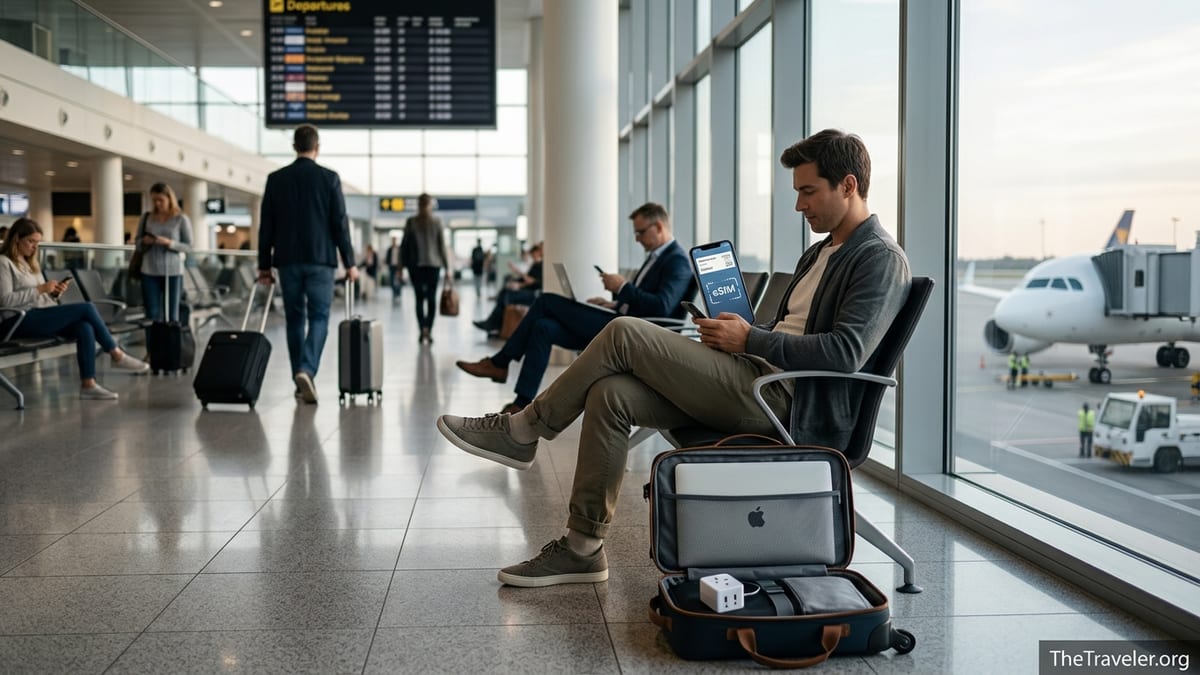
What Keepgo Is and How It Works
Keepgo is an international mobile virtual network operator that sells global data connectivity through eSIMs, physical SIM cards, and mobile hotspots. Instead of running its own cell towers, it partners with major carriers around the world and lets your device roam on those networks using prepaid data. For travelers, that means you can buy one data line and use it in multiple countries, rather than juggling local SIM cards in each destination.
Unlike many popular travel eSIM brands that focus on short validity periods such as 7, 15, or 30 days, Keepgo’s headline feature is its so‑called lifetime prepaid model. When you buy one of its lifetime data products and then add data bundles to it, that data does not have a built‑in expiration date as long as you keep the line active according to Keepgo’s terms. In everyday terms, you can top up once for a trip and keep any leftover data for future travel instead of losing it at the end of the month.
Keepgo currently focuses on data‑only connectivity for consumers. Its eSIMs and SIMs provide mobile data but do not include a phone number for traditional voice calls or SMS. Travelers who rely on WhatsApp, iMessage, FaceTime, Signal, or similar apps will find this familiar, while those who still need regular calls can combine Keepgo with Wi‑Fi calling on their home carrier or a separate VoIP service.
For digital nomads, frequent business travelers, and families who take one or two international trips a year, the main draw is the ability to keep the same Keepgo line in your device, refill it when you need more data, and avoid worrying that unused gigabytes will disappear between trips.
Keepgo’s Lifetime Prepaid eSIM: The Core Offer
The flagship product for most travelers is the Lifetime Prepaid Data eSIM, often branded on the site with constellation names or world eSIM labels. Technically, it is a data‑only eSIM that you install once on a compatible phone or tablet. After installation, you add prepaid data bundles that work in the countries covered by that particular eSIM product. Whatever data you add remains valid as long as you periodically keep the line active by refilling according to Keepgo’s rules, which at the time of writing generally means topping up before long periods of inactivity.
To understand how this plays out on an actual trip, imagine a traveler from Chicago planning a two‑week vacation to Italy and France. They purchase a Keepgo lifetime world eSIM before departure and load it with a modest bundle, for example a few gigabytes of data priced competitively with other travel eSIMs. Once they land in Rome, they switch mobile data to the Keepgo eSIM in their phone settings, and it connects to one of Keepgo’s partner networks, typically a major carrier in that country. When they take the train to Paris a week later, the same eSIM automatically roams onto a French partner network without the traveler needing a new SIM or another QR code.
Crucially, if that traveler uses only half of their data allowance during the trip, the unused data remains on their Keepgo balance. Six months later, when they fly to Mexico for a work conference, they can enable the same eSIM again, connect to a Mexican partner network, and keep using the leftover data. If they need more, they simply log into their Keepgo account and add another bundle. This is very different from many regional eSIMs that wipe all remaining data on a fixed end date.
The eSIM also supports hotspot tethering on most compatible phones, so that Chicago traveler could share their Keepgo data with a partner’s laptop in their Paris apartment, or with a child’s tablet in the backseat of a rental car in Tuscany. It behaves much like a standard local data plan, but the pricing reflects its international nature, so heavy users should still pay attention to how many gigabytes they buy.
Coverage, Devices, and Network Quality
From a coverage standpoint, Keepgo positions itself as a global provider, with consumer products working in many of the most visited countries in Europe, North America, Asia, and beyond. On its coverage lists, you will see major tourist destinations such as the United States, Canada, Mexico, most of Western Europe, several countries in Eastern Europe, parts of Asia and the Pacific, and popular long‑haul spots in the Middle East and Latin America. Rather than a single network in each country, Keepgo often accesses multiple partner operators so that your phone can connect to the strongest available signal where possible.
Coverage does vary by specific eSIM or SIM product. For instance, a world eSIM can work in a broad list of countries, while a lighter “Lite” or regional product may be restricted to around 100 or so destinations that cover the bulk of leisure and business travel traffic. A traveler primarily visiting the United States, United Kingdom, Germany, France, Japan, and Australia could choose a Lite version without noticing a difference, whereas someone doing overland trips through the Balkans or Central America would want to check the detailed country list on Keepgo’s site before buying.
On the device side, the lifetime eSIM is designed for unlocked smartphones and tablets that support eSIM, including recent models from Apple, Samsung, Google, and other major brands. Travelers using older devices without eSIM support can instead opt for a physical Lifetime World SIM card, which also runs on multiple networks and slips into an unlocked GSM phone, mobile hotspot, or even some LTE‑enabled tablets. In both cases, you manage the line and refills through a Keepgo web account rather than going into a physical store.
Network quality in practice will depend on local conditions and the partner networks. In major cities such as London, New York, Tokyo, or Paris, travelers can realistically expect 4G LTE and sometimes 5G speeds, enough for navigation, social media, video calls, and streaming. In remote areas, such as smaller islands, mountain villages, or stretches of rural highways, speeds can drop or coverage may be patchier, just as it would be with a local SIM. Keepgo’s advantage is that your phone is allowed to roam on more than one carrier in many countries, which can make a difference when one network is congested but another has better signal.
Pricing, Refills, and How the “Lifetime” Aspect Really Works
Keepgo’s pricing sits in the mid‑range of the travel eSIM market. You pay an initial amount to activate a lifetime eSIM or SIM, which typically includes a starter bundle of data, and from then on you add refills in gigabyte‑based increments. Exact prices vary by region and promotional period, but it is common to see small starter bundles that cost roughly the same as a casual restaurant meal in a major city, and larger bundles that reflect the cost of staying connected over multiple weeks or months of travel.
What makes the service distinctive is the no‑expiry design for data bundles under the lifetime plan. When you log into your Keepgo account and add data to a lifetime line, that balance stays available rather than expiring after 7, 14, or 30 days. The trade‑off is that the line itself needs to remain active, which practically means you should not neglect it for very long periods without any top‑up. Many travelers treat it a bit like a travel bank account: they add a small refill every so often to keep the line alive, even if they are not currently abroad.
For a real‑world example, consider a consultant who lives in Toronto and travels to clients in the United States and Europe three or four times a year. They might initially buy a lifetime eSIM with a few gigabytes of data, then top up by another small amount before each trip. They never worry about “using it up” before the end of a fixed validity window. When they fly to New York for a two‑day meeting, they may spend only a fraction of their balance on navigation, email, and ride‑hailing, then later consume the rest on a two‑week project in Germany. If a year passes without travel, they can still keep the line by doing a modest refill instead of losing everything.
Compared with local SIM cards, where 10 GB of data might be cheaper in a single country if you are willing to queue in a phone shop, Keepgo rewards those who spread their travel across many places and times. You pay for flexibility instead of rock‑bottom per‑gigabyte pricing. Compared with many global eSIM competitors that offer generous gigabyte packages but delete unused data after a set number of days, Keepgo is more forgiving to light and moderate data users who do not want the pressure of a ticking clock.
Activation, Daily Use, and Managing Your Line
Activating a Keepgo eSIM is straightforward but still worth planning a few minutes for. After purchase, Keepgo provides a QR code and setup instructions. On an iPhone, for instance, you open the Settings app, go to the mobile or cellular section, choose to add a new eSIM, and scan the QR code. On Android devices, the steps are similar through the mobile network settings. Once installed, you can toggle between your home SIM and the Keepgo eSIM, choose which one handles data, and decide whether calls and texts continue using your home carrier.
Most travelers choose to keep their home physical SIM set as the line for voice and SMS, turn off their home carrier’s data roaming, and then set Keepgo as the data line. That way, they can still receive security codes, bank alerts, and occasional SMS messages on their regular number while enjoying prepaid data abroad. When boarding a long‑haul flight, they may switch the Keepgo line off entirely, then re‑enable it after landing and picking up a local signal.
Everyday use is similar to any mobile data connection. You open maps in a new city, book rides from the airport, upload photos from a café, or join a video call from a coworking space. The main difference is that you keep an eye on your data balance rather than on days remaining. Keepgo’s account portal shows how much data you have left and lets you top up before or during a trip. If you run out while standing in a train station in Madrid, you can connect to public Wi‑Fi for a few minutes, log into your account, buy more data, and be back online on the mobile network without hunting for a store.
Managing the lifetime aspect also includes the option to deactivate lines when you know you no longer need them. In the Keepgo account interface, there is a lines section where you can select a particular eSIM or SIM line and permanently deactivate it. Doing so wipes the remaining balance and closes that line, which might make sense if you have accidentally created duplicate eSIMs or want to tidy up old devices. For most long‑term travelers, though, the usual pattern is to keep one or two lines active across multiple phones and simply move the physical SIM, or rely on eSIM on their main devices.
Strengths, Limitations, and How It Compares
The strongest argument in favor of Keepgo is predictability for repeated travel. You install it once, refill on your schedule, and re‑use leftover data, which removes the waste that many travelers experience with rigid validity windows. People who take sporadic trips to different parts of the world, such as a spring conference in Berlin, a summer road trip through the United States, and a winter holiday in Thailand, can keep one central data pool and not think about brand‑new eSIMs every time.
Another useful aspect is multi‑network access in many countries. When your phone is allowed to latch onto more than one local carrier, you gain resilience in crowded urban areas and in border regions where one network might be strong and another weak. This matters in practical situations: streaming a live translation feed from a museum tour in Paris, joining a video call from a hotel lobby in Dubai, or navigating unfamiliar roads in rural California can be smoother when your device is not locked to a single operator.
On the limitation side, Keepgo is strictly data‑only on the consumer lifetime products, so there is no local phone number included for standard calls and texts. Travelers who rely on traditional voice services, for instance to receive calls from hotels or local tour operators who are not comfortable with messaging apps, may need to combine Keepgo with Wi‑Fi calling on their home carrier or a low‑cost VoIP application. In addition, while the lifetime structure is generous, per‑gigabyte pricing is typically not the absolute cheapest available in any given country, so backpackers who stay in one country for a month at a time may still prefer a local SIM.
Compared with other major travel eSIM brands, which often sell multiple small, short‑term packages, Keepgo behaves more like a long‑term wallet. You put money into it occasionally, draw down on it across trips, and avoid repeated setup steps. Travelers choosing between providers should weigh this against features like unlimited data options, built‑in virtual phone numbers, or app‑only management. For example, someone focused solely on a single, two‑week road trip through Spain might prioritize the absolute lowest short‑term price, whereas a consultant who is on the road in different regions all year will likely appreciate not having their leftover data erased every few weeks.
Who Keepgo Suits Best (and When to Skip It)
Keepgo tends to work best for a few specific traveler profiles. First are frequent flyers who visit multiple countries over the course of a year and want a single, persistent data solution. Think of remote workers who split their time between Lisbon, New York, and Bali, or corporate travelers who shuttle between regional offices in London, Singapore, and San Francisco. For them, the effort saved by not hunting down a new SIM in every airport and the security of always having a pre‑configured data line ready to go outweighs the potential savings of localized deals.
Second are occasional travelers who dislike waste and prefer simplicity over micro‑optimizing costs. A family from Boston who takes one big international trip every summer and a shorter city break every winter can buy a lifetime eSIM, top up generously before the first trip, and then use the same balance on the second. Parents can also use Keepgo as a data‑controlled line for a teenager’s phone during travel, knowing exactly how many gigabytes are available.
Third are travelers who want a backup plan. Even those who rely primarily on local SIM cards or hotel Wi‑Fi often keep a Keepgo eSIM installed as an emergency option. If they arrive late at night in a foreign city and the airport kiosks are closed, they can instantly switch on the Keepgo eSIM, use ride‑hailing apps, and check in with family, then shop around for a local SIM the next morning. Some road trippers in North America also view Keepgo as a redundancy tool, because in certain rural areas a secondary network accessed through Keepgo might have coverage when their main carrier temporarily drops out.
On the other hand, travelers who stay for extended periods in a single country, such as language students living in Spain for six months or digital nomads spending an entire season in Vietnam, will typically save money over time with a local data plan. Likewise, those who must have a local phone number for frequent calls with landlords, employers, or government offices may need a traditional SIM regardless, and can then decide whether Keepgo adds enough extra flexibility to justify the cost.
The Takeaway
Keepgo’s eSIM and SIM service occupies a distinctive niche in the travel connectivity landscape. It is not the cheapest way to buy data in any one country, nor the flashiest when it comes to add‑ons, but it offers something many travelers quietly want: data they can buy once, keep as long as they maintain the line, and reuse across trips and continents without tangled fine print.
If your travel pattern involves repeated international trips to varied destinations, or you simply want a reliable backup that works in many of the places you might go, Keepgo’s lifetime eSIM and SIM products are worth considering. Take a few minutes to check the coverage list for your planned destinations, estimate how many gigabytes you realistically use in a week, and compare that cost to short‑term eSIMs and local SIM cards. For the right traveler, the comfort of landing anywhere with a working data line already set up can easily justify the price.
For others, particularly long‑stay visitors to a single country or those who absolutely need local phone numbers, Keepgo may be best seen as a secondary option rather than a primary connection. In either case, understanding exactly what the service offers and how its lifetime structure fits your habits will help you avoid unpleasant roaming surprises and stay connected on your own terms.
FAQ
Q1. Does Keepgo’s eSIM include a phone number for calls and SMS?
Keepgo’s consumer lifetime eSIM and SIM products are data‑only, so they do not provide a local phone number for traditional calls or text messages. Most travelers pair Keepgo with messaging apps such as WhatsApp, iMessage, or Signal and, if needed, with Wi‑Fi calling on their home carrier or a separate VoIP service.
Q2. Will my Keepgo data really never expire?
The data you add to a Keepgo lifetime plan is designed not to have a fixed validity period, but the line itself must remain active under Keepgo’s rules. In practice, that means you should periodically top up and avoid leaving the line dormant for long stretches. As long as you keep the line active, your remaining data balance carries over from one trip to the next.
Q3. How do I know if my destination is covered?
Before buying, you should check Keepgo’s coverage information for the specific eSIM or SIM product you are considering. Each lifetime plan includes a list of supported countries and partner networks. If you are planning a multi‑country trip, confirm that all major stops appear on that list so you can rely on a single line.
Q4. Can I share my Keepgo connection with other devices?
In most cases, yes. If your phone supports hotspot tethering and your destination’s network rules allow it, you can share your Keepgo data connection with a laptop, tablet, or another phone. Travelers often do this to let family members connect briefly in airports or hotel rooms without each person needing a separate data plan.
Q5. What happens if I run out of data during a trip?
If you use up your data balance, your mobile connection will stop passing traffic until you add more data. You can usually join a Wi‑Fi network at a hotel, café, or airport, log into your Keepgo account, and purchase an additional bundle. Once the refill is processed, your mobile data connection resumes using the new allowance.
Q6. Do I need to remove my home SIM to use Keepgo?
Most modern phones let you keep your home SIM in place while adding a Keepgo eSIM or inserting a Keepgo physical SIM in a secondary slot. Travelers typically keep their home SIM active for calls and texts, switch off home data roaming, and designate Keepgo as the data line. This setup allows you to receive important messages on your usual number while keeping roaming costs under control.
Q7. Is Keepgo cheaper than buying local SIM cards?
For long stays in a single country, a local SIM often works out cheaper on a per‑gigabyte basis. Keepgo becomes more competitive when you value flexibility: reusing data across multiple trips, moving between countries without changing SIMs, and avoiding the time and hassle of visiting local carrier shops. Many travelers accept slightly higher unit costs in exchange for that convenience.
Q8. Which travelers benefit most from Keepgo’s lifetime plans?
Frequent international travelers, digital nomads, consultants, and families who take several trips a year tend to benefit most. They can top up a Keepgo line periodically and reuse leftover data from one journey on the next. Occasional travelers who hate seeing unused data expire after short validity windows also appreciate the lifetime structure.
Q9. What if my phone does not support eSIM?
If your device lacks eSIM support, you can choose a Keepgo Lifetime World physical SIM card instead, provided your phone is unlocked and compatible with the necessary bands. You insert it like any other SIM, configure mobile data settings, and then manage your balance and refills online. This approach is especially useful for older devices or dedicated mobile hotspots.
Q10. How reliable is Keepgo’s network performance?
Keepgo relies on established partner carriers in each country, so performance largely reflects local network quality. In big cities and popular tourist regions, most travelers experience solid 4G LTE and sometimes 5G speeds suitable for navigation, streaming, and video calls. In remote or sparsely populated areas, speeds and coverage can be more limited, similar to what you would encounter with a local SIM card.