


More news on this day
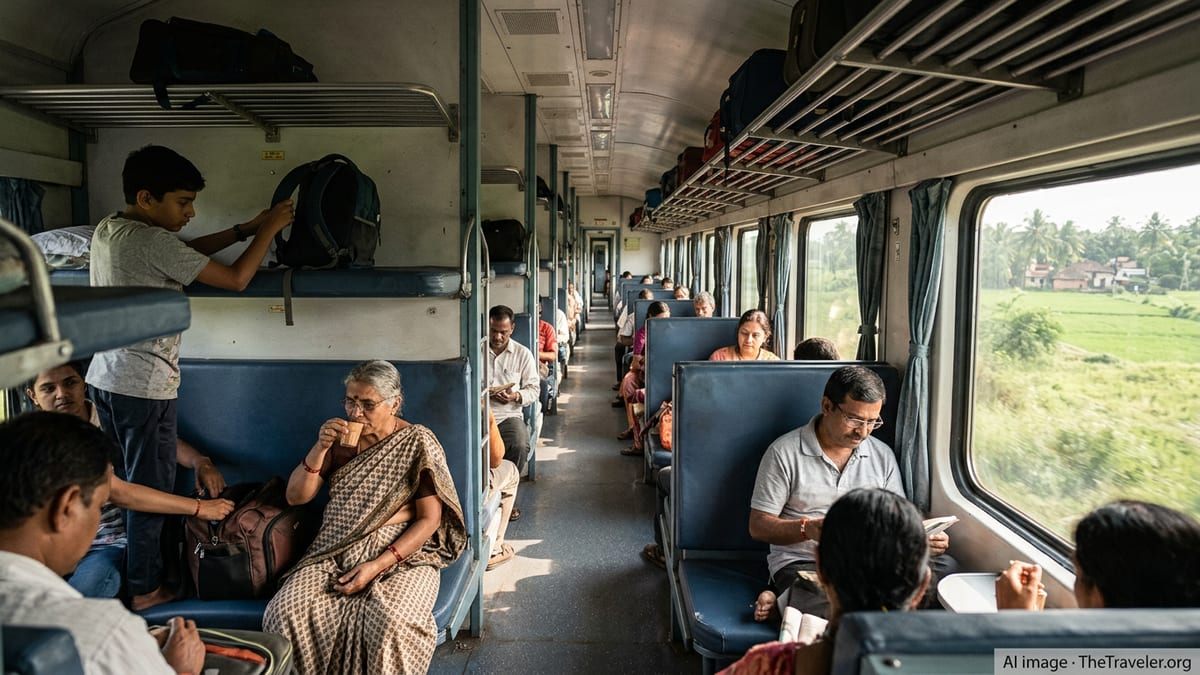
Ahead of Thiruvonam on August 26, 2026, Indian Railways is preparing for one of its busiest Onam seasons in years, with a wave of special trains and temporary capacity boosts being lined up to connect Kerala with major cities across India.
Get the latest news straight to your inbox!
Festive Calendar Sets Stage for Record Passenger Volumes
Kerala’s Onam celebrations in 2026 are clustered tightly around the last week of August, with Thiruvonam, the festival’s most important day, falling on Wednesday, August 26. State holiday schedules and tourism calendars show an extended period of public events and cultural programmes from roughly August 24 to August 30, creating a compact but intense travel window into and out of the state.
Publicly available festival listings from Kerala Tourism describe a dedicated “Onam Tourism Week” built around these dates, signalling coordinated cultural programming in Thiruvananthapuram, Kochi and other hubs. Combined with the pan-India appeal of Kerala’s backwaters, hill stations and beach destinations, this is expected to draw both returning Malayali migrants and domestic leisure travellers from metropolitan centres.
Past years have shown that demand for rail seats to Kerala typically spikes from about ten days before Thiruvonam, with heavy return traffic beginning just after the festival. Reports on previous Onam seasons highlight how regular long-distance trains running to Ernakulam, Thiruvananthapuram and Kozhikode often slip into long waitlists within hours of bookings opening, particularly from Bengaluru, Chennai, Hyderabad, Mumbai and Delhi.
Government documents and parliamentary answers on train operations have underlined how the Railways already treat Onam as a peak-load period comparable to other major Indian festivals, citing dozens of special-train trips in earlier years to manage the surge. Operators are now expected to scale up that model for 2026, in line with rising Kerala-bound tourism and migrant traffic.
Network of Special Trains Extends Beyond Southern Railway
In the run-up to Onam 2026, Southern Railway is emerging as the primary driver of festival specials into Kerala, drawing on precedents from recent seasons when it ran additional services between cities such as Chennai, Bengaluru, Mangaluru and Thiruvananthapuram. Coverage in regional media has already pointed to new temporary links on corridors like Chennai Egmore to Mangaluru, Chennai Central to Kollam and Thiruvananthapuram Central to Tambaram aimed at easing holiday congestion.
Railway notices and regional reporting also indicate renewed focus on the high-demand Bengaluru to Kerala sector, where earlier Onam seasons saw weekly specials to Kochuveli and other termini. Those services, typically operated as fully reserved specials with a mix of AC and sleeper coaches, are being treated as templates for 2026 as planners work to stitch together longer seasonal runs and additional weekend departures.
Beyond Southern Railway’s core territory, the broader Indian Railways network is expected to contribute inter-zonal specials from western and northern India. Past official releases on Onam operations have recorded dedicated trains linking Banaswadi and Ernakulam, along with festival specials from Mumbai and Gujarat towards Kerala. Railway-watchers and passenger forums anticipate a similar pattern this year, with Western, Central and South Central Railway zones likely to schedule targeted specials feeding into Kerala’s main junctions.
Railway circulars describing summer and festival specials in 2026 suggest that Onam services will follow the same broad design: limited-period trains with fixed trip counts, often operating overnight or over two days, and routed through key interchange stations such as Renigunta, Erode and Shoranur. The objective is to create additional capacity while avoiding long-term timetable changes on saturated corridors.
Kerala Tourism Campaigns Add Pressure on Rail Capacity
The expected rail rush is closely intertwined with Kerala’s efforts to market Onam as a signature tourism experience. Kerala Tourism’s 2026 digital event calendar and publicity materials present Onam Week as a showcase of traditional arts, floral decorations, boat races and culinary events, anchored in Thiruvananthapuram but mirrored in towns across the state.
These tourism campaigns have expanded Onam’s reach beyond Malayali communities to a broader domestic audience, spurring more first-time visitors who often see rail travel as the most economical option. Online travel discussions and meet-up forums already show plans by domestic travellers to align holidays with Onam week, with itineraries that combine festival experiences with visits to popular destinations such as Alappuzha backwaters and Munnar.
The combination of returning residents and new tourists creates a pronounced two-way flow: inbound trains into Kerala typically pack out just before Thiruvonam, while outbound services experience intense demand in the following days as travellers connect onwards to other Indian cities. In previous years, this pattern has occasionally exposed gaps in capacity planning, with complaints about long waiting lists and limited special trains to northern Kerala in particular.
For 2026, the visibility of Kerala’s tourism calendar well in advance is giving Indian Railways a clearer planning horizon. Stakeholder commentary suggests that the coordination between tourism promotion and festival special services is becoming more deliberate, with planners using projected event attendance to estimate load on specific routes and days.
Migrants, Students and Working Professionals Drive Nationwide Demand
The backbone of the Onam travel boom remains Kerala’s sizeable migrant community living in other Indian states. Cities such as Bengaluru, Chennai, Hyderabad, Mumbai, Pune and Delhi are home to large Malayali populations who typically return in significant numbers for the festival, often booking rail tickets months in advance when the reservation window opens.
In public forums and social media discussions, these travellers frequently highlight the challenge of securing confirmed seats on popular trains, particularly on the Bengaluru, Chennai and Hyderabad corridors. Some accounts describe tickets being snapped up within minutes of opening, with many turning to special trains, connecting routes or even circuitous journeys via intermediate hubs to reach their hometowns in time for Thiruvonam.
Students and early-career professionals are another crucial segment shaping demand patterns. With university and corporate leave calendars often clustering around the same late-August period as Onam, there is a strong bias towards overnight and weekend trains that minimise time off work or study. This compresses demand into a handful of days on either side of the festival, making special trains and extra coaches particularly important in those windows.
Indian Railways’ seasonal planning documents and parliamentary responses have in past years acknowledged this migrant-driven spike, citing dozens of Onam-related special train trips as a response to requests from public representatives. Analysts expect similar or larger volumes in 2026, especially on routes linking Kerala with technology hubs and northern metros.
Operational Strategies: Extra Coaches, New Routes and Digital Bookings
Handling the 2026 Onam travel boom is pushing Indian Railways to deploy a mix of operational strategies rather than relying solely on a small number of festival specials. Railway zone releases for earlier seasons show that attaching extra coaches to existing long-distance trains has been a common tactic, often adding AC three-tier and sleeper coaches to popular services bound for Ernakulam, Thiruvananthapuram and Kozhikode.
Reports on festival operations also point to experiments with new temporary routes, including special trains connecting Kerala with cities such as Hyderabad, Tirupati and Ahmedabad. Rail enthusiasts have noted instances where such specials run via shorter alignments through Tamil Nadu to save time and free capacity, while still offering direct Kerala connectivity during peak periods.
Digitisation of ticketing is another important dimension of the 2026 plan. Over the past few seasons, online booking platforms and mobile apps have become the primary channel for reserving seats, particularly for tech-savvy travellers in metropolitan areas. Observers suggest that this shift allows the Railways to monitor booking trends in real time and to decide more quickly when additional specials or extra coaches are warranted for specific dates.
Even with these measures, passenger forums anticipate that Onam 2026 will test the limits of the rail network in and around Kerala, given infrastructure constraints and high baseline occupancy. The scale of the special-train programme across India will therefore be closely watched as a barometer of how effectively Indian Railways can respond to concentrated festival demand while maintaining regular services for the rest of its vast passenger base.