


More news on this day
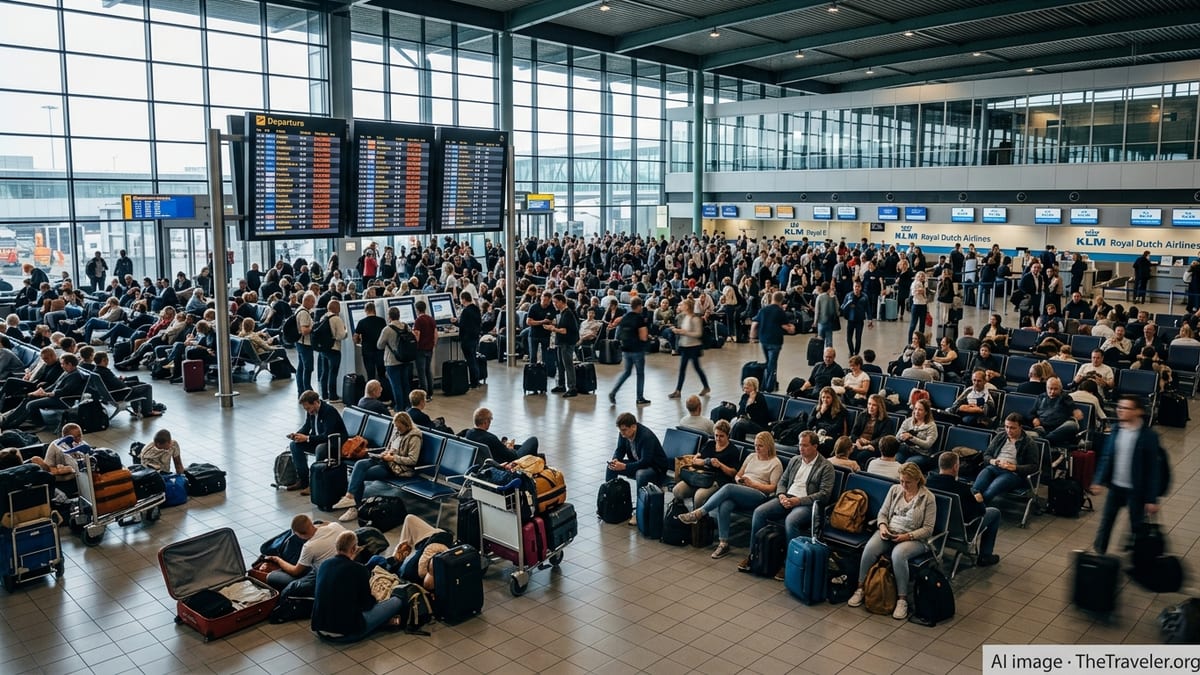
Travelers across Europe faced significant disruption after KLM scrubbed 14 flights and delayed at least 64 more, snarling connections through major hubs such as Amsterdam, Paris and Zurich and affecting popular leisure routes including Budapest and Malaga.
Get the latest news straight to your inbox!
Wide Ripple Effect From a Concentrated Disruption
According to operational data compiled by flight disruption tracking services, KLM’s latest wave of irregular operations saw 14 flights canceled outright and dozens more delayed beyond three hours, a threshold that is often used by passenger rights services to classify severe disruption. The pattern, centered on the carrier’s Amsterdam Schiphol hub, created knock-on effects across the network as aircraft and crew rotations fell out of sync.
Publicly available performance metrics show that just under two thirds of KLM flights arrived on time over the most recent 24 hour period, meaning more than one in three passengers experienced some form of delay. While the majority of these delays were under three hours, the cluster of longer disruptions triggered missed connections and forced last minute rebookings for travelers transiting through Amsterdam, one of Europe’s busiest connecting hubs.
As aircraft were reassigned and schedules compressed, disruption radiated out from the Netherlands into neighboring markets, with services touching France, Switzerland, Hungary and Spain among those affected. The combination of canceled departures and late arrivals complicated crew scheduling and gate availability, further slowing recovery through the day.
Specialist passenger rights platforms report that operational issues, including late incoming aircraft and airspace congestion, continue to be leading causes of such disruptions for European carriers. Although individual flight histories vary, the cumulative result for travelers on this occasion was a day of widespread uncertainty and extended journey times.
Amsterdam, Paris and Zurich Feel the Strain
Amsterdam Schiphol, KLM’s primary base, bore the brunt of the cancellations and delays. A cluster of impacted flights either originated from or were destined for Amsterdam, meaning that even passengers not flying with KLM but connecting through the airport encountered knock on effects such as crowded terminals and longer queues at transfer desks. Disruption at a hub of this scale can reverberate across Europe within hours.
In Paris, where KLM’s partner Air France operates its own extensive network, schedule changes cascaded through codeshare and feeder services. Publicly available timetables show adjusted departure times on several joint network routes, suggesting that carriers were working to re balance capacity and protect as many connections as possible for long haul passengers.
Zurich, another key European gateway, also registered irregular operations on services linked to Amsterdam. Some travelers reported same day rebookings or reroutes via alternative hubs, while others faced overnight stays when onward connections could not be maintained. These patterns are typical when a single hub experiences concentrated disruption, as airlines prioritize long haul connectivity and then rebuild short haul frequencies as aircraft and crew become available.
Despite the operational challenges, core long haul corridors from Amsterdam, Paris and Zurich continued to operate, albeit in some cases with delayed departures. Published flight tracking data indicated that transatlantic and intercontinental flights were generally preserved, underscoring the airline strategy of safeguarding high demand long range services while flexing short haul schedules more aggressively.
Budapest, Malaga and Leisure Routes Hit at the Start of Summer
Beyond the major hubs, KLM services to leisure destinations such as Budapest and Malaga were among those affected, with travelers at the start of the busy summer season facing revised itineraries. For some passengers, this meant departing later in the day than planned; for others whose flights were among the 14 cancellations, itineraries had to be rebuilt around alternative dates or connecting points.
Publicly available network data suggests that point to point leisure routes can be more vulnerable during disruption events because they often operate with fewer daily frequencies. When a single rotation between Amsterdam and a secondary city is canceled, there may be limited same day alternatives on the same carrier, forcing passengers to connect via other hubs or delay travel by a day or more.
In markets such as southern Spain and Central Europe, where multiple airlines compete on similar routes, some travelers were able to secure space with other carriers. However, the short notice and peak season demand meant that remaining seats were often scarce or priced at a premium, adding a financial burden to the inconvenience of disrupted plans.
Tourism operators and hotels in affected cities typically feel a secondary impact when large numbers of guests arrive many hours late or not at all. While the latest KLM disruption appears relatively limited compared with large scale strike or weather events, it highlights the sensitivity of leisure travel flows to even modest schedule changes at major hubs.
Passenger Rights, Compensation and Rebooking Options
KLM’s published guidance on travel alerts emphasizes that passengers whose flights are canceled or significantly delayed can rebook via the airline’s website, mobile app or customer service channels. The carrier highlights options such as changing travel dates without additional fees in certain situations, requesting travel vouchers or seeking full refunds when flights do not operate as scheduled.
Under European Union air passenger protections, travelers departing from or arriving in the European Union on an EU based airline may be eligible for compensation if their flights are canceled at short notice or arrive more than three hours late, provided the disruption is not caused by extraordinary circumstances. Consumer advisory platforms note that compensation levels can range from modest sums on shorter routes to several hundred euros on longer sectors.
Passenger rights organizations advise travelers affected by the latest KLM cancellations and delays to retain boarding passes, booking confirmations and receipts for any additional expenses such as meals or accommodation. These documents are often required when submitting claims for reimbursement or compensation through airline channels or national dispute resolution bodies.
Several independent services that monitor airline punctuality and assist with EU compensation processes report an uptick in KLM related claims corresponding with the cluster of 14 cancellations and 64 major delays. While each case depends on specific circumstances, the volume of claims underlines the extent to which even a relatively short period of disruption can generate lasting administrative and financial consequences.
How Travelers Can Reduce the Impact of Future Disruptions
Recent events underscore the importance for passengers of monitoring flight status closely on days when operational performance is strained. KLM encourages travelers to use its app, text message alerts and email notifications to stay informed about gate changes, revised departure times or cancellations, allowing more time to adjust plans and explore alternative routings where necessary.
Travel advisors frequently recommend building longer connection windows when transiting through major hubs such as Amsterdam, Paris or Zurich, especially during peak seasons or in regions prone to air traffic congestion. A buffer of two to three hours between flights can help protect against missed onward connections when earlier segments suffer moderate delays.
Booking flexible fares or adding travel insurance that explicitly covers delays and cancellations can also mitigate the financial risks associated with disruption. Policies that reimburse additional accommodation and meal costs or cover non refundable ground arrangements such as tours and event tickets can be particularly useful when cancellations occur close to departure.
The latest KLM schedule disruption, while moderate in scale, serves as a reminder that even established European hubs are vulnerable to operational shocks. For many travelers, combining real time monitoring tools with conservative connection planning and clear knowledge of their rights offers the best protection against the cascading effects of canceled and delayed flights.