


More news on this day
Kazakhstan’s low cost carrier FlyArystan is rapidly expanding its network of routes to China, adding new connections and capacity that industry observers say are reshaping travel flows, tourism prospects and cross border economic activity between the two countries.
Get the latest news straight to your inbox!
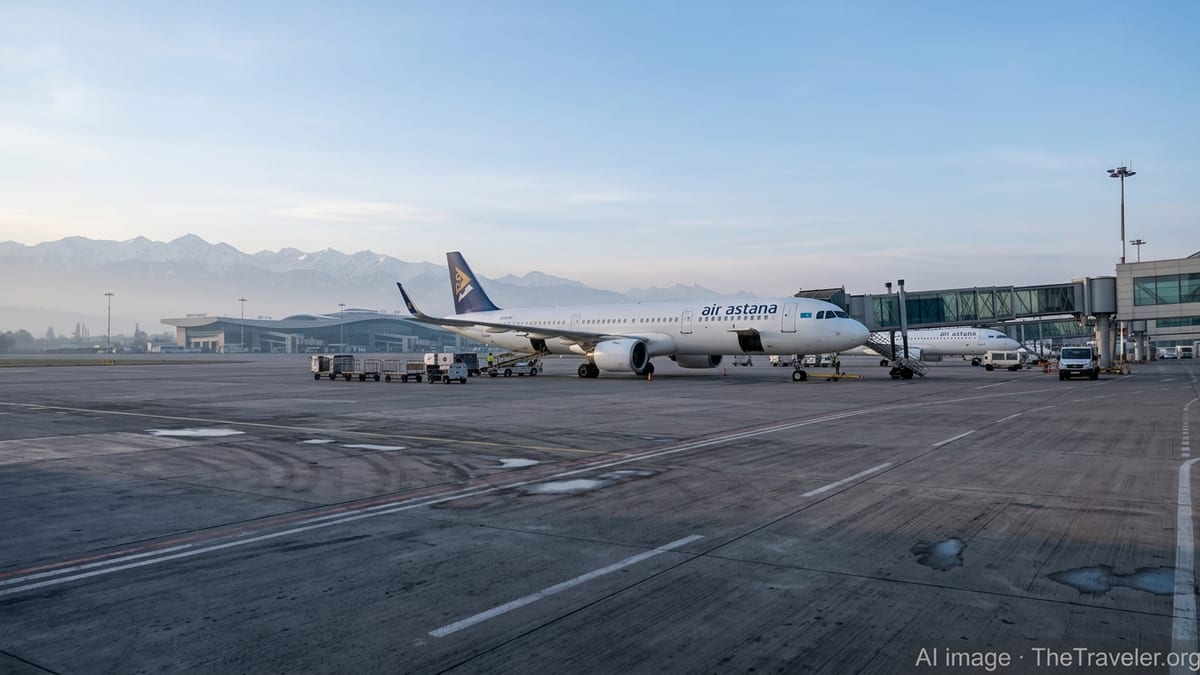
New Routes Link Kazakh Cities With Emerging Chinese Gateways
Publicly available information from the airline shows that FlyArystan has steadily built a China portfolio that now includes routes linking Astana and Almaty with key cities across the Xinjiang Uygur Autonomous Region and inland China. The carrier resumed Astana to Urumqi services and later added Almaty to Yining flights, creating short hop links across the border that significantly cut journey times for travelers compared with previous multi stop itineraries.
Most recently, FlyArystan has launched ticket sales and promotional fares for additional China connections, including services from Aktau to Urumqi and a new Almaty to Xi’an route. The Xi’an flights are scheduled to begin operations at the end of June 2026, extending Kazakhstan’s low cost access deep into central China and complementing existing cross border capacity provided by the wider Air Astana Group.
According to published coverage and company announcements, these developments are part of a broader effort to position Kazakhstan as a more accessible gateway between China, Central Asia and the Caucasus. By using narrow body Airbus A320 family aircraft on relatively short sectors, FlyArystan can offer increased frequency and competitive fares while keeping operating costs under control.
Industry analysts note that the new routes are arriving as demand for travel between western China and Kazakhstan continues to rise, driven by labor mobility, cross border trade, education and tourism. Shorter, point to point links make it easier for passengers from secondary cities to avoid backtracking through major hubs and instead travel directly between regional centers.
Boost to Tourism and Cross Border Leisure Travel
The expansion of FlyArystan’s China network is expected to support two way tourism flows by making short breaks and regional trips more affordable. Routes such as Almaty to Yining and Astana to Urumqi open direct access to culturally and geographically rich areas that have historically been harder to reach on a budget, including mountain regions, markets and historic Silk Road towns on both sides of the border.
Travel industry commentary suggests that low fares and increased seat capacity are particularly important for price sensitive leisure travelers and visiting friends and relatives traffic. The carrier’s promotional campaigns on China routes, including limited time special fares, underline an effort to stimulate demand outside peak holiday periods and encourage first time international travelers in Kazakhstan’s regional cities.
Tour operators in Kazakhstan and China are reported to be adapting their products to the new air links, adding short itinerary packages that combine flights with local accommodation and excursions. These offerings typically focus on nature tourism, shopping and cultural experiences, reflecting strong interest in cross border city breaks and regional sightseeing rather than only long haul, multi country tours.
For Chinese visitors, greater connectivity to Almaty, Astana and western Kazakhstan enhances access to ski resorts, national parks and historic sites, supporting the authorities’ broader objective of raising international visitor numbers. For Kazakhstan residents, the additional frequencies to Chinese destinations expand options for medical travel, retail tourism and educational visits at a lower cost than many long haul alternatives.
Strengthening Kazakhstan’s Role as a Regional Air Hub
FlyArystan’s China expansion is closely tied to Kazakhstan’s ambition to develop Astana and Almaty as regional aviation hubs for Central Asia. Publicly available corporate disclosures from the Air Astana Group highlight a strategy of using the low cost carrier to connect secondary cities to hub airports, where passengers can transfer to further domestic or international flights.
On the Astana to Urumqi route, for example, FlyArystan schedules are aligned to allow same day connections from multiple Kazakh cities and a small number of neighboring markets. This model effectively feeds China bound traffic through Astana while also making it practical for Chinese travelers to reach destinations such as Shymkent, Kostanay or Atyrau with a single stop.
Analysts tracking the region note that the combined capacity of Air Astana and FlyArystan between Kazakhstan and China has increased substantially over the past two years. The group has reported a rise in total weekly flights on China routes compared with 2025, indicating that demand on both the full service and low cost segments is supporting continued growth.
The low cost carrier’s dedicated air operator certificate, obtained in 2024, is cited in industry reports as a key enabler of this expansion. Operating under its own certificate allows FlyArystan to scale its fleet and network planning more flexibly within the group, supporting targeted growth in high potential markets such as China while maintaining a distinct cost structure and brand positioning.
Economic Opportunities Along the Modern Silk Road
Beyond tourism, FlyArystan’s new China routes carry wider economic implications for Kazakhstan’s western regions and trade oriented cities. More frequent and affordable passenger flights often stimulate small business activity by simplifying travel for traders, service providers and entrepreneurs who regularly cross the border for sourcing, meetings and exhibitions.
Western Kazakh hubs like Aktau, which already serve as important logistics and energy centers, stand to benefit from direct links to Urumqi and other Chinese cities. Improved air connectivity can complement rail and road corridors associated with China’s Belt and Road initiatives, helping to diversify the flow of people and potentially drawing more investment into hospitality, retail and service sectors.
Economic reports on Kazakhstan’s aviation sector point to air transport as a growing contributor to national GDP, with low cost carriers playing an increasingly significant role in stimulating mobility and regional development. As FlyArystan adds China routes, local airports may see higher passenger volumes, which in turn supports jobs in ground handling, security, catering and tourism services.
Observers also highlight the potential for closer educational and cultural exchanges as travel becomes more accessible. Universities, cultural institutions and business associations gain additional options for organizing delegations and joint programs, while communities along the new routes may benefit from twinning arrangements, festivals and other people to people initiatives that build on the renewed connectivity.
Competition, Capacity and the Outlook for Regional Connectivity
The rapid build out of routes between Kazakhstan and China is occurring in a competitive environment where carriers from both countries are seeking to capture growing traffic volumes. FlyArystan’s focus on low fares and point to point links positions it differently from full service operators, but market observers suggest that disciplined capacity management will be important to sustain load factors and profitability on new routes.
Fleet growth at FlyArystan, including the induction of additional Airbus A320 family aircraft, has provided the physical capacity to open new international services while maintaining domestic coverage. However, financial analyses of the Air Astana Group note that revenue growth at the low cost arm has recently moderated relative to earlier years, indicating a maturing phase in which network optimization and ancillary revenue development could become priorities.
For passengers, the near term outlook is broadly positive. Expanded choice on China routes, more departure points within Kazakhstan and a mix of low cost and full service options are likely to keep fares competitive and improve schedule flexibility. As infrastructure at Kazakh airports continues to upgrade, the overall travel experience on these cross border links is expected to improve further.
Looking ahead, aviation and tourism analysts will be watching how quickly demand responds to the newest services, particularly the planned Almaty to Xi’an and Aktau to Urumqi routes. If uptake is strong, FlyArystan’s China strategy could serve as a template for further expansion along the broader Silk Road corridor, deepening Kazakhstan’s role as a regional bridge between East and West.