


Staring at the ferry map and trying to decide between Korčula and Hvar is one of the classic Croatian travel dilemmas. Both are gorgeous Dalmatian islands with stone Old Towns, clear water and excellent food, yet they deliver very different trips once you arrive. Whether you are planning a party-heavy week with friends, a slow honeymoon of wine and swimming, or a relaxed family holiday, choosing the right island will shape your entire Croatia experience.
Get the latest updates straight to your inbox!
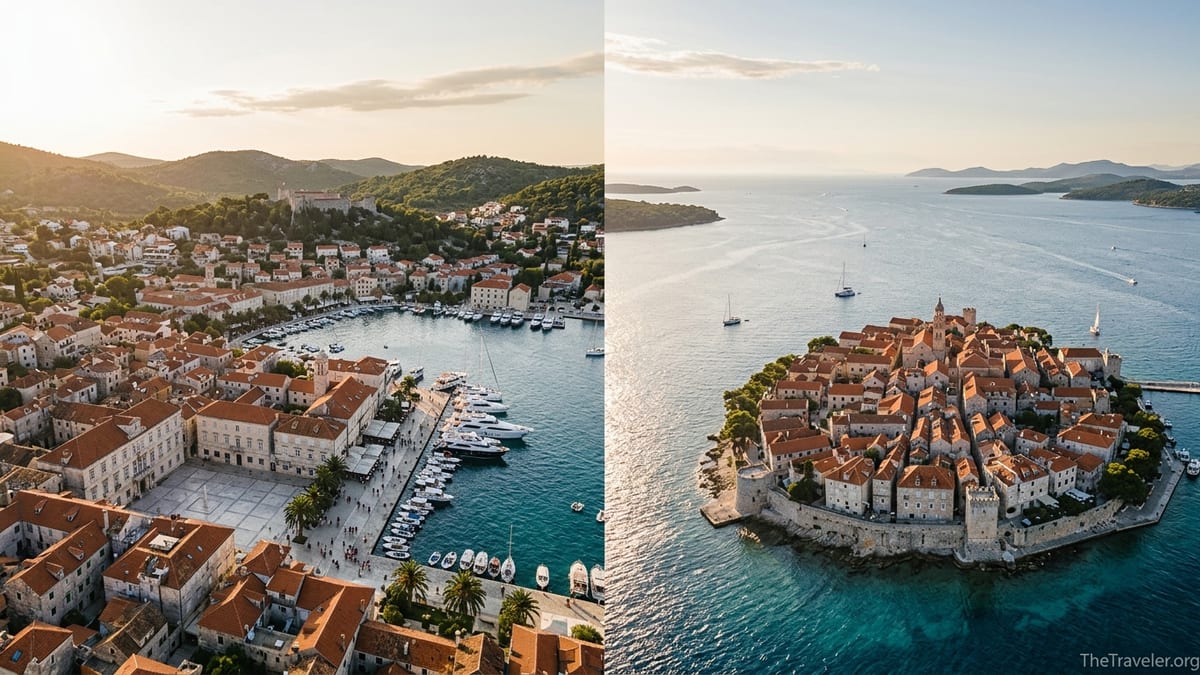
Korčula vs Hvar in a Nutshell
If you stripped the brochures down to a single line, Hvar is Croatia’s glamorous beach-party island with a lively historic town attached, while Korčula is the quieter, more traditional island where stone alleys, vineyards and low-key coves take center stage. Hvar Town fills with yachts, sunset cocktails and beach clubs in July and August, while Korčula Town feels more like a lived-in medieval village that just happens to welcome visitors.
In practical terms, Hvar suits travelers who want energy: late-night bars, day parties at places like Hula Hula Beach Bar and Carpe Diem Beach, and quick catamarans from Split that make it easy to slot the island into a fast-paced itinerary. Korčula suits travelers who value atmosphere, food and wine, and a calmer pace, with evenings spent at family-run konobe in the Old Town or at winery tastings in Lumbarda instead of at the bar until 3 a.m.
The price gap is real. In peak summer, a central double room in Hvar Town can easily cost noticeably more than a similar guesthouse in Korčula Town, and cocktails in Hvar’s waterfront bars often start in the low teens in euros. On Korčula, a glass of excellent local Pošip or Grk wine in a small bar along the walls is often several euros cheaper, and restaurant menus feel less inflated once you step just outside the historic core.
Ferry logistics also play a role. Hvar, particularly Hvar Town and Stari Grad, is tightly plugged into the network of catamarans and car ferries from Split and Dubrovnik, with multiple daily departures in high season. Korčula has good links too, both directly by catamaran and via the short car ferry from Orebić on the Pelješac Peninsula, but moving on and off the island usually takes a touch more planning and a little extra time.
Old Town Charm and Atmosphere
Korčula’s Old Town is one of the most photogenic on the Adriatic. The compact peninsula of honey-colored stone houses and orange tiled roofs projects out into the sea, ringed by medieval walls and towers. Inside, a thoughtful street plan channels breezes through narrow lanes, and in the evening you can wander past tiny wine bars tucked into the fortifications or catch a traditional Moreška sword dance performance on summer nights. It feels like a working town as well as a tourist draw, with schoolchildren biking home and locals doing errands along with visitors.
Hvar Town’s historic center is beautiful but different in mood. The huge marble main square opens onto the waterfront, framed by the St. Stephen’s Cathedral and watched over by the hilltop Španjola Fortress. The alleys behind the Riva are full of restaurant terraces and small boutiques, and the stone architecture is every bit as atmospheric in the narrow backstreets. Yet the waterfront is dominated by hotel terraces, lounge bars and people dressed for the evening scene, especially in July when many arrive straight from Split’s Ultra Europe festival.
If you like to get lost in quiet medieval streets and sit on low stone walls with an ice cream, Korčula Town has the edge. By 22:30 in peak summer, many of its streets are still lively but rarely overwhelmed. You can climb the bell tower for sunset and then sit at a modest bar along the seafront with a glass of local wine without needing to reserve. In Hvar Town, especially in high season, the Riva starts to feel more like an open-air catwalk, and much of the crowd is already thinking about which bar or club they will hit later.
For travelers who want some atmosphere but not a full-on party, Hvar does offer alternatives to the central scene. Staying uphill above the harbor or basing yourself in nearby villages such as Vrboska or Jelsa gives you access to Hvar’s architecture and restaurants without being in the middle of the late-night crush. Still, for pure Old Town charm combined with relative calm, Korčula typically wins.
Nightlife and Evening Scene
When it comes to nightlife, Hvar is in a different league from almost any other Croatian island. The classic Hvar evening might start with sunset drinks at Hula Hula Beach Bar just west of town, continue with a late dinner on the main square, then a boat out to Carpe Diem Beach on a tiny offshore islet for dancing under the pines until the small hours. Bars like Kiva, Nautica and Central Park Club add to the mix, and in July and August it can feel like the entire town is dressed for a night out.
This intensity has pros and cons. If you are a group of friends in your twenties or thirties looking for long nights and easy opportunities to meet other travelers, Hvar Town is a straightforward pick. You can arrive by afternoon catamaran from Split, check into a centrally located apartment, and walk to every bar and club without worrying about taxis. On the other hand, prices match the scene, with cover charges or table minimums at some venues and cocktail prices closer to those in big Western European cities than in much of the rest of Croatia.
Korčula’s nightlife is modest and more about lingering on terraces than nightclub hopping. You will find several bars with sea views along the walls of the Old Town, a handful of late-opening spots playing music, and occasional live performances or DJ nights in summer, but very few visitors come here to party until dawn. A typical Korčula evening might involve a slow waterfront stroll, dinner at a konoba serving grilled fish and local olive oil, and a nightcap in a small wine bar before walking home through quiet streets.
Families, couples who like early starts, and travelers who prioritize good sleep and early ferries often find Korčula’s softer nightlife more appealing. If you are easily disturbed by late-night noise, staying directly on Hvar Town’s Riva in July may not be ideal, whereas a guesthouse on Korčula’s western promenade or in nearby Lumbarda will usually be peaceful by midnight even in peak season.
Beaches, Swimming and Day Trips
Neither Korčula Town nor Hvar Town has long sandy beaches right in the center, but both offer excellent swimming from rocky coves and short boat rides away. Hvar has the advantage of the Pakleni Islands, a chain of low, pine-covered islets scattered just off the town. Water taxis shuttle back and forth all day in high season, landing at spots like Palmižana where you can mix a swim in turquoise coves with lunch at chic restaurants and visits to beach clubs with sunloungers and DJ sets.
On Hvar itself, popular swimming spots include the rocky coves near Hula Hula and the pebble beaches around Pokonji Dol, as well as family-friendly stretches around Jelsa and Vrboska further along the coast. Many visitors rent a small motorboat for the day to explore inlets at their own pace, or join organized boat trips to the Blue Cave on Biševo and the Green Cave near Vis, which frequently depart from Hvar Town in summer.
Korčula’s beaches are more low-key but often quieter. Around Korčula Town, you will find small pebble coves within walking distance, while a short boat hop takes you to the islets of Badija and Vrnik where you can swim off stone quays or from small beaches backed by pine trees. On the eastern side of the island, Lumbarda is known for its rare sandy bays, including shallow beaches that are particularly good for children learning to swim.
Beyond beaches, Korčula offers easy access to vineyards and rural landscapes. Many travelers combine a day of swimming in Lumbarda with visits to local wineries serving Grk and Pošip, often pairing tastings with simple plates of cheese and cured meats. Day trips by catamaran to Mljet National Park or by car and ferry to the Pelješac Peninsula for wine tasting and oyster farms round out the picture. Hvar, in contrast, is more focused on its own island and on full-day boat trips rather than on quick hops to neighboring wine regions.
Prices, Accommodation and Eating Out
Hvar Town has some of the highest seasonal prices on the Croatian coast. In July and August, mid-range hotels and apartments with central locations can book out early, and it is common to see nightly rates that are considerably higher than what you might pay in Split, Šibenik or on nearby islands such as Brač. Seafront hotel terraces serving cocktails at sunset cater heavily to a yacht and festival crowd, and restaurant menus on the Riva reflect that clientele.
Visitors on a tighter budget can still do Hvar without breaking the bank, but it takes more planning. Booking apartments uphill from the harbor or staying in Stari Grad, Jelsa or Vrboska brings prices down considerably compared with the main town. Cooking some meals at home and choosing simple konobe on side streets rather than the flashier Riva restaurants also helps keep costs sane, and grocery prices in local markets are not dramatically higher than on the mainland.
Korčula generally feels more forgiving on the wallet, especially once you step a street or two back from the waterfront. In Korčula Town, you will find family-run guesthouses inside historic buildings, small boutique hotels with only a dozen or so rooms, and apartments on the surrounding hillsides. Many offer sea views at rates that would be difficult to find in Hvar Town at the height of summer, and shoulder-season stays in May, June or September can be particularly good value.
When it comes to food, both islands have excellent seafood and Dalmatian classics, but Korčula has a particularly strong wine culture. Restaurants commonly highlight local Pošip from the Smokvica area and Grk from Lumbarda, and several wineries open their doors to visitors for tastings in the late afternoon. On Hvar, you will also find local wines, primarily Plavac Mali reds from the island and nearby Pelješac, but the emphasis in many seafront venues leans more toward cocktails and bottle service than careful wine lists.
Ferries, Connections and Getting Around
Hvar is one of the best connected Croatian islands. Catamarans run frequently between Split and Hvar Town in high season, with several departures a day on services operated by companies such as Jadrolinija, Kapetan Luka and others. These high-speed boats typically take around an hour and are geared toward foot passengers, making Hvar an easy island to visit even if you are not renting a car on your trip.
For those bringing vehicles, the main car ferry port for the island is Stari Grad, about a 20 minute drive from Hvar Town. Throughout the summer, multiple daily ferries operate between Split and Stari Grad, and buses connect the port with Hvar Town to match arrivals and departures. There are also seasonal catamaran routes linking Hvar with islands like Brač and Korčula and with Dubrovnik, allowing island-hopping itineraries without returning to the mainland.
Korčula is somewhat more spread out in terms of its ports. Passenger catamarans call directly at Korčula Town on routes between Split and Dubrovnik, which makes it possible to travel all the way from Dubrovnik to Korčula and onward to Hvar or Split on through services in the main summer months. For drivers, the most common entry point is via the short car ferry between Orebić on the Pelješac Peninsula and Dominče near Korčula Town, a crossing that takes only around 15 minutes and runs many times per day in season.
Once you are on the islands, local buses and taxis connect the main settlements, but schedules thin out significantly outside July and August. On Hvar, many visitors without cars base in Hvar Town and rely on water taxis and occasional bus rides, while on Korčula renting a car, scooter or e-bike for at least a day or two is popular to reach beaches and wineries around Lumbarda and the central villages. In both cases, planning around the latest ferry timetables and booking peak-season departures in advance is sensible.
Best Island for Couples, Families and Different Travel Styles
For couples, both islands can be excellent but for different moods. If you picture rooftop cocktails, stylish beach clubs, and dressing up for dinner along the Riva, Hvar Town checks all the boxes. It works especially well for short breaks, like a three-night stop between Split and Dubrovnik that focuses on sunsets, boat trips and one or two late nights. On the other hand, if your ideal couple’s trip is more about wandering quiet alleys, lingering over long dinners and spending afternoons between vineyards and sheltered coves, Korčula usually delivers a more romantic, less pressured atmosphere.
Families with young children often find Korčula easier. The pedestrian-friendly Old Town, shallow sandy beaches around Lumbarda, and generally calm evenings suit parents who want to stroll with a gelato without navigating through crowds heading for bars. Self-catering apartments are common, playgrounds sit right along the waterfront promenades, and day trips, such as a short boat ride to Badija for a picnic and swims, are simple to organize.
Hvar can also work for families, especially if you stay away from the noisiest parts of Hvar Town and consider bases like Stari Grad, which has a slower feel and easy access to pebble beaches by bike or on foot. Outside July and early August, when the party atmosphere is at its peak, Hvar Town itself softens considerably and can be a pleasant base even with kids, but parents should be ready for crowds and higher prices in the school-holiday weeks.
Solo travelers and groups of friends who want social energy, organized boat trips, and plenty of bars where it is easy to start conversations naturally lean toward Hvar. Travelers who value authenticity, local culture and a sense that tourism is layered onto an existing community, rather than dominating it, usually come away preferring Korčula. In many itineraries, the best compromise is to visit both: a few nights in Hvar for its buzz, followed by several quieter days on Korčula to decompress.
The Takeaway
Choosing between Korčula and Hvar is less about which island is objectively better and more about which island fits the way you like to travel. Hvar Town is lively, well connected and full of polished waterfront venues and beach clubs, especially in July and August. It works best for travelers who are excited by the idea of sunset cocktails, late-night bars and quick access to the Pakleni Islands and organized boat trips.
Korčula, by contrast, leans into atmosphere, wine and local life. Its walled Old Town is among the most evocative on the Adriatic, and the island’s mix of vineyards, quiet coves and offshore islets rewards travelers who slow down. Prices are generally gentler than in Hvar Town, especially outside the most coveted seafront spots, and evenings tend to end with the sound of conversation on terraces rather than bass from waterfront clubs.
If you only have two or three nights, want to meet other travelers and do not mind higher prices and crowds, Hvar is probably the better fit. If you have a bit more time, value sleep and space, or are traveling with children or on a more moderate budget, Korčula is likely to feel more comfortable and more memorable. Many repeat visitors to Croatia eventually make a point of visiting both, using Hvar for a high-energy stretch and Korčula as the place where the pace finally matches the rhythm of the sea.
FAQ
Q1. Which island is easier to reach, Korčula or Hvar?
Hvar is generally easier for most travelers because multiple daily catamarans and ferries run from Split to Hvar Town and Stari Grad in high season, making it straightforward to slot into an itinerary focused on the central Dalmatian coast. Korčula is still well connected by passenger catamarans between Split and Dubrovnik, and by a short car ferry from Orebić on the Pelješac Peninsula, but journeys usually take slightly longer and can involve at least one extra connection.
Q2. Which island is better for nightlife?
Hvar is the clear winner for nightlife. Hvar Town has a full spectrum of bars and clubs, from beach bars like Hula Hula to late-night venues and offshore party spots that draw crowds well into the early morning. Korčula has a pleasant evening scene with wine bars and terraces, but it is not a party island and most places quieten down around midnight, even in peak summer.
Q3. Where will I find better beaches?
Hvar has the edge in terms of variety and beach-club atmosphere, especially with the Pakleni Islands right offshore offering rocky coves, clear water and chic venues. Korčula’s beaches are more low-key but excellent if you prefer quieter spots, with notable sandy bays around Lumbarda and rocky swimming areas accessible by short boat rides from Korčula Town to nearby islets like Badija and Vrnik.
Q4. Which island is more budget friendly?
Korčula is typically more budget friendly, especially for accommodation and eating out away from the very center of the Old Town. Hvar Town can be significantly more expensive in July and August, particularly on the waterfront where hotel, restaurant and bar prices reflect its reputation as a glamorous destination. Staying in smaller towns on Hvar or visiting in shoulder season narrows the gap, but Korčula still tends to feel easier on the wallet.
Q5. Is Korčula or Hvar better for families?
Korčula usually suits families better thanks to its calmer evenings, pedestrian-friendly Old Town and shallow sandy beaches around Lumbarda that are ideal for children. The island’s pace is slower, and it is easy to combine short boat trips, simple walks and relaxed dinners without worrying much about late-night noise. Hvar can also work for families outside the peak party weeks, especially if you base in quieter Stari Grad or Jelsa rather than Hvar Town.
Q6. Which island has the more charming Old Town?
Both towns are attractive, but many travelers consider Korčula’s Old Town more charming overall. Its compact, walled peninsula, narrow stone alleys and sea views in almost every direction create a particularly intimate feel, while the town remains a genuine community as well as a tourist hub. Hvar Town’s huge marble square and fortress backdrop are striking, yet the overall atmosphere is more oriented toward bars and hotels along the Riva.
Q7. Can I visit both islands in one trip?
Yes, visiting both is very doable, especially in summer when catamarans connect Split, Hvar, Korčula and Dubrovnik on through routes. Many travelers spend two or three nights on Hvar to enjoy the beaches and nightlife, then continue to Korčula for a few quieter days of swimming, wine tasting and exploring the Old Town. The key is to check current ferry timetables and book popular departures in advance during July and August.
Q8. Do I need a car on Korčula or Hvar?
You can manage without a car on both islands, but the experience differs. On Hvar, basing in Hvar Town and using catamarans, water taxis and occasional buses is usually enough, especially if you focus on the Pakleni Islands and central beaches. On Korčula, renting a car, scooter or e-bike for at least a day or two makes it much easier to reach Lumbarda’s beaches, rural villages and inland viewpoints, although it is still possible to get by using local buses and taxis.
Q9. When is the best time to visit each island?
Late May, June and September are excellent months for both islands, with warm weather, swimmable seas and fewer crowds than in late July and early August. Hvar in particular can feel very busy and expensive around the Ultra Europe festival period and peak school holidays, while Korčula, though still lively, tends to stay more manageable. Shoulder seasons also bring better accommodation rates and easier ferry bookings.
Q10. If I have to pick just one, which should I choose?
If you want nightlife, beach clubs, a sociable atmosphere and straightforward connections from Split, choose Hvar, ideally basing in or near Hvar Town. If you prefer a quieter, more traditional feel, are interested in local wine and food, and favor relaxed evenings in a walled medieval town over late nights out, choose Korčula. Thinking honestly about whether you want energy or ease on this trip usually makes the decision clear.