


More news on this day
Kuwait’s airspace reopened on June 6, 2026 after a brief precautionary suspension triggered by overnight Iranian missile and drone attacks, allowing air traffic to and from Kuwait International Airport to resume.
Get the latest news straight to your inbox!
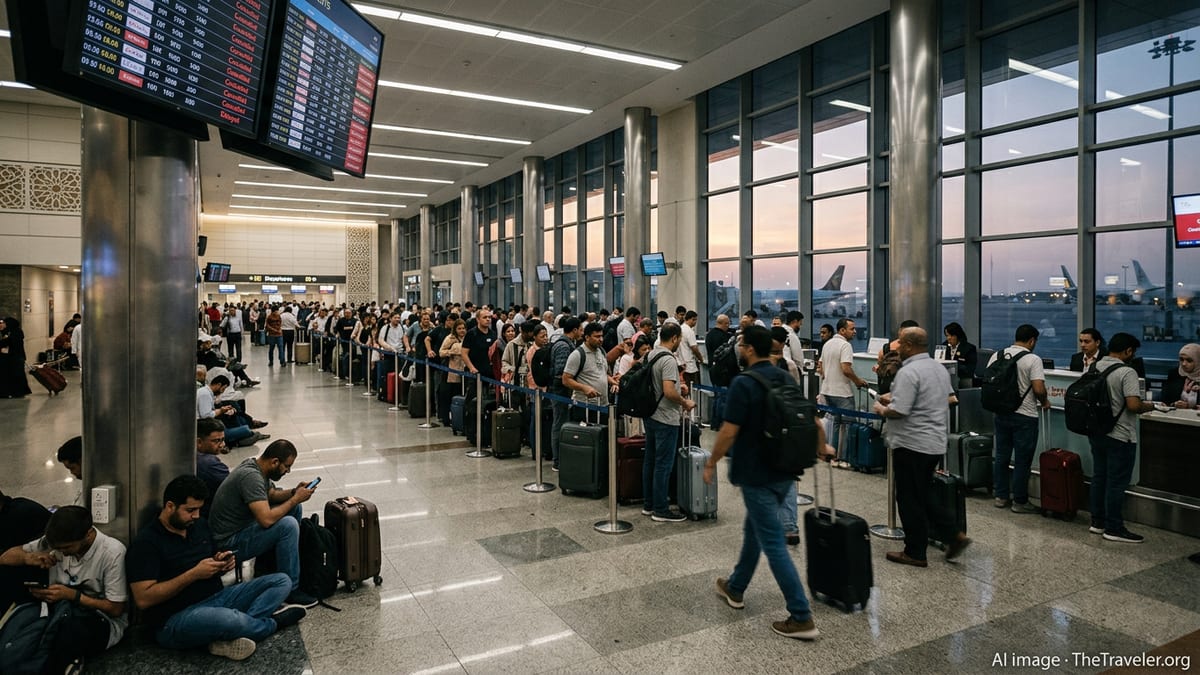
Precautionary Closure Follows Overnight Attacks
Publicly available information shows that Kuwait temporarily closed its airspace in the early hours of June 6 as part of civil aviation safety procedures activated during a period of heightened regional tension. Reports indicate that the suspension was linked to Iranian ballistic missile and drone attacks described locally as hostile aggression directed at targets in Kuwait.
According to published coverage from regional media, the airspace closure began at approximately 4:15 a.m. local time. During the two hour window, all arrivals and departures involving Kuwait’s flight information region were halted while emergency and contingency plans were implemented to protect passengers, crews and airport infrastructure.
The move followed an earlier series of Iranian strikes on Kuwait International Airport and surrounding facilities in recent months, which had already led to prolonged disruption of scheduled passenger services. The latest incident added a short but highly visible interruption to Kuwait’s ongoing effort to normalize aviation activity after those earlier attacks.
Information circulated by local outlets indicates that the closure was framed as a strictly precautionary step rather than a response to direct damage to air traffic control systems or runways on June 6 itself. The emphasis in official public statements has remained on risk management, threat assessment and compliance with international civil aviation safety standards.
Air Traffic Resumes Within Two Hours
By around 6:15 a.m. local time on June 6, Kuwait’s Civil Aviation Directorate announced through public channels that air navigation had resumed and that the country’s airspace was again open to civil traffic. Notices indicated that safety assessments had been completed and that the immediate threat environment was considered stable enough to restore operations.
Regional news reports describe a phased return to normal traffic flows. Aircraft that had been holding outside Kuwaiti airspace or diverted to alternative airports were progressively cleared to continue to their destinations once navigation services were reactivated. Air traffic control sources cited in public reporting characterized the restart as orderly and in line with established contingency procedures.
The rapid reopening contrasts with the much longer airspace suspension that began on February 28, 2026, when Kuwait closed its skies for nearly two months during an earlier peak in Iranian attacks. That extended shutdown only began to ease in late April, with Kuwait International Airport gradually welcoming back scheduled flights from both national and foreign carriers.
For airlines, the June 6 episode appears to have been managed as a short operational disruption rather than a structural setback to the wider recovery of Kuwait’s aviation sector. Network schedules were adjusted on the day, but publicly available timetables show that regular patterns of service are expected to continue in the days ahead.
Diverted Flights and Airline Response
Published accounts from Kuwait-based outlets indicate that 11 flights operated by Kuwait Airways and Jazeera Airways were diverted to neighboring airports during the two hour closure window. Aircraft en route to Kuwait were redirected primarily to Dammam and Riyadh in Saudi Arabia, where passengers waited for clearance to continue their journeys.
Once Kuwait’s airspace reopened, reports show that diverted flights were authorized to return to Kuwait International Airport and that affected airlines began reorganizing their schedules. Statements distributed via airline channels in recent days have emphasized passenger safety, the application of contingency plans and coordination with civil aviation authorities as key factors guiding decisions.
Jazeera Airways reported through its public information platforms that operations at its dedicated Terminal 5 resumed following the June 6 shutdown. Kuwait Airways, which had already been ramping up services from Terminal 4 after earlier suspensions this year, has focused on restoring its regular network and re-accommodating passengers whose travel plans were disrupted.
For travelers, the episode underscores the importance of real time communication between carriers and customers. Airlines serving Kuwait have been advising passengers to monitor flight status through official digital channels and to allow additional time for check in and security procedures while operations stabilize.
Impact on Regional Flight Paths and Travelers
The reopening of Kuwait’s airspace has significance beyond the country’s own borders. Kuwait sits on key north south and east west corridors used by carriers linking Europe, the Gulf and South Asia, meaning even short disruptions can prompt wider rerouting and schedule changes across the region.
According to regional aviation coverage, the June 6 closure led some overflying aircraft to adjust their routings to avoid the Kuwait flight information region during the two hour window. Once Kuwait resumed normal operations, flight tracking data referenced in public reporting indicated a gradual return of overflight traffic to patterns seen in recent weeks, when the country had been rebuilding connectivity after months of restrictions.
For passengers, the main immediate effects have been delays, missed connections and schedule changes on routes touching Kuwait or relying on it as a transfer point. Travel forums and local media reports describe a mix of short ground delays, same day rebooking and, in a smaller number of cases, overnight accommodation for travelers caught by the early morning closure.
Industry observers note that the rapid reopening limited the scale of knock on disruptions. With the closure confined to a two hour window and taking place during off peak overnight hours, airlines have been able to absorb many of the impacts within existing operational buffers rather than implementing large scale cancellations.
Longer Term Aviation Safety and Confidence
The June 6 airspace suspension and swift resumption highlight the continuing sensitivity of Gulf aviation to regional security developments. Kuwait has spent much of 2026 adapting its civil aviation planning to repeated missile and drone incidents linked to the wider confrontation involving Iran and its adversaries.
Documents published by Kuwait’s civil aviation regulator before the latest attacks outline contingency frameworks for both domestic and neighboring airspace closures, emphasizing rapid coordination, pre planned holding patterns and detailed safety assessments before traffic can resume. The June 6 response appears broadly consistent with those policies as described in publicly available regulatory material.
Aviation analysts quoted across various regional outlets suggest that Kuwait’s ability to reopen its skies within two hours, while managing diversions and maintaining safety margins, may help reassure travelers and airline partners that the country can keep disruptions contained even during periods of elevated risk.
At the same time, the recurrence of attacks and temporary suspensions this year keeps attention focused on the resilience of airport infrastructure, air defense systems and crisis communication channels. As flight paths resume and Kuwait International Airport continues its gradual return to full capacity, airlines and passengers are likely to keep monitoring developments closely for any sign of renewed volatility in the airspace over the northern Gulf.