


More news on this day
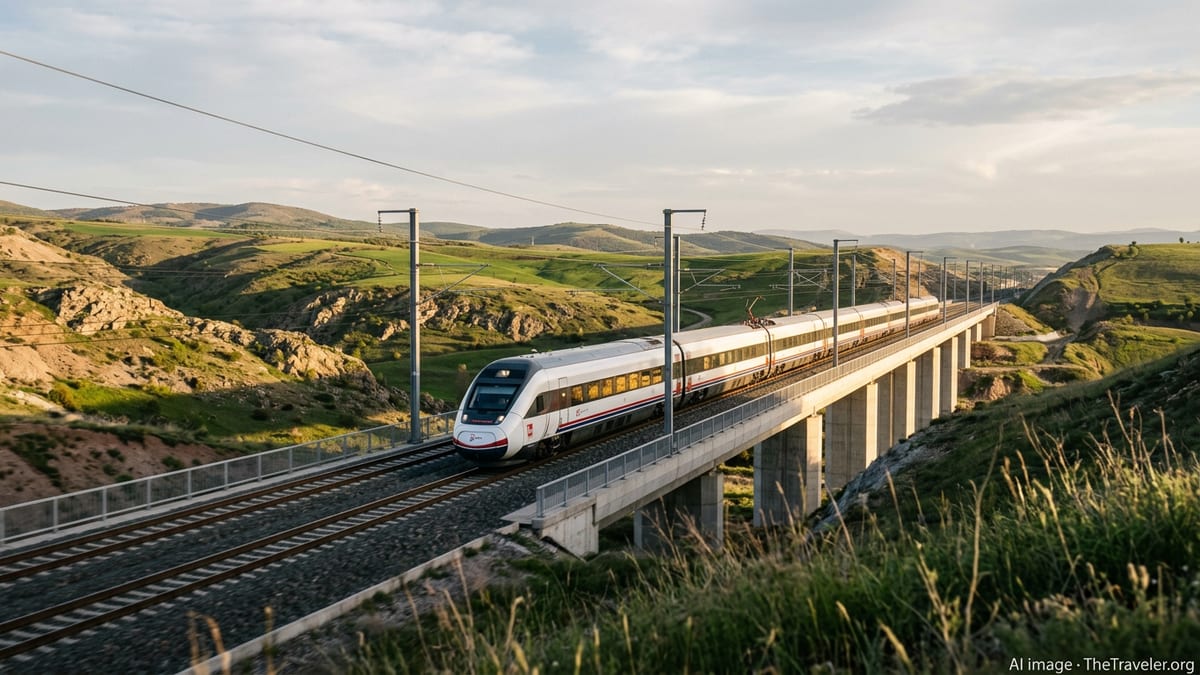
Trabzon’s long-anticipated light rail project has moved into the national investment pipeline, with recently published government documents and local planning reports indicating that work on the new urban rail line is set to advance from studies to implementation from 2026.
Get the latest news straight to your inbox!
From proposal to confirmed investment path
Urban rail for Trabzon has been discussed for more than a decade, but only in recent months has the project clearly shifted from concept to confirmed public investment. Transport budget documents for 2026 highlight the “Trabzon Rail System Line” among priority urban rail initiatives, alongside new metro and tram corridors in larger Turkish cities. Publicly available information indicates that the project is now framed as a light rail or tramway scheme that will form the backbone of public transport along the city’s dense Black Sea coastline.
Earlier municipal planning work defined a corridor running roughly parallel to the seafront highway, linking the western districts with the central Meydan area and continuing toward the airport in the east. The latest references in national planning material point to continuity with this concept, with the Trabzon line grouped among projects intended to reduce dependence on road traffic and expand high-capacity public transport in fast-growing regional centers.
While exact wording varies between national and local publications, the consistent appearance of the Trabzon scheme in the 2026 investment program is being interpreted by regional commentators as confirmation that the light rail is moving beyond feasibility studies. The project is now described in these documents as a rail system whose preliminary design work is largely complete and whose implementation phase is expected to begin within the current national development cycle.
Planned route along airport and seafront corridor
Trabzon’s geography strongly shapes the emerging light rail plan. The city is wedged between steep green hills and the Black Sea, with most activity concentrated in a narrow coastal strip. Existing descriptions of the rail corridor emphasize this linear structure, with a route expected to track the main coastal highway and serve key points such as the intercity bus terminal, the central Meydan district and Trabzon Airport.
Official airport and tourism information shows that the existing airport lies only a few kilometers from the city center, directly on the seafront road used by most visitors arriving by air. That proximity makes the airport a logical anchor for a light rail line, mirroring patterns seen in other Turkish cities where airport links and central business corridors form the spine of new tram systems. For travelers, a direct rail connection would offer a predictable alternative to taxis and buses that currently share congested traffic lanes.
Municipal transport discussions have also highlighted the potential for the line to extend westward from the central districts into growing residential areas, as well as to connect with planned upgrades around the new airport project that national authorities intend to build on a coastal site. Integrating the current and future airport zones into one continuous rail corridor is being framed in public documents as a way to future proof the system and position Trabzon as a regional gateway.
Tourism and everyday mobility in a growing Black Sea hub
Trabzon has become one of Turkey’s most visited Black Sea destinations, combining a busy port city with access to mountain plateaus, lakes such as Uzungöl and historic sites in the surrounding countryside. Travel guides and visitor statistics point to sustained growth in domestic and international tourism, placing additional pressure on already busy coastal roads and inner-city streets.
Public transport today relies heavily on buses and minibuses that navigate narrow corridors between the hills and the sea. Urban mobility studies and recent travel guides describe frequent congestion on the main east–west axis, particularly in summer when tour buses, private cars and local traffic all converge on the same roadway. Against this backdrop, the light rail project is being framed in policy documents as a strategic response to both tourism growth and everyday commuting needs.
Analysts following Black Sea transport projects note that Trabzon’s line would join a small but growing group of modern rail systems in northern Turkey, complementing the established tramway in Samsun. Supporters argue that a reliable rail spine could make it easier for visitors to combine stays in the city with day trips to inland attractions, while also giving residents a faster and more predictable option for work, education and shopping trips along the coast.
Timeline, financing and remaining uncertainties
Despite the clear reference to the Trabzon Rail System Line in the 2026 transport budget and related planning texts, significant details remain open. The current documentation indicates that 2026 marks the transition from preparatory work to active investment, rather than the start of full-scale construction across the entire corridor. Observers expect a phased approach, with early works focused on priority segments and integration points with the airport and bus terminal.
Financing is another key factor shaping expectations. National-level transport reports place the Trabzon project within a wider portfolio of rail and metro investments competing for funding and contractor capacity. This context has led commentators to caution that, while the light rail is now clearly on the national agenda, the pace of construction will depend on broader budget conditions and the sequencing of other major rail schemes around the country.
Engineering challenges are also likely to influence the final schedule. The combination of limited coastal space, existing road traffic and dense urban fabric along the seafront requires careful phasing to keep the city functioning during works. Previous projects in similarly constrained Turkish cities have relied on staged construction and temporary traffic diversions, and observers expect a comparable strategy in Trabzon once detailed tenders and construction contracts are issued.
What travelers and residents can expect next
For now, travelers to Trabzon will continue to rely on the existing mix of buses, minibuses, taxis and private transfers that connect the airport, city center and regional destinations. Transport guides published for 2026 still describe highway-based options as the only practical way to reach popular spots such as Uzungöl and the high plateaus that attract nature tourists.
However, the confirmation of the light rail line in national planning documents marks a turning point in how the city’s future mobility is being framed. Tourism promotion materials increasingly reference ongoing rail and airport projects as part of a broader modernization narrative, signaling that visitors in the coming decade may find a very different transport landscape from today’s bus-dominated system.
Local urban development reports suggest that station areas along the planned corridor are likely to become focal points for new housing, commercial space and public facilities. As seen in other Turkish cities that have introduced tram and light rail systems, this pattern can gradually reshape urban life by clustering services around high-capacity public transport nodes.
While specific opening dates for individual segments of the Trabzon light rail have not yet been fixed in public sources, the project’s elevation to confirmed investment status for 2026 indicates that the coming years will bring visible change along the Black Sea coast. For residents, commuters and the growing number of visitors, the shift from road-dependent travel to a modern rail corridor could prove one of the most significant transformations in Trabzon’s recent history.