


More news on this day
Labor Day 2026 is shaping up to be one of the busiest end-of-summer travel periods in years, with forecasts pointing to heavy traffic on major highways, crowded airports, and fuel costs that remain elevated, raising the stakes for travelers hoping to avoid holiday gridlock.
Get the latest news straight to your inbox!
Holiday Volume Sets the Stage for Record Congestion
Labor Day falls on Monday, September 7, 2026, and transportation calendars and travel forecasts indicate an extended peak period that begins as early as Friday, September 4, and runs through the following week. A New York State traffic monitoring calendar, for example, identifies a special data-collection period around Labor Day that spans from September 4 to September 11, reflecting expectations of sustained higher volumes on key corridors during and after the long weekend.
Regional outlooks point toward near-record road and air travel. Recent Labor Day and summer holiday forecasts from AAA have shown year-over-year increases in domestic trips of 50 miles or more, with road travel remaining the dominant choice for U.S. travelers and airports seeing continued growth in passenger throughput. Industry analyses compiled for Memorial Day and other 2025 holiday periods show tens of millions of Americans traveling over each long weekend, a pattern travel-forecasting groups expect to carry through 2026.
Traffic modeling by transportation agencies and data firms suggests that congestion is likely to be heaviest when holiday traffic overlaps with routine commuter flows. For Labor Day weekend, this effect tends to be most pronounced on the Thursday and Friday before the holiday and on Labor Day afternoon, when many drivers head home at the same time. Historic charts produced by state departments of transportation for Labor Day and other summer holidays repeatedly show volumes peaking during late afternoon and early evening hours.
Gridlock risk is not limited to a handful of cities. Past AAA and traffic-data reports highlight especially heavy congestion in and around major metros such as Boston, New York, Los Angeles, San Francisco, Denver, Seattle and Washington, DC, as well as on key getaway routes to beach, mountain and lake destinations. Given similar projections for 2026, travelers across the country are being advised to treat this Labor Day as a high-impact travel period and plan timing and routes accordingly.
Time Your Drive to Miss the Worst Traffic
One of the most effective ways to dodge gridlock over Labor Day is to shift departure times outside the peak windows highlighted by traffic forecasts. Analyses by INRIX and AAA for recent Labor Day and Memorial Day weekends consistently identify Thursday afternoon, Friday midday and late afternoon, and Monday afternoon as the most congested periods on major interstates and urban freeways. In contrast, early morning departures and, in many cases, Sunday travel show significantly lower volumes.
Travel charts produced by the Washington State Department of Transportation for the I-5 corridor and other routes illustrate this pattern clearly, with red blocks on holiday weekends indicating that roads are at or near capacity during traditional rush hours, while green and yellow segments in the early morning and late evening suggest freer-flowing traffic. Similar patterns have been documented on East Coast routes leading to and from popular beach towns and around major hubs such as Los Angeles and Denver, where Thursday and Friday afternoon getaways produce heavy slowing.
For drivers, this means that leaving several hours earlier than usual can translate into substantial time savings. On some corridors analyzed in recent AAA and INRIX Labor Day outlooks, travel times during peak hours have been projected to run 50 to 70 percent longer than normal. Morning or late-evening trips on the same day often avoid much of that delay. Travelers willing to schedule outbound drives before 9 a.m. on Thursday or Friday, or to shift return trips to Sunday morning or early Monday, may find significantly lighter traffic.
Routing flexibility also matters. Traffic data providers and state transportation departments recommend checking real-time maps and navigation apps before departure and monitoring them during the drive. Alternate routes that appear longer in distance can prove faster if incidents or sustained congestion develop on primary highways. With many agencies publishing holiday-specific charts and advisories online, checking official travel-time guidance for key corridors in advance can help drivers choose not only the best time but also the best path.
Build Extra Time into Airport Trips
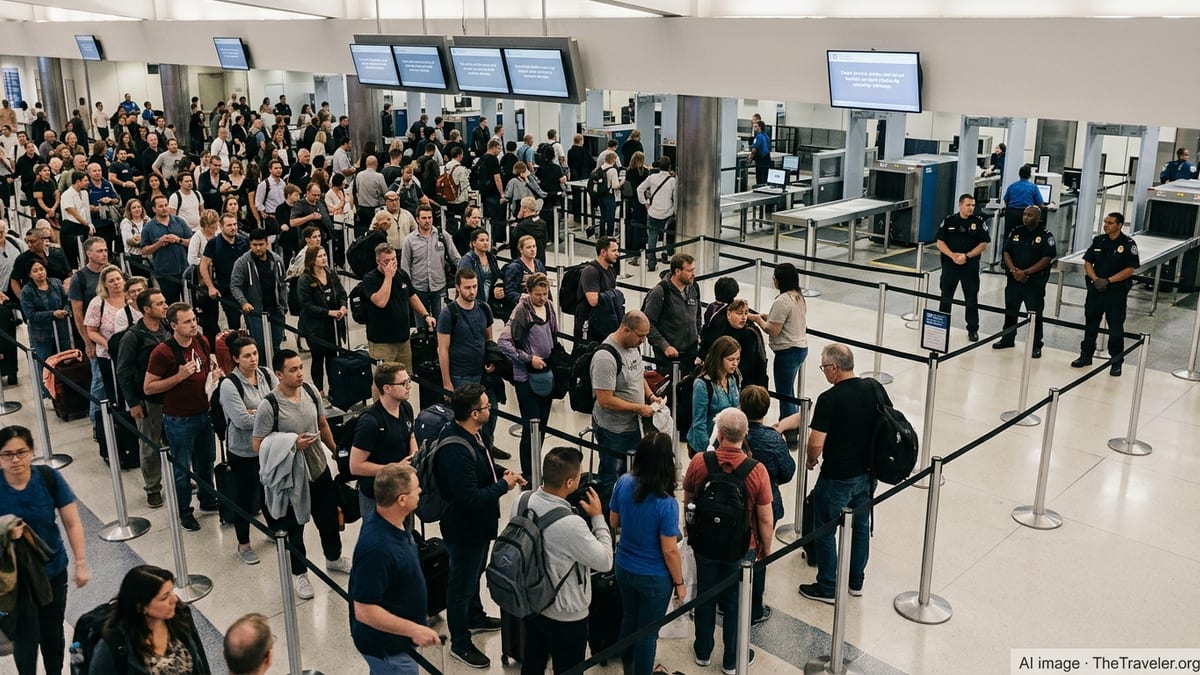
Airports are expected to be under heavy strain over Labor Day 2026, following a series of record or near-record travel periods in 2024 and 2025. Industry reports compiled by national travel groups note that the Transportation Security Administration screened nearly 279 million travelers between Memorial Day and Labor Day 2024, and that daily screening totals have continued to trend higher, with several single-day records set since then. Separate analyses for Thanksgiving and other holidays have also projected 15-year highs for air travel, underscoring sustained demand across the aviation system.
Busy airports mean longer waits at check-in, security and baggage claim. Major U.S. hubs, including Atlanta, Dallas-Fort Worth, Denver, Chicago O’Hare, Los Angeles, New York-area airports and Seattle-Tacoma, routinely rank among the nation’s busiest by passenger volume, according to federal and industry data. During peak holiday periods such as Labor Day, these facilities see additional spikes in departing and arriving travelers, as well as heavier vehicular traffic on airport access roads and surrounding freeways.
Travel organizations are advising passengers to arrive earlier than they would for a routine weekend flight, particularly during early morning and late afternoon departure banks. Recommendations commonly include arriving at least two hours before domestic flights and three hours ahead of international departures, with added buffer time for families, travelers checking bags, or those flying from historically congested hubs. Booking airport parking in advance and using public transit or ride-hailing services where available can also help bypass backups in terminal parking areas.
Digital tools can further reduce stress. Airlines increasingly recommend that passengers download carrier apps to receive gate-change notifications, monitor real-time flight status and access mobile boarding passes. Programs such as TSA PreCheck and Global Entry, which have expanded enrollment in recent years, can shorten security-processing times for eligible travelers. However, travel groups caution that even with expedited screening, high overall volumes mean that lines and processing queues may still be longer than usual around Labor Day.
Watch Gas Prices, Weather and Local Events
Conditions on the road this Labor Day will be shaped not only by traffic volumes but also by fuel prices, weather and local event calendars. Energy and travel-market reporting in early September 2026 indicates that average U.S. gasoline prices are likely to hold above 4 dollars per gallon heading into the holiday weekend, extending a trend of elevated costs observed during the summer. Similar pricing patterns in previous years have not significantly discouraged leisure travel but have added to overall trip costs, particularly for longer road journeys.
Weather is another critical factor. Travel outlooks for Denver and other western destinations this Labor Day note the potential for afternoon thunderstorms in higher elevations and parts of the Southwest, conditions that can slow highway traffic and disrupt flight operations. State transportation agencies and meteorological services emphasize the importance of checking short-term forecasts before departure and monitoring conditions en route, especially on mountain passes and in regions prone to heavy rain or flash flooding.
Local events can amplify congestion around cities and resort areas. Recent coverage from regional outlets has highlighted how festivals, concert weekends and sports events scheduled adjacent to Labor Day can intensify traffic on certain days and corridors beyond typical holiday patterns. For example, reports from Southern California and the mid-Atlantic during recent summers described multi-hour delays on freeways where holiday traffic coincided with large-scale entertainment events or beach-return patterns.
To minimize surprises, travelers are encouraged to scan local tourism and city calendars for the destinations they plan to visit, looking for parades, marathons, fairs or stadium events that may affect road closures or transit operations. Adjusting departure times by a few hours, picking alternative routes that avoid event venues, or shifting plans to less-busy days can help keep a holiday road trip moving even when regional demand is high.
Eight Practical Moves to Avoid Labor Day Gridlock
Experts who analyze holiday travel patterns point to a common set of tactics that can significantly reduce the risk of getting stuck in gridlock. First, shifting travel to off-peak days is one of the most powerful tools. For Labor Day, data from traffic analytics firms and state transportation departments often show that Sunday remains the lightest day for road travel in many regions, while Thursday evening, Friday afternoon and Labor Day itself produce the longest delays. Planning outbound trips for very early Friday or mid-Sunday, and return drives for early Sunday or early Monday, can result in noticeably smoother conditions.
Second, leaving early in the day remains a reliable strategy. Historic charts from multiple states show congestion building steadily through late morning and cresting in late afternoon. Departing before 9 a.m. helps drivers stay ahead of that wave, reducing both travel time and the risk of being caught behind crashes or breakdowns that occur once roads near capacity. Similar timing logic applies to flights, where early-morning departures generally face fewer knock-on delays.
Third, using navigation and traffic apps is now considered essential. Real-time data can highlight emerging bottlenecks, suggest alternates that bypass incidents, and provide updated arrival-time estimates as conditions change. Many state transportation departments supplement this with online travel-time charts and incident maps for major corridors, giving drivers advance insight into typical peak windows and potential trouble spots.
Fourth, building generous buffers into itineraries can transform the experience of traveling during one of the busiest weekends of the year. Industry and agency guidance for recent high-volume holidays suggests planning at least an extra hour for metropolitan drives and two or more extra hours for complex multimodal trips involving airport connections, rental cars or transfers between rail and air. That additional time can absorb minor delays without derailing lodging check-ins, event tickets or flight connections, making Labor Day 2026 feel more like a final summer break than a test of endurance behind the wheel or in the terminal.