


More news on this day
Labor Day return travel pushed crowds back through Hartsfield-Jackson Atlanta International Airport on Tuesday, yet early federal data showed only modest delays as passengers made their way home from the long holiday weekend.
Get the latest news straight to your inbox!
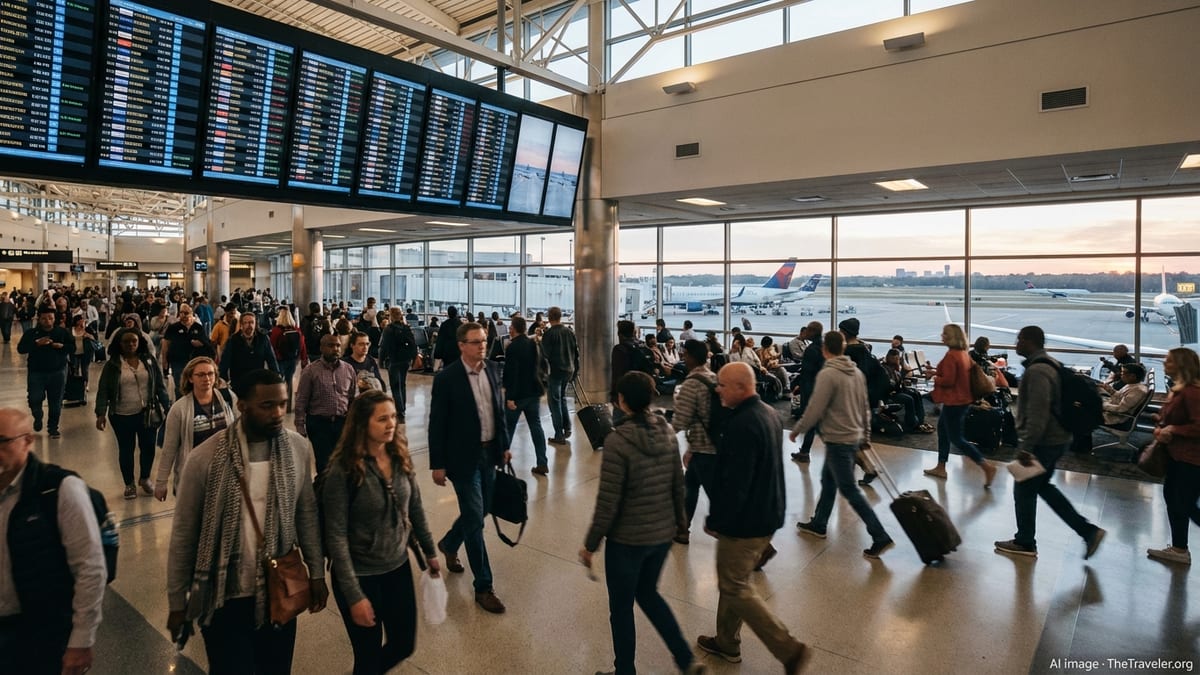
High passenger volumes cap a busy Labor Day period
Hartsfield-Jackson Atlanta International Airport expected about 2.3 million passengers over the Labor Day travel window, a period stretching from the Wednesday before the holiday through the following Wednesday. That forecast, cited in regional and national coverage ahead of the weekend, represented roughly a 1 percent increase from last year’s Labor Day period and continued a broader pattern of incremental growth in U.S. air travel demand.
Reports from Atlanta outlets on September 1 indicated that Friday before Labor Day was projected to be the single busiest day of the stretch, with more than 335,000 passengers moving through the terminals. Crowds tapered somewhat over the holiday itself, then began to build again as travelers turned toward the trip home, positioning the Tuesday after Labor Day as one of the more active return days for domestic flyers.
The projections in Atlanta aligned with national trends. The Transportation Security Administration recently reported record Labor Day weekend volumes at U.S. airports in 2025, with more than 10 million passengers screened over the four-day holiday span and several of the busiest days in agency history falling during the late-summer rush. That trajectory has set expectations for continued heavy traffic through major hubs such as Atlanta as the 2026 travel season matures.
Local travel forecasts from Georgia’s statewide 511 system also signaled a brisk holiday period across the Atlanta region’s roads, pointing to heavier highway congestion around the metropolitan area from the Friday start of the weekend into Saturday. Those roadway projections underscored Atlanta’s role as a multimodal travel gateway, where airport crowds are often mirrored by backups on surrounding interstates.
Return day begins with minimal disruptions
By early Tuesday, the operational picture at Hartsfield-Jackson appeared relatively stable. Real-time status information from the Federal Aviation Administration listed only minor departure and arrival delays, generally 15 minutes or less, for flights into and out of the Atlanta hub. The federal system showed no destination-specific delay programs in effect, suggesting that returning passengers were encountering typical gate and taxi hold times rather than widespread disruptions.
Independent flight-tracking dashboards supported that snapshot. Departure boards for Atlanta on Tuesday morning showed the usual mix of on-time operations, modestly delayed flights and a limited number of cancellations, but not the kind of extensive ripple effects often associated with severe weather, crew shortages or large-scale air traffic control constraints. For travelers heading home after the long weekend, that meant airport congestion was more a matter of volume than of irregular operations.
The relatively smooth return followed a weekend in which local television coverage described conditions at the airport as “running smoothly” even as crowds built on Friday morning. While individual passengers may have experienced isolated delays or missed connections, publicly available information on Tuesday did not point to systemic breakdowns or prolonged ground stops affecting the bulk of Labor Day return traffic.
Weather also appeared to be cooperating. Forecasts around Labor Day from the National Weather Service office serving Atlanta called for routine late-summer heat and scattered thunderstorms, but did not flag the kind of organized severe weather systems that can quickly cascade into multi-hour disruptions at a major hub. Without a major storm system targeting north Georgia on Tuesday, airlines and controllers had more flexibility to keep aircraft moving through the network.
World’s busiest hub manages end-of-summer surge
Hartsfield-Jackson’s ability to absorb the Labor Day return rush with limited delays reflects its longstanding position as one of the world’s busiest and most practiced hub airports. Public data show the Atlanta facility has consistently ranked at or near the top of U.S. passenger counts for decades, anchored by its role as a primary connecting hub and by a dense schedule of short-haul flights across the southeastern United States.
Even outside of holiday periods, Atlanta averages more than a thousand departures a day, linking travelers to more than 200 domestic and international destinations. That scale, supported by a major airline hub operation, gives the airport substantial experience in handling surges at peak times, including the early-morning banks on business days and the extended waves that often mark long holiday weekends.
Local government reports on recent capital investments highlight ongoing work to expand and modernize the airport’s infrastructure. Atlanta’s multi-year improvement initiative at Hartsfield-Jackson has directed billions of dollars to concourse renovations, airfield projects and curbside and ground transportation upgrades, a program designed in part to preserve the airport’s reputation for efficiency even as volumes climb. Those projects have unfolded alongside new tools for travelers, such as online security wait-time dashboards and real-time parking information.
Industry research also points to growing use of data-driven planning at major hubs. A recent academic study drawing on TSA throughput statistics and flight schedules for Atlanta described new forecasting techniques aimed at better anticipating checkpoint demand by hour. The goal of such work is to support staffing and lane-management decisions that can smooth passenger flows during holiday peaks, cutting down on the kind of bottlenecks that can turn routine crowds into hours-long lines.
Tips and trends for late-day and midweek travelers
For passengers still making their way home after Labor Day, published guidance for the Atlanta airport remains consistent with pre-holiday recommendations. Travelers are encouraged by public advisories and airport guidance to arrive at least two hours early for domestic flights and three hours ahead for international departures, allowing time for parking, check-in and security screening on heavily traveled days.
State and regional travel forecasts around the holiday underscored the benefits of avoiding peak roadway periods when heading to or from the airport. Analysts recommended steering clear of Friday afternoon and early evening hours on major interstates feeding Atlanta, including during the outbound rush that started the holiday, and suggested that Sunday and Monday generally present less congestion for drivers. While those specific windows have passed, similar patterns often hold on the Tuesday return as commuters rejoin the mix.
National trends suggest that late-evening departures and midweek flights can sometimes offer more breathing room, even during busy seasons. However, with strong demand driving full flights across many routes, travelers returning after Labor Day are still likely to encounter crowded gate areas and tight overhead bin space, even if runway delays remain limited.
For those planning future holiday trips through Atlanta, the 2026 Labor Day period offers a case study in how strong volumes do not always translate into severe delays. With favorable weather, steady staffing and infrastructure built to handle large connecting banks, a major hub can move hundreds of thousands of people in a single day while keeping most flights within a relatively narrow window of scheduled times.
Atlanta’s Labor Day performance in national context
Across the United States, aviation and travel industry groups have pointed to Labor Day as an increasingly significant bookend to the summer season. TSA statistics show that the period between Memorial Day and Labor Day in recent years has set records for passenger counts, putting sustained pressure on airport facilities, airlines and security agencies as they balance growth with reliability.
Comparisons with other major hubs help place Atlanta’s experience in context. Dallas Fort Worth International Airport, for example, projected about 1.4 million passengers for its Labor Day stretch this year, a roughly 7 percent increase from 2025. That figure is substantially smaller than Atlanta’s expected 2.3 million, but the trend is similar: steady increases in late-summer demand and expectations for packed terminals during the long weekend and the return days that follow.
Industry coverage ahead of Labor Day also noted that national holiday air travel is becoming more resilient, with many airports handling record or near-record volumes without the widespread meltdown scenarios that characterized some past peak periods. Improvements in technology, staffing, and operational planning, along with more cautious scheduling on certain routes, have helped limit the ripple effects of localized disruptions.
For Atlanta, the early signs from Tuesday’s FAA status reports and flight-tracking data point to a holiday travel cycle that was intense but largely manageable. As the last waves of Labor Day passengers clear security checkpoints and board their flights home, Hartsfield-Jackson’s experience this year is likely to feed into planning for the next season, when the airport will once again be called on to move millions of travelers through the close of summer with as few delays as possible.