


If you are planning your first trip to the Canary Islands, the choice between Tenerife and Gran Canaria can feel like a high-stakes decision. Both deliver year-round sunshine, Atlantic beaches and relaxed Spanish island life, yet they offer distinctly different holiday experiences. This guide compares them side by side with concrete, real-world examples so you can confidently decide which island fits your first-time itinerary, budget and travel style.
Get the latest updates straight to your inbox!
Overall Vibe: What a First Trip Actually Feels Like
Tenerife is the most visited island in the Canaries and feels a little like a mini continent. In one week, a typical first-time visitor might stay in a resort in Costa Adeje, ride the cable car up Mount Teide, wander colonial streets in La Laguna and finish with a whale-watching trip from Los Cristianos. The island’s size and road network make it easy to build a varied itinerary with several very different day trips.
Gran Canaria is more compact and often feels simpler to navigate. Many first-time visitors base themselves in the south around Maspalomas or Playa del Inglés for beaches and resort life, then take day trips up into the mountains to Roque Nublo or to Las Palmas for a taste of city culture. You can see a surprising amount of the island in a week without feeling like you are constantly driving.
For a first-timer who wants a classic “big resort plus headline attractions” holiday, Tenerife usually has the edge. For someone who prefers an easy blend of one major city, long beaches and a few mountain or village excursions without too much planning, Gran Canaria often feels more relaxed and less overwhelming.
In practice, many repeat visitors say Tenerife is the safer all-round choice for a first Canary Islands trip, while Gran Canaria often becomes the favorite for a second or third visit once you know what kind of holiday you enjoy most in the archipelago.
Beaches & Resorts: Golden Dunes vs Volcanic Drama
For straightforward, golden, family-friendly beaches, Gran Canaria is hard to beat. Maspalomas and Playa del Inglés form one long arc of sand backed by the famous dunes, while Amadores and Puerto Rico offer sheltered, man-made coves with calm water and plenty of sunbed and beach bar options. First-time visitors who picture a classic sun-and-sea escape with long sandy promenades tend to feel instantly at home here.
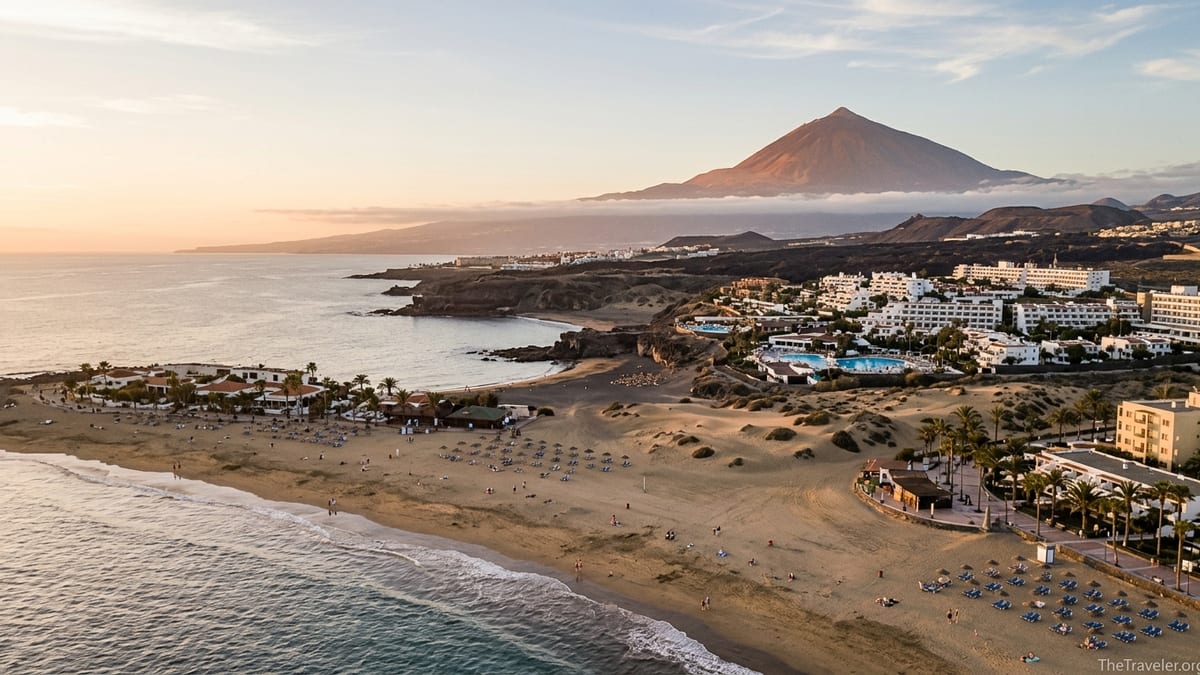
Tenerife’s coastline is more varied but less uniformly sandy. In the south, Playa de las Américas and Costa Adeje have imported light sand and a full resort setup, but many other beaches, like Playa Jardín in Puerto de la Cruz or Playa El Bollullo, keep their natural dark volcanic sand. These look spectacular in photographs, especially with Teide in the background on clear days, but can surprise first-time visitors who expect Caribbean-style white sand.
In terms of resorts, Tenerife’s south specializes in larger, often more upscale properties. Costa Adeje, for example, is packed with four and five-star hotels with big pools, rooftop bars and half-board packages aimed at couples and families. Gran Canaria’s south has everything from simple self-catering apartments around Playa del Inglés to polished seafront hotels in Meloneras, but overall the resort scene feels slightly more mid-range and low-key.
If beach quality in the sense of long, soft, walkable sand is your top priority, Gran Canaria usually comes out ahead for a first-timer. If you like the idea of more dramatic volcanic scenery and do not mind some dark-sand or pebble beaches in exchange for views, Tenerife will appeal more.
Nightlife & Atmosphere After Dark
Tenerife has the more famous nightlife reputation, especially around Playa de las Américas and Costa Adeje. First-timers looking for big, high-energy nights will find international-style clubs, Irish pubs showing Premier League matches and cabaret shows that run into the early hours. It is the island that feels closest to a mini Ibiza, though on a smaller, more accessible scale and generally at softer price points.
Gran Canaria’s nightlife is more split between urban and resort scenes. In Playa del Inglés and the Yumbo area, there is a well-established, LGBTQ-focused bar and club scene with hundreds of venues packed into a small, walkable area. In Las Palmas, the capital, nightlife takes a more local, city-break shape: wine bars and tapas spots in the old quarter of Vegueta, cocktail bars around Triana and late-opening clubs near the port where you will mostly be drinking alongside residents rather than holidaymakers.
For a first-timer whose main priority is nightlife, Tenerife’s south is the easiest option because the party zone is compact and built around visitors, so you can go out every night without thinking about taxis or bus schedules. Gran Canaria is better if you want a mix of a few big nights and more authentic, city-style evenings in Las Palmas, especially if you are comfortable using buses or taxis to move between zones.
Both islands have year-round events, but Tenerife hosts some of the archipelago’s biggest spectacles, such as the Santa Cruz Carnival in February, which can completely change the feel of a trip. First-timers who land during Carnival are often surprised to find a normally laid-back island transformed into a street party that runs late into the night for several days.
Hiking, Teide & Mountain Scenery vs Gran Canaria’s Interior
For hikers and landscape lovers, Tenerife has an obvious trump card: Mount Teide. At 3,718 meters, it is Spain’s highest peak and dominates much of the island’s skyline. Many visitors take the cable car, which as of early 2025 is priced at a little over 40 euros return for adults, to the upper station at around 3,555 meters. Even without hiking to the very summit, the short walks from the top station give first-timers a lunar landscape of craters and lava fields along with views that can stretch across the cloud layer to Gran Canaria on clear days.
To actually stand on Teide’s summit, you need a free but limited permit that must be booked in advance, which can surprise first-time visitors who assume they can just turn up and walk. Those without a permit often join guided excursions that include permit handling and transport from south-coast resorts. It is common for first-timers staying in Costa Adeje or Los Cristianos to book a full-day Teide tour with hotel pick-up, cable car ticket and short high-altitude walk bundled together.
Gran Canaria, by contrast, has no single peak that dominates your plans, but its interior is full of accessible hikes and viewpoints. Roque Nublo is the classic first-timer route: a short, roughly one-hour walk each way from the nearest parking area to a distinctive rock monolith, with sweeping views across terraced hillsides and ravines. Unlike Teide’s summit route, there is no permit system and no cable car, just a straightforward marked path, which makes it very attractive to beginners or anyone traveling with children.
Overall, Tenerife is the better choice if reaching high-altitude volcanic landscapes is a must-do experience on your first trip, especially if you are happy to pay cable car prices and possibly book a guided tour. Gran Canaria is better if you want to mix beach time with easy, low-cost or free hikes that feel adventurous without a lot of logistics or advance planning.
Cities, Culture & Family Attractions
Tenerife offers a mix of resort towns and more traditional Canary Island culture. Many first-timers split their time between the lively south and at least one day in the north. Santa Cruz, the island’s capital, has broad avenues, a waterfront promenade and cultural institutions such as contemporary art spaces, while nearby La Laguna delivers cobbled streets, colorful houses and café-lined squares that give a strong sense of historic Canary life. Families and adults alike often enjoy spending a half day simply wandering these streets between coffees and ice creams.
Gran Canaria’s cultural heart is more clearly defined in Las Palmas, the archipelago’s largest city. A first-timer staying in the south might take an intercity bus up to the San Telmo station and spend the day in Vegueta, visiting the cathedral, exploring small museums and then finishing the afternoon on Las Canteras beach, an urban bay with a long promenade and surf schools. Las Palmas feels like a full city-break destination in itself, which is a major advantage if you enjoy travel that combines beach and culture in equal measure.
For families, Tenerife has a strong advantage in headline attractions. Siam Park near Costa Adeje is regularly ranked among Europe’s top water parks, with expansive slides and wave pools that can fill an entire day. Just down the road, Loro Parque in Puerto de la Cruz combines zoo, aquarium and marine shows and is often one of the most talked-about days out for first-time family visitors. There is no equivalent combination of two world-famous private attractions in such close proximity on Gran Canaria.
Gran Canaria counters with smaller, lower-key options that are easier on the budget, especially for repeat visits or longer stays: local waterparks, boat trips from Puerto de Mogán and small-scale animal parks and aquariums. These may not be bucket-list attractions on their own, but they fit well into a relaxed first-time holiday where the aim is simple, low-pressure enjoyment rather than ticking off big-ticket sights.
Getting Around & Public Transport for First-Timers
Both islands offer solid public transport, but the way first-timers experience it can differ. Tenerife has a green local bus network operated by TITSA and a modern tram between Santa Cruz and La Laguna. Visitors often buy rechargeable travel cards at kiosks and use them to get from south-coast resorts to Santa Cruz or Puerto de la Cruz. For example, a direct bus between Puerto de la Cruz and Santa Cruz costs only a few euros, which makes it very affordable for a day trip compared with hiring a car.
Gran Canaria has a comprehensive blue intercity bus network known as Global that links Las Palmas with airport and southern resorts like Maspalomas and Puerto Rico. A single ticket from Las Palmas down to Maspalomas typically costs under 10 euros, and the journey takes around an hour depending on the route. Within Las Palmas itself, a separate yellow municipal bus network handles city services, which is useful for first-timers staying in the capital who only plan the occasional trip down to the southern beaches.
Official tourism statistics for recent years suggest visitors to Tenerife are more likely to use public transport than visitors to Gran Canaria, while Gran Canaria has a slightly higher share of car rentals. In practice, that reflects how many popular Tenerife excursions, such as up to Teide National Park or across to La Laguna, are offered with transport included, encouraging first-timers to skip car hire. On Gran Canaria, hiring a car for a couple of days to explore the mountain villages and viewpoints is often the easiest way to reach places that lie beyond the main coastal bus routes.
For a first-timer who wants to avoid driving entirely, Tenerife has a slight advantage because key experiences like Teide, the north-coast towns and big attractions such as Siam Park are all easy to reach via organized excursions or direct buses. If you are happy to drive or mix buses and occasional taxi rides, Gran Canaria’s more compact layout means you can cover a lot of ground in just a few days.
Prices, Value & Seasonal Considerations
Overall, Tenerife and Gran Canaria sit in a similar price band for accommodation, food and day-to-day costs, but there are noticeable differences when you zoom in. South Tenerife, especially Costa Adeje, has a concentration of newer luxury resorts that tends to pull hotel prices higher in peak season. A first-timer looking for a four or five-star half-board hotel by the sea in January or February will often find slightly higher nightly rates on Tenerife than in equivalent properties around Maspalomas or Meloneras.
Gran Canaria often works out a little cheaper for everyday spending, particularly if you stay in Las Palmas. Restaurant meals, coffee and local bars in the capital are priced more for residents than tourists, so it is common for first-time visitors to notice that an evening of tapas and drinks near Las Canteras beach costs less than a similar night out in a purpose-built resort on Tenerife’s south coast. Even in the southern resort belt, many bars and cafés around Playa del Inglés advertise simple menu deals and drinks offers that undercut the more polished venues in Tenerife’s Costa Adeje.
When it comes to paid attractions, Tenerife can feel significantly more expensive. A return trip on the Teide cable car alone can cost more than a full excursion day in Gran Canaria’s interior, which might only involve fuel or a modest bus fare and a picnic. Add in tickets to Siam Park or Loro Parque and it is easy for a family of four to spend several hundred euros across just two days of sightseeing. On Gran Canaria, many of the best days out for a first-timer, such as hiking to Roque Nublo or exploring Las Palmas, cost little beyond transport and food.
Seasonally, both islands enjoy a mild climate, but there are microclimate differences. The south of both islands is reliably sunny and dry in winter, which is why resorts cluster there. Tenerife’s north and Gran Canaria’s interior can be cooler and cloudier at times, something first-time visitors often notice on day trips. For a winter-sun break in December or January where you want to maximize beach days, basing yourself in the southern zones of either island is wise, while planning cultural and mountain excursions for days when the forecast is mixed.
Which Island Is Better for Different Types of First-Timer?
For a first-time family trip, Tenerife normally wins. The combination of kid-friendly resorts in Costa Adeje, headline attractions such as Siam Park and Loro Parque, and the option of a dramatic Teide day trip makes it very easy to fill a week with varied, memorable experiences. Package holidays from many European cities are designed around this pattern, so everything from transfers to bundled attraction tickets is optimized for families arriving for the first time.
For beach-first travelers who want long days on golden sand with the option of occasional city or mountain trips, Gran Canaria is often the better call. Base yourself in Maspalomas or Playa del Inglés, spend most days on the dunes or at sheltered beaches like Amadores, then use the Global buses or a rental car to reach Roque Nublo or Las Palmas once or twice. This creates a low-effort, relaxing first trip where logistics stay simple and most of your budget goes on food, drink and the odd day excursion rather than expensive attraction tickets.
Nightlife-focused first-timers will have to decide which style they prefer. Tenerife south offers an all-in-one, resort-based strip of clubs and bars that you can walk between in sandals. Gran Canaria splits the fun between Playa del Inglés, which has a strongly LGBTQ-friendly scene, and Las Palmas, where you can hop between tapas bars and local clubs. If you want a holiday that feels like one big resort party, Tenerife south is simpler. If you like the idea of combining a city break with some big nights, Gran Canaria has more variety.
For first-timers who travel mainly for hiking and landscapes, Tenerife is usually the stronger first choice because of Teide, the laurel forests of Anaga and the variety between north and south. That said, hikers who prefer more moderate trails and quieter viewpoints, and who do not mind the absence of a single headline peak, often fall in love with Gran Canaria’s interior and may appreciate starting there instead, especially outside of peak school holiday periods.
The Takeaway
If this is your very first Canary Islands trip and you want an easy, classic mix of sun, beaches, one or two big-name attractions and a sense that you have seen the island’s greatest hits, Tenerife is the safest bet. You can stay in the resort-heavy south, organize a Teide excursion and drop in a few days of culture in Santa Cruz or La Laguna, confident that transport and tours are set up for first-time visitors.
If, on the other hand, you are picturing long walks on soft golden sand, a more compact island and a balance of resort life with an authentic Spanish city, Gran Canaria may fit you better. A week split between Las Palmas and the southern beaches, or simply a relaxed stay in Maspalomas with a couple of mountain day trips, gives a satisfying, good-value introduction to the Canary Islands without the temptation to spend heavily on big-ticket attractions.
There is no wrong answer between Tenerife and Gran Canaria, but there is usually a better first island for you personally. Think about whether beaches, nightlife, family attractions, hiking or budget matter most, then match that priority to each island’s strengths. Once you have fallen for one, you can always plan a second trip to the other and complete your own Canary Islands comparison in person.
FAQ
Q1. Is Tenerife or Gran Canaria better for a first family holiday?
Tenerife is usually better for a first family trip because of high-profile attractions such as Siam Park and Loro Parque, plus easy-organized Teide excursions from the main resorts.
Q2. Which island has better beaches for first-time visitors?
Gran Canaria generally has the edge, with long golden stretches at Maspalomas and Playa del Inglés and sheltered coves like Amadores that suit children and nervous swimmers.
Q3. Is Tenerife really more expensive than Gran Canaria?
Not always, but south Tenerife often has higher hotel and attraction costs, while everyday spending on meals and drinks can feel lower in Gran Canaria, especially in Las Palmas.
Q4. Do I need to rent a car on Tenerife or Gran Canaria?
You can visit both islands without a car, but Tenerife is slightly easier to manage on public transport and excursions, while Gran Canaria’s interior is more convenient with at least a short car rental.
Q5. Which island is better for nightlife on a first trip?
Tenerife south offers the most straightforward resort-style nightlife in a compact strip, while Gran Canaria’s appeal lies in its LGBTQ-focused Yumbo scene and more local bars in Las Palmas.
Q6. Is Mount Teide worth it for first-time visitors?
Yes, Teide is one of Tenerife’s standout experiences, especially if you take the cable car for high-altitude views, but it requires advance planning and a higher budget than most Gran Canaria hikes.
Q7. Where should I stay on Gran Canaria for a first-time visit?
Most first-timers choose Maspalomas or Playa del Inglés for beaches and resort facilities, while those who prefer a city-break feel base themselves in Las Palmas near Las Canteras beach.
Q8. Is public transport easy to use on both islands?
Yes, both islands have reliable bus networks, but ticket types and operators differ, so first-timers should check routes and fares locally and allow extra time for transfers.
Q9. Which island suits hikers visiting for the first time?
Tenerife is better for dramatic volcanic scenery and high-altitude routes around Teide, while Gran Canaria offers gentler, lower-cost hikes like Roque Nublo with no permit system.
Q10. If I only have five days, which island should I choose first?
With five days, Tenerife gives a clearer “greatest hits” itinerary of resort time, Teide and one or two northern towns, while Gran Canaria works best if your focus is almost entirely on beaches.