


More news on this day
Severe thunderstorms sweeping across the Northeast on July 10 triggered a wave of disruptions at New York’s LaGuardia Airport, with data showing hundreds of flights delayed or canceled and passengers facing long waits, missed connections, and last-minute rebookings.
Get the latest news straight to your inbox!
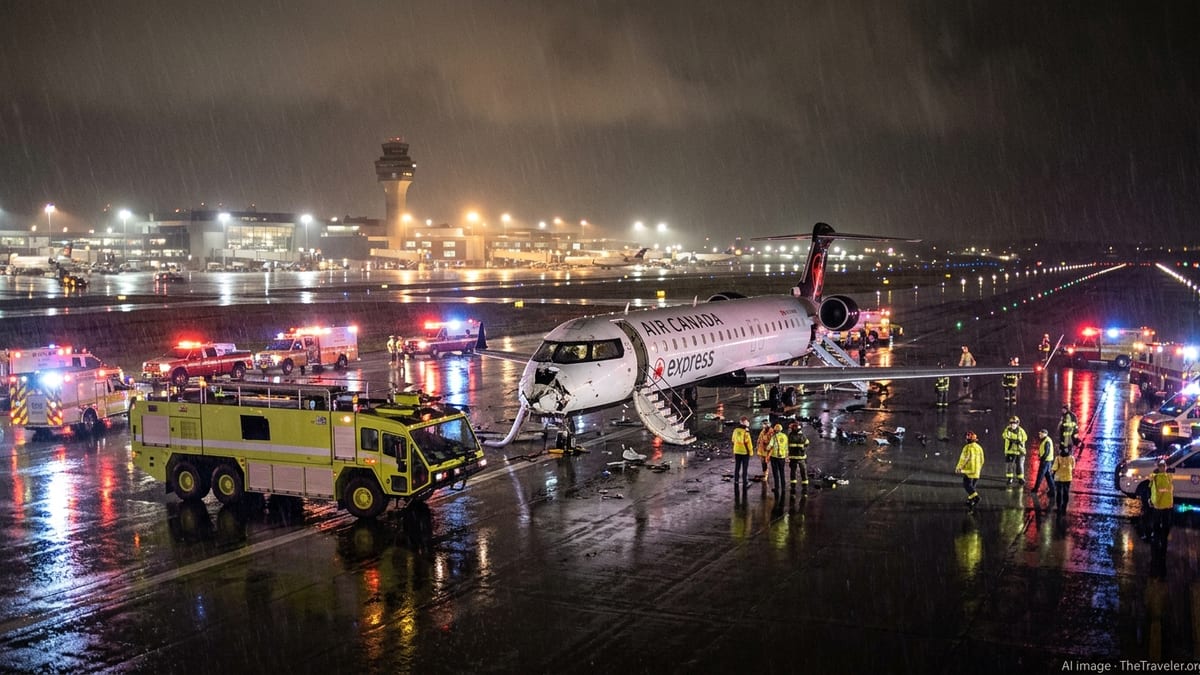
Stormy weather and traffic constraints ripple through LaGuardia
Publicly available flight-tracking data for LaGuardia on July 10 indicates that a significant share of the day’s schedule was disrupted, with large clusters of cancellations and multi-hour delays across major domestic carriers. Real-time cancellation statistics show LaGuardia among the more heavily affected U.S. airports, reflecting the sensitivity of the tightly scheduled New York airspace to summer storms.
The disruptions coincided with a line of strong thunderstorms moving along the East Coast, prompting traffic-management initiatives that slowed arrivals and departures into the wider New York area. Advisories published by federal air traffic planners in the days leading up to July 10 had already flagged continued “slow-going” conditions in the Northeast, and by Friday those constraints translated into rolling delays that pushed more flights past their operational limits.
Individual route data underscores how widespread the impact became. Flights linking LaGuardia with major hubs such as Atlanta and Midwest and Southern cities registered a mix of late operations and outright cancellations, as airlines attempted to rebalance aircraft and crews while dealing with weather, congestion, and prior knock-on delays from earlier in the week.
The problems were not limited to a single airline or destination. Schedules to high-frequency business markets including Chicago, Toronto, and several Florida cities were repeatedly adjusted, with some services operating hours behind timetable while others were scrubbed entirely when connecting crews or aircraft could not arrive in time.
Passengers face long waits, rolling delays, and missed connections
Reports from travelers and publicly visible departure boards showed LaGuardia’s terminals filling with stranded passengers through Friday afternoon and evening as the disruption deepened. Several routes saw flights pushed back multiple times before either departing late into the night or being canceled and rebooked for July 11 or later.
Online discussions from travelers moving through LaGuardia and other New York-area airports described extended tarmac waits, long customer service lines, and difficulty securing alternative routings once the evening peak approached. Some passengers attempting to reach New York reported being rerouted through secondary airports or forced to make overnight stops in intermediate hubs when their original LaGuardia-bound flights were scrubbed.
The pattern matched broader comments from frequent flyers who have noted a rise in severe delays and cancellations across the U.S. network this spring and summer. While LaGuardia is routinely among the country’s most delay-prone airports because of its short runways and slot-controlled schedule, the July 10 storm system arrived on top of an already stretched operation, compounding the strain on airlines and passengers alike.
For travelers with tight connections, the cascading delays meant missed onward flights and disrupted weekend plans. Social media posts from those attempting to transit LaGuardia late Friday described scrambling to secure remaining hotel rooms, with some choosing to overnight in the terminal rather than risk losing their rebooked seats the following morning.
Airlines activate weather waivers and schedule adjustments
In anticipation of the stormy forecast, at least one major U.S. carrier publicly posted a weather waiver for East Coast airports, including LaGuardia, covering the July 10 to July 12 window. Such waivers typically allow affected customers to change travel dates or reroute within a defined region without additional change fees, provided they keep the same origin and destination and rebook within a specified period.
By Friday, that flexibility had become critical for LaGuardia passengers, particularly those with discretionary or leisure trips. Many travelers reported using the waiver to shift departures earlier or later in the weekend, while others opted to move to alternative New York-area airports where seats were still available.
Airlines also made tactical schedule adjustments as the day progressed, consolidating lightly booked flights, canceling select late-evening departures, and prioritizing routes with large numbers of connecting passengers. Individual flight-status pages for carriers serving LaGuardia showed multiple instances of services that had been scheduled for July 10 but ultimately did not operate, either for weather-related reasons or because crews and aircraft were out of position.
The cancellations were layered on top of ongoing changes in the New York market. Earlier this year, for example, Spirit Airlines ended service at LaGuardia, slightly reducing overall capacity but also limiting some passengers’ options when irregular operations hit. On a day like July 10, fewer carriers on key routes meant remaining flights filled quickly once disruptions started to cascade.
LaGuardia’s vulnerability in a crowded Northeast airspace
The events of July 10 highlighted structural challenges that have long made LaGuardia one of the most delay-sensitive airports in the United States. Located in tightly constrained airspace and surrounded by dense residential neighborhoods and water, the airport operates with short runways, limited room for expansion, and a heavy concentration of peak-time departures and arrivals.
Federal planning documents and academic studies have repeatedly pointed to the New York region, and LaGuardia in particular, as a critical pressure point in the national airspace system. When thunderstorms or low clouds reduce usable airspace or runway capacity, traffic managers are forced to meter flights more aggressively, leading to ground stops, holding patterns, and volume-related cancellations that can ripple nationwide.
In recent months, authorities have continued rolling out modernization projects designed to improve surface management and information-sharing at LaGuardia, including systems intended to give controllers and airlines better tools to sequence departures and arrivals. While those upgrades can help reduce routine congestion, they are less able to offset the kind of capacity loss caused by a widespread convective weather pattern like the one that moved through on July 10.
For LaGuardia, which already handles thousands of flights a week and connects to scores of domestic destinations, that means even a single stormy afternoon can quickly translate into a full day of disruption, especially when coupled with staffing constraints at air traffic facilities and crew scheduling limits at airlines.
What travelers can do during ongoing disruptions
With thunderstorms and heat-driven weather expected to remain a feature of the summer travel season, passengers planning to fly through LaGuardia in the coming weeks may look to lessons from July 10. Industry guidance and traveler experience both suggest monitoring forecasts closely in the days before departure and enrolling in airline alerts so schedule changes are flagged as early as possible.
On days when storms are expected, rebooking to earlier flights, particularly morning departures, can reduce the risk of getting caught in evening backlogs. Travelers with flexible plans may also consider routing through alternative airports in the region if options at LaGuardia begin to dwindle as cancellations accumulate.
For those already at the airport when disruptions mount, experts often recommend using multiple channels at once, including airline apps, customer service desks, and phone support, to search for open seats. Travel insurance or premium credit card protections can sometimes help cover hotel and meal costs when weather or air traffic issues strand travelers overnight.
The July 10 turmoil at LaGuardia underscores that, in a period of increasingly volatile summer weather and a tightly scheduled national air system, even routine storms can trigger far-reaching consequences. For passengers, building additional time and flexibility into itineraries may be the most practical response to a travel environment in which days like Friday are becoming more common.