


More news on this day
Severe summer storms and mounting air traffic pressures converged on July 10 to create a day of intense disruption for U.S. air travelers, with LaGuardia Airport at the center of a nationwide wave of cancellations and delays.
Get the latest news straight to your inbox!
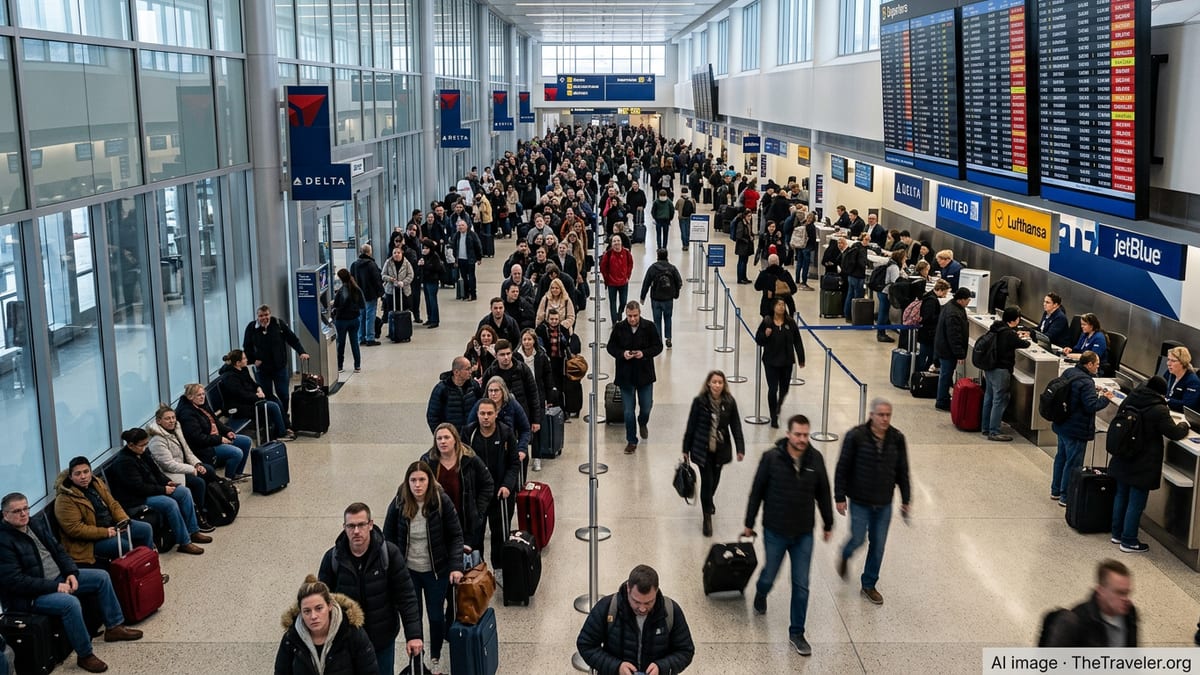
LaGuardia Becomes Epicenter of a Difficult Travel Day
Publicly available flight tracking data for July 10 indicate that New York’s LaGuardia Airport experienced 374 cancellations, making it one of the hardest hit airports in the country. The scale of disruption at LaGuardia substantially exceeded the airport’s typical daily cancellation levels and contributed heavily to broader national gridlock.
Operational data show that the cancellations were concentrated in the afternoon and evening hours, when storm activity and air traffic flow programs most directly affected departures and arrivals in the New York region. A significant share of affected flights involved short-haul domestic routes that feed the broader national network, amplifying the impact across multiple airlines and cities.
LaGuardia’s role as a tightly scheduled, capacity-constrained hub magnified the effects of each individual disruption. Once cancellations began to stack up, recovery options became more limited, leaving many passengers facing same-day rebookings that were later delayed, or rolling reassignments to flights on July 11 and beyond.
Reports from passenger forums and social media posts on July 10 and early July 11 describe crowded terminals, changing departure times, and repeated gate holds, reinforcing the data showing LaGuardia as a focal point of the day’s air travel problems.
Nationwide Delays Top 3,700 as Weather and Congestion Collide
Across the United States, more than 3,700 flights were reported delayed on July 10, according to aggregated tracking from multiple aviation data providers. These delays were spread across major hubs and regional airports, but the most severe knock-on effects were seen at East Coast gateways.
The disruptions were not confined to New York. Recent reports from earlier in the week showed significant weather-related delays at airports such as Atlanta, and those residual effects combined with July 10’s storms to strain airline schedules. As aircraft and crews rotated through the system, localized problems in one region translated into late departures and late arrivals hundreds or even thousands of miles away.
Travelers in cities including Chicago, Washington and Boston reported extended waits on the ground and in the air, with some flights held at origin airports while traffic management measures were applied along the East Coast. That pattern is consistent with historical data from the Bureau of Transportation Statistics, which show that even a limited reduction in capacity at a few key hubs can quickly spread delays across the entire National Airspace System.
By evening, the cumulative effect of rolling delays had left many passengers facing missed connections and overnight stays, even when their original flights ultimately departed. For airlines, the operational challenge shifted from managing weather to repositioning aircraft and crews for the weekend schedule.
Storm Systems and Air Traffic Programs Drive the Disruption
Weather played a central role in the July 10 delays and cancellations. Forecasts and airline travel alerts issued in the days leading up to the disruptions warned of strong thunderstorms and unsettled conditions along the East Coast, particularly in the busy airspace serving New York, New Jersey and surrounding states.
According to publicly available information from the Federal Aviation Administration and airline advisories, traffic management initiatives such as ground delay programs and departure metering were used periodically to keep aircraft flows at safe levels when storm cells moved through critical routes. These tools reduce the number of takeoffs and landings allowed per hour, helping maintain safety margins but also increasing the likelihood of lengthy delays when schedules are already tight.
LaGuardia is especially sensitive to such measures because of its runway configuration and high volume of short-haul flights. When air traffic into the New York area slows, flights bound for LaGuardia are often held at their departure points or canceled outright to prevent gridlock around the airport. On July 10, that dynamic appears to have played out repeatedly as storms developed and dissipated over the region.
Aviation analysts have long noted that summer thunderstorms, when combined with constrained airport infrastructure and heavy seasonal schedules, can lead to cascading disruptions. The events of July 10 fit that broader pattern, with a relatively small number of weather systems triggering an outsized operational impact.
Airlines Activate Waivers and Recovery Measures
In anticipation of the storms and resulting congestion, major U.S. carriers issued travel waivers covering New York area airports and multiple East Coast cities for July 10 and the surrounding dates. Publicly posted notices showed that passengers booked to or from LaGuardia and nearby airports were allowed to change to alternate flights without the usual change fees, subject to fare rules and limited rebooking windows.
These waivers, while helpful for some travelers, could not fully offset the disruption once large numbers of flights were canceled or significantly delayed. With LaGuardia alone recording 374 cancellations and the national system logging thousands of delays, alternate seats quickly became scarce during peak periods. Passengers reported being rebooked on late-night departures or next-day flights, particularly on high-demand routes such as New York to Florida and major Midwestern hubs.
Airlines also faced the challenge of returning aircraft and crew to their intended rotations. When flights are canceled at a hub like LaGuardia, the effect ripples outward to downline cities that rely on those aircraft for later departures. That can lead to additional cancellations or delays even after local weather improves, extending the operational recovery into the following day.
Publicly available commentary from airline executives in recent months has highlighted the ongoing sensitivity of summer schedules to weather and air traffic constraints, given that carriers are operating near pre-pandemic capacity with relatively slim buffers.
Travelers Face Lingering Effects Into the Weekend
For passengers, the fallout from July 10’s disruptions did not end when the storms cleared. With aircraft and crews out of position, some early flights on July 11 departed late or were canceled as the system attempted to reset. Travelers arriving in New York on the morning after the disruptions shared accounts of long lines at customer service counters and limited same-day options.
Consumer advocates note that on days with such significant disruption, travelers benefit from monitoring flight status closely, using airline apps and airport information screens to track schedule changes in near real time. Same-day standby lists and alternative routings, such as connecting through secondary hubs, can sometimes offer earlier arrivals when nonstop flights are heavily affected.
July is historically one of the busiest travel months in the United States, and the events around July 10 illustrate how quickly the system can become stressed when severe weather intersects with already full schedules. Although data show that most flights still operate on time on an average day, the experience of travelers at LaGuardia and across the country underscores the continuing vulnerability of summer air travel to fast-changing conditions.