


More news on this day
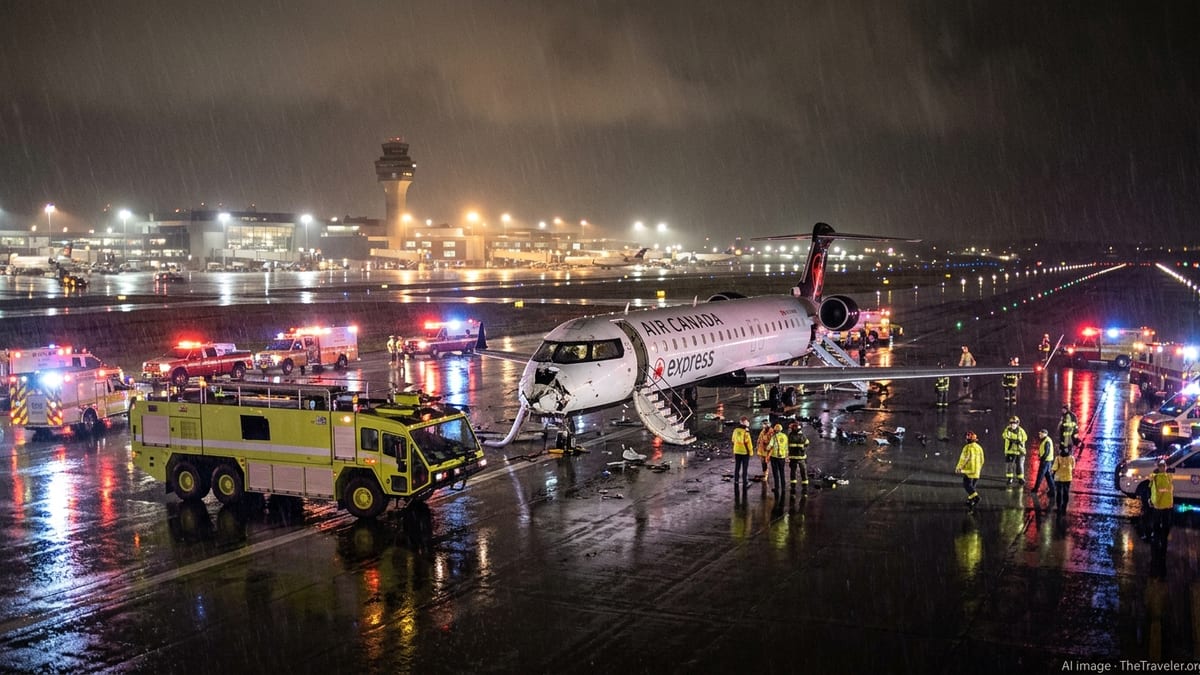
Travelers moving through New York’s LaGuardia Airport on Friday, July 10, 2026, faced widespread disruption as hundreds of flights were canceled or heavily delayed amid thunderstorms across the Northeast and strained air traffic operations.
Get the latest news straight to your inbox!
Severe Weather and Traffic Constraints Hit a Busy Summer Friday
Publicly available aviation data and airline updates indicate that LaGuardia saw a sharp spike in cancellations and long delays on July 10 as storm systems moved along the Eastern Seaboard during one of the peak summer travel weekends. Thunderstorms and low clouds affected visibility and routing, putting additional pressure on an already congested New York airspace shared with John F. Kennedy International and Newark Liberty.
Operational advisories issued for the broader Northeast region in the days leading up to July 10 signaled “slow-going” conditions for arrivals and departures, with traffic management initiatives limiting the number of flights allowed into the area at any given time. These measures, combined with weather-related reroutes, left airlines with fewer options to absorb schedule disruptions when storms intensified on Friday.
Real-time tracking services showed rolling ground delays and flow restrictions through the day, particularly in the afternoon and evening bank of departures when storm cells repeatedly passed through the metropolitan area. As thunderstorms re-formed and moved over key approach and departure corridors, flights that had already been delayed were increasingly pushed into cancellation.
The resulting disruption meant that many LaGuardia flights never left the gate, while others diverted or arrived late from other parts of the country, further compressing the available operating window. By early evening, cancellation tallies had climbed into the hundreds when both departing and arriving flights were taken into account.
National Ripple Effect From LaGuardia Cancellations
The surge in cancellations at LaGuardia did not only affect New York bound travelers. Because the airport serves as a major hub and focus city for several large U.S. carriers, disruptions quickly rippled across the national network. Flights linking LaGuardia with key hubs such as Atlanta, Chicago, Charlotte, Dallas, Toronto, and South Florida cities experienced cascading impacts as aircraft and crews failed to arrive on time for onward routes.
Data from individual route trackers and flight status services for July 10 show multiple LaGuardia legs scrubbed entirely or arriving back to their hub airports many hours late. In some cases, flights that were scheduled to operate on medium range domestic segments from LaGuardia were canceled outright, requiring aircraft to be repositioned on later dates and constraining capacity over the weekend.
Passengers booked on connecting itineraries through LaGuardia, including those traveling between smaller regional airports and larger domestic or Canadian destinations, encountered missed connections and last minute itinerary changes. Some were rebooked through alternate New York airports such as JFK or Newark, while others were shifted to flights days later as limited open seats were quickly taken.
Travel discussion forums and social media posts from July 10 and the morning of July 11 describe travelers stranded at outstations, extended onboard waits, and repeated cancellation notices as carriers attempted to reset their schedules around the New York bottleneck. Accounts also point to crowded customer service desks and long telephone hold times as passengers sought rerouting or refunds.
Travel Waivers and Rebooking Options for Affected Passengers
In response to the forecast of severe thunderstorms and the resulting traffic management constraints, several major airlines serving LaGuardia issued weather-related travel waivers covering July 10 and the surrounding dates. According to publicly posted airline advisories and customer communications, these waivers generally allowed customers to change flights within a defined time window without change fees, provided they kept the same origin and destination.
Some carriers also extended rebooking windows through the weekend to account for limited seat availability on remaining flights, particularly during peak hours. Travelers whose flights were canceled could often request refunds or travel credits, depending on fare rules and the specific airline. However, high demand on summer routes and the sheer volume of disrupted travelers meant that many rebooked seats were only available on early morning or late night services, or via multi-stop itineraries.
Consumer advocates typically advise passengers caught in mass cancellation events to monitor both airline channels and third-party flight status tools, as actual operating times and gate changes can shift quickly. For July 10 at LaGuardia, data from multiple flight-tracking platforms shows that some departures initially posted as heavily delayed later changed to canceled when storms persisted and crew duty time limits approached.
Passengers who secured alternative routes often did so by being flexible on their departure airport, accepting options via JFK, Newark, or even more distant airports with onward connections back to their original destination. Others elected to delay travel entirely to avoid the congested mid-July weekend.
Operational Strain Highlights Ongoing Capacity Challenges
The events at LaGuardia on July 10 underscore how quickly the New York region’s air traffic system can become strained when summer storms coincide with already dense schedules. Although LaGuardia has undergone a substantial terminal redevelopment in recent years, runway and airspace capacity remain tightly constrained compared with demand, particularly during peak travel periods.
Recent planning documents and delay reduction reports for the New York area highlight efforts to modernize air traffic technology, improve surface management at LaGuardia, and better coordinate flows between the region’s three major airports. These initiatives are intended to reduce delay minutes and increase predictability, but many elements are being phased in over several years and were not yet in full effect for the current summer season.
Analysts who follow U.S. aviation performance note that a combination of factors contributes to episodes like July 10, including convective weather patterns, ambitious airline scheduling, and continuing challenges in air traffic control staffing. When those pressures converge on a Friday in midsummer, even modest thunderstorms can result in widespread cancellations as there is little slack left in the system.
LaGuardia’s disruption also comes amid heightened traveler sensitivity to cancellations after several seasons of high-profile operational meltdowns across different airlines. Online discussions following Friday’s events indicate continued frustration from frequent flyers who report more frequent severe delays and last-minute cancellations compared with pre-pandemic years, even when weather is the underlying cause.
What Travelers Through LaGuardia Should Expect Next
By Saturday, July 11, early indications from flight status boards and traveler accounts suggested that operations were gradually stabilizing, although residual delays remained on some routes as carriers repositioned aircraft and crews. Passengers scheduled to depart New York over the remainder of the weekend were still being advised through public information channels to monitor their flight status closely and allow additional time at the airport.
For travelers with upcoming itineraries through LaGuardia later in July, the July 10 disruptions serve as a reminder of how vulnerable peak-season schedules can be to fast-changing summer weather. Industry observers often recommend booking earlier flights in the day, when possible, to reduce exposure to cumulative delays, and considering longer connection times when routing through major hubs like New York.
While infrastructure and air traffic upgrades are expected to improve resilience over the longer term, LaGuardia’s experience on July 10 shows that significant cancellation waves are likely to remain a feature of busy travel seasons when storms line up with high demand. For now, travelers’ best defenses remain flexible planning, careful monitoring of forecasts and flight status tools, and familiarity with airline rebooking and compensation policies before heading to the airport.