


More news on this day
Early June travel plans for hundreds of passengers at New York’s LaGuardia Airport were thrown off course when a fresh wave of delays and cancellations rippled across flights operated by Delta Air Lines, United Airlines, Southwest Airlines and American Airlines, with more than one hundred services reportedly affected in a single day.
Get the latest news straight to your inbox!
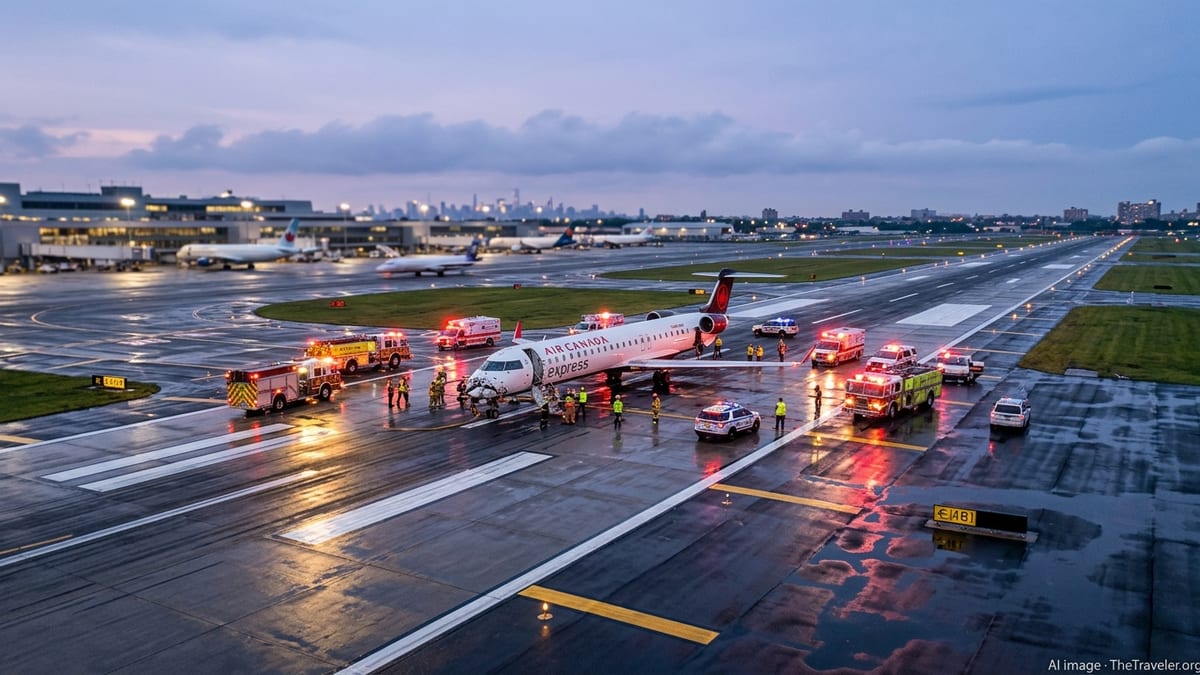
Heavy Disruptions Hit Major Carriers at LaGuardia
Publicly available tracking data and airport monitoring tools for early June 2026 indicate an unusually high number of disrupted flights at LaGuardia, concentrating on services run by the four largest domestic carriers serving the airport. Across a single day, at least 112 flights linked to Delta, United, Southwest and American were reported delayed, while seven were listed as cancelled, creating a cascade of missed connections and crowded gate areas.
The disruptions affected a mix of business and leisure routes, including high-frequency shuttles to major hubs and popular warm weather destinations. Travelers bound for cities such as Atlanta, Chicago, Dallas and Orlando faced rolling departure time changes, with some aircraft held at the gate while crews and ground teams worked through the operational backlog.
The impact extended beyond New York. Because the four carriers use LaGuardia as a key link in their national networks, delays on the ground in Queens reverberated through downstream schedules, leading to further hold-ups for aircraft and crews arriving later into other busy airports.
While LaGuardia has a longstanding reputation for congestion, the level of disruption captured in early June data stands out against typical day-to-day fluctuations, raising new questions about how fragile peak-season schedules remain despite recent investments in terminals and infrastructure.
Weather, Congestion and Tight Schedules Combine
Operational records and aviation tracking platforms suggest that a blend of moderate weather conditions, tight runway capacity and densely packed schedules contributed to the spike in delayed and cancelled services. Even when skies are largely clear, LaGuardia’s short runways and constrained airspace mean that minor slowdowns can quickly accumulate into lengthy queues for takeoff and landing.
Aviation performance analyses consistently list LaGuardia among the country’s more delay-prone airports, pointing to its limited room for expansion and heavy dependence on carefully managed takeoff and landing slots. When early morning flights begin to run late, the knock-on effects often extend through the afternoon and evening departures, particularly on busy Fridays and Sundays when aircraft utilization is already stretched.
Industry data also show that major carriers typically schedule LaGuardia flights with relatively short turnaround times, seeking to maximize aircraft use on high-demand domestic routes. On days when gate changes, late-arriving inbound flights or minor technical checks overlap, those tight buffers can erode quickly, leaving little room to recover from even modest disruptions.
The combination of these structural constraints means that when irregular operations occur, passengers at LaGuardia often experience not just single delays but a series of rolling updates, as departure estimates are repeatedly adjusted to reflect evolving conditions on the ramp and in surrounding airspace.
Passengers Face Crowded Gates and Scrambled Itineraries
The immediate effect for travelers was a familiar but frustrating scene: packed waiting areas, long lines at customer service counters and gate displays filled with revised departure times. Social media posts over the same period show images of crowded concourses and boarding areas as affected passengers sought information, rebooking options and meal vouchers while they waited.
Families traveling at the start of the traditional summer vacation window appeared to be among the most affected, with delays pushing departures late into the evening and, in some cases, into the following day. Missed connections at downline hubs added pressure for those with cruises, tours or time-sensitive events planned soon after arrival.
Business travelers also reported knock-on consequences, including rescheduled meetings and last-minute changes to hotel stays. For some, cancellations of key evening services meant unexpected overnight stays in New York or at connecting airports, as remaining seats on alternative flights filled up quickly.
Travel rights and compensation rules vary depending on the airline, ticket type and reason for the disruption, and publicly available consumer guidance suggests that passengers affected by LaGuardia’s latest wave of delays are reviewing their options for refunds, credits or partial reimbursements for out-of-pocket expenses such as meals and lodging.
Airlines Juggle Recovery Efforts and Summer Demand
Operational data from airline schedules show that Delta, United, Southwest and American have all ramped up capacity into LaGuardia for the 2026 summer season, banking on sustained leisure demand and a continued rebound in corporate travel. The concentration of service among these carriers means that any operational strain can be highly visible across the departure boards.
Following the early June disruptions, flight tracking logs point to a gradual normalization of operations, with on-time performance improving in the days that followed as carriers repositioned aircraft and crews. Recovery flights and upgauged aircraft on select routes helped absorb some of the stranded demand, though certain peak departures remained heavily booked.
Industry observers note that airlines operating at LaGuardia are balancing aggressive schedules with ongoing constraints in pilot availability, maintenance capacity and air traffic control staffing. While carriers have added buffers compared with pre-pandemic timetables, intermittent surges in demand and localized weather can still expose weak points in the system.
The latest episode at LaGuardia underscores how even short-lived disruptions can generate outsized headaches at slot-constrained airports, particularly when several major carriers are affected simultaneously and alternative options for rerouting passengers are limited.
What Travelers Can Do Ahead of Peak Summer Weekends
Consumer travel advisories published around the start of the 2026 summer season recommend that passengers using LaGuardia build extra time into their plans, especially on Fridays, Sundays and holiday periods when schedules are heaviest. Booking earlier departures, avoiding tight connections and monitoring flight status well before leaving for the airport remain widely endorsed strategies.
Experienced travelers also suggest packing essentials such as medications, a change of clothes and charging cables in carry-on bags, in case an unexpected cancellation turns an evening delay into an overnight stay. For those with fixed commitments at their destination, selecting more flexible ticket types or considering nearby airports such as John F. Kennedy International or Newark Liberty International can provide additional fallback options.
Publicly available performance statistics show that LaGuardia continues to sit near the bottom of national rankings for on-time departures, even as terminal renovations and infrastructure upgrades improve the passenger experience inside the buildings. For many travelers, that reality means treating schedule times as best-case scenarios rather than guarantees during the busiest travel weeks.
As airlines, airport operators and aviation regulators look for ways to alleviate recurring congestion, passengers planning June and July trips through LaGuardia are likely to keep a close eye on conditions, hoping that the mid-month peak of the summer getaway season will not bring a repeat of the 112 delays and seven cancellations that marked the airport’s latest bout of travel chaos.