


More news on this day
A major U.S. airport has endured a third consecutive day of Federal Aviation Administration ground stops and departure delays, triggering the highest concentration of flight cancellations in the country and stranding travelers across multiple regions as the busy summer travel period continues.
Get the latest news straight to your inbox!
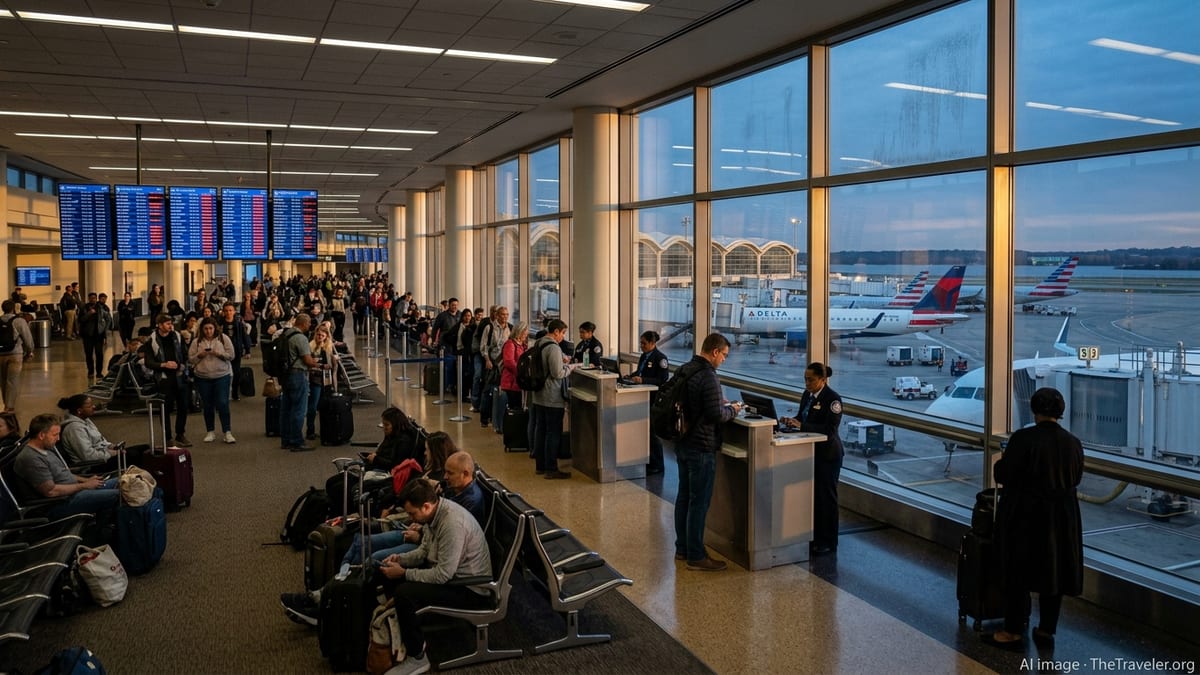
Third Day Of Disruptions At A Key National Hub
Publicly available air traffic data and airline tracking dashboards indicate that one large hub airport has again recorded the most cancellations and extended delays in the United States, as the Federal Aviation Administration continues to meter departures for a third straight day. Ground stops and ground delay programs have repeatedly paused or slowed departures, creating bottlenecks at gates and on taxiways.
The repeated disruptions have effectively turned the airport into the nation’s largest single source of cancellations, with knock-on effects felt at smaller spokes throughout the network. Because many flights operate as through services with shared aircraft and crews, a single paused bank of departures can cascade into dozens of scrubbed or heavily delayed flights by the end of the day.
Tracking services show that the hub has consistently ranked near the top of national cancellation and delay tables during the multi day episode, at times accounting for a sizable share of all disrupted flights within, into, or out of the United States. The pattern has continued even as other major airports have returned closer to normal levels of operations.
Weather, Congestion And Staffing Combine To Slow Traffic
Reports indicate that the immediate triggers for the latest ground stops are a mix of convective weather in key arrival corridors, heavy traffic volume and airspace management constraints. Thunderstorms can close approach paths, force aircraft onto longer routes around storm cells and sharply reduce the number of planes that can land or depart in a given hour.
According to published FAA air traffic summaries, weather remains the leading cause of flight delays nationwide, with traffic management initiatives such as ground stops and ground delay programs used to prevent excessive congestion when conditions deteriorate. These tools slow the rate of arrivals and departures so that runways and surrounding airspace do not become overloaded during peak travel periods.
Aviation analysts also point to ongoing challenges in staffing critical air traffic facilities as a factor that can limit how much traffic a busy hub can safely accommodate at any one time. When controller availability is tight, the margin for handling surges in demand or work arounds for severe weather becomes much smaller, making ground interventions more likely.
Ripple Effects Stretch Across Airline Networks
The hub at the center of the current disruptions functions as a primary connecting point for one of the country’s largest carriers. Network planning information and previous incident reports show that when a core hub is constrained, the airline’s broader schedule can quickly unravel as aircraft and crews end up in the wrong cities at the wrong times.
Travel industry coverage of earlier large scale disruptions has documented how extended ground stops can leave pilots and flight attendants unable to complete their assigned sequences before reaching legal duty limits. Once that happens, even flights that appear ready to depart can be canceled late in the process because there are no available crews to operate them, further amplifying the disruption for passengers waiting downline.
Smaller regional airports are particularly vulnerable in these situations, as carriers often prioritize keeping long haul and trunk routes operating by canceling lower volume feeder flights first. That pattern can leave travelers in secondary cities with fewer rebooking options and longer waits, even though local conditions at their home airports may be relatively calm.
Travelers Face Packed Terminals And Difficult Choices
Images and descriptions posted to social media from the affected hub and its spokes show crowded gate areas, long customer service lines and passengers camped out in concourses as they wait for rebooking or newly assigned aircraft. With many flights sold close to capacity during peak season, finding available seats on alternative departures has become increasingly difficult.
Consumer advocates note that, under U.S. regulations, airlines are required to provide refunds when a flight is canceled or significantly changed and a passenger chooses not to travel. However, there is no federal requirement for cash compensation for delays, leaving much of the response in the form of rebooking options, meal vouchers or hotel accommodations at the discretion of individual carriers.
Travel advice from industry groups continues to emphasize the importance of checking flight status frequently, using airline mobile apps to rebook when possible, and considering alternative routings that bypass the most heavily affected hubs. Some travelers have opted to connect through less congested airports or delay their trips altogether as the disruption continues.
Questions Raised Over Resilience Of The Air Travel System
The latest episode of multi day disruption has renewed attention on the resilience of the U.S. air travel system, particularly during peak demand periods. Recent summers have featured several large scale breakdowns at major hubs, whether driven by severe weather, technology outages or compounded staffing shortages.
Government data and independent analyses show that cancellations at the largest U.S. airports have generally trended lower compared with some prior years, but concentrated events at a single hub can still generate nationwide headlines and frustration. The current situation illustrates how much of the system’s performance can hinge on the smooth operation of a handful of key connecting points.
Policy discussions in recent months have focused on increasing the number of certified air traffic controllers, investing in modernized airspace management tools and encouraging airlines to keep schedules aligned with realistic capacity at constrained airports. Advocates for travelers argue that such steps are essential if the industry is to reduce the likelihood that a single hub can become the biggest source of cancellations in America for days at a time.