


More news on this day
Antarctic cruise tourism is grappling with a mounting workforce challenge as growing numbers of expedition guides abandon what was once considered a dream job, arguing that booming visitor numbers and fossil fuel intensive voyages are at odds with protecting the rapidly warming continent.
Get the latest news straight to your inbox!
Record Visitor Numbers Meet Rising Moral Unease
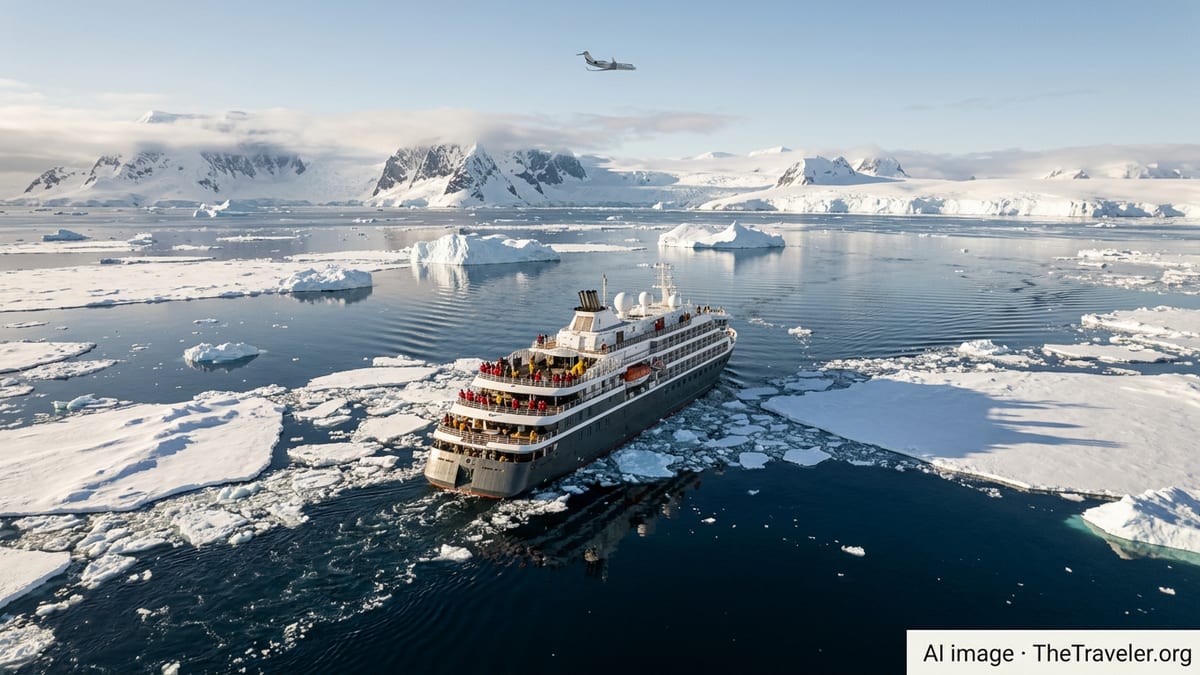
Recent seasons have confirmed Antarctica as one of the fastest‑growing cruise destinations in the world, with more than 120,000 visitor landings reported in the 2023–24 austral summer and industry projections pointing to continued high demand in coming years. Industry briefings describe a marked shift from the niche, expedition style trips of previous decades toward a larger and more commercially diverse fleet, including bigger vessels and more fly‑in packages.
At the same time, research in leading tourism and environmental journals highlights a contrasting trend among the workforce: experienced expedition staff are increasingly questioning their role in sustaining this growth. Studies based on interviews with current and former guides describe mounting discomfort at escorting ever larger groups into fragile wildlife sites while global warnings about sea‑ice loss, glacier retreat and ecosystem disruption intensify.
The tension is sharpened by the carbon footprint of long haul flights and diesel powered ships needed to reach Antarctica. Academic work assessing life‑cycle emissions indicates that a single cruise passenger’s journey to the White Continent can generate several tonnes of carbon dioxide equivalent, a figure that sits uneasily with the conservation messaging guides are expected to deliver on deck and on shore.
These overlapping trends have set the stage for what observers describe as a workforce reckoning, in which some of the industry’s most skilled interpreters are deciding that remaining in the sector no longer aligns with their environmental values.
Guides Turn Resignation into Climate Action
New peer reviewed research has begun to frame quitting polar tourism as a form of pro environmental behaviour. One qualitative study of former Antarctic guides reports that participants did not walk away because they had lost affection for the continent or for their work, but because they saw withdrawal as one of the few levers they had to challenge a model of growth they viewed as unsustainable.
Several interview based projects describe the same core dilemma. Guides are hired in part for their scientific literacy and passion for polar conservation, and they often spend long hours giving lectures on ice dynamics, wildlife disturbance and global climate feedbacks. Yet the very presence of thousands of visitors in remote landing sites, transported on vessels that burn large volumes of marine fuel, has become harder for some to reconcile with those messages.
Researchers note that many of the guides who left had previously embraced the idea that well designed tourism could turn visitors into climate conscious ambassadors. Over time, however, they reported feeling that awareness raising alone was insufficient in the face of rapid environmental change and continued expansion of the cruise market. For some, resigning and speaking publicly about their decision has become a way to draw attention to what they see as a structural contradiction at the heart of Antarctic travel.
This shift is being watched closely by tour operators, which rely on a relatively small pool of multilingual field staff with specialist skills in ice navigation, small craft handling and environmental interpretation. Any sustained outflow of experienced guides could complicate efforts to maintain safety standards and high quality educational programming.
Industry Emphasizes Regulation as Critics Warn of Overtourism
Industry bodies argue that Antarctic cruising remains among the most tightly managed forms of tourism on the planet, pointing to strict site guidelines, caps on the number of people ashore at any one time and mandatory briefing protocols designed to minimize disturbance. Operator associations also underline their role in supporting environmental monitoring, waste management rules and ship routing measures intended to reduce risks to wildlife and sensitive habitats.
However, scientific and policy analyses increasingly question whether existing frameworks are keeping pace with the scale and speed of tourism growth. Commentaries in environmental journals note that the cumulative impact of many thousands of landings across a relatively small network of accessible sites is still poorly understood, particularly in an era of record low sea ice and shifting penguin and seal populations.
Climate researchers and conservation advocates argue that even with careful onshore management, the greenhouse gas emissions associated with repeated cruises to the region undermine wider efforts to limit global heating. Some call for explicit visitor caps, more stringent fuel standards and stricter rules on ship size, while others suggest that Antarctic tourism should be reframed as an exceptional activity reserved for a much smaller number of participants.
Within this debate, guides play a dual role as both implementers of regulations and eyewitnesses to change. Academic work on polar governance describes them as frontline actors who translate treaty principles into daily practice, but who also experience the strain when policies and commercial pressures collide.
A Workforce Caught Between Precarity and Principle
Beyond environmental concerns, recent scholarship highlights that Antarctic guiding is often precarious work. Many expedition staff are employed on short seasonal contracts, move frequently between operators and lack long term job security. Although daily pay rates can appear attractive, the absence of guarantees from season to season and the physical demands of the job leave some workers vulnerable to burnout.
Studies of tourism labor in climate sensitive regions suggest that this precarity can both delay and accelerate exits from the industry. On one hand, workers who depend on guiding as their main income may feel compelled to tolerate ethical discomfort for longer. On the other, the lack of permanent contracts can make it easier, at least administratively, for disillusioned staff to step away once they decide they can no longer justify the work to themselves.
Researchers examining guides as potential climate change agents argue that the sector underutilizes staff expertise and personal commitment. In their view, giving guides a stronger voice in company level decisions on routing, group size, fuel use and partnerships with scientific projects could both improve environmental outcomes and reduce the moral strain that is currently driving some of the most experienced practitioners out of the field.
The emerging picture is of a workforce that is deeply attached to Antarctica but increasingly divided over whether staying inside the system or leaving it altogether is the more meaningful form of climate engagement.
Future Seasons Test the Limits of “Last Chance” Travel
With global demand for so called last chance destinations showing few signs of slowing, analysts expect the ethical debate around Antarctic cruising to sharpen in the next several seasons. Economic headwinds and rising operational costs may moderate the steepest growth curves, but industry documents still point to tens of thousands of people crossing the Southern Ocean each summer in pursuit of polar wildlife and ice scenery.
Some operators are publicly exploring lower carbon strategies, ranging from hybrid propulsion systems and alternative fuels to longer itineraries that bundle multiple regions into a single long haul trip. Others are experimenting with more stringent self imposed limits on passenger numbers or the number of landings per voyage. Environmental organizations and academic observers will be watching closely to see whether such measures amount to incremental tweaks or a substantive shift in how the sector defines success.
For the guides who remain, the coming years are likely to involve continued negotiation of their role as both hosts and critics. Many still view high quality interpretation as a powerful tool for inspiring climate engagement, yet they are operating in a context where the very journeys that make that storytelling possible contribute to the warming trends they describe.
As the Antarctic cruise industry sails into another peak season, the growing chorus of former guides who chose to disembark on principle is forcing operators, policymakers and travelers to confront a difficult question: how many people can justifiably be taken to the planet’s southernmost wilderness, and at what moral cost to those tasked with showing it to them.