


More news on this day
Travelers passing through Miami International Airport on June 8 faced another day of frustration as 77 delayed departures and one cancelled flight disrupted connections across the United States, Canada, Mexico and key European markets including Spain, France and Italy, according to real-time tracking data and publicly available operations reports.
Get the latest news straight to your inbox!
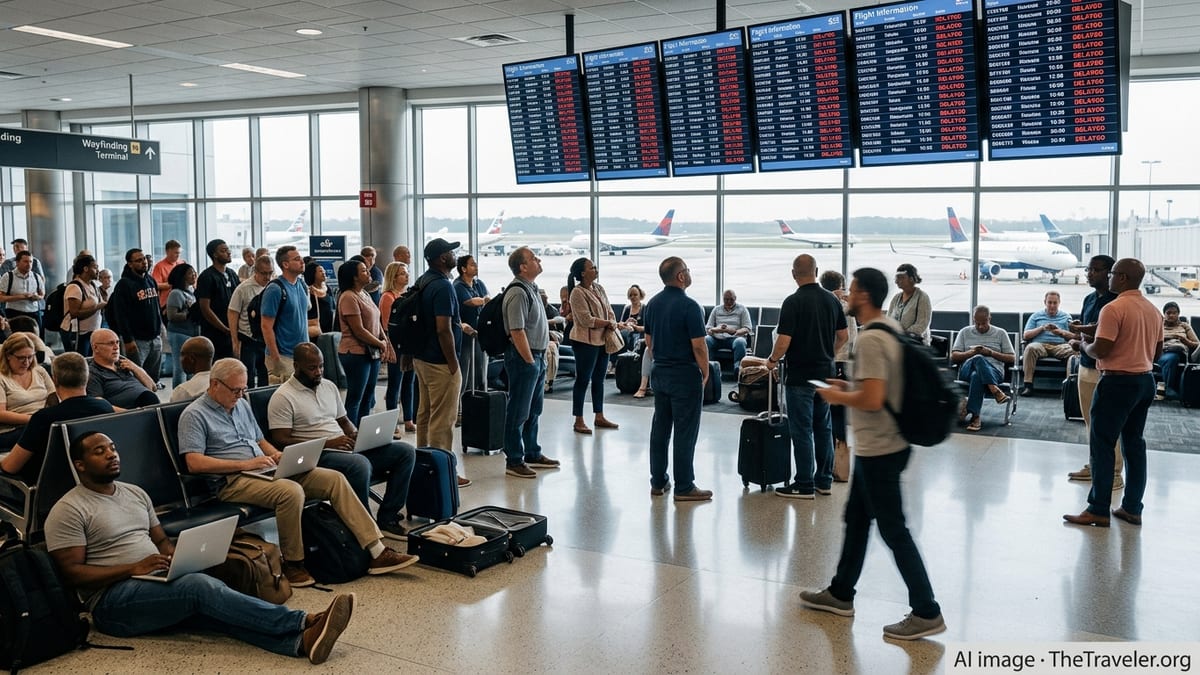
Busy Hub Sees Operational Snarl As Summer Crowds Build
Miami International Airport is one of the busiest gateways in the United States for traffic to Latin America and Europe, with American, United, Southwest and a mix of foreign carriers feeding dense networks across the region. Historical traffic reports from the Miami-Dade Aviation Department show steady growth in international operations into 2025 and 2026, underscoring how even a modest spike in disruptions can quickly affect large numbers of passengers.
On June 8, that vulnerability was on display. Flight-tracking dashboards showed dozens of services scheduled from Miami to major U.S. cities, Canadian hubs and leisure destinations in Mexico operating behind schedule, with delay durations typically ranging from 30 minutes to more than two hours. A single cancellation originating at Miami removed an entire departure bank for affected passengers, forcing last-minute rebookings and missed onward connections.
Publicly available route data indicate that Miami connects directly to major European cities such as Madrid and Paris, with American, Air France and partner airlines operating long-haul services that rely heavily on on-time departures to meet overnight schedules. When aircraft leave late from Miami, the disruption can cascade into missed morning arrivals, aircraft rotations and subsequent departures in Europe.
The uneven pattern of delays and the lone cancellation came as airlines navigate peak-season loads, high aircraft utilization and ongoing staffing and fleet constraints. Industry forums and airline performance trackers in recent months have pointed to a thinner margin for error, meaning any localized disruption at a hub like Miami can translate into ripple effects across multiple regions.
United, Southwest And American Among Most Affected Carriers
United Airlines, Southwest Airlines and American Airlines were among the carriers most visibly affected by the June 8 disruptions at Miami, according to aggregated status boards and airline-specific tracking pages. The three airlines collectively operate a significant portion of domestic and short-haul international flying from the airport, giving them broad exposure whenever the departure bank slows.
United’s Miami services link into its broader U.S. network and onward connections to Canada and Mexico. When Miami departures run behind schedule, passengers connecting via hubs such as Newark, Chicago or Houston can find their itineraries compressed, particularly on evening departures that offer only limited backup options the same day.
Southwest’s point-to-point model means that even a delay on a single Miami rotation can disrupt aircraft and crew assigned to multiple subsequent flights. Recent public discussions among travelers have highlighted how a long delay or cancellation at one station can ripple through a day’s schedule, a pattern visible again in the uneven operations on June 8.
As the dominant carrier at Miami, American is particularly exposed when operations slow. The airline’s extensive network to U.S. cities, Canada, Mexico and Europe relies on tight connection windows at the hub. Public flight data for early June show American services from Miami to regional U.S. destinations and popular leisure markets in Mexico posting departure delays of more than an hour in some cases, compressing onward connectivity for long-haul flights later in the day.
Knock-On Impacts From North America To Europe
The 77 delays and single cancellation at Miami did not remain a local issue. Network maps show that Miami flights feed connections across the United States, linking to cities such as Atlanta, Dallas, New York and San Francisco, which in turn connect to further domestic and international services. When departures from Miami leave late, tight connections at those hubs can be lost.
Canada also felt the impact. Airlines including Air Canada and various U.S. carriers operate regular services linking Miami with Toronto and other Canadian gateways. Delayed Miami departures into these hubs can interfere with banks of evening transcontinental and regional flights, forcing passengers to be rebooked or arrive significantly later than planned.
Southbound routes were similarly affected. Mexico-bound services from Miami, including flights to Cancun and Mexico City, showed schedule slippage on June 8 on several public trackers. Delays on these sectors can be particularly disruptive for travelers connecting to resort destinations or onward domestic links within Mexico, where later frequencies may be limited.
Across the Atlantic, the consequences can stretch into the following day. Published route schedules indicate that Miami’s flights to Spain, France and Italy are typically timed as overnight departures arriving in Europe in the morning. When these flights push back late, arrival times can shift into mid-morning or midday, compressing aircraft turnaround times and reducing slack in the schedule for subsequent European departures.
Weather, Congestion And Structural Strains Converge
While official cause codes for each delay were not immediately available, recent operational patterns at major U.S. hubs point to a familiar mix of contributing factors: convective weather, air traffic flow programs, aircraft maintenance issues and crew availability constraints. In South Florida’s summer climate, fast-developing thunderstorms can trigger ground stops or departure metering at short notice, backing up departures in a matter of minutes.
Air traffic management reports in recent weeks have highlighted intermittent flow restrictions in busy East Coast airspace, which can slow traffic into and out of Miami during peak periods. When combined with high runway utilization at a hub airport, these measures can lead to rolling delays across multiple banks of departures.
Structural strains in airline operations also continue to play a role. Industry reporting this year has emphasized the ongoing impact of aircraft delivery delays, engine maintenance bottlenecks and tight staffing in certain crew categories. These constraints reduce the buffer airlines have to absorb disruptions, making it more likely that a weather or airspace issue turns into sustained delays across part of the schedule.
Travelers’ recent accounts from Miami and other hubs describe a recurring pattern in which flights are repeatedly pushed back in short increments before eventually departing or, in some cases, being cancelled after crew duty limits are reached. The June 8 pattern of dozens of delays and one cancellation at Miami aligns with that broader experience of gradual schedule degradation over the course of a busy day.
What Travelers Can Expect In The Coming Days
With summer peak travel underway, aviation analysts expect Miami and other large U.S. hubs to remain sensitive to even minor operational shocks. Historical traffic data from the airport show that June is among the busier months for both domestic and international travel, increasing the likelihood of crowded terminals and longer recovery times when disruptions occur.
Public guidance from airlines and consumer advocates continues to emphasize the importance of real-time monitoring and flexible planning. Many carriers encourage passengers to track their flights through official apps and status pages, which typically reflect gate changes and revised departure times before they are posted on airport information boards.
For travelers connecting in Miami to onward flights in the United States, Canada, Mexico or Europe, the day’s disruptions are a reminder of the value of longer connection windows, especially for evening departures. Industry observers frequently recommend avoiding very tight layovers during peak summer months, particularly when traveling through weather-prone regions.
As airlines digest the June 8 disruptions, schedule adjustments and equipment swaps are likely to continue over the next several days as carriers attempt to rebalance aircraft and crews. While the impact of the 77 delays and single cancellation at Miami may dissipate relatively quickly, the episode highlights how fragile summer operations can be at one of the country’s most important international gateways.