


More news on this day
United Arab Emirates airports remain open and largely operational even as several governments raise travel advisories for the Gulf and a new hotel security warning prompts visitors to reassess how they plan trips, stays and stopovers in the region.
Get the latest news straight to your inbox!
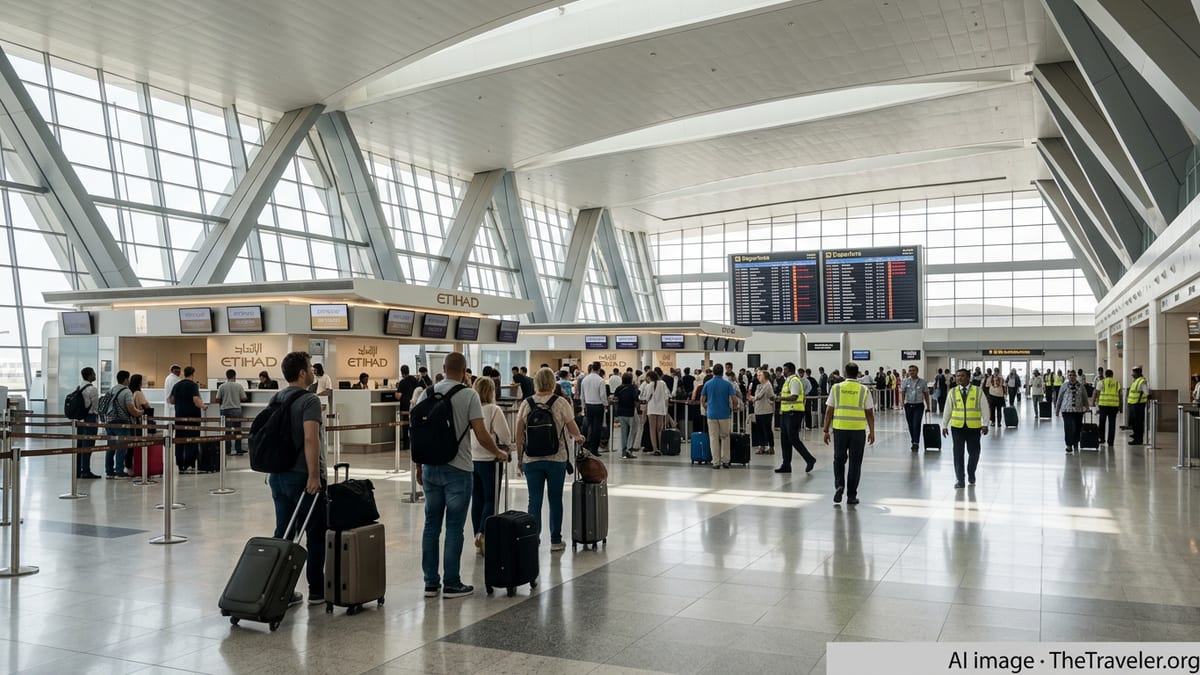
Airports Stay Open Amid Shifting Gulf Risk Assessments
Despite an increasingly cautious tone from foreign ministries and embassies, Dubai International, Abu Dhabi’s Zayed International and other UAE airports continue to handle passenger and cargo movements, according to airport statements and tourism authorities. Publicly available information from Abu Dhabi’s destination authorities indicates that Zayed International Airport is open and Etihad Airways is maintaining connections to dozens of cities worldwide, albeit with schedule adjustments when regional airspace is congested.
Operational updates from Dubai show a similar pattern. After earlier periods of disruption linked to regional missile and drone activity, Dubai’s main hub has been restoring capacity, with local airport operators reporting that passenger volumes and aircraft movements have continued to recover as airspace restrictions ease. Industry figures suggest that even at reduced levels, the hub has processed millions of travelers and tens of thousands of flights in recent months.
At the same time, airlines are advising customers to monitor flight status closely before leaving for the airport. Travel updates from major Gulf carriers highlight the possibility that security checks, immigration procedures and departure processes may take longer than usual at times of heightened alert. Passengers are being urged to arrive early, remain flexible and be prepared for last minute gate or timing changes when regional tensions spike.
The result is a travel environment where the UAE’s aviation infrastructure continues to function as a primary conduit between Asia, Europe and Africa, but where reliability now depends as much on shifting regional dynamics as on local airport conditions. For many travelers, that means building additional buffer time into itineraries and double checking connections through Dubai or Abu Dhabi before departure.
Foreign Governments Raise Advisory Levels for the UAE
While airports remain open, several governments have updated formal guidance for citizens considering travel to the UAE and neighboring Gulf states. Recent advisories from countries such as the United Kingdom, Canada, Australia and the United States point to volatile regional security conditions following repeated exchanges of strikes involving Iran and Western allies, as well as attacks on energy and transport infrastructure across the Gulf.
Some governments now recommend that travelers reconsider non essential journeys to the UAE, citing the risk that regional hostilities could lead to further missile or drone incidents, temporary airspace closures or short notice changes to airline schedules. Official guidance often stresses that while the UAE itself maintains extensive air defense and security systems, incidents elsewhere in the Gulf can have knock on effects on routes, diversions and transit options.
Travel insurance conditions have also come under closer scrutiny. Advisories remind passengers that elevated risk levels, such as a formal call to avoid non essential travel, can affect policy coverage. Would be visitors are being encouraged to review insurance terms carefully, confirm that transits through the UAE are still covered, and verify what happens if flights are disrupted or if the security status of a destination changes after a trip is booked.
For residents, the revised advisories translate into practical guidance rather than blanket warnings. Recommendations include staying alert to local announcements, registering with consular services where available, and maintaining contingency plans for family travel or rapid relocation should the regional security picture deteriorate further.
Hotel Security Warning Adds New Layer to Trip Planning
Alongside the aviation focus, a new hotel security warning has emerged in sector specific analysis and specialist travel risk bulletins examining vulnerabilities in major Gulf tourism destinations. Recent commentary highlights concerns about the potential impact of any future strikes or security incidents on high profile coastal properties and urban resorts, especially in cities that have previously experienced damage to hotels or nearby infrastructure during missile barrages.
Security consultants tracking the region note that large hotels can be indirectly exposed because of their proximity to symbolic landmarks, waterfronts, ports or transport corridors, even when there is no indication that tourists are being deliberately targeted. The latest warnings encourage travel managers and individual guests to review hotel security measures, evacuation routes and shelter in place options, treating these checks as standard due diligence rather than a sign to avoid the UAE altogether.
Publicly available hospitality guidance now frequently recommends choosing properties that clearly communicate emergency procedures, have visible access controls and security staff, and can outline how they would support guests in the event of airspace disruption or extended airport closures. Some corporate travel programs are temporarily favoring hotels located slightly away from the highest profile shoreline developments or near established business districts with stronger critical infrastructure.
For travelers, the practical advice often comes down to verifying booking flexibility, ensuring the hotel has up to date contact details in case of schedule changes, and keeping digital and printed copies of travel documents accessible should a rapid relocation or re routing become necessary.
Tourism and Hospitality Sector Focuses on Resilience
Despite the more cautious tone from overseas governments, tourism and hospitality operators across the UAE are emphasizing continuity, preparedness and flexibility. Local tourism boards describe attractions, shopping districts and beaches as open, with visitor arrivals still supported by extensive ground transport, event programming and retail activity. The pattern echoes previous periods of regional tension in which the UAE continued to receive travelers even as growth rates softened.
Industry updates from airport and customs authorities in Dubai highlight preparations for the current summer travel peak, including expanded staffing at passenger terminals and coordination with airlines to manage surges in demand. Officials have pointed to the dual goals of maintaining service levels and preserving strict security standards, particularly in screening procedures for baggage and cargo.
Many hotels, particularly at the upper end of the market, have invested in crisis management plans and staff training following earlier episodes of regional disruption. These preparations can include designated safe areas inside properties, protocols for coordinating with local emergency services, and communication templates for quickly updating guests if flight cancellations lead to unplanned extended stays.
Travel observers note that the UAE’s experience coping with prior airspace closures and mass rebookings has led to better coordination between airlines, airports and hotels. During past episodes, stranded passengers were accommodated in thousands of complimentary rooms across dozens of properties, a model that sector analysts expect could be reactivated if renewed large scale disruptions occur.
What Travelers Should Consider Now
With airports open but advisories elevated, the UAE presents a complex risk picture for international travelers. The overarching message from government guidance and industry updates is not a blanket instruction to stay away, but a call for careful planning, situational awareness and flexibility. For many, transiting through Dubai or Abu Dhabi remains feasible, particularly on itineraries that can absorb timing shifts or route changes.
Travel planners recommend monitoring both official travel advisories and airline specific updates in the days before departure, with particular attention to any changes in regional airspace rules. Confirming hotel reservations that permit date adjustments, verifying airport transfer arrangements and keeping backup routing options in mind can reduce the impact of sudden disruption.
Visitors are also being advised to keep a low profile around sensitive sites, avoid areas near military or critical infrastructure, and follow any instructions delivered through local alert systems. While major tourist districts in Dubai and Abu Dhabi continue to operate normally, the rapidly evolving security context across the wider Gulf means conditions could shift with limited notice.
For now, the UAE’s aviation and tourism systems are demonstrating resilience under pressure, keeping borders and runways open even as foreign governments raise their level of caution. How long that balance can be maintained may depend less on domestic factors than on the trajectory of regional hostilities in the weeks ahead.