


More news on this day
Travelers on key US–Canada routes faced hours of disruption at New York’s LaGuardia Airport after regional carriers Republic Airways and Jazz Aviation scrubbed dozens of flights and racked up more than 200 delays amid ongoing operational pressures.
Get the latest news straight to your inbox!
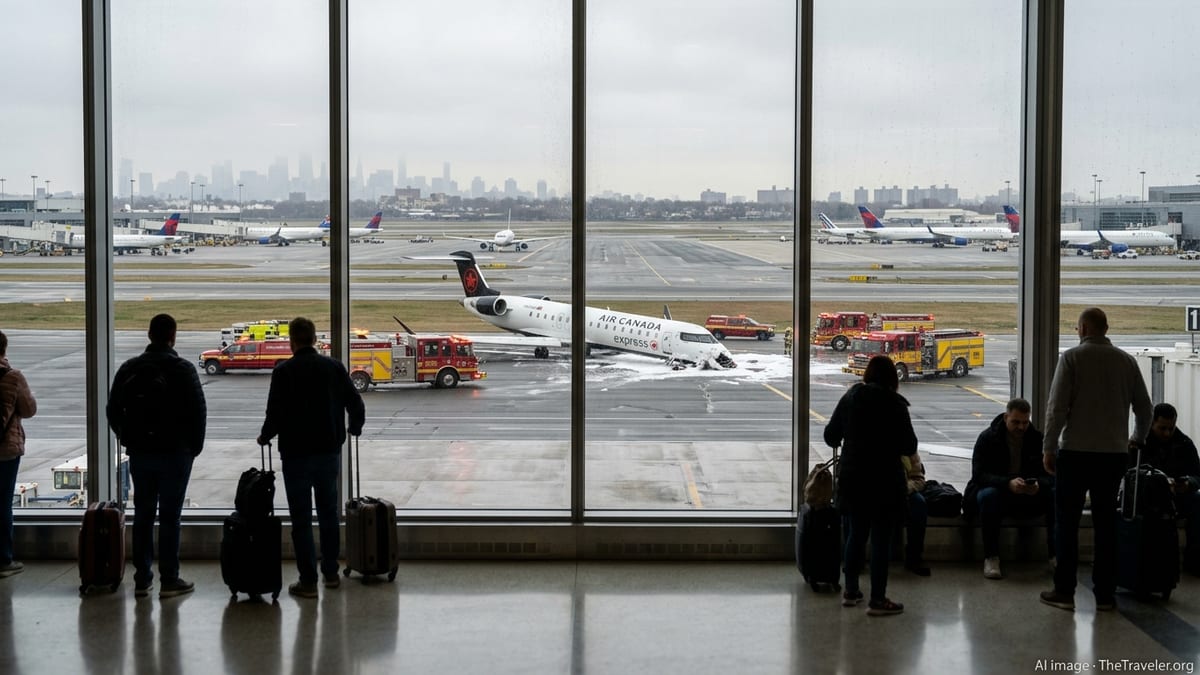
Regional carriers at center of LaGuardia disruption
Publicly available flight tracking data shows that Republic Airways and Jazz Aviation were among the regional airlines hardest hit during the latest bout of operational chaos at LaGuardia. The two carriers, which operate under major airline brands on routes linking New York with Canadian cities and smaller US markets, jointly canceled more than 20 flights in a single day while hundreds of additional services ran late.
Reports indicate that Republic Airways, a key feeder for large US airlines at LaGuardia, was responsible for the bulk of the cancellations, with multiple rotations scrubbed on short notice. Jazz Aviation, which flies as Air Canada Express on cross border services, also registered cancellations and a cluster of lengthy delays on its New York bound operations.
Disruption spread quickly along the busy US–Canada corridor, affecting travelers connecting through LaGuardia from cities such as Toronto and Montreal. With both carriers closely integrated into the schedules of their larger partners, even a relatively small number of cancellations translated into missed connections and rebookings across wider networks.
Available aviation records show that Republic Airways maintains a significant presence at LaGuardia, while Jazz Aviation provides much of the regional lift for Air Canada Express services into the New York market. That structure leaves passengers heavily reliant on the resilience of these smaller carriers whenever conditions at LaGuardia deteriorate.
Ongoing fallout from Air Canada Express runway collision
The latest wave of disruption comes in the shadow of a serious March runway collision at LaGuardia involving an Air Canada Express CRJ 900 operated by Jazz Aviation and an airport fire vehicle. Published coverage of that incident notes that the crash killed two pilots and prompted a full closure of the airport overnight, with more than 600 flights ultimately canceled as operators attempted to reset schedules during the following day.
Although LaGuardia has since reopened both runways, subsequent reporting from travel and aviation outlets indicates that the airport continues to experience elevated levels of delays and cancellations as airlines adjust to operational and staffing constraints. Residual effects from the crash, including changed safety procedures and air traffic management measures, have added friction to an already congested airfield.
Regional carriers such as Jazz Aviation have been particularly exposed. Analysis from industry observers suggests that these operators often have less spare aircraft and crew available than their mainline partners, making it harder to recover from extended ground stops or sudden runway closures. As a result, relatively modest schedule changes at LaGuardia can translate into days of irregular operations on cross border routes.
The impact on US–Canada travel has been notable, given LaGuardia’s role as a primary gateway for business and leisure trips from eastern Canada into Manhattan. Even as Air Canada maintains overall capacity into the New York area by using neighboring airports, disruptions at LaGuardia are still reverberating through Jazz operated services branded as Air Canada Express.
Weather, infrastructure strain and scheduling pressures collide
The latest cancellations and delays involving Republic Airways and Jazz Aviation also reflect broader strains at LaGuardia. Federal aviation data for recent weeks shows recurring ground delay programs tied to weather, with average holdups at times approaching two hours and departure queues contributing to knock on disruptions along the East Coast and into Canada.
Separate reporting has highlighted infrastructure challenges at the airport, including temporary runway closures linked to maintenance work and localized issues such as surface repairs. When one runway is taken out of service, capacity at LaGuardia drops sharply, forcing airlines and air traffic managers to compress schedules or proactively cancel flights to avoid gridlock.
Regional airlines operating smaller jets often bear a disproportionate share of those cuts. Industry tracking sites and passenger advocacy groups note that carriers like Republic Airways are frequently used to thin out schedules because their aircraft carry fewer passengers than mainline narrow body jets, even though the resulting cancellations can severely disrupt travel for those on board.
Scheduling complexity compounds the problem. With LaGuardia slot constrained and heavily banked around peak morning and evening departures to major business destinations, a single burst of low visibility or a ground stop can ripple through an entire day’s operation. Flights serving secondary US cities or cross border routes are often the first to be sacrificed when planners look for slack in the system.
Passengers on US–Canada routes face tough choices
For travelers booked on Republic Airways and Jazz Aviation services, the consequences have been immediate and costly. Accounts shared through public forums describe missed meetings in New York and Toronto, abandoned weekend trips, and overnight stays in terminals as travelers waited for rebooking options on later flights or alternative airports.
Consumer rights organizations advise that passengers affected by LaGuardia disruptions should closely review the policies of the major airline whose code appears on their ticket, since Republic Airways and Jazz Aviation typically operate under those brands. Depending on the cause of the delay or cancellation, travelers may be entitled to meal vouchers, hotel accommodation or refunds, especially when disruptions are not directly linked to severe weather.
On US domestic segments, Department of Transportation rules require airlines to provide refunds when flights are canceled and travelers choose not to be rebooked. For cross border itineraries involving Canada, compensation standards differ and are shaped by consumer protection frameworks in both countries, leaving many passengers to navigate a patchwork of rules that can be difficult to interpret in the midst of a disruption.
Travel analysts suggest that flyers with time sensitive plans consider routing through alternative New York area airports when possible, or building longer connection times into itineraries that depend on LaGuardia. While these strategies cannot eliminate risk, they can provide additional flexibility when regional carriers are forced to trim schedules or when ground delays intensify.
Outlook for summer travel at LaGuardia
As the busy summer season approaches, aviation data firms and travel industry commentators are watching LaGuardia closely for signs that the pattern of elevated delays and cancellations will persist. The combination of heavy construction, lingering effects from the runway collision, and typical summer thunderstorms has raised concerns that regional operators may face another challenging period.
Airlines have indicated through their schedule filings and public statements that they are attempting to build more resilience into operations, including longer turn times for aircraft and adjustments to peak bank structures. However, the tight slot environment at LaGuardia and strong demand for New York access limit how much slack carriers can introduce without surrendering valuable market share.
For Republic Airways and Jazz Aviation, the priority in the months ahead will likely be stabilizing performance on key US–Canada routes and ensuring that aircraft and crew utilization patterns leave more room to absorb unexpected shocks. Industry observers note that both carriers play an outsize role in connecting smaller cities to major hubs, making their reliability critical to the wider North American network.
Passengers planning trips between Canada and the United States through LaGuardia are being encouraged by travel advisers to monitor flight status frequently, consider travel insurance that includes disruption coverage, and be prepared for last minute gate changes or reroutings. While conditions can improve as airlines refine their operations, the recent spate of cancellations and delays underscores how quickly circumstances at one busy airport can ripple across an entire cross border travel corridor.