


Lemmenjoki National Park looks, on the map, like pure trackless wilderness at the northern edge of Europe. In reality it is both wilder and more complicated than most first-time visitors expect. The park’s size, sparse infrastructure, living gold fields and Sámi culture make it unforgettable, but also easy to underestimate. Here is what seasoned visitors wish they had known before heading into Finland’s largest national park.
Get the latest updates straight to your inbox!
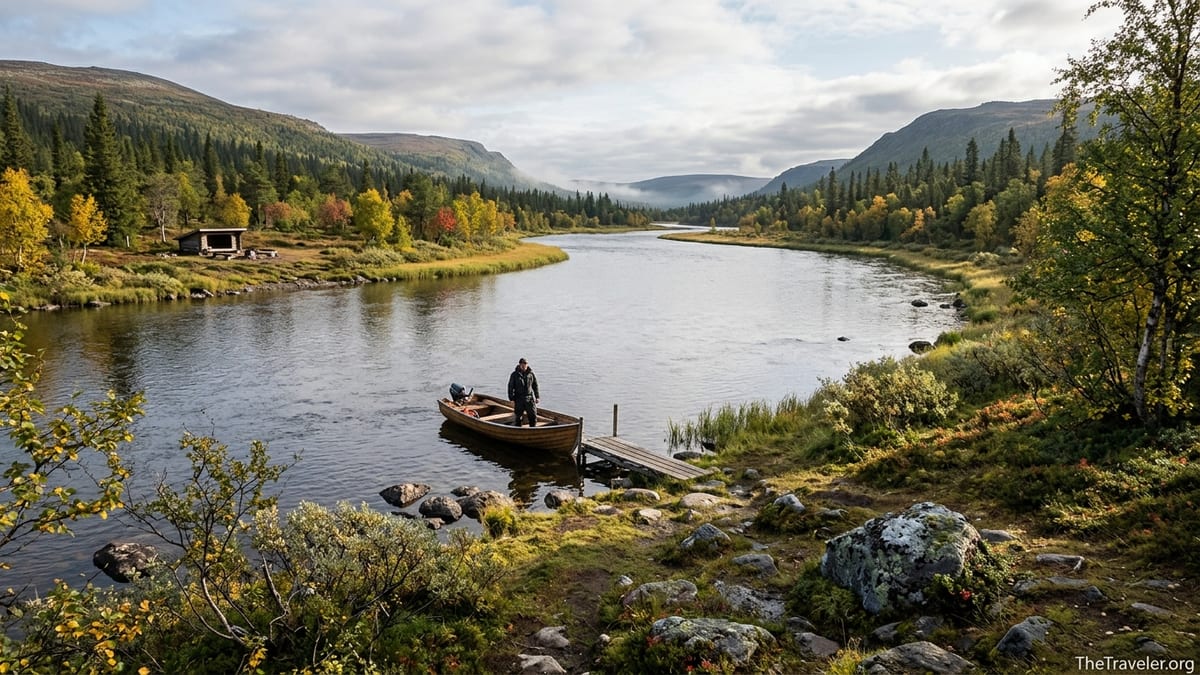
It Is Vast, Remote and Less “Curated” Than Many Expect
Lemmenjoki National Park covers roughly 2,850 to 2,860 square kilometers in Finnish Lapland, making it the biggest national park in Finland and among the largest roadless backcountry areas in Europe. That looks impressive on a brochure, but it feels even bigger on the ground. Main valleys like the Lemmenjoki and Vaskojoki cut through long stretches of spruce forest and open fell, with very few roads and only a handful of entrance points. Many visitors used to well-marked Alpine or American national park trails are surprised by how quickly they feel alone once they leave the river or the closest hut.
Unlike popular parks such as Oulanka or Nuuksio, Lemmenjoki’s infrastructure is concentrated in just a few areas around Njurkulahti and the main river valley. Beyond that there are long sections of path that may be muddy, braided or faint, and some routes are closer to traditional reindeer tracks than groomed hiking trails. Hikers who arrive expecting frequent signposts, railings and boardwalks sometimes find that a 15 kilometer day here feels more like 25 kilometers on a city-side nature trail.
For a concrete example, the classic Ravadasjärvi–Morgamoja Kultala circular route is about 26 to 27 kilometers long, not counting the separate 15 kilometer approach from Njurkulahti if you do not use the boat service along the river. On paper it sounds like a nice weekend loop. On the ground, you are walking in sometimes boggy, rooty terrain, gaining and losing small amounts of elevation all day, often in changing weather. Many hikers who comfortably knock off 25 kilometers in southern Finland find that here they are happier doing 12 to 18 kilometers and leaving more time to set up camp, heat water and simply deal with the conditions.
This relative lack of curation is part of Lemmenjoki’s charm. The park is designed to keep its wilderness character intact, so visitor numbers are managed more by distance and effort than by fences and rules. The trade-off is that you need to arrive with realistic expectations: this is not a “theme park wilderness” where every viewpoint is signposted and every risk engineered away. The experience is more independent, more self-reliant and, for many travelers, more rewarding.
Getting There and Around Takes More Time and Money
On a map, Lemmenjoki looks close to Inari and just a short detour from the main E75 road through Lapland. In practice, reaching trailheads like Njurkulahti from southern Finland usually involves at least one long travel day and often two. Many foreign visitors fly to Ivalo Airport, then continue by bus or rental car to Inari village. From Inari to Njurkulahti is roughly 40 to 50 kilometers along a smaller road, and public transport options change seasonally and can be limited, so you may need to budget for a taxi from Inari if you do not drive. Travelers report paying a taxi fare that can easily approach or exceed the price of a budget flight within Europe for this last stretch, especially if traveling alone.
Once in the park, movement is mostly on foot or by river boat. During the main summer season, local operators based in Njurkulahti and along the Lemmenjoki offer motorboat transport up the river to places such as Ravadas waterfall or the traditional gold areas. A one-way trip for one or two people to Ravadasjärvi or the falls can cost roughly what you might pay for a full-day excursion elsewhere in Europe, especially if you book a private transfer rather than a scheduled tourist cruise. It is money well spent if it saves you a long, repetitive hike next to the river, but it can surprise travelers who assumed transport inside a national park would be minimal-cost or subsidized.
Because the park is so linear, many backpackers use the river boat one way and hike back. For example, some take the boat to Ravadasjärvi, hike the loop via Morgamoja Kultala and return on foot to Njurkulahti. Others have the boat drop them further up the valley and then walk out over several days using wilderness huts. That flexibility is a major advantage, but only if you plan ahead. Boat services do not run in shoulder seasons when the river is iced up or water levels are too low, and departures can be affected by weather or demand. Booking in advance, especially in July and August, and building extra time at the start or end of your hike can save you the stress of missed flights or connections.
If you are used to parks with visitor shuttles or trailhead buses, it is worth repeating: within Lemmenjoki there is no internal public transport network. Everything you do beyond Njurkulahti, Lemmenjoki village or Menesjärvi is powered by your own legs, an arranged boat ride or, in winter, skis and snowmobiles on designated routes. That isolation contributes to the sense of being truly “out there,” but it also means that even short logistical mistakes can translate into long, wet days on the trail.
Trails, Huts and Camping: How Accommodation Really Works
Lemmenjoki is part of Finland’s national park system, so it benefits from the network of wilderness huts and shelters that many repeat visitors come to rely on. The park offers a mix of free open wilderness huts, reservation huts and basic lean-to shelters, plus nearby commercial cabins and a campground near Njurkulahti and Lemmenjoki village. This sounds luxurious on paper, but there are some catches that many first-timers only discover on arrival.
Open wilderness huts are small, often simple log buildings with bunks, a stove and sometimes a gas cooker, intended for short stays. They are free to use and cannot be reserved in advance. In busy weeks in August or during autumn color season, a popular hut along a main route can fill up by evening. The unwritten rule is that everyone makes room and the last arrivals are still sheltered, but you are expected to carry your own tent or other shelter in case a hut is full or you prefer privacy. Hikers accustomed to hut-to-hut systems in the Alps, where you can book a bunk and arrive light, are sometimes caught off guard by this “no guarantees” system.
Reservation huts, on the other hand, can be booked in advance through the official Finnish services. They often offer a bit more comfort or privacy, sometimes including a sauna, and are strategically placed along popular routes. For instance, Morgamojan Kultala, a historic gold-rush site in the park, now serves as a reservable hut on one of the main hiking loops, while other rental options sit on ridges or at lake shores with classic fell views. Rates are typically modest by Nordic standards, but advanced booking is important if you are traveling in peak season or with a group.
As for camping, Finland’s relaxed outdoor culture and everyman’s rights can cause confusion. Inside national parks like Lemmenjoki, you must follow park-specific rules. In practice, this usually means camping at designated sites along the main routes and being more flexible about pitching elsewhere in the more remote parts of the park. Many of these designated zones come with a fire ring, prepared firewood and a compost toilet, which makes life much easier at the end of a long day. Travelers used to commercial campgrounds sometimes expect showers and electricity, but facilities here are deliberately minimal. Bringing a reliable stove, a warm sleeping bag, and a groundsheet that can handle damp tundra moss is more important than counting on amenities.
A useful pattern for many hikers is to plan their route from hut to hut but treat huts as a bonus rather than a guarantee. For example, you might aim for the Ravadasjärvi open hut your first night, a lean-to near Kaapin Jouni’s old homestead on night two, and a tent camp near a smaller side stream on night three. If weather or fatigue change your pace, you still have options. This mindset turns Lemmenjoki from a potentially stressful logistics puzzle into a flexible backcountry experience.
Weather, Seasons and How Wild the Darkness (or Light) Feels
Lemmenjoki lies well north of the Arctic Circle, and its climate shapes everything about the experience. From late May to mid-July the sun barely sets, and in high summer you can hike at midnight without a headlamp, navigating by soft golden light. Visitors often underestimate how disorienting and energizing this can be. Some discover too late that without a good eye mask and a windproof tent, it is hard to sleep when the sky never really turns dark and birds call through the small hours.
Summer also brings mosquitos and other biting insects in serious numbers, especially in June and early July near wetlands and slow river sections. Travelers who pack only a light repellent are often taken by surprise on their first evening at camp when the air around the fire seems to hum. Locals and experienced visitors typically carry a head net, long-sleeved shirts with tight cuffs, and a repellent they already know works for them. Many also plan to cook in shelters and keep tent doors zipped except when entering or leaving. By August, especially after the first cold nights, insect numbers usually drop, and conditions become more pleasant.
By late August and September, Lemmenjoki turns into a destination for autumn colors and, for the lucky, northern lights. Berry bushes and dwarf birch turn intense shades of red and gold, and night skies finally darken enough to see auroras. Daytime temperatures can still be mild, but nights often fall close to freezing. Visitors coming from milder climates sometimes underestimate how cold and damp it can feel in a tent when the sun has been below the horizon for several hours and a river valley fills with mist. A sleeping bag with a realistic comfort rating near or below freezing, a closed-cell foam pad or insulated air mat, and at least one spare set of dry base layers make a big difference in comfort and safety.
Winter, from roughly November to April, is another world. Many trails are covered in snow, hiking turns into ski touring or snowshoeing, and daylight can shrink to just a few usable hours around midday in December and January. Temperatures can fall well below minus 20 degrees Celsius. In these months the park is best tackled by experienced winter travelers or on guided trips that use snowmobiles and wilderness huts. For an average visitor whose only winter reference is a city in central Europe or North America, a March ski tour here can feel both magical and harsh, with long cold nights, dazzling snowfields and the constant need to manage frostbite risk and condensation inside gear.
The Reality of Gold Fields, Reindeer and Sámi Culture
One of Lemmenjoki’s surprises is that it is not just a pristine empty wilderness. Parts of the park are still an active gold-mining area, with claims and operations that hikers can see from main routes. Instead of untouched riverbanks, you may pass piles of rock, old machinery or small dredges. Regulations now restrict gold prospecting here mostly to manual methods such as panning and shovel work, but the landscape bears traces of older, more intensive activity. Some visitors find this jarring after glossy brochures that emphasize untouched nature, while others see it as a rare chance to walk through a living chapter of Lapland’s gold-rush history.
Guided gold experiences are offered in season, particularly near the classic gold fields up the Lemmenjoki valley. A typical short tour might combine a motorboat trip from Njurkulahti, a visit to a small claim, and a chance to try your hand at panning flakes from a trough or stream. Prices are comparable to other half-day excursions in Lapland and can be a highlight for families or travelers who appreciate local stories and hands-on experiences more than long hikes. At the same time, the gold fields are working areas and in some locations privately leased. Walking through claims or touching equipment without permission is frowned upon, and signs usually indicate which zones are off-limits.
Lemmenjoki also lies within Sámi homelands and serves as pasture for semi-domesticated reindeer, which you are likely to see on most multi-day visits. They may appear almost tame, grazing casually near huts or campsites, but they are working animals that belong to specific herding cooperatives. Chasing them for photos, trying to feed them or letting dogs run loose is considered disrespectful and can cause problems for herders. Travelers who are interested in the cultural context often combine a visit to Lemmenjoki with time at the Sámi museum and nature center in Inari, where exhibits explain how reindeer herding, traditional livelihoods and modern tourism interconnect in this region.
Understanding this human layer helps make sense of some of the rules and realities in the park. For instance, you might see snowmobile tracks in winter even in areas where motorized access is otherwise restricted, because herders and certain permit holders are allowed to travel for work. You may also encounter fences or modest cabins used in herding that are not tourist facilities. Treating the park as a shared living landscape rather than a purely recreational space leads to more considerate choices, from where you pitch your tent to how quietly you move through grazing areas.
Safety, Navigation and Managing Realistic Risk
On paper, Lemmenjoki is not a park of dramatic cliffs or high-altitude glaciers. Its hills are rounded fells, and much of the walking is through forest and gentle valleys. That can make it seem inherently safe. In reality, its biggest risks are distance, water, exposure and communication. Trails can vanish under snow patches or bogs, river crossings can become serious after heavy rain, and mobile signal fades quickly once you leave the main valley. Unlike busier hiking regions, you might not see another party for a full day or more on some routes, which means a twisted ankle or lost pack becomes a larger problem.
A reliable GPS device or navigation app with offline maps, backed up by a paper map and compass, is strongly recommended. Several detailed maps of Lemmenjoki are available through Finnish outdoor retailers and visitor centers, including topographic sheets that show huts, camp sites and smaller streams. Many experienced visitors download official route data and bring a power bank large enough to keep their phone or GPS running for an extra couple of days beyond the planned trip length. That margin matters when bad weather or an interesting side valley tempts you into changing plans.
Water is generally plentiful, with countless streams and lakes, but quality can vary, especially near gold fields and heavily used huts. Locals often drink directly from clear upstream sources, but visiting hikers increasingly choose to filter or boil water as a precaution. Lightweight squeeze filters have become common in Lapland, allowing you to refill a bottle from almost any side stream without carrying large quantities at once. In late summer, some smaller creeks can run low or dry, so checking recent conditions with the nearest visitor center or campground operator before you leave is wise.
Perhaps the most important safety advice seasoned travelers share is to plan your days generously. If you calculate that you can hike 20 kilometers per day on level gravel tracks at home, consider planning for 12 to 15 kilometers here, especially on your first day with a full pack. This gives you time to cope with mud, berry picking breaks, navigation checks and unexpected scenery stops without hiking into exhaustion. It also leaves a cushion to deal with sudden rain, gear repairs or simply the desire to linger by a fireplace at a beautiful hut instead of pushing on in marginal conditions.
Budgeting and Services: Wilderness Does Not Always Mean Cheap
The entrance to Lemmenjoki National Park is free, and wild camping or use of open huts does not involve overnight fees. That can make the park sound like a bargain compared with other northern wilderness destinations. Yet many travelers find that their total costs end up higher than expected once transport, food and occasional services are factored in. The remoteness that protects Lemmenjoki’s character also keeps prices for fuel, supplies and commercial accommodation in Lapland higher than the Finnish average.
For example, staying the night at a simple commercial cabin or guesthouse near Njurkulahti or Lemmenjoki village before or after a hike may cost what a mid-range hotel night in a central European city would. Restaurant meals featuring local fish or reindeer in Inari or along the main road are rarely budget-level, particularly once you add in desserts, drinks and service. Groceries for a week-long trek, including dehydrated foods, snacks, gas canisters and emergency rations, add up quickly in small northern supermarkets where shipping costs are built into the shelf price.
Boat trips, guided gold tours, fishing permits and sauna rentals can also stretch a budget. None of these individual costs are unreasonable when treated as occasional treats, but together they can easily push a supposedly “cheap” wilderness week into a premium holiday category. Travelers who arrive with a realistic budget are more likely to enjoy the occasional splurge: a hot shower and sauna after several days on the trail, a hot meal in Inari after eating freeze-dried dinners, or a scenic boat transfer that saves a day of repetitive walking.
At the same time, Lemmenjoki still offers real value if you lean into its self-supported nature. Carrying in most of your food, sharing taxis or rental cars with other hikers when possible, and using open wilderness huts instead of private cabins can keep overall costs manageable. It is also worth remembering that some of the best experiences here are completely free once you have arrived: watching evening light move across a fell ridge, listening to the river from your tent, or catching your first glimpse of the northern lights above a dark spruce forest.
The Takeaway
Lemmenjoki National Park rewards visitors who come prepared for its scale and character. It is not a manicured postcard landscape with a snack bar at every viewpoint, but a living, working wilderness where gold panners, reindeer herders, casual day-trippers and serious backpackers share the same river valleys and ridges. The park’s huts and shelters make multi-day travel more accessible, yet still demand that you bring your own backup shelter and navigation skills. Its climate delivers warm midnight sun, intense insect seasons, brilliant autumns and deep, demanding winters.
If you are willing to plan transport carefully, respect local culture and herding practices, carry appropriate gear and accept that conditions may be rougher than promotional photos suggest, Lemmenjoki can be one of the most memorable places you visit in Finland. It is a park that tends to favor those who move slowly, pay attention and give it enough days to work its quiet magic. For many travelers who have returned several times, the hardest part is not the distance or the weather but accepting that eventually they must leave the river valleys behind and head back to the road.
FAQ
Q1. How many days should I plan for a first visit to Lemmenjoki National Park?
For a first trip focused on hiking, many travelers find that three to five days in the park itself works well, plus at least one travel day on each side. This allows time for a classic loop from Njurkulahti, a river boat trip and at least one more relaxed day to adjust to conditions and enjoy the scenery.
Q2. Do I need a car to visit Lemmenjoki?
You can technically reach Lemmenjoki using flights or trains to northern Finland followed by buses and a taxi, but having your own car or sharing a rental with other hikers makes logistics much easier. Public transport to Inari is workable, yet the last stretch to trailheads like Njurkulahti often requires a pre-arranged taxi or ride.
Q3. Are there entrance fees for Lemmenjoki National Park?
There is no general entrance fee for Lemmenjoki National Park, and using open wilderness huts or camping at designated sites is usually free. However, you will pay for services such as motorboat transport, reservable huts, commercial cabins, guided tours, fishing permits and parking at some private facilities.
Q4. How difficult are the trails for someone with basic hiking experience?
Many of Lemmenjoki’s marked routes are technically non-technical and do not involve scrambling, but the terrain can be muddy, rooty and uneven, with long stretches between facilities. Hikers who are comfortable walking 15 to 20 kilometers a day on good paths in other countries should reduce that expectation slightly here and be prepared for slower progress, especially with a full pack.
Q5. When is the best time of year to visit?
For most hikers, the best period is from late June to early September, when trails are generally snow-free and services like river boats are running. July and early August bring warmer temperatures and more insects, while late August and September offer fewer bugs, cooler nights, autumn colors and a chance of northern lights.
Q6. Do I need to reserve huts in advance?
Open wilderness huts in Lemmenjoki cannot be reserved and operate on a first-come, first-served basis. Reservable or rental huts, including some historic sites and saunas, should be booked in advance through the official Finnish booking system, especially during peak holiday periods and autumn color season.
Q7. Is it safe to drink water from rivers and streams?
Many locals drink untreated water from clear, fast-flowing streams in remote parts of the park, but visitors are increasingly cautious. Using a lightweight filter, purifier or boiling water is a sensible precaution, especially near gold fields, busy huts or slow-moving sections of the river.
Q8. Can beginners try gold panning in the park?
Yes, several local operators offer short guided gold panning experiences, often combined with a river boat trip. These tours typically provide pans, instruction and access to a claim where you can try your luck, making it an accessible activity even for families and first-time visitors.
Q9. Are there bears or other dangerous animals in Lemmenjoki?
Lemmenjoki is home to large mammals such as elk and predators like bears and wolverines, but sightings are rare and attacks on people are extremely unusual. The greater concern for most visitors is managing insects, weather and navigation rather than wildlife encounters, provided you store food sensibly and move calmly through the landscape.
Q10. What kind of clothing and gear do I really need?
At a minimum you should bring sturdy waterproof hiking boots, a layered clothing system for cool and wet weather, effective insect protection, a reliable tent or shelter even if you plan to use huts, a sleeping bag suited to near-freezing nights, a map and navigation device, and a stove for cooking. Packing as if you might need to be self-sufficient for an extra day or two is a good guideline in Lemmenjoki’s remote conditions.