


Landing at Las Vegas Harry Reid International Airport is the easy part. The tougher question is how to get yourself and your luggage to the hotel without overpaying or wasting precious vacation time. Between flat-fare taxis, surge-prone rideshare apps, and a patchwork of shuttle services, the “cheapest” or “easiest” option is not always obvious. In many situations, especially for solo travelers or groups, an airport shuttle quietly beats Uber or Lyft on both price and convenience.
Get the latest updates straight to your inbox!
How Airport Shuttles Work at Harry Reid International
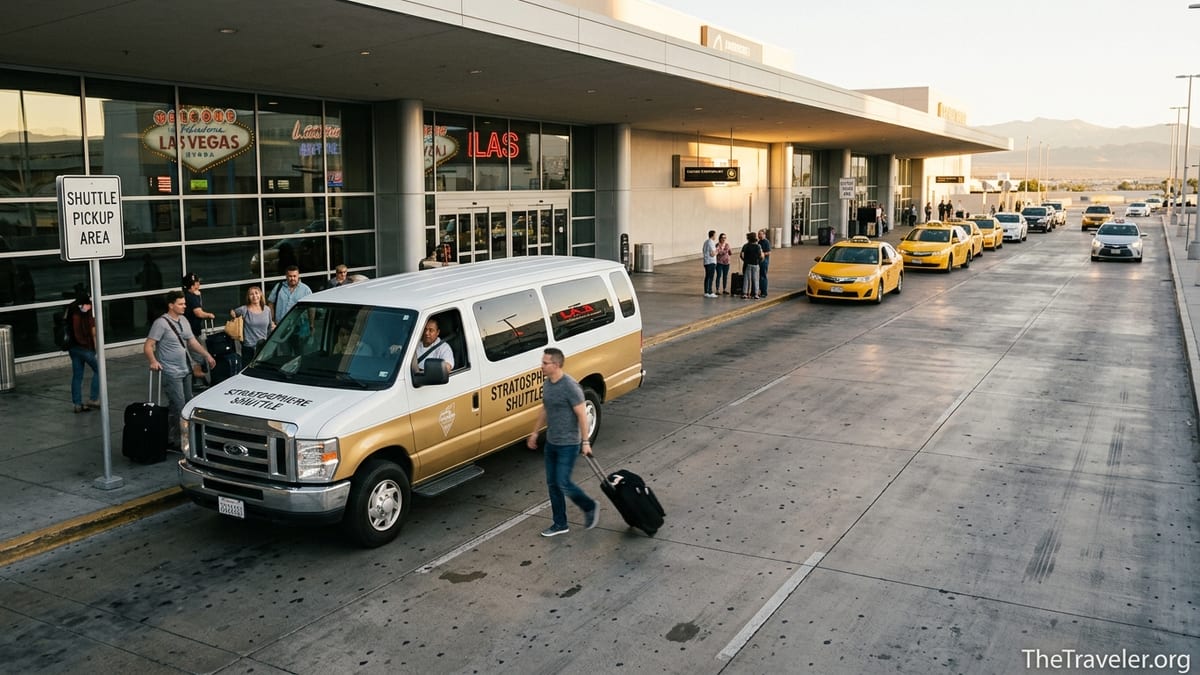
Harry Reid International Airport sits a short drive from the main resort corridor, but the terminal layout and traffic mean your transfer can feel more complicated than the distance suggests. Most shuttles operate from the lower level of Terminal 1 and Terminal 3, in clearly signed zones separate from taxis and rideshare pickup. At Terminal 1, the shuttle pickup areas are just outside baggage claim, while at Terminal 3 they sit on the arrivals level near the exits used for buses and limos. You do not need to leave the airport or use the rental car shuttle to access them.
Several licensed companies run shared and private shuttles from the airport to Strip and downtown hotels. Bell Trans is the best known operator and has been in business for decades, offering both per-seat shared vans and prebooked private vehicles ranging from SUVs to minibuses. Other operators and booking platforms resell similar services, but in practice many of those reservations are fulfilled by the same core shuttle fleets. This means you may see different brand names online, but check-in at the airport often funnels you to the same counters and boarding zones.
Most shared shuttles operate on a simple model: you either prebook online and show a confirmation at the counter, or walk up after landing and buy a ticket. Staff group passengers heading to the same area, then load vans or minibuses that follow a loop of hotels on the Strip or downtown. Expect some extra stops compared with a private ride, but also a significantly lower cost per person, especially if you are traveling solo.
Unlike taxis and rideshare, which price by distance, time and demand, shuttle pricing tends to be flat and fairly stable year-round. A shared shuttle from Harry Reid to a typical mid-Strip resort such as Bellagio, Caesars Palace or Park MGM often costs in the low teens per person one way, with some services offering a modest discount for roundtrip tickets. Downtown hotels like Golden Nugget or Fremont Street properties are usually priced a few dollars higher because of the longer distance, but still under what many visitors now see on Uber and Lyft during busy periods.
Shared Shuttles vs Uber, Lyft and Taxi: Real Cost Comparisons
In 2026, the gap between shuttle prices and rideshare fares has widened in Las Vegas. On a normal weekday afternoon, an UberX from Harry Reid International to a central Strip hotel usually runs around 20 to 27 dollars before tip, while a trip to downtown can land closer to 25 to 35 dollars depending on traffic and demand. During major events, weekends or late-night arrivals, some travelers report short airport-to-Strip trips spiking over 35 dollars or more for basic rides, with higher categories like Uber Comfort or XL costing significantly more.
By contrast, a one-way shared shuttle seat to Strip hotels typically remains close to the low-teens range per person, and to downtown in the mid-teens range, even when rideshare prices climb sharply. For a solo traveler heading from the airport to a Flamingo Road or Las Vegas Boulevard resort, this can translate to roughly half the price of a standard UberX, and often far less than an on-demand Uber ordered during surge pricing. When you add a return transfer, the roundtrip shuttle ticket can remain comfortably under what many people end up paying for a single high-demand rideshare ride.
Taxi pricing has also shifted. Nevada regulators introduced flat fares for trips between Harry Reid and Strip hotels. Depending on which zone your hotel falls into, a taxi ride from the airport to most mid-Strip properties is commonly in the 25 to 35 dollar range plus tip, with the airport pickup fee already built into that fixed rate. For short distances, such as from the airport to resorts near Tropicana Avenue, the flat fare means you now pay more than you might have under a strict meter system, but you avoid classic “long haul” detours through the freeway tunnel.
When you put it all together, shared shuttles clearly win for solo travelers and some couples aiming to minimize costs without worrying about dynamic pricing. A single traveler going from Harry Reid to a central Strip hotel might pay around 13 dollars on a shuttle instead of 25 dollars in a taxi or 20 plus dollars in an Uber. A pair of travelers could still come out ahead, paying roughly 26 dollars in total for two shuttle seats versus 25 to 30 dollars for a taxi. Once your party grows to three or four passengers, the math begins to tilt toward taxis or rideshare, which is where private shuttles and group transfers come into play.
When Shared Shuttles Are the Smartest Choice
Shared shuttles shine for certain traveler profiles. If you are arriving alone or as a couple without children, staying at a hotel on the Strip or downtown, and your priority is to save money rather than minimize every minute of transit, the shared van is often the sweet spot. This is especially true during busy conventions, major sports weekends, music festivals, or holiday peaks when rideshare prices climb and the ride-hailing zones at the airport become congested and chaotic.
Consider a typical Friday evening in March, when a convention overlaps with a home game at Allegiant Stadium. UberX prices from the airport to South Strip properties like Mandalay Bay or Luxor may show as high twenties or low thirties before tip, with wait times stretching to 15 minutes or more as drivers battle event traffic. In the same moment, the shared shuttle counter may be selling per-seat tickets at a stable price that has barely changed from the previous month, and boarding times can be predictable because vans run on fixed loops rather than chasing surge fares.
Shuttles are also a simple fallback when your phone battery is low or you are having issues with your rideshare account. Since you can pay at the counter with a card or cash and board with only a printed confirmation or name lookup, you do not need to rely on an app or mobile data connection. For international visitors who arrive without US mobile service, this can be a practical way to avoid dealing with airport Wi-Fi or roaming plans while standing in a crowded pickup zone.
The main trade-off with shared shuttles is time. A van might stop at several hotels along Las Vegas Boulevard before reaching yours, which can add 20 to 40 minutes to your door-to-door journey compared with a direct taxi or Uber. If you land late at night, are traveling with tired children, or are on a tight schedule for a dinner reservation or show, consider whether saving 10 to 15 dollars is worth the extra delay. But in many ordinary scenarios, particularly daytime arrivals where check-in will not open for a few hours, the slower pace and lower price feel like an acceptable or even pleasant compromise.
Private Shuttles and Group Transfers: When They Beat Rideshare
For groups, private shuttles and prearranged transfers can beat both rideshare and standard taxis on value and comfort. Companies such as Bell Trans and other charter operators run private SUVs, limos, and minibuses that meet your party at the airport and take you directly to one hotel or multiple stops. Pricing is typically fixed by vehicle, not by passenger, which means larger groups can drive down the cost per person even when the base rate looks high at first glance.
As one example, a private stretch SUV or small limo for up to six people from Harry Reid to a center-Strip resort might be quoted in the 80 to 120 dollar range, depending on date, time and extras like a brief photo stop at the “Welcome to Fabulous Las Vegas” sign. If six adults are splitting that ride, the per-person cost can be roughly comparable to or only slightly higher than each person paying for a shared shuttle, yet the group benefits from door-to-door service, direct routing, and luggage assistance without multiple stops.
Larger groups, such as bachelor or bachelorette parties, family reunions, or corporate groups, can book minibuses or small coaches that hold 15 to 30 people. A private minibus transfer for around a dozen passengers from the airport to the Strip may come in around the same total price as booking three or four separate UberX rides during a busy time. The difference is that everyone arrives together, avoids waiting in different pickup queues, and has an easier time coordinating hotel check-in and baggage delivery.
Groups with accessibility needs also benefit from private arrangements. Many shuttle companies operate ADA-compliant vehicles with wheelchair lifts and reserved seating, but availability can be limited at peak times. If someone in your party uses a wheelchair or mobility device, booking an accessible private shuttle in advance ensures the correct vehicle and ramp equipment will be waiting for you, instead of gambling on what may be available in the shared queue or standard taxi stand.
Hotel Shuttles, Free Transfers and Off-Strip Stays
Unlike some resort cities, most major Strip casinos in Las Vegas do not operate free airport shuttles. For years, a handful of off-Strip or budget-friendly hotels ran complimentary vans, but that number has shrunk as rideshare has grown and operating costs have risen. Today, free airport shuttles are more common among limited-service hotels near the airport or south Strip corridor, including several brands under Hilton, Marriott and similar chains, rather than the marquee casino resorts.
A traveler booking a night at an airport-focused property such as Tru by Hilton Las Vegas Airport or certain SpringHill Suites and Courtyard hotels may still find complimentary airport transfers included. The shuttle typically runs on a fixed schedule, perhaps every 30 minutes, and operates a short loop between the hotel and the terminals. These free shuttles are practical for late arrivals who simply want to sleep near the airport, or for travelers with early-morning flights who prefer to stay close to their departure gate and then transfer to the Strip by taxi, rideshare or public transit afterward.
Some downtown or off-Strip casinos occasionally offer promotional shuttles tied to specific events, conventions or loyalty programs. For example, during a large trade show at the Las Vegas Convention Center or a furniture market at World Market Center, event organizers may run branded buses between partner hotels, the convention venues and sometimes the airport. These shuttles are usually limited to registered attendees and operate on event-specific timetables, so they should be seen as a bonus rather than a guaranteed airport transfer option.
If you are staying in an off-Strip condo, vacation rental or smaller motel that does not advertise shuttle service, your best bet is to combine transport types. You might take an economy shared shuttle to a major Strip resort like MGM Grand or Caesars Palace, then complete the final short leg by local taxi or a quick rideshare trip at standard in-town rates. This can still be cheaper than paying surge fares from the airport directly to a lesser-known address that drivers might have trouble finding in heavy traffic.
Shuttles, Luggage and Traveling With Gear
Airport shuttles are generally well set up for standard luggage, but there are a few practical points to consider before you buy tickets. Most shared shuttles expect each passenger to bring one standard suitcase and one small carry-on. Large sports equipment, musical instruments, or multiple oversized bags may not be accepted without prior notice, or may require an extra fee. If your trip to Las Vegas involves golf clubs, trade-show displays, or bulky photo gear, check the fine print of your shuttle provider or consider a private transfer with more cargo space.
On the positive side, shared shuttles eliminate some of the stress of loading luggage into smaller cars. Vans and minibuses have dedicated cargo areas, and drivers are used to stacking suitcases for an entire loop of hotels. If you are arriving with a long-haul international flight and two heavy checked bags, handing those over to a shuttle driver outside baggage claim can be easier than wrestling them into the trunk of a compact rideshare car that has just dropped off another traveler and still has items in the back.
For families traveling with strollers, car seats or multiple children, the shuttle trade-offs are mixed. On one hand, a minibus gives you space to settle kids and store gear without playing trunk Tetris. On the other hand, you will be sharing the vehicle with strangers, and shuttle seating usually does not come with car seats installed. Parents who prioritize installing their own child seats may prefer a prebooked private SUV or a taxi where they can quickly attach their equipment and travel directly to the hotel without other passengers.
Travelers with mobility challenges should pay close attention to accessibility details. Several licensed shuttle companies offer vehicles with wheelchair lifts, but you may need to call ahead to confirm availability and booking procedures. If you rely on a mobility scooter, walker or other large assistive device, clarify whether it will ride in the passenger compartment or the luggage bay. In some cases, an accessible taxi or a dedicated medical transport service could provide a smoother experience than a general shared shuttle, particularly at very late or early hours.
Timing, Terminals and How to Choose on Arrival Day
Choosing between shuttle, rideshare and taxi often comes down to three factors on arrival day: how many people you have, how much time you can spare, and how chaotic the airport feels when you collect your bags. At Harry Reid, both Terminal 1 and Terminal 3 have clear signage to direct passengers to “Shuttles,” “Taxis” and “Ride Share,” but the actual walk and wait can feel drastically different depending on the time of day and ongoing events in the city.
If you land in Terminal 1, the traditional taxi queue is directly outside baggage claim. In many cases you can be in a cab within a few minutes, especially mid-morning or early afternoon on weekdays. Shuttles are picked up nearby at dedicated zones, often with staff waving signs or guiding passengers to counters just inside the terminal. Rideshare pickup areas, by contrast, are usually a longer walk from baggage claim and can involve crossing roadways or following signs to multi-level parking structures. During heat waves or when you are carrying multiple bags, that extra walk matters.
Terminal 3, used by multiple international and domestic carriers, has its own set of ground transportation zones. Taxi and shuttle areas sit outside the arrivals level, while rideshare pickup is positioned separately to manage congestion. Here, shared shuttles can be especially attractive for travelers arriving from overnight flights who do not want to troubleshoot an app at a busy curb. You can simply follow the airport signs to the shuttle counters, pay on the spot, and wait to be called when your hotel zone is boarding.
As a rule of thumb, if you are alone or traveling as a couple and your app shows high surge pricing or long estimated arrival times for Uber or Lyft, glance at the shuttle counter before committing. If your group is three or more and rideshare prices look reasonable, a taxi or single rideshare vehicle may offer a faster and comparably priced trip. For groups of six or more, especially those who care about starting the trip with everyone together, prebooked private shuttles typically deliver the best balance of cost, convenience and experience.
The Takeaway
There is no single best way to get from Harry Reid International Airport to your Las Vegas hotel. The right choice depends on your group size, budget, luggage, arrival time and tolerance for crowds. In many cases, especially for solo travelers and couples arriving during busy periods, a traditional shared shuttle quietly beats both Uber and Lyft on price, and can even edge out flat-fare taxis when every dollar counts.
For groups, private shuttles and prearranged transfers can deliver surprisingly good value once you divide the total fare among all passengers, while also simplifying luggage logistics and keeping everyone together. Free hotel shuttles still exist, primarily at airport-focused properties and for certain events, but they should be seen as a bonus rather than the default. Meanwhile, taxis remain a strong contender from the airport thanks to flat fares and minimal walking, and rideshare excels for flexibility and in-town hops once you are settled at your hotel.
The key is to think about your transfer like any other part of your Las Vegas budget. Check approximate Uber and Lyft prices for your arrival time, compare them with known shuttle rates, and factor in how many people and bags you are moving. With a few minutes of planning, you can step off the plane knowing whether a shared shuttle, a private transfer, a taxi or a quick app tap will get you to the casino floor faster and for a price that feels fair.
FAQ
Q1. Is a shared airport shuttle from Harry Reid cheaper than Uber to the Las Vegas Strip?
For solo travelers and many couples, a shared shuttle is often cheaper. Per-seat shuttle prices to Strip hotels frequently undercut typical UberX fares, especially during busy times when rideshare prices surge.
Q2. How long does a shuttle from Harry Reid Airport to Strip hotels usually take?
Plan on 30 to 60 minutes door to door. The drive itself is short, but shared shuttles make multiple hotel stops and may wait a few minutes to fill seats before departing.
Q3. Do I need to book a Las Vegas airport shuttle in advance?
Advance booking is recommended during weekends, major conventions and holidays, or if you arrive late at night. On quieter days you can usually walk up to a shuttle counter after collecting your bags.
Q4. Are there any free hotel shuttles from Harry Reid International Airport?
Some airport-area hotels, especially limited-service brands, still run free shuttles, but most major Strip casinos do not. Always confirm directly with your hotel before assuming a free transfer exists.
Q5. When is a taxi better than a shuttle or Uber from the airport?
A taxi is often best if you want to avoid walking to the rideshare area and prefer a fast, direct trip with a predictable flat fare to Strip hotels, particularly when rideshare prices are high.
Q6. What is the best option for a group of six or more people?
For larger groups, a private shuttle, limo or minibus typically offers the best combination of value and convenience. The total fare divided among passengers can rival or beat multiple separate Uber rides.
Q7. Can I bring large luggage or sports equipment on a shared shuttle?
Most shuttles allow standard suitcases and carry-ons, but large items such as golf clubs or trade-show cases may need advance approval or incur extra fees. Check the operator’s luggage policy before booking.
Q8. Are shuttles from Harry Reid Airport accessible for wheelchair users?
Several licensed shuttle companies operate vehicles with wheelchair lifts, but availability can be limited. Travelers who use wheelchairs should arrange an accessible shuttle or taxi in advance whenever possible.
Q9. How do I find the shuttle pickup area at Harry Reid International?
Follow airport signs for “Shuttles” or “Hotel Shuttles” from baggage claim. At both terminals the pickup zones are on the arrivals level near other ground transportation, with counters or staff to direct you.
Q10. Is it safe to use shared shuttles, taxis and rideshare from Harry Reid Airport at night?
Licensed shuttles, official taxis and authorized rideshare pickups at the airport operate under local regulations and are generally considered safe. Stick to marked zones and avoid unlicensed solicitations inside the terminal.