


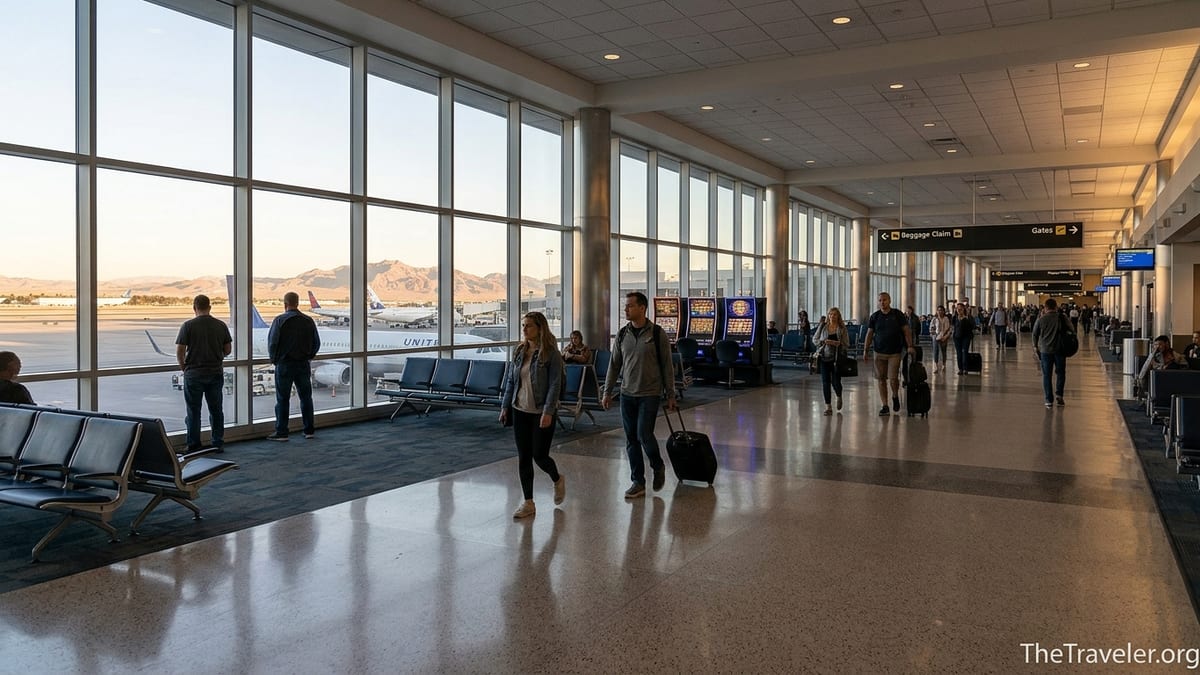
Landing at Las Vegas Harry Reid International Airport can feel like stepping straight onto a casino floor: bright lights, slot machines humming and thousands of people moving in every direction. For first-time visitors, this guide walks you through exactly what to expect at the airport, how to get to your hotel on the Strip or downtown, and how to avoid common pitfalls so you can start enjoying Las Vegas as smoothly as possible.
Get the latest updates straight to your inbox!
Airport Basics: Layout, Terminals and Arrivals
Harry Reid International Airport, still called “McCarran” by many locals, is the main gateway to Las Vegas and sits just a few miles from the southern end of the Strip. The airport has two primary passenger terminals: Terminal 1 and Terminal 3. There is no Terminal 2, so if you see it mentioned in older guides, you can safely ignore it. Most domestic flights use Terminal 1, while many international and some domestic carriers operate from Terminal 3. A free inter-terminal shuttle connects the two, and you will never have to clear immigration or customs to move between them if you are on a domestic connection.
When you land, you will generally deplane into concourses labeled A, B, C or D for Terminal 1, and E gates for Terminal 3. After a fairly short walk past the first set of slot machines, you will follow overhead signs to baggage claim. In Terminal 1, baggage claim is on Level 1 below ticketing; in Terminal 3 it is on the same general level you arrive on, with separate carousels for domestic and international flights. Customs and immigration for international arrivals are housed in Terminal 3, regardless of which carrier you fly.
Once you have your luggage, you will see clearly marked exits for ground transportation, rideshare, shuttles and rental car shuttles. Although the airport is compact compared with major hubs, walk times can still feel long after a late-night arrival. Budget 15 to 30 minutes from gate to curb, especially if you are arriving in the evening when banks of flights land close together.
For first-time travelers, the most important thing to know is which terminal you are using. Your boarding pass and airline confirmation will state Terminal 1 or Terminal 3. If you need to switch terminals, follow signs for the inter-terminal shuttle; pickups are typically on the ground level outside the terminal, and the ride between terminals is roughly 10 minutes depending on traffic.
Which Airlines Use Which Terminals
Most large U.S. carriers and low-cost airlines use Terminal 1. It commonly handles flights from airlines such as Southwest, Spirit and Frontier, along with several others that operate domestic networks. If you are flying from cities like Los Angeles, Phoenix, Denver, Salt Lake City or Dallas on one of these carriers, you will almost certainly arrive into Terminal 1 and depart from it as well.
Terminal 3 is home to a mix of domestic and international airlines. It typically handles big-network carriers and international operators that serve Las Vegas from hubs like London, Toronto, Mexico City and various European and Canadian cities. If you are flying on a full-service carrier from overseas, or on certain U.S. airlines that use Terminal 3 for operational reasons, you will find check-in counters, security and baggage claim all under one modern roof.
Because airline terminal assignments can change, especially during busy convention periods or schedule overhauls, always double-check your airline’s app on the morning of travel. For example, a carrier that usually operates from Terminal 1 might occasionally move some flights to Terminal 3 during construction or peak periods. The airport’s wayfinding signage is updated, but verifying in advance saves you from being dropped off at the wrong terminal by a taxi or rideshare.
If you do end up at the wrong terminal, do not panic. Use the inter-terminal shuttle rather than paying for another ride. Factor in an extra 20 to 30 minutes for the bus and security if you misjudge your drop-off, particularly during weekend evenings when security queues can build quickly.
Ground Transportation: Taxis, Rideshare, Shuttles and Buses
The biggest shock for many first-time visitors is how close the airport is to the Strip. In normal traffic, a taxi from Terminal 1 to a mid-Strip hotel like Bellagio or Paris can take around 10 to 15 minutes. Fares vary by time of day and traffic but are often in the range of a short-city ride in other U.S. metros. Taxis line up outside baggage claim areas at both terminals, and attendants will direct you to the next available cab. Credit cards are widely accepted, though it is wise to confirm before you load your bags.
Rideshare services such as Uber and Lyft are fully authorized at Harry Reid International Airport. Pickup points are well signposted: in Terminal 1 they are typically in the parking garage on an upper or mezzanine level, while Terminal 3’s rideshare pick-up is on the valet or designated level of its parking structure. The apps will direct you to a lettered zone, and screens in the garage will show vehicle and license plate details. In practical terms, a rideshare trip to a central Strip resort is often comparable in price to a taxi, though surge pricing can apply after big concerts, fights or late-night arrival banks.
Shared shuttles and pre-booked vans still operate to major Strip and downtown hotels, although their popularity has declined as rideshare has become widespread. These shuttles can make sense for solo travelers heading to downtown Fremont Street hotels such as the Golden Nugget, Four Queens or Circa, where the ride is longer and splitting the cost still results in savings. Journey times can stretch if your shuttle stops at multiple properties on the way, so allow extra time if you have dinner or show reservations.
Public buses operated by the local transit agency serve the airport, but they usually require a transfer at the South Strip Transit Terminal to reach the Strip or downtown. This can be cost-effective if you are on a strict budget, but it is not the most convenient option, particularly with luggage or in hot weather. For most first-time visitors, taxis or rideshare offer the best balance of price, comfort and simplicity.
Rental Cars, Parking and Returning to the Airport
Las Vegas is one of the easiest cities in the United States for first-time visitors to drive in, and Harry Reid International Airport operates a consolidated Rent-A-Car Center a few miles away from the terminals. All major brands, including Avis, Budget, Enterprise, Hertz, Alamo and National, share this facility. To reach it, follow signs in baggage claim for “Rental Car Shuttle” and head to the shuttle stops outside the terminal. The ride is generally about 10 minutes and runs around the clock with frequent departures.
Inside the Rent-A-Car Center you will find rental counters, garages and a small selection of services like snack shops and a bag-drop concierge. After you pick up your vehicle, freeway-style directional signs quickly lead you either north toward the Strip and downtown or south toward Henderson and the suburbs. Many visitors use their rental car not only to get to their hotel but also for day trips to Hoover Dam, Red Rock Canyon or Valley of Fire State Park, all within about an hour’s drive.
Parking at the airport is centered around large garages at both terminals and economy lots nearby. Short-term and long-term options are clearly marked, and payment is generally automated at exit gates. Typical use cases include locals flying out for the weekend, road-trippers leaving their car while they connect elsewhere, or visitors who rented a car in another city and are dropping it at the airport before flying home. If you are simply picking up arriving friends or family, there are cell phone waiting areas where you can park for free until they text that they are curbside.
When it is time to return your rental car, follow highway signs back to the Rent-A-Car Center rather than the terminals. Once you have handed back the keys, dedicated shuttles will return you to your departure terminal. Many travelers underestimate the time this adds, especially on busy Sunday afternoons when large numbers of weekend visitors leave at once. Plan to arrive at the Rental Car Center at least two hours before a domestic departure and three hours before an international flight to comfortably cover shuttle time, check-in and security.
Lounges, Food, Wi-Fi and Other Amenities
Harry Reid International Airport offers a mix of airline lounges and independent clubs. Several major U.S. carriers operate their own branded lounges in the concourses they primarily use, generally accessible to premium cabin passengers, high-tier frequent flyers or holders of certain credit cards and day passes. There are also at least two locations of an independent lounge brand known for accepting Priority Pass and similar memberships, commonly found in Terminal 1 and Terminal 3 near the D and E gates.
For food and drink, expect a typical U.S. airport mix with a local twist. Alongside national chains serving burgers, pizza, coffee and sandwiches, you will find outposts of well-known Las Vegas names. For example, you may spot locations of popular local burger joints, Mexican eateries or bars modeled on downtown cocktail lounges. Prices are generally higher than on the Strip, but not wildly out of line with other major airports. If you are arriving late at night or very early in the morning, options narrow, so it is sensible to grab a snack before leaving your hotel if your flight is at off-peak hours.
Free Wi-Fi is provided throughout the airport, and speeds are usually adequate for streaming, video calls and large downloads. Charging points are widely distributed at gate areas, though they can be busy on weekends and during large conventions like CES or major sports events. Many gates have work tables with built-in outlets, useful if you need to answer emails or finish a presentation before boarding.
Additional amenities include slot machines located throughout the concourses, nursing rooms in select areas, pet relief zones both inside security and at curbside, and a variety of convenience shops selling last-minute souvenirs, toiletries and travel accessories. It is not uncommon to see travelers using a long layover to squeeze in one last round of blackjack at the terminals’ gaming machines before flying home.
Hotels Near the Airport and On the Strip
There is no large hotel physically attached to the terminal buildings at Harry Reid International Airport in the same way some major hubs have on-site airport hotels. However, there are numerous properties within a 5 to 10 minute drive that are popular with travelers catching very early flights or arriving late at night. Examples include extended-stay brands with kitchenettes south of the airport, as well as mid-range hotels near the southern Strip that offer free or low-cost shuttles to the terminals.
For most first-time visitors, staying on the Strip offers the best balance of atmosphere and convenience. Resorts such as Mandalay Bay, Luxor, Excalibur and Tropicana-style properties sit on the southern end of Las Vegas Boulevard and are often just a short taxi or rideshare ride from the airport. Slightly farther north, hotels like MGM Grand, New York-New York, Park MGM, Bellagio, Caesars Palace and Paris Las Vegas remain within a quick drive, typically under 20 minutes in normal traffic.
If you prefer a more old-school Vegas vibe or slightly lower room rates, downtown hotels in and around the Fremont Street Experience, such as Golden Nugget, Fremont Hotel & Casino and El Cortez, are about a 20 to 30 minute drive from the airport depending on traffic. Rideshare and taxis serve these properties constantly, especially on weekends. First-timers who want to experience both the modern Strip and historic downtown sometimes split their stay between a Strip resort and a downtown hotel, using the move as an opportunity to see more of the city.
One practical tip: when booking hotels that describe themselves as “near the airport,” always check a map. Some budget properties may advertise proximity but are several miles away without a free shuttle, which can quickly eat into savings once you add daily rideshare costs. If you have an early morning departure, staying at a hotel with a reliably timed shuttle or an inexpensive taxi fare can significantly reduce pre-flight stress.
First-Time Vegas Survival Tips Starting at the Airport
The moment you land, Las Vegas starts tempting you to overspend and undersleep. It begins right in the terminal, where you will see gaming machines on the way to baggage claim. There is nothing wrong with dropping a few dollars into a slot if it adds to your experience, but remember that airport payouts are rarely as favorable as those in full-size casinos. Treat it as novelty, not a serious gambling opportunity.
Hydration is critical in the desert, even if you arrive at night. The air in the terminal and on the plane is very dry, and temperatures outside can exceed 100 degrees Fahrenheit in summer. Before you leave the airport, refill a water bottle at a fountain or buy a large bottle at a newsstand. If you plan to head straight to the Strip and walk around, this simple step can prevent headaches and fatigue later in the day.
Another rookie mistake is underestimating how disorienting arrival times can be. Many flights into Las Vegas arrive late at night due to time zone differences and airline scheduling. Checking in at your hotel at midnight or 1 a.m. local time is common, especially for visitors from the East Coast who started their travel day in the morning. Plan your first-night activities with that in mind. Instead of booking a 9 p.m. show for the evening you arrive, consider a casual dinner, a quick stroll through one or two casinos, and an early night so you can enjoy the city properly the next day.
Finally, build in a buffer both on arrival and departure days. Arrivals can be delayed, and departures can be affected by long security lines after big events. Giving yourself an extra hour here and there can mean the difference between a relaxed start or end to your trip and a stressful race through the terminal.
The Takeaway
Harry Reid International Airport is one of the most straightforward big-city airports in the United States, and its proximity to the Strip makes arriving in Las Vegas remarkably quick. By understanding the basic terminal layout, knowing where to find your chosen transport option to the Strip or downtown, and allowing for shuttle time if you are renting a car, you can turn what might feel chaotic into a smooth, predictable experience.
For first-time visitors, the airport is more than just a transit point. It is your first taste of the city’s energy and a preview of the logistics that will shape your stay: how you get around, where you sleep and how rested you feel when you hit your first buffet or show. Approach your arrival and departure with a simple plan, a bit of time margin and realistic expectations about lines and crowds, and you will start and end your Vegas adventure on a winning note.
FAQ
Q1. How long does it usually take to get from Harry Reid Airport to the Strip?
In normal traffic, expect 10 to 20 minutes by taxi or rideshare from the airport to most central Strip hotels, slightly longer during big events or rush hour.
Q2. Should a first-time visitor take a taxi or rideshare from the airport?
Both work well. Taxis are easy from the curb and have fixed airport surcharges, while rideshare can be slightly cheaper off-peak but may surge during busy periods.
Q3. Is it worth renting a car for a short Las Vegas trip?
If you plan to stay mostly on the Strip, you may not need a car. It becomes more useful for trips to Hoover Dam, Red Rock Canyon or off-Strip attractions.
Q4. How early should I arrive at Harry Reid Airport before my flight?
For domestic flights, aim to arrive 2 hours before departure. For international flights, plan for 3 hours, especially on Sunday afternoons and after large conventions.
Q5. Which terminal handles international flights at Harry Reid Airport?
Most international flights arrive and depart from Terminal 3, which houses immigration, customs and international baggage claim facilities.
Q6. Are there good food options if I have a long layover?
Yes. Both terminals offer a mix of national chains and local-style restaurants and bars. Choice is best during daytime and early evening hours.
Q7. Is there an airport hotel connected directly to the terminal?
No. There is currently no hotel physically connected to the terminals, but there are many hotels within a short taxi or rideshare ride of the airport.
Q8. Can I use public transportation from the airport to reach my hotel?
Public buses do serve the airport, usually with a transfer at the South Strip Transit Terminal. It is cheap but less convenient than taxi or rideshare, especially with luggage.
Q9. Does the airport have lounges accessible with Priority Pass or similar memberships?
Yes. Independent clubs in both terminals often accept Priority Pass and similar programs, alongside airline-operated lounges for eligible passengers.
Q10. Are the slot machines at the airport a good place to gamble?
Think of them as entertainment rather than serious gambling. Many visitors prefer to save most of their play for full-size casinos on the Strip or downtown.