


Landing at Tampa International Airport is usually the easy part. The real decisions begin as soon as you collect your bags and start figuring out how to reach downtown Tampa, your Westshore hotel, or the cruise port. Tampa does not have a rail link and its public transport is limited, so choosing the right transfer can save both time and stress. This guide walks you through the real-world options that actually work for most visitors, with concrete examples for business travelers, families, and cruise passengers.
Get the latest updates straight to your inbox!
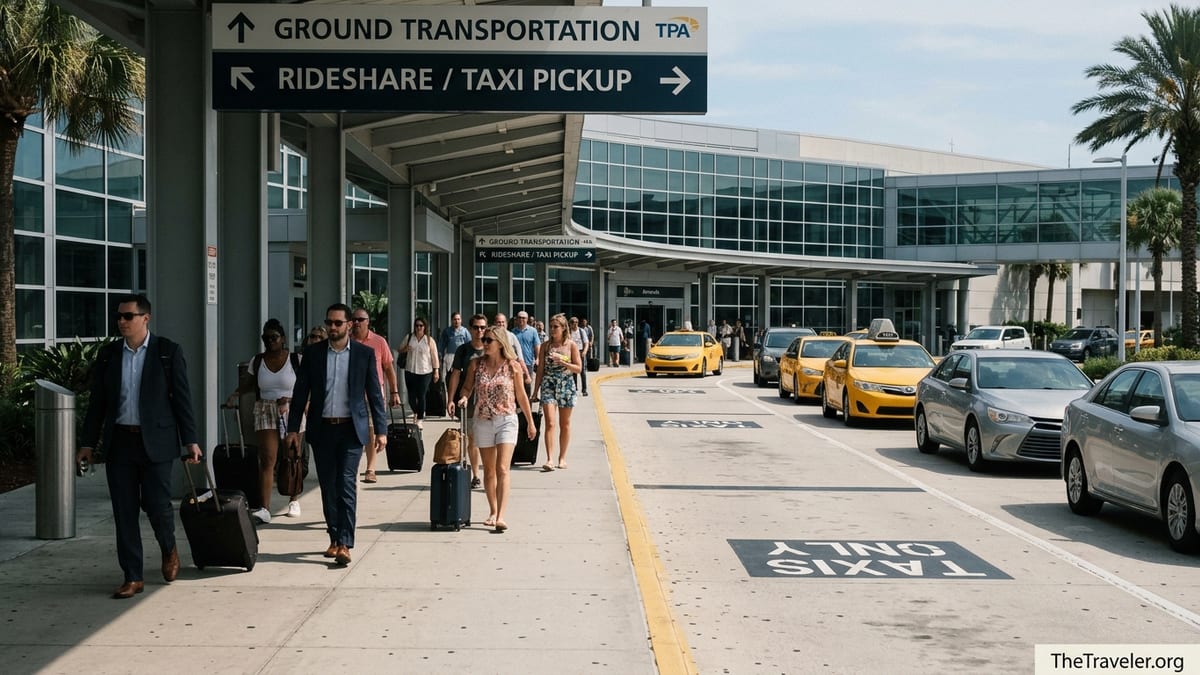
Understanding Tampa International Airport’s Layout
Tampa International Airport sits roughly five miles west of downtown Tampa, just off State Route 60, which makes road transfers relatively quick when traffic is light. The terminals are arranged around a central hub, and you will use a short automated train to move between the main terminal and the airsides where flights arrive. This design is compact compared with sprawling hubs like Atlanta, which means most travelers can be curbside within 15 to 25 minutes of landing, assuming normal immigration and baggage claim times.
After you exit security and ride the shuttle back to the main terminal, you will head down to baggage claim on the lower level. Taxis and ride-shares pick up just outside baggage claim at the Red and Blue curbs, while the airport’s SkyConnect automated train takes you from the main terminal to the consolidated Rental Car Center and the public bus stops. Knowing that the buses and rental cars are not directly at the main terminal is important: you should plan a few extra minutes if you are catching an express bus into downtown or picking up a hire car.
Because the airport is close to both the Westshore business district and downtown, typical ground transfers are relatively short. In normal mid-day traffic, a taxi or ride-share can reach central downtown hotels around the Tampa Riverwalk in roughly 15 to 20 minutes, and the cruise terminals in the Channelside area in about the same. During the afternoon rush, especially on weekday evenings, the same journey can stretch to 30 minutes or more as Route 60 and the I-275 approaches slow down.
First-time visitors should watch airport signs carefully. Look for clear directions to “Ground Transportation,” “Rental Cars,” and “Public Bus.” If you are heading to a hotel shuttle or private transfer, confirm in advance whether your pickup is at the main terminal curb or at a dedicated hotel shuttle area, as some Westshore properties use shared vans that follow a set loop.
Taxi, Uber and Lyft: Fastest and Easiest Options
For most visitors, especially after a long flight, a taxi or ride-share is the simplest way to get from Tampa International to downtown. The airport’s official taxi concession typically operates a flat-rate system for central destinations. As of mid-2026, the flat fare for a standard taxi to downtown Tampa or the cruise terminals is in the region of 30 to 35 dollars per car, not per person, which makes it good value for couples or small groups. Fares may be slightly higher at night or if toll routes are used, but you avoid metered surprises on longer detours.
Uber and Lyft are widely available at Tampa International. In normal conditions, a standard ride-share trip to downtown hotels like the Tampa Marriott Water Street or the Hyatt Place Tampa Downtown often prices in the mid-20s to mid-30s in US dollars, depending on demand and time of day. During peak cruise departure mornings or big events at Amalie Arena or Raymond James Stadium, surge pricing can push that closer to 40 dollars or more. If you are traveling light and on a budget, checking both UberX and Lyft standard options before committing can save a few dollars.
Pickups for ride-shares follow airport signage to designated curb areas. In practice, you open your app only once you are at the curb, choose “Tampa International Airport” as the pickup point, then follow the prompts to specify your zone. The apps will show a lettered or color-coded pickup area, such as Red Express or Blue Express curbside. Factor in about 5 to 10 minutes for your car to arrive, longer in severe weather or peak demand. Many business travelers heading straight to the Tampa Convention Center or offices in the downtown core prefer ride-shares because they put the charge directly into their expense management apps and avoid carrying local cash.
Families should consider ordering a larger category such as UberXL or Lyft XL when traveling with more than three people or with bulky cruise luggage. The price can jump to the 40 to 55 dollar range, but that is still typically cheaper than booking two separate sedans or relying on per-person shuttle pricing. If you are traveling with young children, remember that Florida child seat laws apply; some ride-share services allow you to request a car with a child seat in advance, but availability is limited, so families may want to bring a compact travel seat.
Rental Cars and When They Make Sense
Tampa is a car-oriented city, and renting a vehicle can be the most flexible option if your plans extend beyond downtown. The Rental Car Center is connected to the main terminal by the SkyConnect train, which runs frequently and takes only a few minutes. Major brands such as Hertz, Avis, Budget, Enterprise, Alamo and National all operate on-site, so you can step off the train and walk directly to your rental counter without waiting for individual company shuttles.
For a visitor spending several days exploring the wider Tampa Bay area, a compact rental car might cost roughly 40 to 70 dollars per day before insurance and fees, depending on demand and season. If you are planning day trips to Busch Gardens, the beaches around Clearwater and St. Pete, or suburban shopping centers like International Plaza or the Brandon area, that daily cost may compare favorably with multiple ride-share trips. A couple staying three nights who plan trips to both Busch Gardens and Clearwater Beach will often find that a rental becomes cheaper than relying solely on Uber or Lyft.
However, rental cars add complexity if you are staying exclusively downtown or sailing from Port Tampa Bay. Parking at downtown hotels can run 25 to 40 dollars per night for valet or self-parking, meaning that a three-night stay can add over 100 dollars in parking charges alone. Cruise passengers who rent a car one-way for a single night before departure must also consider where to return the vehicle. Some travelers drop the car at a downtown branch near the cruise terminals and walk or take a short ride-share, while others return it to the airport and then pay for a separate transfer to the port. The apparent flexibility of a rental does not always outweigh these extra steps.
Renting also means navigating unfamiliar highways soon after you land. While the drive from Tampa International to downtown primarily follows I-275 or the Selmon Expressway, which are well signed, first-time visitors arriving late at night or in heavy rain might prefer to leave the driving to a local taxi or ride-share driver. If you do rent, check whether your car has a SunPass or other toll transponder enabled, as some routes from the airport to outlying suburbs or to Orlando involve toll roads, and rental agencies charge additional fees for toll processing.
Hotel Shuttles, Westshore Stays and Cruise Packages
Many hotels in the nearby Westshore district provide complimentary or paid shuttles to and from Tampa International Airport. Properties clustered around Cypress Street, Westshore Plaza and International Plaza, such as business-focused hotels and extended-stay brands, often run small vans every 20 to 30 minutes during the day. For example, a typical Westshore business hotel may advertise a free shuttle within a two-mile radius, picking up guests at the airport curb and also dropping them at nearby offices or shopping areas. This can be an efficient option for short corporate stays where you do not plan to visit downtown at all.
It is important to note that very few hotels provide free shuttles directly to downtown Tampa or the cruise terminals. A traveler who books a pre-cruise night at a Westshore hotel because it offers a free airport shuttle will almost always need to arrange separate transportation to the port the next morning. In real terms, that usually means budgeting an additional 20 to 35 dollars for an Uber or Lyft from Westshore to Port Tampa Bay, or joining a hotel-organized shuttle that charges per person, often in the 15 to 20 dollar range.
Some cruise-focused hotels closer to the Channelside district and Ybor City offer “park and cruise” or “stay and sail” packages. These typically bundle one night’s accommodation, parking for the duration of your cruise, and a scheduled shuttle to the port. For instance, a downtown limited-service hotel might charge a modest premium over its standard nightly rate to include up to seven nights of parking and round-trip port transfers for two people. For couples driving in from other parts of Florida, these packages can be cheaper than paying separate port parking fees at the cruise terminals.
Always read the fine print on shuttle schedules. Many hotel shuttles require advance reservations and operate in fixed time slots rather than on demand. A cruise shuttle might leave at 10:30 and 11:30 in the morning, but not later, meaning late risers or those with later check-in times at the port could be better off arranging a private transfer. Likewise, airport shuttles sometimes stop running in the late evening, so guests arriving on flights after 11 p.m. might need to budget for a taxi even if the hotel lists an airport shuttle on its website.
Public Transportation: Useful but Limited
Unlike some major US cities, Tampa does not have a rail link connecting the airport to downtown. The main public transit options are buses run by Hillsborough Area Regional Transit (HART) and express buses operated by the Pinellas Suncoast Transit Authority (PSTA). To use these services from the airport, you first ride the SkyConnect train to the Rental Car Center, where the bus stops are located. This is an extra step that catches some travelers by surprise, particularly those expecting a bus stop right outside baggage claim.
HART route 30 connects Tampa International with downtown Tampa, heading to the Marion Transit Center. As of mid-2026, the fare is only a few dollars per person, making it by far the cheapest way to reach downtown from the airport. However, it is a local bus with multiple intermediate stops, and travel times can approach 45 to 60 minutes depending on traffic and time of day. Service frequency typically ranges from every 30 minutes to hourly outside peak periods. For a solo budget traveler with a backpack who is not in a hurry, route 30 can make good sense; for a tired family with multiple suitcases, the time and discomfort often outweigh the savings.
PSTA’s route 300X is an express service that links downtown Tampa to Pinellas County and usually includes stops at the Tampa International Rental Car Center. This route is designed more for commuters traveling between downtown Tampa and St. Pete or Largo, but visitors staying in Pinellas County beach areas sometimes use it as the first leg of their journey. Again, fares are low compared with taxis or ride-shares, but schedules are geared toward weekday peak hours, with fewer services in the middle of the day and on weekends.
There are practical limits to relying on public transit for leisure trips in Tampa. With infrequent service, limited hours and sometimes sparse shelters or lighting at stops, the system is not ideal for late-night airport arrivals or anxious first-time visitors. Travelers with mobility issues or heavy luggage may find boarding and alighting difficult when buses are busy. In addition, if your destination is not directly in downtown but in neighborhoods like Ybor City or Seminole Heights, you may face one or two transfers at Marion Transit Center, lengthening your journey significantly. For most short-term visitors, public buses work best as a backup option if ride-shares are temporarily expensive or unavailable, rather than as the primary plan.
Getting to Westshore, Downtown Hotels and the Cruise Port
Many visitors to Tampa stay in one of three main areas: the Westshore business and shopping district near the airport, the core downtown and Riverwalk area, or the Channelside and Ybor City neighborhoods near Port Tampa Bay. Understanding the basic geography helps you choose a transfer. Westshore hotels, such as those clustered near the International Plaza shopping center or Westshore Plaza mall, are located only a few minutes’ drive from the airport. In off-peak times, a taxi or Uber can cover that distance for around 15 to 20 dollars, and many hotels here offer their own shuttle, which can make this the most economical area for a short overnight stay.
Downtown hotels like the Tampa Marriott Water Street, JW Marriott Tampa Water Street, Embassy Suites Downtown, or boutique options nearby sit roughly 8 to 9 miles from the airport, depending on route. A ride-share or taxi usually takes 15 to 25 minutes and costs around 25 to 35 dollars for a standard car. Business travelers heading to the Tampa Convention Center or to office towers on Ashley Drive commonly opt for this straightforward ride-share route. If you are arriving on a weekday afternoon, leaving the airport before 4 p.m. or waiting until after 6:30 p.m. can help avoid the worst of the congestion on I-275.
Cruise passengers heading to Port Tampa Bay’s terminals in the Channelside district find the journey similarly short. The port is about 9 miles from Tampa International, and in typical traffic, the drive is 15 to 20 minutes. Ride-share costs often mirror those to downtown, usually in the 30 to 40 dollar range for a standard vehicle, slightly more at peak cruise hours when many ships are embarking or disembarking on the same day. The port’s cruise terminals are within walking distance of attractions like the Florida Aquarium and the Sparkman Wharf dining area, so some cruise passengers arrive a day early, stay in a nearby hotel and walk to the ship on embarkation morning.
If you are combining a business trip with a cruise, one practical scenario is to spend your first night at a downtown or Westshore hotel, using a quick ride-share from the airport, then transfer to the port the next morning by taxi or Uber. For example, a traveler arriving late on a Friday might stay at a Westshore hotel with a free airport shuttle, enjoy breakfast at International Plaza, then take a 25 to 30 dollar Uber to the cruise terminal on Saturday. This two-step approach spreads costs and makes late-night arrivals less stressful.
First-Time Arrival Tips and Common Pitfalls
First-time visitors to Tampa often underestimate travel times and overestimate the convenience of public transportation. One common mistake is assuming there is a direct airport train or frequent shuttle into downtown, and only discovering the reality of the bus system on arrival. To avoid unnecessary stress, decide in advance whether you will use a taxi or ride-share, and have the app downloaded and payment details set up before landing. This is particularly important for international travelers who may not have immediate mobile data; arranging an international plan or using airport Wi-Fi to book your ride will smooth the process.
Another pitfall is not budgeting realistically for ground transportation. A family of four booking the cheapest flights into Tampa may later find that round-trip ride-shares from the airport to a distant beach rental and back can add well over 150 dollars to the trip budget. In such cases, comparing that cost with a three or four-day car rental plus parking can help you make a more informed decision. For purely downtown-based stays, by contrast, it is often more economical to skip the rental and use ride-shares only when needed, especially if you plan to spend most of your time on foot along the Riverwalk or using the free TECO Streetcar between downtown, Channelside and Ybor City.
Weather and timing also matter. Summer afternoons in Tampa frequently bring heavy thunderstorms that can slow traffic and create brief but intense downpours. If your cruise departure or business meeting schedule is tight, build in extra time between landing and your onward commitment. For example, if your cruise check-in window opens at noon and you land at 10 a.m., choosing a taxi or pre-booked ride-share rather than relying on an infrequent bus reduces your exposure to delays. Similarly, late-night arrivals should be cautious about using public buses due to reduced frequency and limited crowds, opting instead for the security and convenience of door-to-door services.
Finally, keep small practicalities in mind. Having a little local currency or a functioning card ready for tipping your driver, knowing your hotel’s exact name and address, and having a backup plan if your first-choice transfer option is disrupted can make your arrival smoother. Screenshots of your hotel confirmation and a map of the downtown area are helpful if your mobile signal is weak. If you are uneasy about navigating unfamiliar roads at night after a long flight, it is perfectly reasonable to pay a little extra for a straightforward taxi or rideshare and start your Tampa visit without stress.
FAQ
Q1. How much does a taxi from Tampa International Airport to downtown Tampa typically cost?
Most standard taxis from Tampa International Airport to the downtown core or cruise terminals charge a flat fare in the ballpark of 30 to 35 dollars per car, which can vary slightly with policies, time of day and toll usage.
Q2. Is Uber or Lyft cheaper than a taxi from the airport to downtown?
A standard Uber or Lyft ride from the airport to downtown hotels often falls in the mid-20s to mid-30s in US dollars when demand is normal, so it is sometimes a few dollars cheaper than a taxi, but during busy periods surge pricing can make it similar or even more expensive.
Q3. How long does it take to get from Tampa International Airport to downtown?
In light to moderate traffic, most rides from Tampa International to downtown hotels or the cruise port take about 15 to 20 minutes, but during weekday rush hours or heavy rain the journey can stretch to 30 minutes or more.
Q4. Is there a direct train or metro from Tampa Airport to downtown?
No, Tampa does not have a rail or metro line connecting the airport to downtown. The closest public transit options are local and express buses that leave from the Rental Car Center, reached via the airport’s SkyConnect train.
Q5. Are public buses a realistic option for visitors with luggage?
Public buses such as HART route 30 are inexpensive and can work for solo travelers with light luggage who are not in a hurry, but the trip can take up to an hour and buses may be crowded or infrequent, so families or tired long-haul passengers often find taxis or ride-shares more practical.
Q6. Do Westshore hotels near the airport offer free shuttles?
Many Westshore district hotels provide complimentary or low-cost shuttles to and from Tampa International, particularly business-oriented and extended-stay properties, but these shuttles usually serve only the airport and nearby offices or malls, not downtown or the cruise terminals.
Q7. What is the best way for cruise passengers to get from Tampa Airport to Port Tampa Bay?
Most cruise passengers find a taxi or ride-share the most straightforward option, with typical rides costing around 30 to 40 dollars and taking 15 to 20 minutes; some also book hotel packages that include port shuttles if they are staying overnight nearby.
Q8. Should I rent a car if I am only staying in downtown Tampa?
If your plans are focused on downtown, the Riverwalk and nearby neighborhoods, renting a car is usually unnecessary and can become expensive once hotel parking fees are included, so relying on ride-shares, taxis and short walks is often more convenient.
Q9. How do I catch the bus from Tampa Airport to downtown?
To use public buses, you ride the free SkyConnect train from the main terminal to the Rental Car Center, then follow signs to the HART and PSTA bus stops, where you can board routes such as HART 30 toward downtown; you pay a small cash or card fare on board.
Q10. Are late-night arrivals better off using taxis or public transit?
For flights arriving late in the evening or after midnight, taxis and ride-shares are generally safer and more reliable, as bus services run less frequently and may stop entirely on some routes, making door-to-door options the better choice for most travelers.