


Landing at Las Vegas Harry Reid International Airport can feel intense, especially if you are arriving for the first time and heading straight to the Strip. Between bright slot machines, long taxi lines, and a separate rental car center a few miles away, it pays to know what happens after your plane’s doors open. This guide walks you step by step through arrivals at Harry Reid (airport code LAS), so you can move confidently from the gate to your hotel, conference, or rental car with minimal stress.
Get the latest updates straight to your inbox!
Understanding the Layout: Terminals, Gates, and Trams
Harry Reid International Airport has two main passenger terminals for commercial flights: Terminal 1 and Terminal 3. Many domestic airlines such as Southwest primarily use Terminal 1, while several international and some domestic carriers use Terminal 3. You might land at a concourse that is connected by tram, so your first move after leaving the aircraft is to follow the overhead “Baggage Claim” signs rather than memorizing concourse letters in advance.
Terminal 1 has four concourses, and some gates are reached by a short automated tram. If you arrive at the C or D gates, expect to board this people mover into the main terminal building before reaching immigration-free exits and baggage claim. The ride is only a few minutes but can be crowded at peak times such as Friday evenings and major event weekends.
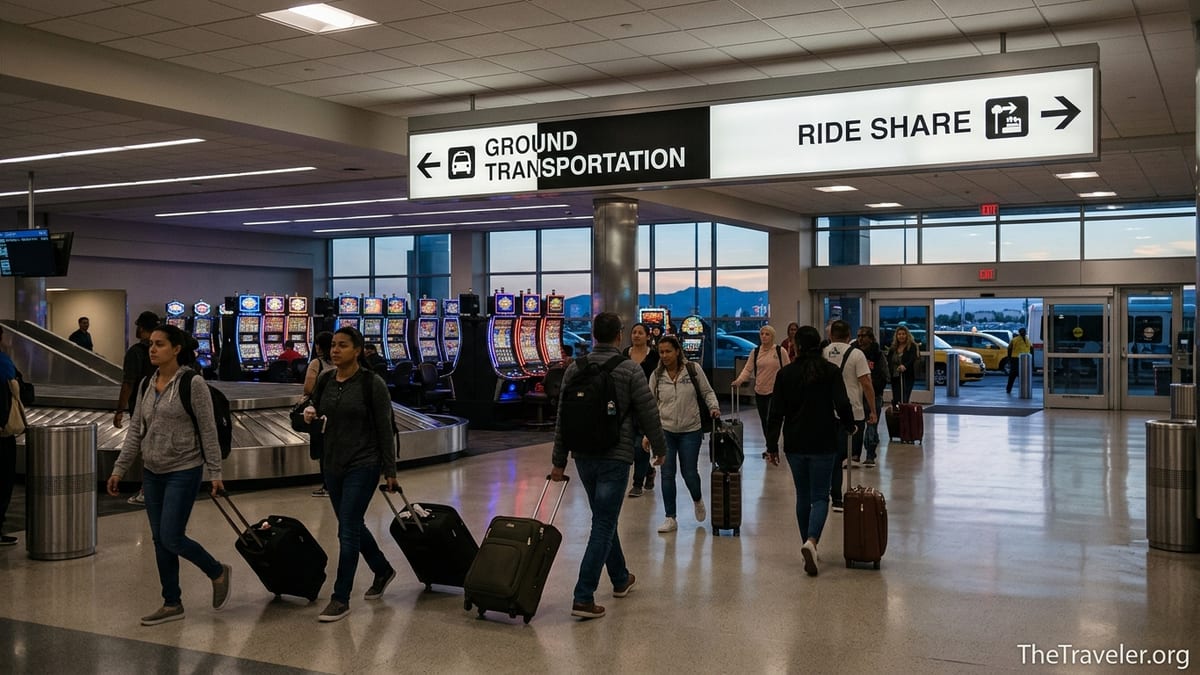
Terminal 3 handles most long-haul and international arrivals. International passengers must clear U.S. Customs and Border Protection after landing, then reclaim and re-check any checked bags if they have a connecting flight. Once you exit customs into the arrivals hall, look for the large overhead signs pointing to “Baggage Claim,” “Ground Transportation,” and “Ride Share” to orient yourself. If you are connecting between Terminal 1 and Terminal 3, there is a free inter-terminal shuttle on Level 0; factor in at least 20–30 minutes for the transfer in normal conditions.
The airport buildings can seem confusing because Las Vegas Boulevard and the Strip hotels lie to the west while the consolidated rental car center is several miles south. Think of Terminal 1 and Terminal 3 as separate islands that funnel all ground transportation to clearly marked curb areas. Once you understand that everything radiates from these ground transport levels, the rest of the arrival process becomes much easier.
Baggage Claim, Lost Luggage, and First Minutes in the Terminal
After leaving the secure area, you will walk directly into the baggage claim halls, which are known for their bright signage, video screens, and even rows of slot machines. Oversized monitors list your flight number and corresponding carousel, and announcements are frequent. Bags usually begin arriving within 15–30 minutes on typical domestic flights, though peak weekend traffic, weather delays, or large convention arrivals can push this longer.
If your bag does not appear, the first step is to remain at the carousel until all bags from your flight are unloaded and the display changes or staff confirm the belt has stopped. Then, go straight to your airline’s baggage service counter in the same claim area. Carriers such as Southwest, Delta, United, and American maintain staffed offices near the carousels where you can file a missing baggage report. Have your baggage tag and boarding pass ready; most airlines can arrange delivery to major Strip hotels once the bag is located, though delivery may take many hours or overnight.
While you wait for your luggage, this is a good time to use the restrooms, refill a water bottle at the fountains, or withdraw cash from nearby ATMs positioned along the walls of the baggage claim halls. If you plan to use ride share or taxi services, you can also open the relevant apps or check estimated wait times so you know whether to walk more quickly to the transport area once your bag arrives. Keep your passport and valuables in your personal item rather than your checked luggage, since baggage claim can be busy and distracting.
For travelers with special items such as golf clubs, skis, or mobility devices, oversize baggage is typically delivered to a separate area near the main carousel zone. Overhead or wall signage will direct you to “Oversize Baggage.” If you do not see your equipment after standard bags have arrived, ask any uniformed airline or airport employee to point you toward the correct counter or holding area before leaving the secure surroundings of baggage claim.
Ground Transportation Basics: Taxis, Rideshare, Shuttles, and Hotel Transfers
Once you have your bags, follow the large overhead “Ground Transportation” signs toward the appropriate level. At Terminal 1, most ground transport options are accessed from the lower level outside baggage claim, while Terminal 3’s ground transport and rental car shuttles are typically on Level 0. The signage is clearly color-coded, but it can be a long walk, so allow a few extra minutes, especially if you are traveling with children or heavy luggage.
Official taxis line up at designated taxi queues outside each terminal. In normal traffic, a metered taxi ride from Harry Reid Airport to a mid-Strip hotel might typically cost in the range of 20 to 30 dollars before tip, depending on traffic patterns and exact location. Flat-rate airport surcharges and fuel fees sometimes apply, so check the rate card displayed at the taxi stand. For example, a cab from the airport to Fremont Street downtown may run higher than a quick hop to a nearby Strip resort such as the MGM Grand.
Hotel shuttles are less common on the Strip than in some other U.S. cities, but several off-Strip properties and budget hotels, such as those near Paradise Road or east of the Strip, may run courtesy vans. These typically pick up in the “Courtesy Shuttle” area signed separately from public buses and taxis. If you have arranged a charter coach or limousine with a local provider, your confirmation email should specify a pickup zone, often in the commercial vehicle or pre-arranged limousine lanes close to the taxi area. It is wise to have the driver’s phone number handy in case crowds or event traffic make it difficult to find each other immediately.
Public transit is an option for travelers on a strict budget. Regional Transportation Commission routes, such as those running along Paradise Road, stop near the airport and connect to the Strip or downtown. However, with luggage and in hot weather, most first-time visitors prefer taxi, rideshare, shuttle, or prebooked transfer services to avoid multiple stops and transfers. If you do choose public buses, follow “Public Transit” signage and carry small bills or a contactless payment method as required by the local system at the time of travel.
Using Uber, Lyft, and Other Rideshare Services at LAS
Harry Reid Airport authorizes major rideshare companies such as Uber and Lyft to pick up and drop off passengers, but pickup locations are in specific sections of the parking garages, not at the main curb. At Terminal 1, the rideshare pickup area is typically on Level 2 of the public parking garage; follow the “Ride Share” signs from baggage claim, which lead you across the pedestrian bridge and then down ramps or walkways to the marked pickup zone. At Terminal 3, rideshare pickup is generally on the valet level of the Terminal 3 parking garage. Clear signage points the way once you exit baggage claim and head toward the garage.
In practice, this means you should not request your ride the moment you step off the plane. Instead, collect your luggage first, then start walking toward the rideshare signs. When you are within a few minutes of the pickup area, open the app and confirm the correct terminal and door or zone number that the app displays. During busy times like late-night weekend arrivals or major trade shows, there may be a virtual queue of drivers, but pickup usually remains fairly quick once you reach the designated zone.
For a typical trip from the airport to a central Strip property such as Caesars Palace, the Bellagio, or the LINQ, rideshare fares might often range from about 18 to 30 dollars in standard vehicles, depending on the time of day and surge pricing. Luxury categories or large SUVs can cost significantly more, especially late at night. Many visitors check both Uber and Lyft simultaneously to compare live pricing and wait times before committing.
Safety is important in the busy pickup areas. Before getting into any car, verify the license plate, vehicle type, and driver’s name match what is shown in your app. Stand only in the designated rideshare loading lanes and keep luggage close at hand. If the ride appears incorrect or you feel uncomfortable, cancel in the app and request another car from a well-lit location near other travelers. The airport and drivers are accustomed to high volumes of visitors each day, so staff in reflective vests are usually present and can answer basic questions about where to stand and which direction to walk.
Rental Cars and the Off-Site Rent-A-Car Center
Unlike some airports where rental counters sit just outside baggage claim, Harry Reid International uses a consolidated Rent-A-Car Center located roughly three miles south of the terminals at Gilespie Street. All major agencies, including Alamo, Avis, Budget, Dollar, Enterprise, Hertz, National, Payless, and Thrifty, operate from this complex, along with several independent brands. The facility is open 24 hours a day with continuous shuttle service between the terminals and the rental car center.
To reach the Rent-A-Car Center, follow the “Rental Car Shuttle” signs from baggage claim. At Terminal 1, the shuttles typically board outside doors near the center of the building on the ground transportation level. At Terminal 3, you will head to Level 0 and find clearly marked shuttle stops on the west end. Blue-and-white shuttle buses labeled for the Rent-A-Car Center arrive frequently, and the ride usually takes about 10–15 minutes, though traffic on the airport connector can occasionally extend this.
Once at the rental facility, proceed to your company’s counter or preferred customer kiosk. At busy periods, such as Sunday afternoons before large conventions, lines at popular brands like Enterprise or Budget can be lengthy, so mobile check-in or loyalty program enrollment may help you bypass the main desk. When you select a vehicle, verify whether your hotel charges overnight parking; Strip resorts often add nightly parking fees that can easily add over 15 to 25 dollars per night to your trip budget.
Some off-airport rental agencies that are not located inside the official Rent-A-Car Center operate their own shuttles from designated off-airport shuttle stops near the terminals. If, for instance, you have booked with a value-focused company whose office lies a short distance from the main complex, your confirmation should explain which curbside area to use and how frequently their van runs. In every case, wait only at marked shuttle stops and confirm the company name and logo on the vehicle before boarding.
Cash, ATMs, SIM Cards, and Connectivity Options
Once you have cleared baggage claim, you may need cash for tips, small purchases, or gaming. ATMs are widely available throughout Harry Reid Airport, especially in the baggage claim halls and near the exits to ground transportation. Machines are often operated by major U.S. banks or independent ATM providers, and foreign cardholders should expect standard international withdrawal fees plus any additional bank charges. To minimize costs, withdrawing a moderate amount once on arrival is usually more economical than making multiple small withdrawals.
Currency exchange services are more limited than at some international hubs. Many travelers find it simpler to withdraw U.S. dollars using a debit card rather than exchanging large amounts of foreign cash at the airport. Major Strip resorts, downtown casinos, and bank branches also offer exchange services, though rates can vary. Using cards with no foreign transaction fees is generally the most cost-effective way to pay for hotel charges, meals, and shopping in Las Vegas.
For mobile connectivity, dedicated airport SIM card kiosks come and go over time, and availability can change. When present, they are typically small counters or vending-style machines near arrivals or retail areas, selling prepaid plans from large U.S. carriers or global roaming brands. However, many international visitors increasingly rely on eSIM solutions purchased online before travel, which can be activated upon landing without needing to locate a physical booth. Popular eSIM providers often offer short-term U.S. data plans that you can install by scanning a QR code at home.
If you prefer a traditional plastic SIM, one practical option is to ride from the airport to a nearby big-box electronics or mobile carrier store, such as a branch of a major carrier along Maryland Parkway, Tropicana Avenue, or Las Vegas Boulevard. Local prepaid SIMs from the major U.S. networks often start around the lower double-digits for basic data and voice bundles, though prices vary by promotion and store. Free airport Wi-Fi is available in most terminal areas, which allows you to quickly message your hotel, book ride share, or download eSIM profiles before leaving the building.
Checking In to Your Hotel and First Steps in Las Vegas
By the time you clear the terminal and find transport, you will likely be eager to reach your hotel. Most Strip properties lie a 10–20 minute drive from the airport in normal traffic. When you arrive, be prepared for bell staff and valet areas to be busy at peak times, especially around major events, concerts, or sports weekends. Keep small bills handy for tipping baggage handlers or valet staff if you use those services, as tipping is widely expected in Las Vegas hospitality settings.
If your room is not ready, many hotels will store luggage near the bell desk while you explore the property or grab a meal. This can be especially helpful if you arrive on an early morning flight from the East Coast or from overseas. Some resorts offer early check-in for an additional fee when occupancy allows; asking politely at the front desk, particularly if you are part of a loyalty program, is often worthwhile. In large megaresorts, walking distances between the front desk, elevators, and parking or drop-off areas can be significant, so factor that in when planning your first outing.
For those attending conventions at venues such as the Las Vegas Convention Center, Caesars Forum, or Mandalay Bay Convention Center, your event materials may specify recommended entrances or shuttle bus stops. Many large meetings run their own shuttle loops between host hotels and venues during show hours. It is a good idea to pick up your badge, confirm session locations, and understand where the event shuttles depart on your first day, so you are not rushing through crowded casino floors at the last minute.
After a long flight, especially across multiple time zones, hydrate and pace yourself when you first hit the Strip. Summer temperatures can exceed 100 degrees Fahrenheit in the afternoon, and even short outdoor walks between resorts may feel strenuous. Using the shaded walkways, pedestrian bridges, and indoor corridors linking certain properties can make your first hours in Las Vegas more comfortable. Many seasoned visitors plan a low-key first evening with a simple dinner near their hotel and an early night, then dive into shows, gaming, and excursions once they have adjusted.
The Takeaway
Arriving at Harry Reid International Airport is your gateway to the energy of Las Vegas, and a little preparation can dramatically improve your first few hours on the ground. Understanding that rideshare pickup occurs in the parking garages, that rental cars require a short shuttle ride to a separate facility, and that ground transportation is concentrated on specific levels at each terminal helps you move confidently from plane to hotel.
Focus on a clear sequence: follow signs to baggage claim, resolve any luggage issues immediately, locate your chosen transport mode using airport signage, and only then worry about entertainment or sightseeing. With realistic expectations around taxi and rideshare pricing, an awareness of where to find cash and connectivity, and a plan for checking into your hotel or meeting a conference shuttle, your arrival at Harry Reid Airport can be smooth and efficient instead of confusing.
Las Vegas thrives on spectacle, but your arrival does not have to be part of the drama. By approaching the airport like a well-organized transit hub rather than a maze of flashing lights and slot machines, you set the tone for a trip that is memorable for all the right reasons.
FAQ
Q1. How long does it usually take to get from the gate to the taxi or rideshare area at Harry Reid Airport?
For most domestic arrivals, expect 30 to 60 minutes from landing to reaching the taxi or rideshare area, including taxiing, deplaning, walking to baggage claim, and waiting for checked bags.
Q2. Is Uber or Lyft cheaper than a taxi from the airport to the Las Vegas Strip?
Prices change with demand, but standard rideshare to a central Strip hotel often falls in the high-teens to around 30 dollars, while taxis may cost a similar or slightly higher amount depending on traffic and any surcharges.
Q3. Where exactly do I find the rideshare pickup zones at Harry Reid Airport?
At Terminal 1, follow “Ride Share” signs to Level 2 of the public parking garage. At Terminal 3, follow the same signs to the valet level of the Terminal 3 parking garage, where the pickup zones are clearly marked.
Q4. How do I get to the rental car center from the terminal?
Look for “Rental Car Shuttle” signs near baggage claim. Board the blue-and-white shuttle buses at the designated stops outside each terminal. The ride to the consolidated Rent-A-Car Center typically takes about 10 to 15 minutes.
Q5. Are there hotel shuttles from Harry Reid Airport to the Strip?
Most major Strip resorts do not run their own complimentary airport shuttles, but some off-Strip or budget properties do. Private shuttle companies, prebooked transfers, and limousines are available and usually depart from separately signed courtesy and charter zones.
Q6. Can I buy a local SIM card inside Harry Reid Airport?
SIM card kiosks or vending machines may be present but are not guaranteed and can change over time. Many visitors now use eSIM services activated on arrival, or they take a short trip from the airport to a nearby carrier or electronics store to purchase a prepaid SIM.
Q7. Are ATMs easy to find in the arrivals area?
Yes. ATMs are located throughout the terminals, including near baggage claim and exits to ground transportation. They dispense U.S. dollars and accept most major international cards, though fees vary by machine and issuing bank.
Q8. Is there a free shuttle between Terminal 1 and Terminal 3?
Yes. A complimentary inter-terminal shuttle operates on the lower level between Terminal 1 and Terminal 3. It is helpful if you land at one terminal but need to meet a friend, connect, or depart from the other.
Q9. How long does it take to reach a Strip hotel from the airport?
In typical traffic, it takes around 10 to 20 minutes by car from Harry Reid Airport to most mid-Strip hotels. During very busy periods, such as big conventions or fight nights, travel times can be longer due to congestion.
Q10. What should I do if my luggage is delayed or lost on arrival?
Stay in the baggage claim area until your flight’s carousel is finished unloading, then go directly to your airline’s baggage service counter. File a claim using your baggage tag and contact details; many airlines can deliver found bags to major Las Vegas hotels once they are located.