


More news on this day
Travelers moving through Peru at the start of the peak dry season are facing a new round of disruption as cancellations by LATAM and United Airlines strand passengers across Lima, Cusco and other key gateways, snarling connections to Houston, Iguazu Falls and several high-demand domestic routes.
Get the latest news straight to your inbox!
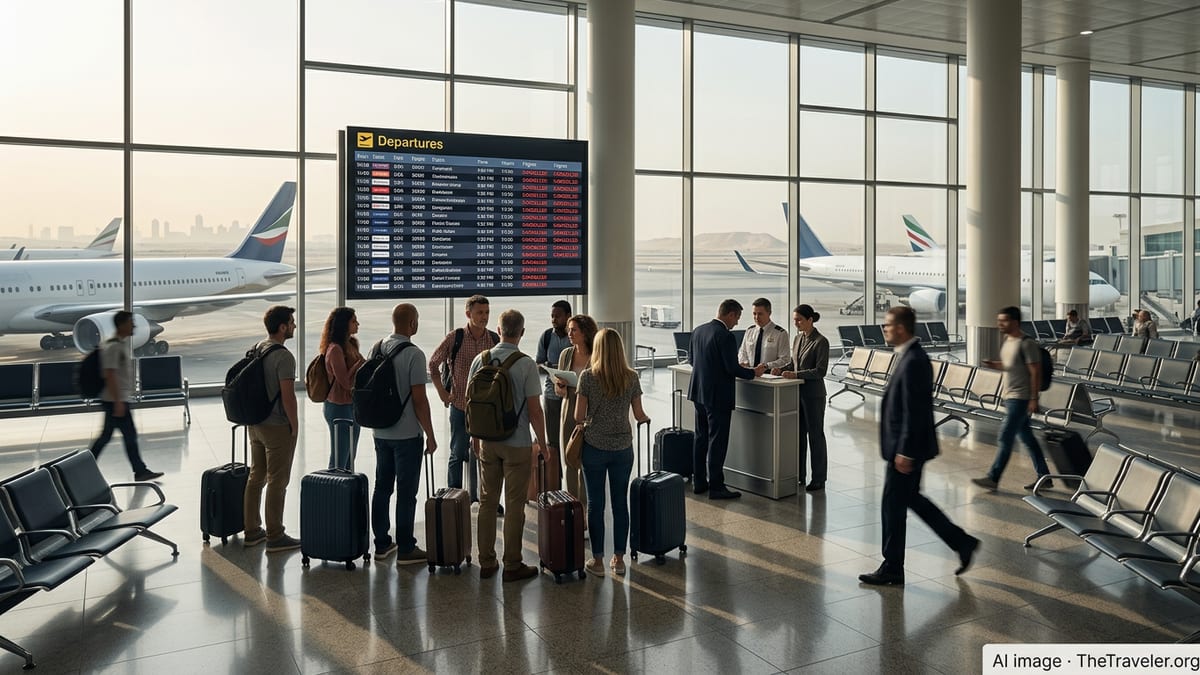
Dozens of Services Scrubbed Across Peru’s Busiest Corridors
Published coverage and live schedule data for late May 2026 indicate that a dozen or more services on LATAM’s Lima–Cusco corridor and other domestic links have faced cancellations or significant schedule changes in recent days, adding pressure to an already congested network. These interruptions follow months of intermittent disruption tied to infrastructure constraints, operational reshuffles and seasonal weather across the Andes.
On top of the domestic turbulence, United’s long-haul links between Lima and Houston have experienced irregular operations in recent months, with mechanical issues and crew availability cited in public tracking data and passenger accounts. When the single daily Houston rotation is scrubbed, travelers report being left overnight in Lima with limited rebooking options and long waits at airport counters.
The combined impact is particularly acute for visitors attempting tight same-day connections. Many itineraries rely on morning flights from Cusco to Lima feeding into afternoon and evening departures to North America and onward to Europe. When Lima–Cusco services are delayed or canceled, travelers miss their Houston or other onward flights, often finding that same-day alternatives are sold out or heavily oversubscribed.
Recent disruptions have also affected regional links from Lima toward Puerto Iguazu, the gateway to Iguazu Falls, through LATAM’s wider network. Where those services are canceled or reshuffled, passengers report being moved to multi-stop routings via Brazil or Chile, adding long layovers and complexity to trips originally planned as straightforward connections through Lima.
Why Lima and Cusco Are So Vulnerable to Disruption
Lima’s Jorge Chávez International Airport serves as LATAM’s primary hub in Peru and a key transfer point for United’s traffic between the United States and the southern Andes. Industry commentary and local media reports consistently highlight that the airport is operating close to capacity, with infrastructure works and new fee structures shaping how airlines schedule and route traffic through the terminal.
Within Peru, Cusco remains the critical domestic spoke. The city sits at high altitude and is surrounded by mountainous terrain, which makes it especially sensitive to weather and visibility changes. Aviation tracking data shows that the Lima–Cusco route sees a heavy concentration of daily frequencies, and even a small number of grounded aircraft or rotations can rapidly cascade into missed connections and rolling delays.
LATAM has additionally been adjusting its broader Lima-based international portfolio in response to higher transfer charges and cost pressures, canceling or suspending several routes over the past months. Analysts note that these structural changes leave the remaining network more exposed; when aircraft and crew are shifted off marginal long-haul or leisure routes, irregular operations on the core Lima–Cusco shuttle and select international links can be harder to absorb.
United’s Lima–Houston service is also structurally fragile because it typically operates as a single daily round-trip. When that flight is canceled due to technical, weather or crew-related reasons, there is no immediate backup frequency on the same route. Passengers then compete for limited seats on partner airlines via other U.S. gateways, or face overnight stays in Lima while they wait for space to open on subsequent days.
Passenger Experience: Long Queues, Patchy Information and Price Spikes
Accounts shared on travel forums and social media over the past year describe scenes of long lines at Lima and Cusco check-in areas when irregular operations hit, with passengers struggling to obtain clear guidance on rebooking options. Travelers on separate tickets between domestic Peru legs and international long-haul flights appear particularly exposed, as they may not receive automatic protection when the first segment is canceled or heavily delayed.
Reports from previous waves of disruption indicate that many passengers were notified of cancellations only a few hours before departure by email or app notifications, leaving little time to adjust ground arrangements around Machu Picchu tours or onward hotel bookings. Some travelers describe learning of cancellations only upon arriving at the airport and checking departure screens, then joining queues that stretch across the terminal as airline staff work through rebookings flight by flight.
At the same time, fare data from online travel agencies shows that when Lima–Houston or popular domestic legs are disrupted, remaining seats on alternative routings can surge in price. Travelers attempting same-day self-rebooking through public channels sometimes find that viable alternatives involve backtracking via other South American hubs or overnight layovers in U.S. cities far from their original destination.
In the case of connections to Iguazu Falls, disruptions in Peru can force an entire itinerary to be rebuilt. Passengers may be reprotected on indirect routes via São Paulo, Buenos Aires or Santiago, often requiring additional immigration checks, airport transfers or domestic segments within Brazil or Argentina just to reach their planned starting point for a visit to the falls.
What Travelers Can Do If Their Peru Flight Is Canceled
Consumer-rights guidance and airline policy documents suggest that passengers affected by cancellations in Peru should first check whether their disrupted segments are part of a single through-ticket or are held on separate bookings. Those traveling on a single ticket from, for example, Cusco to Houston via Lima have stronger protection for rebooking than travelers who combined a domestic Peru ticket with a separately purchased international fare.
Publicly available information from regulators in South America and compensation specialists indicates that some travelers on international itineraries may have entitlements to meals, accommodation and alternative transport when cancellations are within the airline’s control. However, the precise remedies can vary by origin, destination and the jurisdiction governing the ticket, and weather-related disruptions or air-traffic restrictions may fall outside standard compensation rules.
Travel planners often recommend building generous buffers into itineraries involving Lima and Cusco, especially when connecting to North America or Europe. Recent traveler reports commonly suggest allowing three to four hours between a domestic arrival and an international departure, and avoiding the last flight of the day from Cusco when a long-haul connection is at stake. Some advisers also encourage booking all sectors on a single carrier or alliance where possible, so that a single airline group remains responsible for delivering the passenger to the final destination.
For those currently stranded, airline apps and websites are increasingly the fastest channel to secure rebooking, although many travelers still prefer in-person assistance for complex multi-stop journeys. Travel insurers and credit-card providers may offer additional support, including coverage for extra hotel nights, reissued tickets or nonrefundable tours affected by missed flights, provided that travelers keep documentation of cancellation notices and receipts for unexpected expenses.
Outlook for the Coming Weeks of Peak Travel
With June and July approaching, Peru is about to enter one of its busiest visitor periods as travelers from North America and Europe flock to Machu Picchu and the Sacred Valley. Aviation analysts caution that the structural pressures now visible in Lima, combined with intermittent operational issues at both LATAM and United, could continue to generate pockets of disruption even if the current wave of cancellations subsides.
Network adjustments by LATAM in response to transfer fees and infrastructure constraints around Lima are expected to continue into the second half of 2026, which may lead to further fine-tuning of schedules across the region. Any such changes could alter connection patterns for routes linking Peru to the United States and to regional leisure destinations such as Puerto Iguazu.
For travelers, the immediate takeaway from the latest cancellations is the need to plan for uncertainty. Flexible tickets, longer connection windows and robust travel insurance are emerging as essential tools for navigating Peru’s evolving aviation landscape, especially for complex journeys that string together domestic segments, long-haul flights and onward regional hops.
While airlines are gradually restoring disrupted services and reallocating capacity to the most in-demand routes, the experience of passengers stranded in recent days underscores how quickly a handful of cancellations on the Lima–Cusco shuttle or the Lima–Houston link can ripple through holiday plans and business trips alike.