


More news on this day
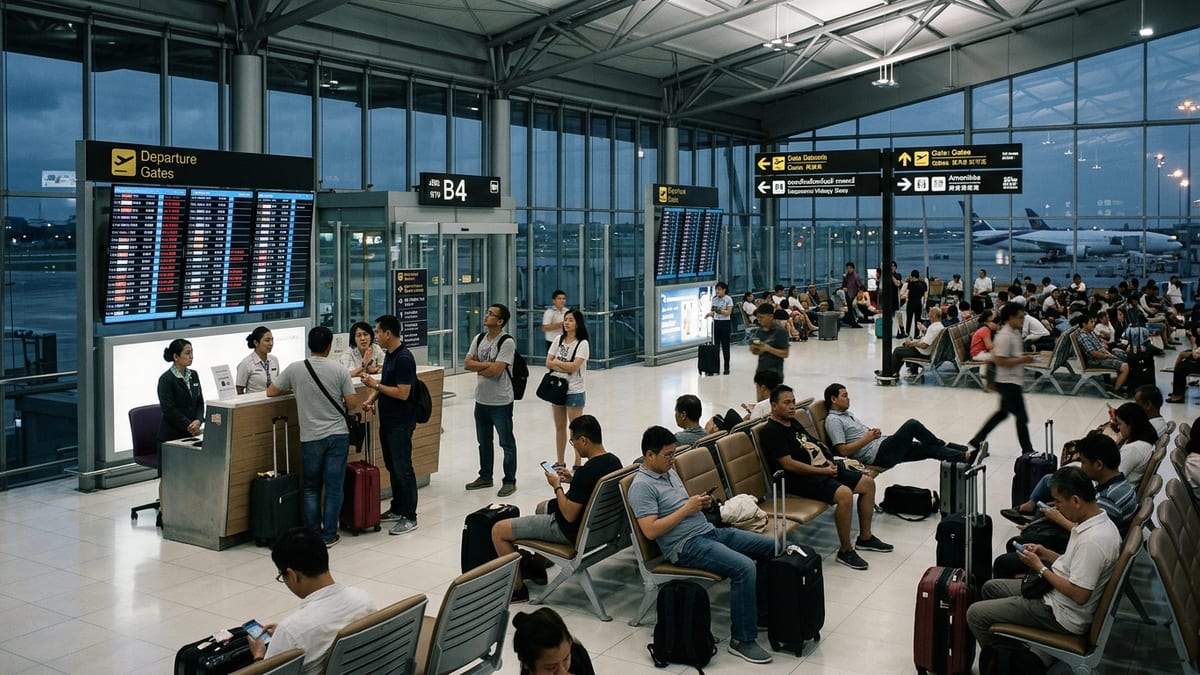
Hundreds of travelers across Canada are facing unexpected overnight stays and missed connections after a cascading wave of disruptions left around 30 flights canceled and more than 170 delayed on Tuesday, affecting services operated by PAL Airlines, Jazz, Air Canada, Air Inuit, Pacific Coastal and other carriers at Toronto, Vancouver, Montreal, Kuujjuaq, Trail and additional airports.
Get the latest news straight to your inbox!
Major Hubs in Toronto, Vancouver and Montreal Hit Hard
Publicly available flight tracking data for Tuesday indicates that Canada’s three largest hubs, Toronto Pearson, Vancouver International and Montreal Trudeau, experienced the highest concentration of cancellations and delays. Dozens of departures and arrivals were listed as significantly late, while a smaller but disruptive share were scrubbed outright, forcing passengers to rebook or seek hotel rooms at short notice.
Air Canada and its regional partners, including Jazz and PAL Airlines operating under the Air Canada Express banner, appear prominently across disruption boards, alongside WestJet, Porter, Pacific Coastal and several foreign carriers. While the total number of affected flights varies across monitoring platforms, aggregated figures for the day point to roughly 30 cancellations and more than 170 delays nationwide, translating into hundreds of displaced travelers and knock-on impacts across connecting routes.
Reports indicate that the disruptions are not limited to a single corridor. Services between Toronto and Vancouver, Montreal and Toronto, and Vancouver and Montreal show a mix of on-time, delayed and canceled operations, creating a patchwork of reliability that has complicated travel planning for both business and leisure passengers moving through the country’s busiest air corridors.
Aviation analysts note that when multiple carriers serving the same trunk routes experience delays, missed connections compound quickly. Travelers bound for transborder and transatlantic flights from Toronto and Montreal are particularly vulnerable when inbound segments from Western Canada arrive late or not at all, creating a surge in last-minute rebooking requests.
Regional Routes from Kuujjuaq to Trail Also Affected
Beyond the major hubs, regional airports in communities that depend heavily on air links have also reported service disruptions. Kuujjuaq, a key gateway to Nunavik in northern Quebec, has seen delays on flights involving Air Inuit and other regional partners, affecting residents and workers who often have few alternative transport options. In remote regions, even a single canceled rotation can leave entire communities waiting an extra day or more for essential travel.
In British Columbia, flights involving Pacific Coastal on routes such as Trail to Vancouver and services linking coastal and interior communities have experienced schedule changes, including delays and at least one same-day cancellation according to live schedules. These routes are used not only by tourists but also by medical travelers, resource industry employees and government staff, meaning disruptions can have consequences far beyond holiday inconvenience.
Travelers in smaller centers typically face longer recovery times when plans fall apart. Unlike major hubs, where carriers may offer multiple daily frequencies, some northern and regional routes operate only once or twice a day. When an aircraft goes out of rotation, passengers can be left with no same-day alternatives and must rely on rebooking for the following day or rerouting through distant hubs.
Communities served by PAL Airlines in Atlantic Canada and Quebec, as well as by Jazz on behalf of Air Canada Express, have also seen periodic delays as aircraft and crews cycle through congested hub airports. Passenger rights specialists caution that travelers on these routes should monitor their bookings closely when system-wide disruption is reported, since delays at Toronto, Montreal or Vancouver can ripple outward to flights many provinces away.
Mixed Causes Cited for Cancellations and Delays
Published coverage and aviation data providers suggest that today’s problems reflect a mix of factors rather than a single weather or technical event. Recent days have seen shifting weather systems across central and eastern Canada, including periods of reduced visibility and thunderstorms that typically slow arrivals and departures at large airports. When combined with already tight schedules, even modest weather-related restrictions can trigger extended holding patterns and missed slots.
Operational challenges within airlines are also playing a role. Industry reports from recent months describe ongoing crew and aircraft availability constraints at some Canadian carriers, particularly during peak travel periods. When a single aircraft or crew goes out of position due to a mechanical check or a late inbound flight, the resulting gap can cascade into multiple delayed legs, especially on regional networks where backup capacity is limited.
Fuel costs, route restructuring and ongoing fleet adjustments at major airlines have further complicated network planning. Recent schedule changes by large Canadian carriers, including the suspension of certain domestic and transborder routes deemed no longer viable, highlight the pressure operators face in balancing reliability with financial performance. On days when disruptions spike, that balancing act can leave passengers feeling that resilience has been sacrificed for efficiency.
Aviation observers point out that Canada’s air transport network has become increasingly interconnected, with regional carriers such as Jazz, PAL Airlines, Air Inuit and Pacific Coastal feeding traffic into the larger hubs of Air Canada and other mainline operators. While this connectivity offers more one-stop options for travelers, it also means that problems at one point in the network can quickly spread across multiple airlines and regions.
Passenger Rights and Options Under Canadian Rules
Under Canada’s Air Passenger Protection Regulations, entitlement to compensation or assistance depends on the cause of the disruption and the size of the airline. Guidance from consumer advocacy organizations explains that travelers on large carriers whose flights are canceled or significantly delayed for reasons within the airline’s control, and not related to safety, may be eligible for cash compensation in addition to rebooking or refunds.
When delays or cancellations are attributed to safety-related issues, severe weather or air traffic control constraints, airlines are generally required to provide rebooking or refunds but not financial compensation. However, they may still be responsible for basic standards of treatment, such as providing meals or accommodation, depending on the length of the delay and the specific circumstances.
Legal experts advise passengers to retain boarding passes, booking confirmations and receipts for out-of-pocket expenses such as hotels and meals incurred due to a disruption. These documents can support later claims with airlines or travel insurance providers. Travelers are also encouraged to document any notifications received from carriers that reference the reasons for cancellations or delays, as wording around “operational constraints” or “crew availability” can be relevant to compensation assessments.
For international itineraries touching Canada, separate protections under the Montreal Convention may apply, particularly for demonstrable financial losses caused by delays. In practice, this means that travelers on affected Air Canada or partner flights linking Canadian hubs with overseas destinations may have multiple avenues for redress, though the process can be time-consuming and may require formal claims or, in some cases, legal assistance.
What Travelers Can Do Now
Travel experts recommend that passengers booked on Canadian domestic or transborder flights in the coming days monitor their flight status frequently through official airline channels and airport departure boards. On days when system-wide disruption has occurred, aircraft and crews can still be out of position for some time, leading to follow-on delays even after the immediate cause has passed.
Those already stranded are advised to seek written confirmation of cancellations, as well as clarification on whether the disruption is classified as within or outside the airline’s control. With this information, passengers can make informed decisions about whether to accept rebooking options, pursue refunds and arrange independent travel, or later file claims for compensation where applicable.
Travelers connecting through smaller airports such as Kuujjuaq or Trail may wish to build longer buffers into itineraries, especially when linking regional flights to international departures from Toronto, Vancouver or Montreal. Adding several extra hours between legs can reduce the risk that a delay on a feeder route will cause a missed long-haul connection that is harder to rebook.
As Canadian carriers head into the busy summer season, industry observers expect operational pressures to remain elevated. Episodes like today’s cancellations and more than 170 delays show how quickly minor disruptions can escalate into widespread problems, particularly in a network that relies heavily on regional partners and tight turnarounds across a geographically vast country.