


More news on this day
Air links between the United Arab Emirates and Iran are steadily rebuilding as flydubai, Emirates and several regional carriers restore services, signaling a cautious revival of tourism and wider economic ties across the Gulf.
Get the latest news straight to your inbox!
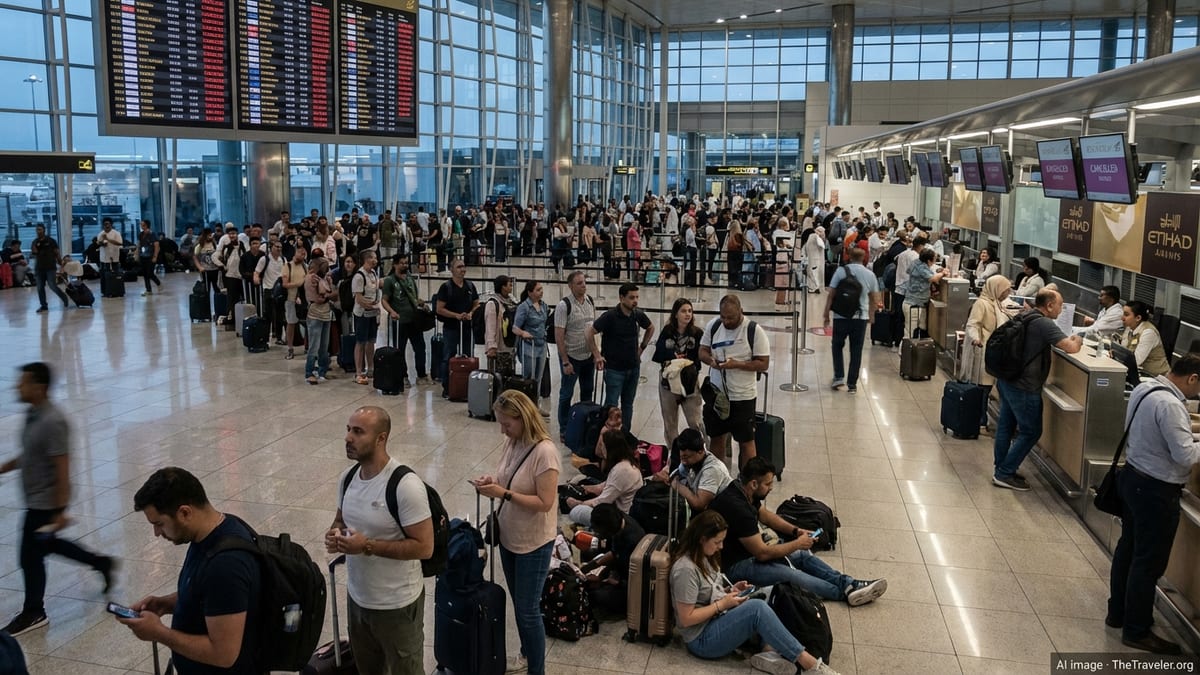
UAE Carriers Restore Routes After Security Disruptions
Published coverage shows that UAE airlines began restoring Iran services in stages after a wave of regional security concerns led to temporary suspensions in April 2024. Reports from Dubai-based outlets indicate that flydubai resumed multiple daily flights to Iranian cities once airports and airspace reopened, bringing back links to Tehran and a series of secondary destinations. These moves aligned with broader Gulf aviation trends as carriers reassessed risks and reactivated suspended schedules.
Information released by flydubai highlights that the airline has progressively expanded its Iran portfolio over the past decade, starting services to the country in 2014 and later adding cities such as Mashhad, Isfahan, Shiraz, Bandar Abbas and Lar. In September 2024, the carrier inaugurated flights to Kish Island and Kerman, further cementing Dubai International as a key hub for point to point and connecting traffic between Iran and markets in Europe, South Asia and Africa.
Emirates, which has long operated services between Dubai and Tehran, has maintained Tehran Imam Khomeini International Airport on its route map, providing another high capacity link between the UAE and Iran. The combination of Emirates wide body operations and flydubai narrow body services offers a dense schedule across premium and value focused segments, shaping Dubai’s role as a primary access point for inbound visitors to Iran as well as outbound Iranian travelers.
Abu Dhabi based carriers have monitored the same security dynamics and, according to regional business reports, have adopted similarly cautious approaches. Publicly available information suggests that frequencies from the UAE to Iran are being calibrated to match demand, insurance conditions and evolving risk guidance from international aviation bodies.
Regional Airlines Join in Rebuilding Iran Connectivity
The UAE reopening has coincided with a wider regional pattern in which Gulf and Near Eastern carriers reintroduce services to Iranian destinations. Reports from news organizations in Qatar describe how Qatar Airways resumed scheduled flights to Tehran and other Iranian cities after a temporary halt associated with heightened regional tensions in April 2024. Subsequent travel advisories and schedule updates show daily operations to the Iranian capital from Doha, maintaining a key transfer corridor for long haul passengers.
Turkish aviation data and destination summaries indicate that Turkish Airlines continues to serve several cities in Iran from its Istanbul hub, linking the country to an extensive European and North American network. These services, together with flights from Pegasus Airlines and Armenia based operators, add redundancy and competition on routes that feed leisure and visiting friends and relatives traffic into Iran.
Although some Gulf and European airlines remain cautious or have limited exposure to the Iranian market, the critical mass of services offered via Dubai, Doha, Istanbul and Muscat provides multiple entry points for international travelers. Industry analyses in regional media suggest that this web of connections can help normalize travel patterns and gradually rebuild confidence among tour operators and individual travelers.
However, schedule bulletins and risk assessments cited in aviation trade publications underline that carriers are retaining flexibility. Notices to air operators continue to encourage robust contingency planning when flying in Gulf and Iranian airspace, reflecting an industry consensus that connectivity and caution must advance in parallel.
Tourism Prospects Rise as Air Links Multiply
As air services are restored, tourism stakeholders in the region are watching for signs of a sustained rebound in visitor flows to Iran. Travel features and destination material from airlines highlight the appeal of cities such as Tehran, Isfahan, Shiraz and coastal hubs on the Gulf and Caspian shores, emphasizing cultural heritage, historic architecture and ecotourism potential. With more nonstop and one stop options available via UAE and regional hubs, these attractions are becoming easier for international travelers to access.
In particular, flydubai’s expansion to Kish Island and Kerman has attracted attention among tour planners and regional travelers seeking new leisure destinations. Kish Island, located in the Arabian Gulf, is marketed as a visa friendly resort option for certain nationalities, while Kerman provides access to desert landscapes and heritage sites in southeastern Iran. By linking these cities with Dubai’s global network, the carrier is opening additional itineraries that combine time in the UAE with onward visits to Iran.
Tourism analysts cited in Gulf based coverage note that the recovery is likely to be gradual and heavily dependent on perceptions of safety, currency stability and on the availability of travel insurance coverage. The presence of high profile airlines such as Emirates and Qatar Airways on key routes is seen as a supportive factor, with their marketing resources and loyalty programs capable of drawing more visitors to the Iranian market.
At the same time, inbound tourism to the UAE itself can benefit from improved Iran connectivity. The revival of short haul routes supports weekend shopping trips, medical visits and business travel from Iranian cities to Dubai and Abu Dhabi, reinforcing the UAE’s role as a regional tourism and services hub.
Economic and Policy Context Behind the Aviation Thaw
The aviation shift is unfolding against a broader backdrop of cautious economic engagement between the UAE and Iran. In May 2024, the two countries convened the first session of a Joint Economic Committee focused on cooperation in tourism, transport, renewable energy and entrepreneurship. Official communiqués referenced in economic coverage describe an ambition to create a more favorable climate for cross border business, in which reliable air links are a foundational component.
Trade analysts argue that stronger connectivity can facilitate not only tourism but also small and medium sized enterprise activity, including logistics, healthcare travel and education related mobility. With Dubai, Abu Dhabi and Sharjah positioning themselves as gateways to global markets, improved links to Iranian population centers may attract companies that serve both sides of the Gulf.
Observers also point to the role of aviation in signaling wider regional de escalation. The resumption and expansion of flights is being interpreted in some policy commentary as a barometer of how far governments are willing to support people to people contact, even as political negotiations continue on separate tracks. While air services can be adjusted quickly if tensions rise again, their restoration requires advance planning and coordination, reflecting a degree of confidence in the near term outlook.
Nonetheless, energy prices, sanctions regimes and financial sector restrictions continue to influence the profitability of Iran related routes. Airlines are therefore balancing network strategy with careful yield management, often focusing on cities and schedules where they can count on steady demand from diaspora communities, religious travel and trade related trips.
Balancing Connectivity With Ongoing Risk Management
Aviation regulators and carriers across the region continue to stress risk mitigation as they restore Iran services. Notices summarized in international media advise airlines to exercise heightened caution over parts of the Middle East, including the Gulf and Iranian airspace, and to maintain updated security assessments. This guidance has led some airlines to alter routings or altitude profiles while still maintaining scheduled operations.
Industry commentators highlight that modern fleet capabilities and sophisticated flight planning tools enable airlines to adapt rapidly to changing risk profiles. For UAE based carriers, this has meant closely coordinating schedules, crew planning and insurance coverage while keeping aircraft available for high demand markets such as Tehran and key provincial cities.
Travel agencies and online platforms are responding by emphasizing flexibility, steering customers toward fares that allow changes and by clearly communicating any remaining advisories. Publicly available booking data shows that, despite occasional disruptions, demand for flights connecting through UAE hubs to Iran remains resilient, especially during peak holiday and religious travel periods.
Taken together, the actions of flydubai, Emirates and their regional peers indicate that the Gulf aviation sector is moving toward a new equilibrium with Iran. The emerging pattern is one of measured expansion: restoring and adding routes that support tourism and trade, while preserving the ability to recalibrate if the security landscape shifts again.