


More news on this day
Travelers across the United States faced fresh disruption over the weekend as Los Angeles International Airport recorded 116 delayed flights and six cancellations on April 12, snarling operations for carriers including SkyWest, Southwest and United on busy corridors linking cities such as San Francisco and Dallas.
Get the latest news straight to your inbox!
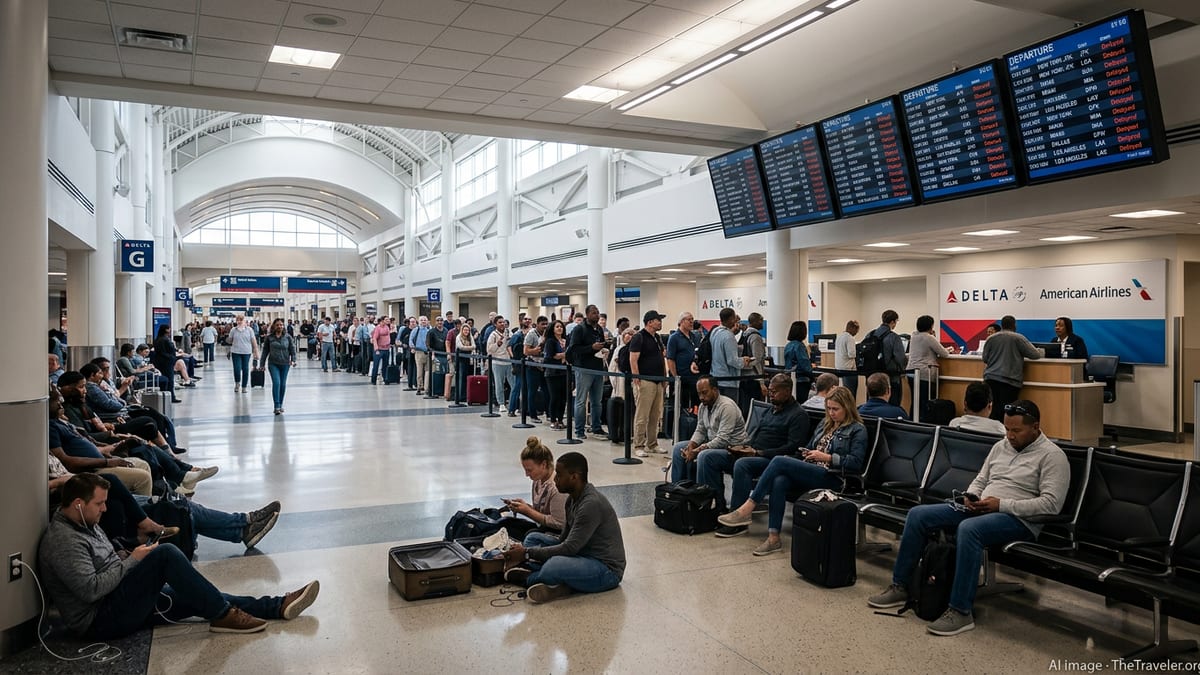
LAX Becomes Focal Point in a Wider Week of Disruptions
Publicly available flight-status data for April 12 indicate that Los Angeles International Airport was among the country’s most affected hubs, with more than one hundred departures and arrivals pushed behind schedule and a small cluster of flights scrubbed entirely. The imbalance between a high delay count and a modest number of cancellations resulted in crowded terminals and extended waiting times, particularly through the afternoon and evening peaks.
Coverage from aviation and travel outlets notes that the turbulence at LAX formed part of a broader pattern of schedule strain across the U.S. in mid-April, as storm systems and tight airline timetables left little room for recovery once early flights ran late. In this context, the 116 delays and six cancellations at Los Angeles on April 12 added to an existing backlog fed by earlier weather and operational issues at other major hubs.
Air travel analysts point out that disruptions concentrated at an airport of LAX’s size can quickly cascade through the national network. Late-arriving aircraft from Los Angeles often feed onward departures in cities such as San Francisco, Dallas, Chicago and Houston, meaning a delay in Southern California can translate into missed connections or last-minute rebookings several time zones away.
SkyWest, Southwest, United Among Most Affected Carriers
Breakdowns of carrier-level performance for April 12 show that multiple airlines experienced significant operational pressure at Los Angeles International. Reports indicate that American Airlines registered the largest number of delayed departures, but notable impacts were also recorded for Southwest Airlines, Delta Air Lines, SkyWest Airlines, United Airlines and Spirit Airlines.
Regional operator SkyWest, which flies on behalf of several major brands, saw a series of delayed services on links connecting Los Angeles with key western gateways. These short- and medium-haul flights often support tight connection banks, so even relatively modest delays can trigger missed onward flights and the need to reroute passengers through alternative hubs later in the day.
Southwest and United, both with extensive domestic networks, also contended with rolling knock-on effects. Aircraft and crews scheduled to operate multiple segments over the course of April 12 had to be repositioned or reassigned when early trips ran late, limiting flexibility to absorb further disruption. Publicly available data suggest that while outright cancellations remained limited at LAX on the day, the cumulative effect of dozens of late departures was felt well into the evening.
Knock-on Impacts for San Francisco, Dallas and Other Hubs
The strain at Los Angeles did not occur in isolation. In the same mid-April period, national trackers and industry summaries reported more than 2,000 disrupted flights across the United States as storms and low-visibility conditions affected major hubs including Dallas Fort Worth, Chicago O’Hare, Atlanta, Newark, Houston and San Francisco. Late-running inbound flights from these airports further complicated schedules at LAX, while delayed Los Angeles departures in turn contributed to congestion elsewhere.
Routes linking Los Angeles with San Francisco and Dallas were among those facing particular pressure, reflecting the high frequency of services and the importance of these city pairs for both business and leisure travel. Even when flights were able to depart, they often did so behind schedule, compressing connection windows at onward hubs and nudging subsequent departures later into the day.
Travel-focused reporting highlights that Phoenix, Detroit, Boston, Fort Lauderdale and Newark also logged substantial disruption around the same weekend, reinforcing the sense that travelers were dealing with a nationwide pattern rather than a single-airport anomaly. In this environment, passengers beginning or ending their journeys in Los Angeles were exposed to delays not only at LAX itself but also along connecting points across the network.
Weather, Tight Schedules and Network Complexity Drive Chaos
While no single cause fully explains the 116 delays and six cancellations at Los Angeles, aviation analysts consistently point to a combination of spring weather, air-traffic flow restrictions and dense aircraft rotations as key drivers. Storm systems and unsettled conditions across parts of the central and eastern United States during the second week of April led to capacity reductions at several hubs, which then rippled into ground holds and airborne holding patterns.
At the same time, many airlines are operating with leaner staffing and spare-aircraft reserves than in previous years. Publicly available commentary on recent disruption patterns notes that this leaves carriers more vulnerable when the first wave of flights does not operate on time. Once early-morning services are delayed, the knock-on effect often continues throughout the day, particularly on routes that crisscross already busy airspace.
The complexity of modern airline networks further magnifies these issues. Carriers such as United, Southwest and SkyWest manage schedules that link dozens of cities through a relatively small number of hubs, meaning that any disturbance at a node like Los Angeles, San Francisco or Dallas is quickly felt by passengers on connecting flights. The April 12 figures at LAX illustrate how even a limited number of cancellations, when paired with a broad field of delays, can significantly disrupt travel plans for thousands of people.
Travelers Confront Missed Connections and Rebooking Challenges
For travelers, the immediate consequences of the Los Angeles disruptions were familiar: extended waits in departure lounges, missed connections at onward hubs and a scramble for available seats on later flights. Passenger experiences shared across public platforms over recent weeks describe long lines at customer-service desks and difficulty securing same-day alternatives when weather and operational problems converge at multiple airports.
Information compiled from travel-industry guidance stresses that in such circumstances, monitoring flight status frequently and acting quickly when delays lengthen can improve the chances of securing favorable rebooking options. With airlines such as Southwest, United and SkyWest working through backlogs from LAX and other affected hubs, travelers who were proactive in seeking reroutes via alternative cities often fared better than those who waited until departure times neared.
The disruption at Los Angeles on April 12, combined with broader nationwide turbulence throughout the same weekend, underscores how fragile on-time performance can be during the busy spring travel period. As major carriers continue to refine schedules and adjust capacity, the episode serves as a reminder that conditions at one airport can reverberate widely across the U.S. air travel system.