


More news on this day
Fresh intelligence warnings, renewed unrest in the Israeli-occupied West Bank and mounting fears over maritime attacks near the Strait of Hormuz are driving a new wave of uncertainty across Israel, Iran and the wider Middle East today, October 24, 2026.
Get the latest news straight to your inbox!
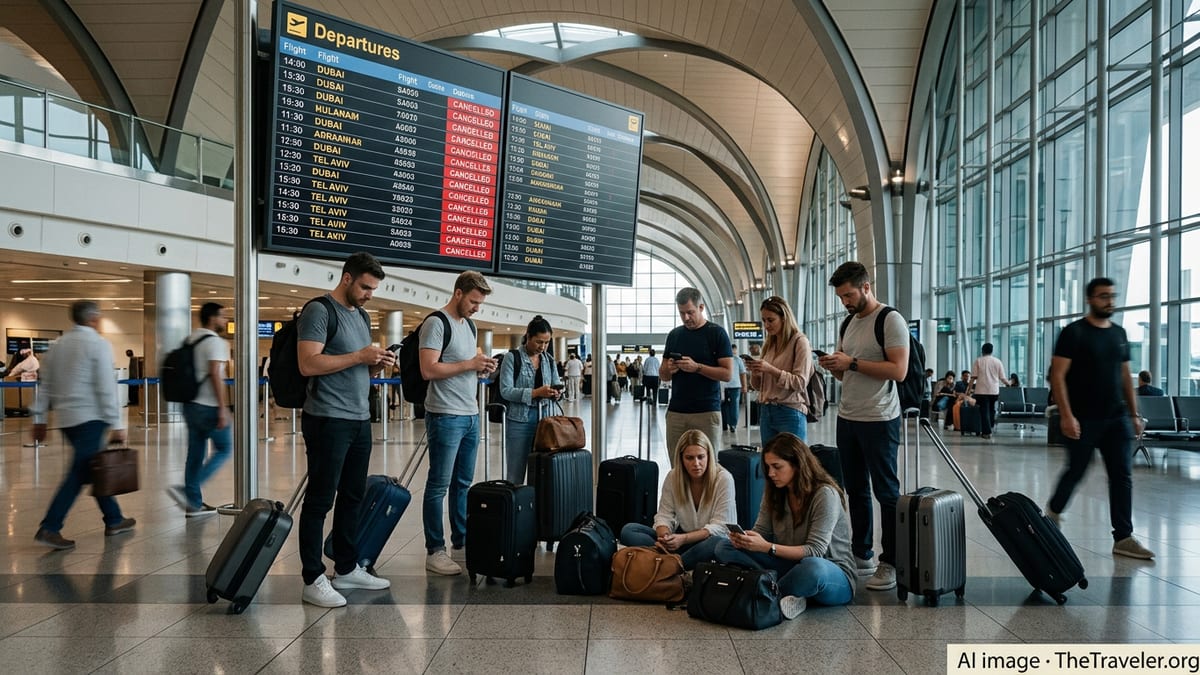
Heightened Security Alerts as Iran Tensions Deepen
Publicly available intelligence assessments released in recent days indicate that Iran has substantially intensified efforts to target foreign officials and facilities across the Middle East and beyond, prompting drawdowns of diplomatic staff in several regional capitals. An internal memo dated October 23 and described in multiple media reports outlines what analysts describe as “advanced” planning for lethal operations, underscoring how the conflict that began with joint United States and Israeli strikes on Iran in February 2026 continues to evolve.
Coverage from major American outlets notes that talks between Washington and Tehran have stalled despite a memorandum of understanding signed in June that was intended to wind down the fighting. The stalemate has coincided with warnings from the Iranian Revolutionary Guard about potential action against regional bases, reinforcing concerns that any miscalculation could spill beyond existing battlefields.
Reports from Jerusalem-based and international media indicate that military planners in Israel and the United States have already drafted scenarios for renewed strikes on Iranian energy and military infrastructure after the U.S. midterm elections on November 3. Commentators point out that leaders in both countries face domestic political pressure over security and fuel prices, raising questions about how electoral timelines and battlefield decisions may intersect in the weeks ahead.
Regional governments are reacting with a mix of caution and contingency planning. Gulf states have increased security around critical infrastructure, while European governments have advised their citizens and companies operating in the region to review evacuation and crisis-response plans, particularly in countries bordering the Gulf and along key air corridors.
Israeli Operations Expand in West Bank as Violence Flares
Inside the Israeli-Palestinian arena, the focus has shifted in the past 24 hours to Hebron and surrounding parts of the occupied West Bank, where Israeli forces have launched what local media describe as a large targeted operation following a deadly attack near a checkpoint on October 23. Live blogs from regional outlets report that hundreds of Palestinian families have been displaced amid raids and movement restrictions imposed around the city.
Israeli newspapers and broadcasters detail an expanded pattern of arrests, road closures and house searches in several West Bank governorates as security forces hunt for suspects and weapons. Travel across checkpoints connecting Hebron to other West Bank cities has reportedly slowed to a crawl, affecting both local residents and foreign visitors who had been attempting to reach religious sites and heritage locations during the autumn travel season.
Humanitarian organizations cited in international coverage warn that the West Bank escalation is unfolding against a fragile backdrop in Gaza, where rights groups say more than 1,400 Palestinians have been killed by Israeli fire since a ceasefire agreement formally took effect in October 2025. While active large-scale bombardments on the coastal enclave have eased compared with earlier phases of the conflict, reports highlight continuing airstrikes, tight border controls and what aid agencies describe as a deepening crisis in water, power and medical supplies.
For travelers, the security clampdown has translated into sporadic closures of key access roads to Bethlehem, Hebron and parts of the northern West Bank, with tour operators adjusting itineraries at short notice. Aviation tracking data compiled by enthusiast communities also shows routine diversions and holding patterns for flights routed near Israeli airspace during periods of heightened alert.
Strait of Hormuz Attacks Rattle Energy Markets
Farther east, the maritime corridor off Iran’s southern coast has reemerged as one of the most sensitive flashpoints in the region. Iranian officials stated this week that at least seven oil tankers were attacked in or near the Strait of Hormuz in October, part of a broader pattern of strikes that a British naval monitoring cell says has pushed incident levels to their highest point since the early weeks of the Iran war.
Reports from international wire services describe a mix of mine attacks, drone strikes and suspected missile launches against commercial shipping linked to Gulf producers and foreign operators. While most vessels have remained afloat or been escorted to safety, at least one previously damaged tanker has since sunk, highlighting the cumulative risks to crews and cargo in one of the world’s busiest energy chokepoints.
Oil market coverage from business media records Brent crude climbing above 117 dollars a barrel in recent sessions, with analysts directly linking the price surge to fears of a renewed U.S. and Israeli air campaign against Iranian infrastructure and the possibility of further disruption at sea. Economists cited by European outlets warn that prolonged instability in the strait could push several Gulf economies deeper into recession following months of reduced export volumes.
Shipping companies have begun to adjust their risk calculus, adding war-risk premiums to policies and in some cases rerouting tankers along longer paths through the Red Sea and around the Arabian Peninsula. For global travelers, these shifts translate into higher aviation fuel costs that can feed through to ticket prices on long-haul routes connecting Europe, Asia and Oceania.
Regional Diplomacy Struggles to Contain Fallout
As the security picture darkens, regional and international diplomacy is working to keep pace. Coverage from Istanbul highlights a meeting on October 23 that brought together foreign ministers from Turkey, Egypt, Pakistan, Saudi Arabia and European partners including Britain, France and Germany for talks focused on the Iran war, Houthi attacks on Saudi Arabia and the broader energy shock.
Statements reported by outlets such as Al Jazeera and the Jerusalem Post show participating ministers voicing concern that any fresh strike on Iran could widen the conflict and further destabilize Lebanon, Syria, Iraq and the Gulf. Turkish officials in particular are quoted urging restraint and renewed negotiations, arguing that only sustained dialogue can address both nuclear concerns and regional proxy conflicts.
At the same time, humanitarian groups and policy institutes tracking the crisis emphasize the growing impact on civilians far beyond the immediate front lines. In Yemen, Iran-aligned Houthi forces have intensified drone and missile attacks on Saudi military and oil facilities, provoking intercept operations and raising the risk of misfires near residential areas. In Lebanon, cross-border exchanges between Israel and Hezbollah have continued at varying intensity since March, contributing to internal displacement and intermittent disruptions to tourism along the Mediterranean coast.
European leaders have also entered the fray, with recent visits by figures such as France’s president to Gulf capitals seeking ways to ease fuel price shocks at home while encouraging de-escalation. Analysts note that many regional governments feel they have limited direct leverage over the core dispute between Washington and Tehran but are deeply exposed to its economic and security consequences.
Travel and Aviation Disruptions Across the Middle East
For travelers and the aviation industry, the combined effect of unrest in Israel and the occupied Palestinian territories, instability around Iran and Houthi attacks in Yemen has been a patchwork of disruptions rather than a complete shutdown. Airlines that operate transcontinental routes over the eastern Mediterranean and the Gulf have introduced additional routing buffers, sometimes adding flight time to avoid high-risk areas flagged in airspace safety notices.
Major carriers continue to serve hubs such as Tel Aviv, Dubai, Doha and Riyadh, but schedules have periodically been trimmed or shifted to daylight hours on days when regional tensions spike. Travel advisories from Western governments now routinely caution against nonessential trips to border regions near Lebanon, Syria, Iraq and Yemen, and urge heightened vigilance for those transiting major airports across the Middle East.
Within Israel and the West Bank, tour operators have scaled back group excursions to flashpoint locations, focusing instead on coastal cities and better-secured urban centers when security conditions allow. In Iran, inbound tourism had already fallen sharply following the onset of hostilities in February and has not recovered in any significant way, according to figures cited in recent economic analyses.
Industry observers say the coming weeks will be critical. If diplomatic efforts manage to prevent a renewal of large-scale strikes on Iran after the November midterms, airlines and travelers could see a gradual stabilization of routes and prices. If, instead, tensions escalate further and the Strait of Hormuz crisis deepens, the ripple effects on global mobility, fuel costs and regional tourism are likely to intensify.