


More news on this day
Passengers travelling through London Stansted this week have reported chaotic scenes, with two-hour queues, missed flights and crowded terminals adding to mounting concern about airport resilience as Europe adjusts to tougher border controls and record demand for air travel.
Get the latest news straight to your inbox!
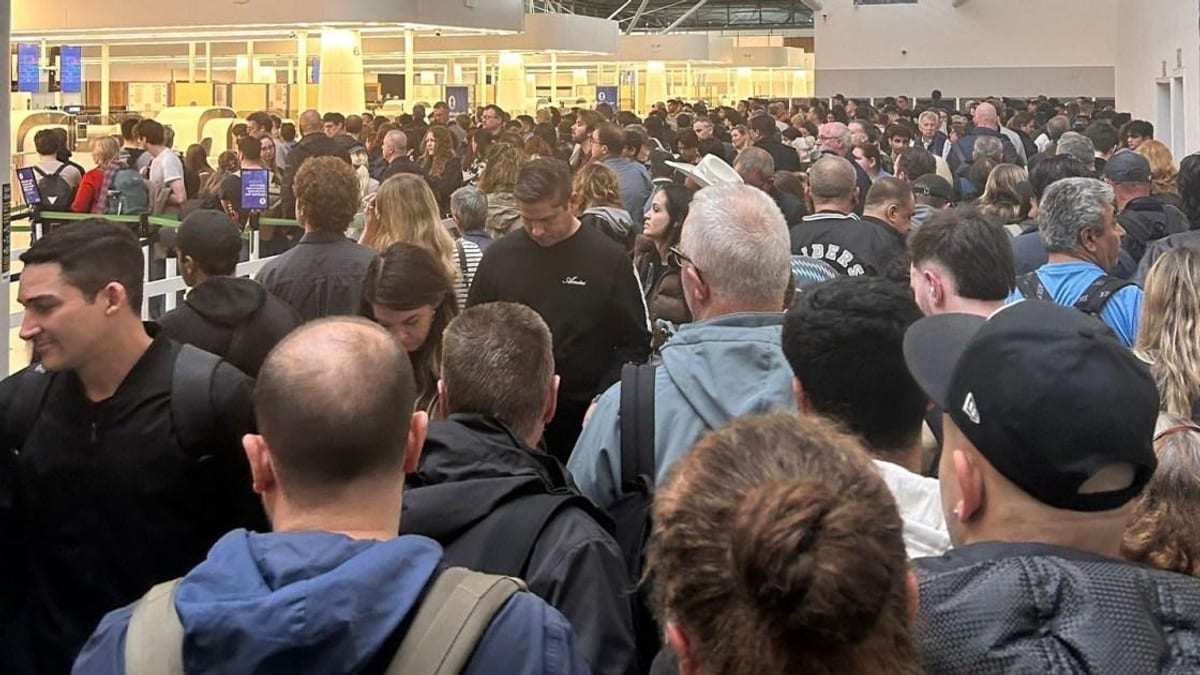
Reports of two-hour queues and missed departures
Travellers passing through London Stansted in recent days have described long, slow-moving security and check in lines that in some cases stretched back into the public areas of the terminal. Social media posts and online travel forums point to waits of up to two hours at peak times, with some passengers warning others to arrive significantly earlier than the usual guidance.
Accounts shared publicly reference bottlenecks at both the initial boarding pass check and the main security search area, with queues at times snaking around barriers and into adjacent concourses. Several passengers indicate that even those who had followed airline advice to arrive around two hours before departure were left rushing to reach their gates once they finally cleared screening.
While lengthy lines are not unprecedented at the Essex hub, which serves as a major base for low cost carriers, the combination of sustained queues, crowded holding areas and a tight departure schedule has heightened anxiety among travellers. Online discussion boards feature multiple recent threads from passengers asking whether standard pre flight arrival times at Stansted are still sufficient, especially for early morning departures.
Strain on a fast growing airport
London Stansted has been operating close to capacity after several years of rapid growth in passenger numbers and an aggressive expansion of routes by budget airlines. Publicly available figures from the airport and industry bodies show that annual traffic has climbed to record levels, with peak days now handling tens of thousands of departing passengers.
Airport reports highlight that, in normal conditions, the majority of travellers pass through security in under 15 minutes. However, the same documents acknowledge that volumes are carefully managed against hourly and rolling two hour passenger caps designed to protect key pinch points such as security search, immigration and boarding gates. When services are bunched together or disrupted, those thresholds can be tested, creating sudden surges in demand at screening lanes.
Some aviation analysts note that low cost scheduling patterns, with multiple departures in short windows, can compound congestion if even minor operational issues arise. At Stansted, early morning and late evening waves are particularly sensitive to staffing levels, temporary system faults or irregular operations upstream in the network, all of which can quickly translate into longer queues on the ground.
Wider European border pressures feeding into UK hubs
The disruption at Stansted is unfolding against a broader backdrop of strain across European border and security checkpoints. The European Union’s new Entry Exit System, which became fully mandatory this month for many non EU travellers, requires biometric registration at external Schengen frontiers. Industry groups and media coverage across the continent have already linked the rollout to extended queues at several major airports, with some reporting waits of two to three hours at busy times.
Although Stansted primarily handles outbound UK passengers rather than inbound Schengen processing, travel patterns mean any delay at one end of a route can ripple through schedules. Airlines operating dense networks between British airports and European cities have warned in public statements that longer processing times at overseas border posts can delay aircraft turnarounds, squeeze connection windows and push departures later into already congested slots.
At the same time, trade associations representing European airports have urged policymakers not to normalise waits of an hour or more at border and security checkpoints, citing risks to safety, customer satisfaction and the overall efficiency of the air transport system. Their calls underscore concerns that what begins as a temporary adjustment period to new rules could harden into a more permanent pattern of longer lines and disruption if capacity is not increased.
Passenger advice and calls for better information
In response to the latest reports from Stansted, frequent flyers and travel commentators are urging passengers to allow additional time for every stage of departure, particularly for flights leaving in the early morning peak. Unofficial guidance circulated on forums and by consumer advocates now typically recommends arriving at least three hours before scheduled departure, even for short haul routes, when travelling from busy UK airports during popular travel periods.
Travel experts also highlight the importance of checking in online in advance wherever possible, travelling with hand baggage only, and monitoring airline and airport channels on the day of travel for any indication of disruption. Some airlines offer fast track security options at Stansted for an additional fee, though passengers note that these can also become crowded when the terminal is under particular strain.
Consumer groups argue that clearer, real time information on queue lengths and processing times would help travellers make better decisions and reduce stress in the terminal. Published performance statistics suggest that Stansted can and often does process the vast majority of passengers rapidly, but the recent experiences reported by some travellers indicate that when the system comes under pressure, the impact on those caught in the longest queues can be severe.
Questions over long term capacity and resilience
The latest scenes at London Stansted are likely to revive debate over airport capacity and resilience in the south east of England. The airport’s operator has previously consulted on plans to increase its permitted annual passenger limit, citing strong demand and the economic benefits of additional flights. Local councils, community groups and industry stakeholders have engaged in detailed discussions over how further growth can be managed without undermining the passenger experience.
Aviation planners point out that infrastructure projects to expand terminal space, modernise security technology or reconfigure passenger flows take years to deliver. In the meantime, airports rely on operational measures, staffing flexibility and cooperation with airlines to smooth peaks and minimise disruption. The combination of record demand, the bedding in of new border systems across Europe and the continued popularity of low cost air travel is testing those measures at Stansted and other hubs.
For passengers, the immediate priority remains clear communication and realistic expectations. As the busy summer season approaches, the experience of those recently caught in two hour queues at London Stansted serves as a warning that even routine short haul journeys can be vulnerable to wider pressures in the aviation system, both in the UK and across the continent.