


More news on this day
LOT Polish Airlines is marking the tenth anniversary of its Warsaw–Cluj-Napoca service in 2026, celebrating a route that has quietly become a strategic air bridge into the heart of Transylvania.
Get the latest news straight to your inbox!
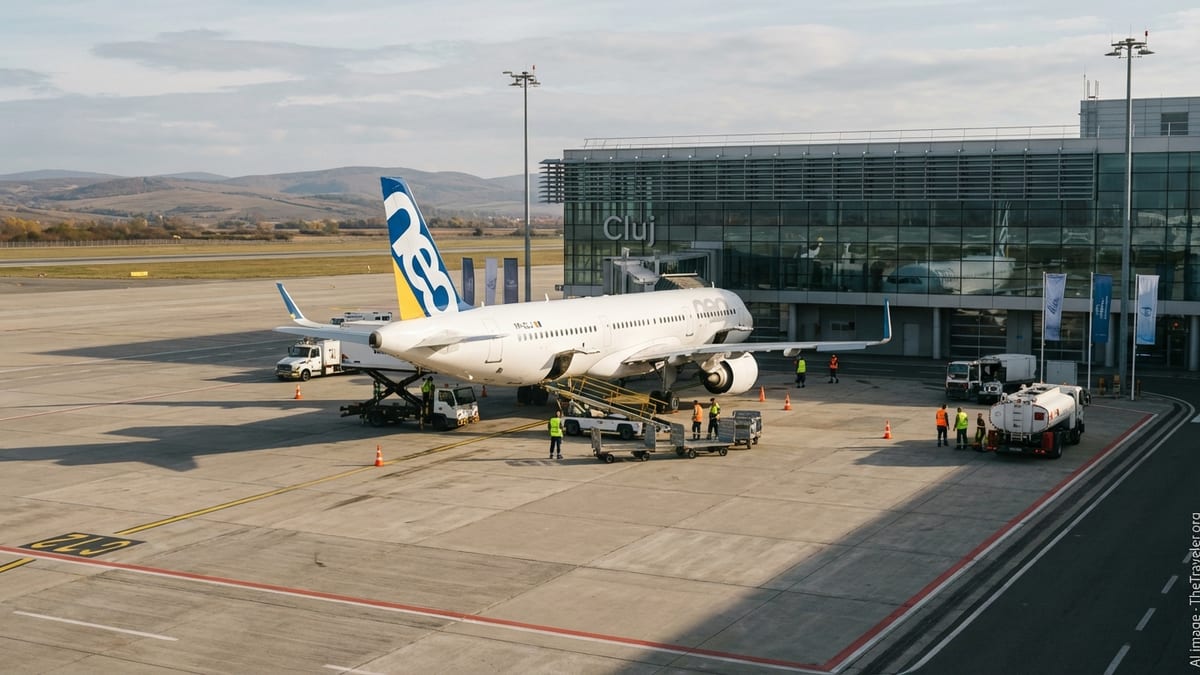
A Decade of Continuous Service Between Warsaw and Cluj-Napoca
According to publicly available information from the airline and airport operators, the Warsaw–Cluj-Napoca connection was launched in 2016 and has since grown into a staple of regional air travel. The route links Warsaw Chopin Airport with Cluj Avram Iancu International Airport, offering travelers direct access between the Polish capital and one of Romania’s most dynamic Transylvanian cities.
Reports indicate that LOT Polish Airlines remains the only carrier operating nonstop on the Warsaw–Cluj-Napoca sector, positioning the service as a key north–south corridor within Central and Eastern Europe. Flight schedules published by route-tracking platforms show a regular daytime rotation, typically around a 1.5-hour flying time, making it an efficient hop for both business and leisure passengers.
Airport data from Cluj-Napoca highlight that since the start of operations, several hundred thousand passengers have flown on LOT services at the airport, underlining the route’s importance in the regional traffic mix. The decade mark is being noted locally as a milestone in the airport’s drive to expand international connectivity and attract more European hubs.
Publicly shared figures on LOT’s broader network show that the carrier has continued to grow its footprint in Central and Eastern Europe, using Warsaw as a transfer platform. Within that network, the Cluj-Napoca service is presented as a model of how mid-size regional cities can be integrated into a global flight map via a single, well-timed hub connection.
Strengthening Transylvanian Tourism and Cultural Exchange
Tourism agencies and travel media in both countries reflect that the Warsaw–Cluj-Napoca route has become a convenient entry point to Transylvania for visitors from Poland and beyond. By routing through Warsaw, travelers from Scandinavia, Western Europe, and North America are gaining more straightforward, single-connection access to Cluj-Napoca and surrounding destinations such as the Apuseni Mountains and medieval Transylvanian towns.
Destination marketing campaigns over recent years have increasingly highlighted Cluj-Napoca’s blend of university life, tech start-up culture, and historic architecture, themes that are echoed in coverage of the anniversary. The direct air link has enabled weekend city breaks and short cultural visits that were far more complex when overland journeys or multi-stop itineraries were the norm.
On the outbound side, residents of Cluj-Napoca and the wider Transylvanian region benefit from quicker access to Warsaw’s growing roster of European, Asian, and North American routes. Publicly available network maps show that the connection effectively plugs Transylvania into a wide web of onward destinations, from Baltic cities to long-haul gateways.
Travel reporting suggests that this ease of movement has contributed to a gradual rise in Polish visitors exploring Romania’s historic regions, wine areas, and Carpathian landscapes. At the same time, more Romanian travelers are using the link to discover Polish cultural hubs such as Krakow, Gdansk, and Wroclaw via transfers in Warsaw.
Economic Ripple Effects and Business Connectivity
Regional development analyses from Cluj-Napoca emphasize the city’s emergence as an IT and services hub, with growing ties to neighboring markets. Against that backdrop, the Warsaw–Cluj-Napoca route is frequently cited in local economic commentary as an enabling factor for cross-border investment, corporate travel, and project-based collaboration between Polish and Romanian firms.
Business travel patterns observed by industry trackers indicate that the route is used extensively by professionals in technology, manufacturing, and financial services who require rapid access to both capitals and to onward markets. The timing of flights through Warsaw’s hub allows day-plus trips and short stays that support everything from start-up pitches to regional conferences.
Authorities responsible for regional planning in Cluj County have publicly portrayed LOT’s decade-long presence as an example of how consistent air links can bolster the attractiveness of a city for foreign investors. Stable connectivity to a major Central European hub is often cited as one of the location factors multinational companies weigh when choosing new satellite offices or shared-service centers.
In Poland, coverage of LOT’s network strategy notes that deeper penetration into neighboring markets such as Romania contributes to Warsaw’s positioning as a competitive transfer alternative to larger Western European hubs. The Cluj-Napoca route, by channeling both leisure and business demand, feeds passenger flows that support long-haul operations and broader regional capacity growth.
Gateway Role in LOT’s Romanian Network
Public information on LOT’s operations in Romania shows that the airline has built a modest but strategically positioned network in the country, with regular flights to Bucharest and Cluj-Napoca and, more recently, to Oradea in western Romania. The Cluj-Napoca route, as one of the earlier launches, is often framed as a foundation stone for that wider presence.
Industry coverage indicates that the airline views its Romanian destinations as complementary, each serving different catchment areas and travel purposes. While Bucharest anchors political, diplomatic, and corporate traffic, Cluj-Napoca and Oradea strengthen LOT’s access to the industrial and innovation corridors of Transylvania and the Romanian west.
Route-development commentary observes that this pattern aligns with a broader trend among European network carriers to reach beyond capital cities into high-growth regional centers. In this context, the decade-long Warsaw–Cluj-Napoca service is being highlighted as an example of an early bet on secondary markets that has matured into a stable, year-round operation.
As additional Romanian and Central European links have been added to LOT’s map, connecting opportunities for passengers traveling through Warsaw have multiplied. Travel analysts point out that itineraries combining Polish and Romanian cities, or pairing Transylvania with Baltic, Nordic, or Western European destinations, are now easier to construct on a single airline ticket than they were ten years ago.
Future Horizons for the Warsaw–Cluj-Napoca Corridor
Coverage of the anniversary emphasizes that the ten-year mark is being treated not only as a celebration of the past but as a springboard for future development. Aviation observers note that sustained demand, combined with the broader growth of Cluj-Napoca’s economy and tourism profile, could support additional capacity or schedule refinements in the coming years.
Industry analysis suggests that as LOT continues to refresh its fleet and refine its network, routes such as Warsaw–Cluj-Napoca are likely to benefit from improved connections and potentially upgraded onboard products. Enhancements to digital services, interline partnerships, and through-checking options would further solidify the corridor as a preferred path into Transylvania for international travelers.
At the same time, Cluj Avram Iancu International Airport is pursuing infrastructure and service improvements aimed at accommodating higher passenger volumes and more diverse traffic. Airport communications indicate ongoing efforts to expand facilities, streamline processing, and court additional international carriers, developments that could ultimately reinforce the role of the Warsaw link within a larger web of routes.
For now, the tenth anniversary underscores how a single, consistently operated route can evolve into a luminous bridge of connectivity, prosperity, and seamless travel between Poland and Romania. As Central and Eastern Europe continues to integrate economically and culturally, the Warsaw–Cluj-Napoca corridor appears well positioned to remain a defining artery into the Transylvanian horizons it first connected in 2016.