


More news on this day
Unusually low water levels on Europe’s major rivers are stranding cruise passengers, forcing sudden ship swaps and long bus transfers as operators struggle to keep itineraries running on the Danube and Rhine during the peak summer season.
Get the latest news straight to your inbox!
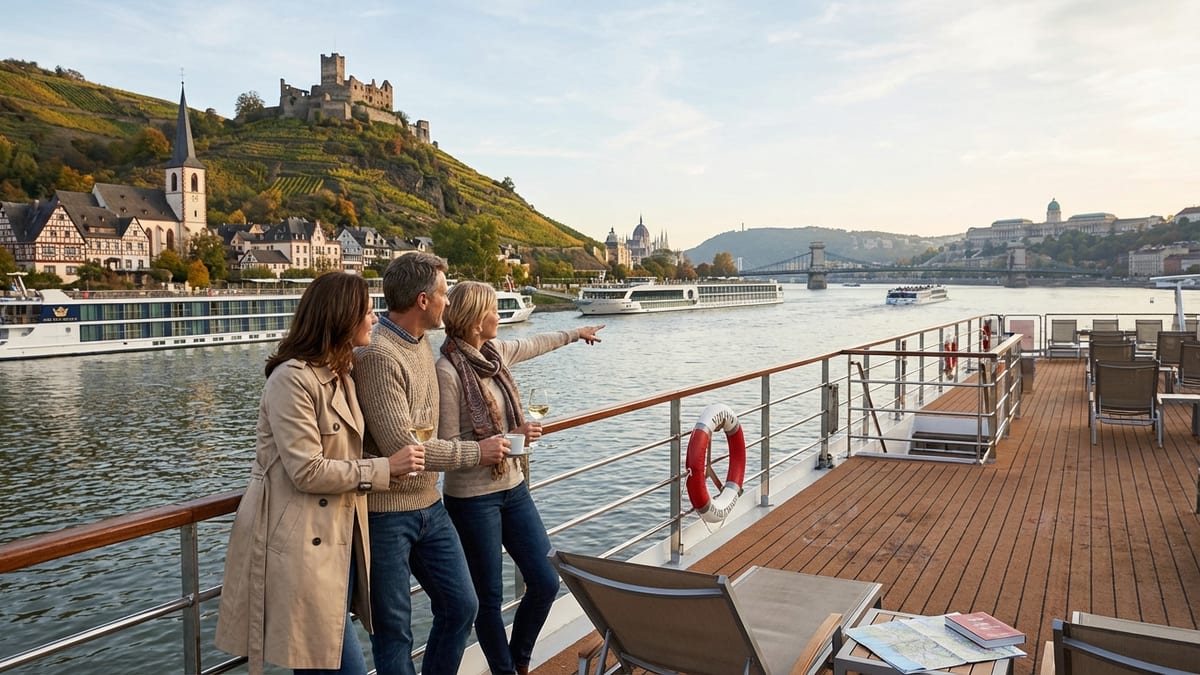
Heat, Drought and Shrinking Navigation Windows
The current disruption follows weeks of hot, dry weather across central Europe, with limited rainfall reported in key river catchments. Publicly available travel alerts from major cruise brands describe an extended spell of above average temperatures and scarce precipitation that has left stretches of the Danube, Rhine and Main shallower than usual.
Specialist river level reports indicate that conditions have tightened along several critical bottlenecks. On parts of the Upper Danube, near Straubing and Vilshofen in Germany, local observers describe exceptionally low depths that narrow the safe navigation channel for long, shallow draft cruise vessels. On the Rhine, recent updates highlight fluctuating but recurrent low water restrictions on cargo and passenger shipping, even where short periods of rain have provided only partial relief.
Hydrology experts within cross border navigation bodies have been warning since early 2026 that prolonged low water spells are becoming a structural challenge rather than a rare anomaly. Meeting summaries from the Danube Commission point to increasing “hydrological volatility,” with both extreme low and high water episodes reshaping how operators plan and price services on Europe’s inland waterways.
Market analyses for the Rhine draw similar conclusions. Recent reports from the Central Commission for the Navigation of the Rhine reference low water episodes in 2025 and early 2026 that squeezed freight capacity and undercut cruise reliability, underlining how even modest depth changes can ripple quickly through tourism and trade when rivers are working near their operational limits.
Stranded Ships, Ship Swaps and Marathon Bus Rides
The impact on travelers has been immediate and highly visible. According to published travel trade coverage, multiple river cruise lines have been forced in recent days to cancel segments, substitute hotel stays on land and move guests over long distances by coach where ships cannot safely pass shallow sections of river.
Travel advisors quoted in industry reports describe clients booked on Danube itineraries who have spent several nights in Budapest hotels after being bused in when low water made it impossible for ships to reach the city. Others on Rhine sailings have seen the opening days of their voyages replaced with bus tours, with passengers temporarily separated from their original vessels until water levels or ship logistics allowed cruising to resume.
First hand accounts on cruise forums and social platforms echo the same pattern. Recent posts from guests sailing between Basel and Amsterdam report last minute notifications of mandatory ship swaps as water on parts of the Rhine dropped below preferred operating thresholds. Travelers recounted having to disembark, drive several hours by road and reboard a sister ship positioned beyond the shallowest stretch, while crews stayed with the original vessel.
Some passengers describe missing classic scenic sections entirely. Reports from June and early July tell of buses replacing cruising through castle lined reaches of the Middle Rhine, or long coach transfers between Danube ports where gangways could not be deployed safely. While dining and accommodation standards have generally been maintained, travelers highlight the fatigue of early starts, late evening arrivals and compressed time in marquee cities.
Cruise Lines Scramble to Keep Itineraries Alive
River cruise operators emphasize in public statements that safety and navigability remain the core constraints. Travel alerts issued by global brands such as Scenic and others note that water levels on sections of the Danube, Rhine and Main are lower than seasonal norms, and that itineraries may require operational adjustments on short notice.
Those adjustments include changing embarkation and disembarkation ports, transferring guests between near identical sister ships, or converting parts of a cruise into a land based program with hotels and motorcoaches. Industry reports highlight that some lines are offering guests the option to rebook for future departures or switch to escorted land tours when low water is forecast to persist.
Larger fleets with standardized ship designs appear better positioned to execute complex “ship swap” maneuvers, sending two matching vessels toward each other on either side of a low water choke point and exchanging passengers mid itinerary. Trade coverage notes that operators with centralized nautical teams and in house captains can also make routing decisions more quickly as river gauges update throughout the day.
Nevertheless, the business costs are mounting. Cruise lines must refund or compensate for missed excursions, absorb the expense of hotels and buses and manage reputational risk in a sector that markets stress free, unpack once convenience. Travel trade analysts suggest that sustained low water seasons could encourage even more conservative capacity planning, higher contingency budgets and new language in booking terms that explicitly addresses hydrological uncertainty.
Climate Signals and a Growing Structural Risk
The pattern now unfolding fits into a longer trend documented by European navigation and climate research bodies. Academic preprints and inland shipping market reports published over the past year connect a series of recent low water crises on the Rhine and Danube to broader warming trends, reduced snowpack in alpine headwaters and more frequent summer heatwaves.
Studies of the Rhine basin note that extreme low water in 2018 and again in 2022 severely constrained both cargo flows and cruise operations, prompting discussions about dredging, river engineering and infrastructure upgrades at critical gauges. For the Danube, expert meetings organized in early 2026 highlighted how shifting riverbed morphology, lower flows and more variable precipitation patterns are complicating efforts to maintain consistent fairway depths throughout the year.
These findings are beginning to feed into long term planning. Official market observation documents from river commissions reference climate change as a key factor in future capacity, and point to the need for coordinated investment across countries to stabilize navigation conditions while also protecting ecosystems. Potential measures discussed in public reports range from targeted riverbed works to smarter water level management and improved forecasting tools for both freight and tourism operators.
For travelers, the practical implication is that water related disruption is no longer an outlier event confined to the occasional drought year. Consumer facing advice on cruise forums increasingly frames low and high water as recurring risks that should be factored into timing, route selection and insurance choices, particularly for peak summer departures.
What Prospective Passengers Should Expect in 2026
Despite the current challenges, demand for European river cruises remains strong. Recent industry data from European travel associations and river commissions show passenger numbers on the Rhine and Danube surpassing pre pandemic levels, and new ships entering service on multiple rivers. Media coverage describes a “river cruise boom,” even as operators grapple with cleaner propulsion requirements and rising environmental expectations from local communities along the banks.
For travelers considering a Danube or Rhine cruise later in 2026, the message from publicly available advisories and traveler reports is to plan for flexibility. Guests are being urged to monitor line specific travel alerts in the weeks before departure, review travel insurance coverage for itinerary changes and be prepared for the possibility of bus segments, altered ports of call or modified sightseeing schedules.
Experienced cruisers contributing to online discussion boards recommend avoiding rigid bucket list expectations about seeing every castle reach or docking directly in marquee city centers. They suggest focusing instead on the broader experience of small ship travel, guided touring and cultural immersion along the route, accepting that the river itself may dictate adjustments.
As Europe heads deeper into the summer of 2026 with water levels already strained in several corridors, the current wave of stranded ships, ship swaps and reworked itineraries on the Danube and Rhine offers a clear reminder that these storied waterways remain living systems. For an industry built around the steady flow of water, adapting to a more volatile climate is becoming a defining test.