


For many visitors to Mallorca, the first decision after landing at Palma de Mallorca Airport is simple: pay for a taxi or ride the A1 airport bus into the city. The A1 is usually the cheapest and most practical way to reach central Palma, but only if you know how tickets work, where the stops are and what catches out first-time visitors. This guide walks you through the full A1 experience, from walking out of arrivals to stepping off in Palma’s historic centre, using the latest information available in mid‑2026.
Get the latest updates straight to your inbox!
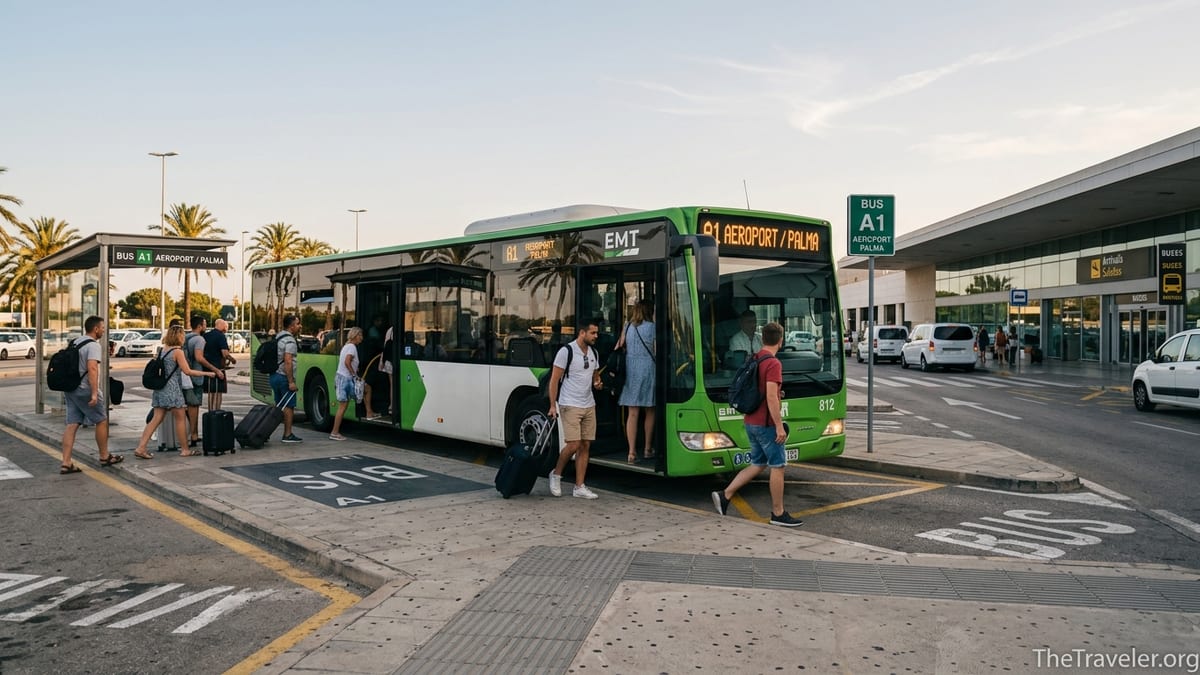
What The A1 Airport Bus Actually Is
The A1 is the dedicated EMT Palma city bus that links Palma de Mallorca Airport (PMI) with central Palma and the seafront. It is part of the green‑white EMT urban network rather than the red‑yellow intercity TIB buses, which means it is designed primarily for airport to city transfers rather than island‑wide journeys. For most visitors staying in Palma’s old town, around Plaça d’Espanya, on the Paseo Marítimo or near the port, this is the bus you will use.
The A1 runs between the airport and Palma Centre via key stops such as the Palau de Congressos conference centre, Porta des Camp, Plaça d’Espanya / Estació Intermodal and Passeig Mallorca. In practice, that means a single 15 to 30 minute ride can drop you within walking distance of many popular hotels near La Rambla, Avenida d’Antoni Maura, Santa Catalina and the seafront promenade. For example, a traveler booked at a boutique hotel near Passeig del Born would typically ride the A1 to Porta des Camp or Plaça d’Espanya and then walk or connect to a local EMT line.
Unlike intercity buses that criss‑cross the island, the A1 is a simple shuttle. It runs in a loop: from the airport into the city, around central Palma and back. You do not need to worry about direction names like you might with trains or the TIB network; if the destination display shows “Aeroport – Palma Centre” or similar and you are at the airport stop, you are in the right place. Once on board, stops are announced and shown on screens, though visitors sometimes miss them when the bus is crowded, which is why it is useful to know your stop in advance.
From a cost perspective, the A1 offers a very large saving over taxis. As of summer 2026, a taxi from the airport to central Palma typically runs around 25 to 30 euros depending on time of day and traffic, plus supplements. By contrast, the A1 single airport fare is around 5 euros if you buy a regular ticket on board, and often closer to 3 euros if you simply tap a contactless bank card, making the bus particularly attractive for solo travelers and couples without excessive luggage.
Airport Stops, Finding The Bus And Luggage Rules
When you exit the arrivals area at Palma de Mallorca Airport, follow the signs for buses and taxis. The airport bus stop for the A1 is located just outside the terminal building on the arrivals level, near the main taxi rank. You will see green‑white EMT buses pulling in to a clearly marked “Aeroport – Palma Centre” stop, and there is usually a large information board showing routes A1 (city) and A2 (Playa de Palma / s’Arenal). Many visitors mistakenly head to the red‑yellow TIB intercity bays further along, which are for destinations like Alcúdia, Cala Bona or Port de Pollença, not for central Palma.
Luggage is generally straightforward on the A1. Standard suitcases, cabin bags and backpacks can be brought on board without extra charge. The buses are low‑floor vehicles with dedicated luggage racks near the middle doors, as well as open standing areas where larger suitcases can be kept out of aisles. A practical example: a family of four arriving with two large checked cases and two cabin bags can usually board through the middle door, lift the big cases onto the rack and hold the smaller ones by their seats. It is considered good manners to keep wheeled suitcases locked and positioned so they cannot roll into other passengers if the driver brakes suddenly.
There are a few limitations. Very large sports equipment such as surfboards or oversized bike boxes may be refused if the bus is busy or if the driver judges that they will block evacuation routes. Folded pushchairs are normally allowed, but at peak times in high summer drivers sometimes ask families to fold strollers and move further inside so other passengers can board. A common mistake is standing with heavy luggage right in the doorway because it feels easier; this quickly causes delays at busy stops like Plaça d’Espanya and annoys both driver and locals.
Accessibility is generally good. The A1 uses low‑floor buses with a ramp that can be deployed at the front door for wheelchairs or passengers with reduced mobility. If you are arriving with a mobility scooter or using a wheelchair, wait near the front of the queue so you can signal the driver when the bus arrives. These vehicles are designed so that a wheelchair can be secured in a designated space opposite the middle doors, and there are priority seats close by. In practice, local passengers are usually quick to offer these seats, but it is wise to speak up if you need them.
Route Through Palma: Key Stops And Where To Get Off
The A1’s route is designed to serve both airport passengers heading into town and travelers connecting to other buses or the metro. After leaving the airport, the bus typically joins the Ma‑19 motorway and then turns off towards the seafront and conference centre before looping through central Palma. While stop names can vary slightly on timetables or displays, several are especially important for visitors.
One of the first city stops is often near the Palau de Congressos and the seafront promenade leading towards Portixol. Travelers staying in modern waterfront hotels around that area can get off here rather than going all the way to Plaça d’Espanya and backtracking on foot. Farther along, stops near Porta des Camp and Avinguda d’Antoni Maura are useful for the old town, the cathedral and boutique hotels in streets such as Carrer de la Bosseria or Carrer de Sant Jaume. For instance, someone booked at a small hotel near the cathedral could hop off at the first convenient stop near the sea, then walk uphill towards La Seu in less than 10 minutes.
The most important hub is Plaça d’Espanya / Estació Intermodal, where the A1 stops on the surface level near the equestrian statue and the entrances to the underground bus and train station. This is the place to get off if you are continuing onwards by TIB bus to resorts such as Alcúdia, Cala d’Or, Pollença or Port d’Andratx, or taking the heritage Sóller train. Travelers headed to Magaluf or Santa Ponsa, for example, often ride the A1 to Plaça d’Espanya and then transfer to an intercity bus from the underground platforms below.
After Plaça d’Espanya, the A1 generally continues along central avenues and then onto Passeig Mallorca and parts of the Paseo Marítimo, serving hotels and apartments near Santa Catalina, Es Baluard museum and the western side of Palma’s harbour. A visitor staying near the Auditorium or the Porto Pi shopping area might use one of these later stops to be closer to their hotel. It is important to check the most recent route map on EMT information boards or in the official app, because small diversions or temporary route changes can occur during major events, construction or summer festivals along the seafront.
Tickets, Prices And How To Pay In 2026
Ticketing on Palma’s A1 bus has become easier and more flexible, especially since contactless card payments were rolled out across the EMT network. As of mid‑2026, the standard single airport fare when paying as a regular visitor is approximately 5 euros if you buy a paper ticket. You can purchase this directly from the driver when boarding or, at the airport, often from an EMT ticket machine next to the bus stop. Children under a certain age typically travel for free when accompanied by an adult, but age limits and identification requirements can change, so families should always check the latest notice on the bus stop panel.
The simplest and usually cheapest option for most tourists is to tap a contactless bank card or payment device on the reader when boarding. For example, a visitor from the United States can tap a Visa or Mastercard debit card, or use a smartphone wallet, and the system will automatically charge a slightly reduced airport fare in the region of 3 euros. You do not need to buy any separate ticket in advance, and there is no surcharge for foreign cards beyond whatever your bank charges for foreign currency transactions.
Local transport cards and passes exist, but they are largely designed for residents or frequent users rather than short‑term visitors. Cards such as the citizen’s pass or multi‑trip EMT cards are usually not available to non‑residents without registration, and they offer their best value on regular city routes rather than the special airport lines. A typical three‑day visitor staying in Palma and making a couple of bus trips per day will often find that simply tapping a bank card each time is both cheaper and less confusing than trying to purchase and load a specific card in Spanish or Catalan at a machine.
One important detail is that EMT’s airport fares are different from the flat urban fare. On regular city lines, a standard onboard fare is around 2 euros, but the A1 and A2 airport services carry a higher tariff because of luggage space and the longer route. Some visitors are surprised when they pay 2 euros one evening to ride a local bus from Santa Catalina to the old town, then 5 euros the next morning from the airport to the same area on the A1. This is not a mistake; the airport premium is normal, and still compares very favourably to taxi prices.
Frequency, Operating Hours And Seasonal Variations
Frequency and operating hours are crucial details for planning late flights or early departures. According to recent schedule updates and travel advisories available in 2025 and 2026, the A1 typically runs from early morning until just after midnight. In many periods of the year, the first departure from the city towards the airport is around 5:30 to 6:00 in the morning, and the last bus leaving the airport for Palma is shortly after 1:00 in the morning. This allows most early morning and late evening flights to be covered, although very early departures or very late arrivals may still require a taxi.
During the main tourist season, the A1 usually runs about every 10 to 15 minutes throughout much of the day, with slightly longer gaps in the very early morning or late at night. For example, a traveler landing at 10:00 on a July Saturday will often find a bus pulling in within a few minutes, whereas someone arriving on a winter weekday around lunchtime might see intervals closer to 20 minutes. Waiting times are posted at the airport bus shelter and can also be checked in real time via EMT’s mobile app and third‑party journey planners.
In off‑season months, especially from late autumn through early spring, EMT sometimes adjusts the timetable to match lower passenger demand. That can mean slightly reduced evening frequencies or changes to first and last bus times. A visitor landing in January at 23:30, for instance, may still catch a bus into Palma, but if the flight is significantly delayed and arrives after the final scheduled departure, the only realistic option becomes a taxi or pre‑booked transfer. To avoid surprises, it is advisable to check same‑week schedules rather than relying on a timetable you saw months earlier.
Traffic conditions also affect real‑world journey times. On a clear morning with little congestion, the ride from the airport to Plaça d’Espanya can take as little as 15 to 20 minutes. In August, around midday or during evening rush hour, the same journey may stretch closer to 30 minutes due to congestion on the Ma‑19 and around the seafront. When planning connections to intercity buses or the Sóller train, build in a safety margin of at least one or two bus intervals so that a delayed flight or a crowded arrival hall does not cause you to miss a pre‑booked tour or last rural bus of the evening.
Common Tourist Mistakes To Avoid
Despite being a straightforward service, the A1 still catches out many first‑time visitors. One of the most common mistakes is confusing the A1 Palma Centre line with the A2 Playa de Palma / s’Arenal bus or with the TIB intercity services. It is easy, especially when tired from a flight, to jump on the first bus that says “Aeroport” on the display. A concrete example: a couple whose hotel is behind the cathedral boards the A2, thinking all airport buses go to the centre. They find themselves heading east towards Playa de Palma, then must either ride all the way back to the airport and change, or get off in a suburb and hunt for a bus back into the city.
Another frequent issue is ticket and payment confusion. Some visitors try to buy tickets from the red‑yellow TIB ticket machines at the airport, believing they are valid on the EMT A1. When they board, the driver tells them the ticket is not valid on this route and asks them to pay again or get off. Others still assume that buses only take cash and line up at the ATM inside arrivals, even though tapping a bank card directly on the A1 is often cheaper and faster. As of 2026, carrying a small amount of cash in euros is still sensible, but relying entirely on cash for the A1 is no longer necessary for most travelers.
Missing the right stop is also common, especially around Plaça d’Espanya. Visitors continuing to Alcúdia or Cala Millor sometimes forget that they must get off the A1 at Plaça d’Espanya to connect to their TIB bus. They stay on until Passeig Mallorca or the port, then need to ride a city bus back up the hill with all their luggage. A simple way to avoid this is to remember that anything involving trains, intercity buses or the Sóller railway usually starts from Estació Intermodal at Plaça d’Espanya, not from the seafront.
Finally, many travelers underestimate how busy the A1 can be in high season and at peak hours. It is not unusual in August for a bus at the airport to arrive already half full from the city side of the loop. In that case, standing space fills quickly and those with large suitcases may struggle to board. If you are traveling with young children or lots of luggage, it can be worth letting one very full bus go and taking the next, especially when they are running every 10 minutes. For late‑night arrivals around 23:30, it is also wise to have a backup plan in mind in case a delayed flight means you miss the last departure.
Using The A1 With Connections, Groups And Families
For solo travelers and couples heading straight into Palma, the A1 is usually the obvious choice. However, for groups, families or those continuing onwards to distant resorts, it is worth thinking through the whole journey. A family of five with bulky luggage going to Cala d’Or, for example, might reasonably choose a pre‑booked transfer van that meets them at arrivals and drives directly to the resort in about an hour. The per‑person cost can end up comparable to five A1 bus tickets plus onward TIB fares, and the door‑to‑door convenience is hard to beat when traveling with children and beach gear.
For budget‑minded travelers connecting to other parts of the island, the A1 plus TIB combination can be very economical. A backpacker heading to Port de Pollença might ride the A1 to Plaça d’Espanya, buy or tap a ticket for a TIB bus to the north and still spend less than half the cost of a private transfer. In these cases, the key is to pay attention to onward schedules. Some rural or long‑distance TIB lines run only once every hour or two in low season, and missing one by a few minutes at Plaça d’Espanya can leave you waiting on the underground bus platforms for quite some time.
Groups should also be aware that there is no special group discount on the A1 itself for standard visitors. Ten people arriving on the same flight will still pay roughly 5 euros each if buying single airport tickets in cash, or slightly less per person if they all tap their own bank cards. This means that from seven or eight people upwards, a private minibus transfer may actually be cheaper per head, especially late at night or during periods when buses are less frequent.
Families with children often find that planning seat positions and luggage placement before boarding makes the ride smoother. A typical arrangement might involve one adult boarding first to claim two seats near the luggage rack, while the other adult brings the children on behind and then passes the suitcases to the first adult. This avoids blocking the doorway and reduces stress when the bus is crowded. Explaining to teenagers ahead of time that they should keep backpacks on the floor or on their laps, not in the aisle, will also earn you appreciative looks from local commuters.
The Takeaway
The A1 airport bus is one of Palma de Mallorca’s most useful pieces of infrastructure for visitors: cheap, frequent and reasonably comfortable, with a route that touches many of the places newcomers want to be. Understanding its airport stop layout, central Palma routing and up‑to‑date payment options can save you both money and frustration compared with simply joining the taxi queue.
If you are staying in or near central Palma, the A1 is typically the best default option, particularly if you are traveling light or in a small group. For those connecting to distant resorts or traveling in larger parties, it is still a valuable first leg into the transport hub at Plaça d’Espanya, but it is worth comparing total journey times and costs with shared shuttles or private transfers. Above all, avoid the classic mistakes: boarding the wrong bus, missing Plaça d’Espanya when you need a connection, or assuming that tickets bought from other operators will be valid on EMT’s airport lines.
With a little preparation, stepping out of the airport and onto the A1 can feel like an easy, almost local way to begin your time on the island. Watch for the green‑white bus, have your contactless card ready, know your stop and enjoy the short ride into one of the Mediterranean’s most appealing small cities.
FAQ
Q1. How much does the A1 bus from Palma Airport to the city centre cost? The standard single fare on the A1 airport bus is usually around 5 euros when you buy a ticket on board, while tapping a contactless bank card typically brings the cost down to roughly 3 euros per journey, subject to minor adjustments by EMT.
Q2. How long does the A1 bus take from the airport to central Palma? In light traffic, the journey from Palma Airport to Plaça d’Espanya usually takes about 15 to 20 minutes, but in busy summer periods or rush hour it can stretch to around 30 minutes.
Q3. What are the A1 operating hours? The A1 generally runs from early morning, around 5:30 to 6:00, until shortly after midnight or about 1:00, though exact first and last departure times can vary by season, day of the week and timetable updates.
Q4. How often does the A1 bus run? During most of the main tourist season, the A1 operates roughly every 10 to 15 minutes through the day, with frequencies sometimes reduced to around 20 minutes in the very early morning, late evening or quieter winter months.
Q5. Where should I get off the A1 for the old town and cathedral? For Palma’s old town and the cathedral area, many visitors get off at stops near Porta des Camp or Plaça d’Espanya, then walk 10 to 15 minutes through the historic streets, although exact stop choice depends on your hotel’s address.
Q6. Where do I change from the A1 to other buses for the rest of Mallorca? To connect to intercity TIB buses serving resorts like Alcúdia, Cala d’Or or Port de Pollença, you should leave the A1 at Plaça d’Espanya and follow signs down into Estació Intermodal, the island’s main bus and train hub.
Q7. Can I pay for the A1 bus with a contactless bank card? Yes, you can simply tap a contactless debit or credit card, or a phone or watch wallet, on the validator when boarding, which usually applies a slightly cheaper airport fare than paying cash for a traditional ticket.
Q8. Is the A1 bus suitable if I have lots of luggage? The A1 is designed for air travelers and has low floors and luggage racks, so normal suitcases and cabin bags are fine, though at very busy times you may find it more comfortable to wait for a less crowded bus or consider a taxi if you have very bulky items.
Q9. What happens if my flight is very late and I miss the last A1 bus? If your arrival is delayed beyond the last scheduled A1 departure, you will need to use an airport taxi or a pre‑booked private transfer into Palma or to your resort, as nighttime public transport options are very limited once the airport buses stop.
Q10. Do I need to buy an EMT transport card for a short city break? For most short visits of a few days, it is not necessary to buy a special EMT transport card; tourists usually find it simpler to pay per trip on the A1 and other city buses using contactless bank cards or, if preferred, individual cash tickets.