


Hidden between pine forests and the Adriatic, the Croatian island of Korčula has quietly become a serious destination for white wine lovers. This is the home of Grk and Pošip, two native grapes that you will rarely find outside southern Dalmatia, poured in laid-back coastal wineries where tastings feel more like being welcomed into a family garden than a formal tour. The best part for travelers: you can experience much of the island’s wine, food, and vineyard scenery without ever getting behind the wheel of a car.
Get the latest updates straight to your inbox!
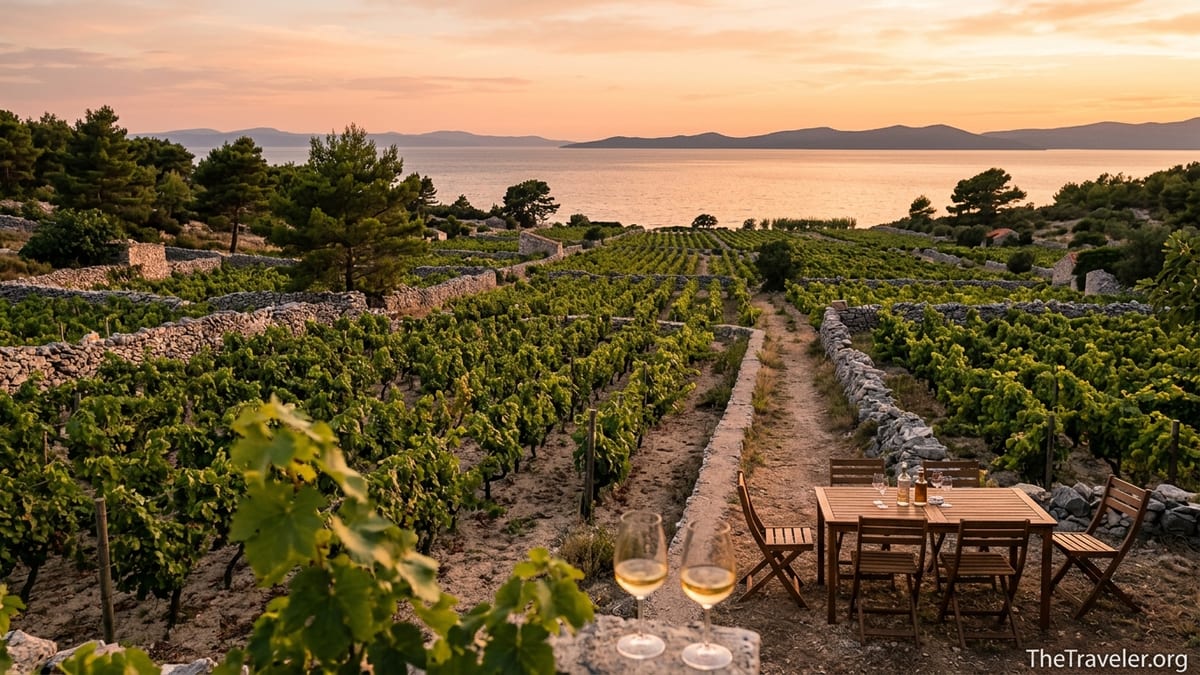
Why Korčula Belongs on Every Wine Lover’s Map
Compared with better-known Croatian wine regions such as Istria or Pelješac, Korčula still feels low-key and personal. The island is particularly prized for its white wines. Grk is grown almost exclusively in the sandy vineyards of Lumbarda on the eastern tip of the island, while Pošip is centered inland around the villages of Smokvica and Čara. This clear geographic split makes it easy to organize your tastings by area, even if you are relying on buses, taxis, or bikes.
Most wineries on Korčula are small family operations. Tasting rooms may be attached to a traditional stone house or set among rows of vines with views across to the Pelješac Peninsula. Rather than polished, high-volume experiences, you are more likely to find a handful of outdoor tables, the winemaker or a family member pouring, and relaxed conversations that drift between vintages, olive harvests, and island life. This intimacy is one of Korčula’s main draws, especially if you are used to larger, more commercial wine routes.
Prices remain relatively accessible considering the island’s increasing profile. A seated tasting of three to five wines typically ranges from about 12 to 25 euros per person, sometimes including a small plate of local cheese, olives, or anchovies. Buying bottles direct from the cellar is usually cheaper than in wine shops or restaurants; a bottle of quality Grk that might list for around 40 euros in a high-end restaurant in Korčula Town can cost closer to 18 to 25 euros at a Lumbarda winery.
Travelers often combine an afternoon beach swim with early evening tastings, then linger for a simple dinner of grilled fish or pasta at a village konoba. Public buses link Korčula Town and Lumbarda in 10 to 15 minutes, and local taxis or pre-arranged transfers can get you to inland Pošip villages without needing a rental car. For many visitors, this slow, car-free rhythm becomes part of the island’s appeal.
Understanding Grk: Lumbarda’s Rare Coastal White
Grk is one of Croatia’s most distinctive and rare grapes. The variety is planted primarily around Lumbarda, on sandy soils just above small coves and sandy beaches. The grape is unusual in that it has only female flowers, so it is often interplanted with other varieties such as Plavac Mali to ensure pollination. This mix of coastal breezes, sandy ground, and traditional planting patterns gives Grk a character that is difficult to replicate elsewhere.
In the glass, Grk is typically dry and medium to full-bodied with vibrant acidity. Expect citrus and green apple notes, often with a saline edge that reflects its maritime setting. Some bottlings show subtle herbal or Mediterranean scrub aromas, making them particularly good partners for local seafood. Many visitors compare a good Grk to a mix of Vermentino and Assyrtiko, though it has its own personality and structure.
Wineries such as Bire and Popić in Lumbarda have become reference points for Grk. At Bire, tastings often include both the classic dry Grk and a more structured barrel-aged version, alongside a rosé or red from Plavac Mali. Popić, set amid vines with sea views, typically offers several Grk vintages and a relaxed, family-run atmosphere. Smaller producers, including vintners with only a few hectares, often pour their wines from terraces overlooking the vineyards, giving you a direct sense of where the grapes originate.
Grk’s rarity means production is limited, and many wineries sell out of their most sought-after bottles by late summer. If you taste something you love in June or early July, it is worth buying a bottle or two on the spot rather than assuming you will find it easily in shops back home. For travelers planning visits in September or October, it is wise to check directly with wineries or tour operators in advance to confirm which wines are still available for tasting.
Pošip: Inland Vineyards and Food-Friendly Whites
While Lumbarda is the heartland of Grk, the inland villages of Smokvica and Čara form the historic home of Pošip. This variety is now planted more widely across southern Dalmatia, but many Croatian wine writers still point to Korčula’s central valley as the benchmark for quality. Here vineyards spread across rolling hills and terraces bordered by low stone walls, with small chapels and olive groves interrupting the rows of vines.
Pošip typically produces dry, aromatic whites with ripe stone fruit flavors, moderate to fuller body, and enough acidity to stay refreshing in the island’s summer heat. Some producers favor a clean, stainless-steel style that highlights apricot, peach, and citrus, while others use partial barrel aging or extended lees contact to add body and texture. As a result, Pošip can range from crisp aperitif to serious gastronomic wine suited to richer dishes like grilled swordfish, octopus under the peka dome, or roasted chicken.
Notable producers in the Smokvica and Čara area include Pošip Čara, a cooperative and winery that draws on surrounding vineyards, and Car Winery in Smokvica, which runs a modern tasting room amid the vines. Boutique wineries around these villages often require advance booking for tastings, especially if you are visiting outside peak summer. Many tastings here include both classic Pošip and more experimental cuvées, allowing you to see how versatile the grape can be.
Reaching these inland wineries without a car usually means arranging a taxi from Korčula Town or Lumbarda or joining an organized island wine tour that combines Pošip and Grk visits. A typical half-day tour from Korčula that includes transfers, visit to one inland winery plus one or two in Lumbarda, and guided tastings often starts from around 70 to 120 euros per person, depending on group size and how much food is included.
Lumbarda Wineries: Sea Views, Sandy Soils, and Easy Logistics
Lumbarda is the most practical base for car-free wine tasting on Korčula. The village sits on the island’s eastern tip, less than 15 minutes by bus or taxi from Korčula Town, and is surrounded by sandy vineyards and small coves. Several wineries and tasting rooms are within walking distance of each other, so it is realistic to visit two or even three in a single afternoon on foot.
Many travelers structure their day around the public bus that runs between Korčula Town and Lumbarda. In summer, services are typically frequent enough to allow flexible planning. A common pattern is to take a late-morning bus, swim at sandy Vela Pržina or Bilin Žal, then walk uphill in the late afternoon through the vineyards to tasting rooms such as Bire or Popić. After tasting, you can stroll back down to the waterfront for dinner in Lumbarda Village before catching the evening bus back to Korčula Town.
Several local operators offer small-group wine tours focused on Lumbarda. Experiences often marketed under names like “bike & wine,” “Lumbarda vineyards walk,” or “Grk tasting experience” usually combine light exercise with visits to two family wineries. Prices for these outings commonly range from around 70 to 140 euros per person, including bike rental or guided walk, two tasting stops, and a plate of local snacks such as sheep’s cheese, cured meats, or marinated anchovies. For travelers who prefer not to plan logistics, these tours remove the need to coordinate opening times and transfers.
If you prefer to explore independently, it is still a good idea to contact your preferred wineries in advance via phone or email and ask about tasting hours. In high season, early evening slots around sunset are particularly popular, and some tasting terraces have limited seating. Outside July and August, certain wineries reduce hours or open only on request, so a quick confirmation helps avoid disappointment, especially if you are relying on the last evening bus back to town.
Food and Wine Pairings: Where to Eat with a Glass of Grk or Pošip
Korčula’s food scene has grown in parallel with its wines. The island is known for fresh Adriatic seafood, handmade pasta such as the local makaruni, and slow-cooked peka dishes, where meat or octopus roasts for hours under an iron dome. Many restaurants and konobas highlight local bottles on their lists, giving you plenty of chances to match Grk or Pošip with regional flavors.
In Lumbarda, waterfront restaurants and wine-focused bistros routinely pour local Grk by the glass. It is common to see menus pairing chilled Grk with fresh oysters or mussels from nearby Pelješac, anchovy starters, or grilled white fish. A relaxed dinner for two consisting of a shared seafood appetizer, two mains such as gnocchi with sage and goat cheese or mussels in buzara sauce, plus three or four glasses of Grk, might come to around 120 to 140 euros at a well-regarded Lumbarda restaurant. Simpler family-run konobas will usually be more modest, especially if you opt for house wine from the tap.
In Korčula Town, higher-end restaurants attached to boutique hotels or housed in restored palaces often offer tasting menus with dedicated local wine pairings. A multi-course dinner here can easily reach 120 to 200 euros per person with wine, but the upside is curated introductions to top island producers, sometimes including limited Grk or Pošip bottlings that are hard to track down elsewhere. For travelers who want a concise deep dive into Korčula’s wine scene in a single evening, this can be a worthwhile splurge.
More casual wine bars and bistros across the old town often stock an impressive range of Korčula bottles at accessible prices. It is common to find Pošip by the glass for roughly 6 to 9 euros and Grk for a bit more, reflecting its smaller production. Ordering a simple plate of local cheese, pršut, and marinated olives with a flight of three wines can be an effective way to calibrate your palate before deciding which wineries to visit. Staff are usually happy to recommend producers based on your preferences for lighter, crisper styles versus fuller, oak-aged whites.
Planning Wine Tasting Without a Car
One of the biggest practical questions for visitors is how to taste safely without driving. On Korčula, this is easier than in many wine regions. Public buses, local taxis, walking paths, and guided tours together create a network that lets you visit several wineries in a day without renting a car. The key is to group tastings geographically and keep travel times realistic.
If you are staying in Korčula Town, consider dedicating one day or afternoon to Lumbarda and another to an inland Pošip excursion. On your Lumbarda day, use the regular bus service or a short taxi ride to reach the village, then walk between beaches, vineyards, and tasting rooms. Many accommodations and tour organizers provide maps of vineyard paths that keep you on quieter lanes away from heavier traffic. Good footwear and sun protection are important, as some routes involve gentle hills and little shade.
For Smokvica and Čara, there is less frequent public transport, and distances are greater. Here, pre-arranging a round-trip taxi, hiring a private driver for half a day, or booking a group tour is usually the safest and most efficient option. A half-day private transfer for two people to visit one or two inland wineries may start around 80 to 120 euros, depending on distance and waiting time, but costs can be shared if you join forces with other travelers from your hotel or guesthouse. Always confirm return timing with your driver, especially if you are visiting in the evening.
Cycling is another attractive option in and around Lumbarda, where several rental shops offer standard and e-bikes by the day. This can work well if you plan to taste moderately, spacing visits with swims and food stops. Helmets, lights for late returns, and a cautious pace on shared roads are essential. If you anticipate heavier tasting, guided bike-and-wine tours with a leader who manages timing and routes may be a safer choice than fully independent riding.
Sample Itineraries: From Quick Tastings to Full Wine Days
To make the most of limited time, it helps to anchor your plans in realistic itineraries. If you have just one afternoon, a straightforward option is to catch an early afternoon bus from Korčula Town to Lumbarda, swim at Vela Pržina, then walk uphill for a late-afternoon tasting at one winery such as Bire. Afterward, stroll down to the waterfront for a seafood dinner and return on the evening bus. This gives you sea, sand, wine, and a village meal without ever needing more than a bus ticket and sturdy sandals.
With a full day, you could combine two Lumbarda wineries and unhurried beach time. Start in mid-morning with a walk or short taxi to a first tasting, have lunch at a konoba in the village, then continue to a second winery in the late afternoon. Many tasting rooms close between lunch and late afternoon, so checking opening times and reserving ahead helps you avoid long gaps. Sunset views over vineyards sloping toward the sea make early evening the sweet spot for your second tasting.
Travelers seeking a deeper dive into both Grk and Pošip might dedicate one day to Lumbarda and another to an inland tour. On the second day, arrange a driver or join an organized excursion that visits a Smokvica or Čara winery for Pošip, then returns via a viewpoint or short cultural stop in a traditional village. Ending the day with a casual wine bar visit back in Korčula Town lets you compare the island’s main styles side by side and decide which bottles to take home.
For those with limited mobility or who prefer very low-effort experiences, several hotels and agencies can arrange door-to-door wine tastings that include pick-up and drop-off. These experiences often feature a curated selection of local wines served on a terrace or at a partner winery without requiring significant walking. When booking, be clear about your mobility needs so that vehicles and routes can be chosen with minimal steps and steep paths.
The Takeaway
Korčula offers a rare combination of serious wine, relaxed hospitality, and manageable logistics. Grk and Pošip are not just labels on a list but reflections of two distinct landscapes: sandy coastal vineyards wrapped around Lumbarda’s coves and rolling inland terraces around Smokvica and Čara. Visiting their wineries lets you see, smell, and taste these differences in real time, often in the company of the families who farm the vines.
For travelers, perhaps the island’s greatest strength is how approachable it feels. You do not need deep technical wine knowledge, a large budget, or a rental car to enjoy Korčula’s bottles. A bus ticket, a few tasting reservations, and an openness to slow down are usually enough. Whether you are sipping chilled Grk next to the sea, pairing Pošip with a plate of grilled fish in a village konoba, or toasting sunset over the vineyards, Korčula’s wine culture invites you to stay present, curious, and just a little bit salty from the sea air.
FAQ
Q1. Do I need a car to visit wineries on Korčula?
You can visit several key wineries without a car by combining buses, taxis, walking, and guided tours, especially around Lumbarda where vineyards are clustered close together.
Q2. How much should I budget for a typical wine tasting?
Most seated tastings of three to five wines cost roughly 12 to 25 euros per person, with some including small snacks such as cheese, olives, or anchovies.
Q3. Is it necessary to book winery visits in advance?
In high season it is strongly recommended to reserve tastings, particularly in small Lumbarda wineries with limited seating and at inland Pošip producers that may open only by appointment.
Q4. What is the best time of day for wine tasting in Lumbarda?
Late afternoon to early evening is ideal, when temperatures are cooler and you can enjoy vineyard or sea views at sunset before or after dinner.
Q5. Can I combine beach time with wine tasting on the same day?
Yes. Many visitors swim at sandy beaches like Vela Pržina or Bilin Žal in late morning or early afternoon, then walk uphill for wine tastings in the late afternoon.
Q6. Are vegetarian or seafood-focused food options easy to find with local wines?
Yes. Most restaurants offer seafood, pasta, salads, and vegetable dishes that pair well with Grk and Pošip, and staff can usually recommend suitable wine matches.
Q7. Can I ship wine home from Korčula?
Some wineries and shops can help arrange shipping, but options and costs vary. Many travelers instead pack a few carefully wrapped bottles in checked luggage.
Q8. What should I wear for vineyard visits and tastings?
Comfortable shoes, light clothing, sun protection, and a hat are sensible, especially if you plan to walk between vineyards and villages in the afternoon heat.
Q9. Is tipping expected at wineries and on wine tours?
Tipping is not obligatory but rounding up or leaving around 5 to 10 percent is appreciated, especially if you received attentive service or enjoyed a guided explanation.
Q10. Which wine should I try if I have time for only one tasting?
If you have to choose, make it a glass of Grk in Lumbarda, ideally at a winery terrace overlooking the sandy vineyards and the sea that shape this rare coastal white.