


Step aboard the right luxury ship today and you could easily forget you are on a cruise at all. The ambiance feels more like a chic beachfront resort in Mykonos or a design-forward hotel in Singapore than a traditional vessel at sea. Butler-serviced suites, Michelin-level dining, sleek rooftop pools and quiet, residential lounges are replacing neon atriums and crowded buffets. For travelers who love the ease of cruising but prefer the polish and privacy of a five-star resort, a new generation of luxury lines is rewriting what it means to sail in style.
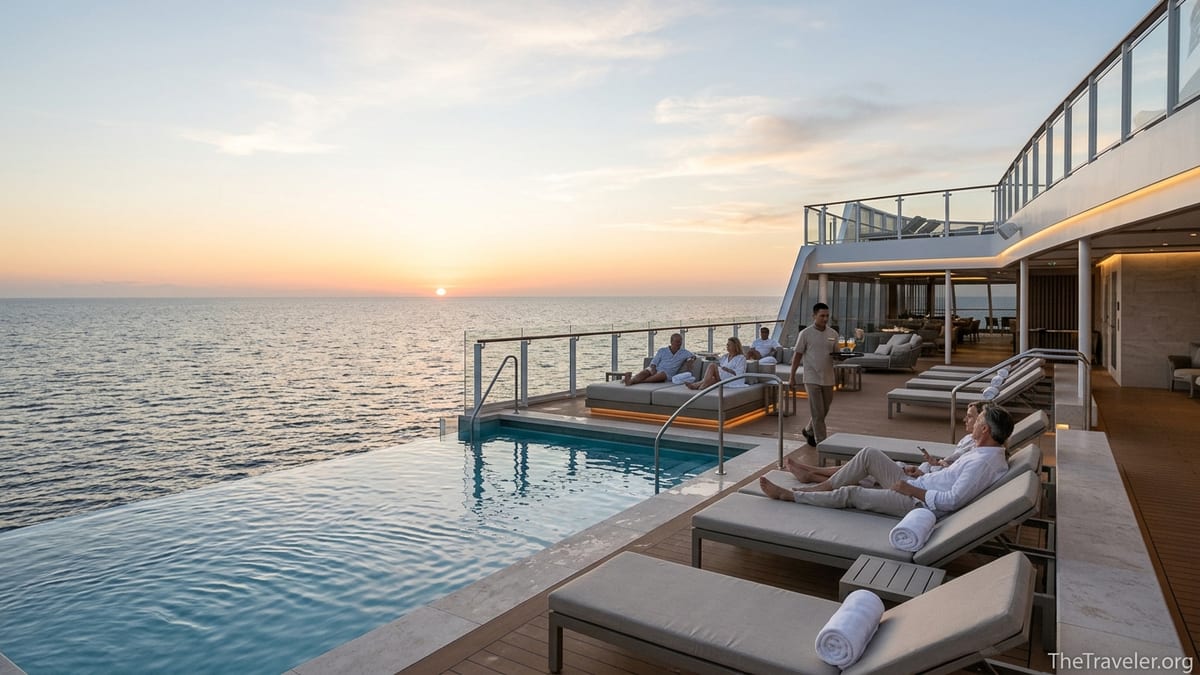
From Cruise Ship To Floating Resort: What Luxury Now Looks Like
In the past, even the nicest ships still felt unmistakably like cruise vessels, with regimented schedules, formal dress codes and cavernous dining rooms. Today’s top-end lines talk instead about “yachts,” “homes at sea” and “ocean resorts.” The focus has shifted to residential comfort and flexibility, with more open deck space, fewer passengers and a design language that would not look out of place in a contemporary city hotel. You are more likely to see neutral linens, sculptural lighting and curated art than brass handrails and nautical kitsch.
On these ships, your suite becomes a private retreat, often with a walk-in wardrobe, marble-clad bathroom and a veranda large enough for breakfast with a sea view. Regent Seven Seas and Silversea, for example, offer all-suite fleets where top-tier accommodations include separate living rooms and full dining tables, closer in feel to a penthouse at a luxury resort than a cabin on a ship. Butler service, included for most suites on lines such as Silversea and Seabourn, brings that residential feel full circle, with tailored touches like unpacking, pressing and in-suite cocktail service.
Public spaces mirror that resort aesthetic. Instead of one main pool area overrun with loungers, you will find several different outdoor zones: a quiet, adult-focused pool deck, a buzzy bar with live music at sunset, and tucked-away whirlpools with cabanas. Explora Journeys, the luxury lifestyle brand of MSC, talks openly about its “hotel-at-sea” concept, and its ships feature multiple pools, including a glass-roofed indoor space that feels much closer to a spa resort in the Alps than a traditional lido deck.
Service also tracks closely with what frequent guests expect at five-star hotels. Crew-to-guest ratios are high, sometimes close to one-to-one in top categories, and the staff quickly learn your preferences. Your morning cappuccino appears the way you like it, your favorite table in the restaurant is remembered, and the sommelier knows which bottles to suggest based on earlier conversations. The result is an experience that feels bespoke rather than mass market, even when you are sharing the ship with a few hundred other guests.
All-Inclusive Luxury: Understanding What You Are Really Paying For
Sticker shock is common when travelers first look at luxury cruise pricing. Day rates of 400 to 1,500 dollars per person are not unusual, and world cruises can run into six figures. Yet those headline numbers are often far closer to what many guests ultimately spend on a mainstream ship once onboard extras are factored in. The core difference lies in what the fare includes, and that is where the comparison to five-star resorts becomes useful.
On a genuinely all-inclusive line such as Regent Seven Seas, the fare typically covers business-class flights on many European routes, pre-cruise hotel stays in gateway cities, unlimited shore excursions, specialty dining, premium drinks, gratuities and Wi-Fi. Travelers who are used to signing for every cocktail and transfer at a resort in the Caribbean or Mediterranean often find it liberating to simply put their wallet away for the week. Industry analyses suggest that when you account for airfare, excursions and high-end dining, the nightly cost compared with a premium line plus extras can come surprisingly close.
Silversea and Seabourn, often priced in a similar band, lean heavily into the inclusive model as well. Recent fare breakdowns from cruise travel advisors show many Silversea sailings in the range of roughly 500 to 1,500 dollars per person per night, depending on itinerary and suite category, with wines, spirits, gratuities and a selection of excursions included. Travelers used to paying resort prices in destinations such as Santorini, Saint-Barth or Maui will recognize that while this is not inexpensive, it is broadly in line with top hotels once all meals, activities and transportation are considered.
Value also comes from the absence of constant upselling. On a modern luxury ship, specialty restaurants are generally part of the fare, and there is far less pressure to buy beverage packages, photo packages or spa “deals.” The onboard economy feels calmer and more in tune with an international five-star resort where you sign only for extras like high-end spa treatments, rare wines or private tours. It is a different psychological experience from mainstream megaships, and for many cruisers, that shift alone justifies the higher initial cost.
Regent Seven Seas And Silversea: Classic Ultra-Luxury At Resort Level
Among the established luxury players, Regent Seven Seas and Silversea consistently rank near the top of expert lists for travelers who want a resort-like experience at sea. Both operate relatively small, all-suite ships and focus on service levels and inclusions that rival top-tier hotels. If you picture a classic grand resort with attentive white-gloved service, marble floors and champagne on arrival, these lines are a natural starting point.
Regent’s fleet is known for its space-per-guest ratio and unapologetically lavish interiors. Ships such as Seven Seas Explorer and the upcoming Seven Seas Prestige feature lounges and suites that would look at home in an upscale city hotel, with crystal chandeliers, art collections and spaces such as the Observation Lounge that feel like high-end cocktail bars. Suites come with walk-in wardrobes, large balconies and full-sized bathtubs, which are still rare at sea but expected at a five-star resort. Industry reports highlight that Regent frequently tops surveys of most inclusive cruise lines, with airfare, excursions and specialty dining bundled into the fare.
Silversea, part of the Royal Caribbean Group, delivers a slightly different mood. Its newer ships, including Silver Nova and Silver Ray, emphasize open-air spaces and a connection to the water, with an asymmetrical pool deck and expansive glass that flood interiors with natural light. Many suites have floor-to-ceiling windows and spacious verandas, and the line’s butler service in every suite has become one of its hallmarks. For guests coming from land-based stays at grand hotels in places like the Amalfi Coast or the French Riviera, the aesthetic on these ships feels familiar: refined, serene and quietly opulent rather than flashy.
Both Regent and Silversea also excel in their culinary programs, another key part of the resort comparison. Multiplicity of venues is the norm, from French fine-dining rooms and contemporary pan-Asian concepts to casual pool grills that would not look out of place at a chic beach club. On Silversea, intimate venues like La Dame offer multi-course wine-paired dinners that echo Michelin-starred tasting menus ashore, while Regent’s steakhouse Prime 7 is frequently cited by repeat guests as one of the best steakhouses at sea. The ship becomes not just your hotel but your restaurant district, and that is precisely the feeling many travelers seek when they talk about a “floating resort.”
Explora Journeys And Viking Ocean: Design-Forward “Hotels At Sea”
While the classic luxury names continue to refine their formulas, a newer generation of lines is pushing hard into the resort identity. Explora Journeys, the luxury lifestyle brand launched by MSC Group, speaks explicitly about creating “homes at sea” and a calm, yacht-inspired environment for fewer than 1,000 guests. Its first ships carry around 922 passengers and are laid out in a way that will feel instantly familiar to fans of contemporary boutique hotels, with warm woods, neutral textiles and generous outdoor lounges scattered across the decks.
On Explora I and its sister ships, nearly every accommodation is an oceanfront suite, many with large daybeds and private dining areas on the terrace. The top-tier Owner’s Residence, designed with input from noted architect Patricia Urquiola, offers a separate living room, panoramic sea views and a private plunge pool, mirroring the feel of a designer villa at a Mediterranean resort. Multiple pools, including a covered solarium with a retractable glass roof, means guests can swim and sunbathe comfortably in almost any weather, just as they might move between indoor and outdoor areas at an upscale spa hotel.
Viking Ocean, although sometimes categorized as “upper premium” rather than ultra-luxury, also feels distinctly resort-like for many travelers. Its ships are almost entirely veranda cabins, and the interiors draw heavily on Scandinavian design principles: light woods, clean lines and large windows that blur the boundary between ship and sea. Public spaces such as the Living Room lounge and the two-story Explorer’s Lounge read like the lobby and rooftop bar of a well-designed Nordic hotel. Importantly for resort-style travel, Viking includes specialty dining, wine and beer with meals and a free excursion in most ports, simplifying the onboard experience.
These design-forward lines tend to appeal to guests who might otherwise choose brands such as Aman, Six Senses or contemporary city hotels like those from Edition or Andaz. The onboard atmosphere is less about formality and more about creating a holistic environment where wellness, design and cuisine are part of a seamless whole. If you are the type of traveler who chooses a resort as much for the ambience as for the location, Explora Journeys and Viking Ocean are compelling options.
Yacht-Style And Boutique: Seabourn, Ritz-Carlton Yacht Collection And Beyond
Some luxury cruisers prefer a more intimate, yacht-like experience rather than a traditional ship or large resort feel. Here, lines such as Seabourn and The Ritz-Carlton Yacht Collection come into their own. With smaller passenger counts and an emphasis on outdoor space, they deliver an atmosphere closer to a private members’ club or small island resort than a conventional cruise.
Seabourn’s ships typically carry between 450 and 600 guests, and the atmosphere onboard has long attracted travelers who value fine dining and discreet service. A partnership with acclaimed chef Thomas Keller has elevated one of Seabourn’s signature restaurants, offering menus reminiscent of top-tier land-based establishments. On deck, the aft pool areas and whirlpools feel like the adults-only sections of a smart resort, with attentive bar service, comfortable loungers and a soundtrack kept deliberately low so conversation can flow.
The Ritz-Carlton Yacht Collection, by contrast, leans fully into its hotel heritage. Its yachts, carrying around 300 guests, are laid out with multiple restaurants, a waterside marina platform and spacious suites, many of which include double-vanity bathrooms and walk-in closets that mirror high-end Ritz-Carlton hotel rooms. For loyalists of the Ritz-Carlton brand who are accustomed to staying at the company’s resorts in destinations such as Grand Cayman or Bali, the transition to its yachts feels natural. The onboard aesthetic is all about understated luxury, with soft neutral palettes, custom furnishings and large windows.
Other boutique-style operators, from expedition-focused lines offering helicopters and submarines to small-ship brands sailing in the Adriatic or along the Croatian coast, extend this resort-yacht crossover even further. While their price points and inclusions vary, the unifying theme is that these vessels are designed primarily for comfort and atmosphere rather than onboard spectacle. Think champagne on deck as the sun sets over a remote bay, with space and quiet to match a secluded coastal resort.
Onboard Life: How Daily Routines Mirror High-End Resorts
One of the main reasons certain cruises feel like five-star resorts is the rhythm of daily life onboard. Instead of a constant stream of announcements, trivia contests and loud pool games, the schedule on a luxury ship is designed around unhurried enjoyment. Mornings might begin with yoga on deck, a leisurely breakfast at an outdoor terrace and a long coffee in a quiet lounge with panoramic views, mirroring the sort of day you might have at a wellness resort in Mexico or Thailand.
Spa and wellness facilities on these ships are central, not an afterthought. Many luxury vessels feature extensive thermal suites, hydrotherapy pools, snow rooms or salt saunas, often complimentary or available with a day pass. At-sea treatments draw from recognizable boutique spa brands and techniques, from hot stone massages to advanced facials and targeted recovery therapies. A guest might easily structure an entire sea day around spa rituals, fitness classes and relaxation areas, just as they would at a destination spa resort.
Culinary life also unfolds in a resort-like way. Instead of a single main dining room, there are multiple venues of varying formality: a casual pool grill for lunch, a refined Mediterranean restaurant for dinner, a small sushi bar for late-night bites. Reservation systems, if used, function much like at a luxury resort, with concierges assisting in planning dining throughout the voyage. Many guests choose to dine al fresco whenever weather permits, adding to the sensation that they are at a coastal property rather than in the middle of the ocean.
Evenings bring another round of resort-style options: cocktail hours with live piano or jazz, small-scale performances in cabaret lounges and occasional destination-focused talks. Casinos, when present, are typically compact and understated rather than sprawling. If you have ever spent an evening moving between the bar, terrace and living-room-style lounge of a boutique hotel, the flow will feel familiar, simply with the added backdrop of a moving seascape and the promise of a new port in the morning.
Choosing The Right “Floating Resort” For Your Travel Style
With so many luxury options now available, the key is matching the ship to your personal definition of a five-star resort. Some travelers prioritize maximum inclusivity and do not want to think about a bill until disembarkation. Others care most about design, spa facilities or destination depth. Thinking first about what you value in a land-based resort is a useful starting point before translating those preferences to the sea.
If you prize all-inclusive simplicity, lines such as Regent Seven Seas and Silversea are strong contenders. Their fares typically incorporate flights on many itineraries, transfers, excursions, premium beverages and gratuities, creating a fully packaged experience. For couples who might otherwise book a week at a renowned all-inclusive resort in the Maldives or Caribbean, these cruises offer a similar financial model with the added benefit of exploring multiple destinations in one trip.
Travelers who care deeply about design, atmosphere and a modern aesthetic may gravitate toward Explora Journeys or Viking Ocean. The ships on these lines feel as though a contemporary design studio has been given free rein, resulting in calm, visually cohesive spaces and generous outdoor areas. Guests who typically choose design-forward hotels in cities like Copenhagen, Barcelona or New York often find that these ships feel like a natural extension of their usual travel preferences.
For those who associate five-star resorts with seclusion and intimacy, yacht-style operations such as Seabourn or The Ritz-Carlton Yacht Collection may resonate most. Smaller guest numbers, a higher sense of privacy and the ability to access smaller ports provide an experience closer to an exclusive island property or lakeside lodge. In each case, the ship becomes the destination in much the same way that a resort does, and choosing wisely will determine whether your cruise truly feels like that coveted “floating resort” experience.
The Takeaway
The line between luxury cruising and high-end resort travel has never been thinner. Today’s top ships combine the best aspects of both worlds: the attentive service and curated experiences of renowned hotels with the convenience of unpacking once and waking up to a new horizon every day. Instead of neon-lit atriums and rigid dinner seatings, guests now encounter calm, design-led spaces, flexible dining and a level of inclusivity that can make a week at sea feel strangely similar to a week at their favorite coastal hideaway.
For travelers willing to invest in this level of comfort, the rewards are significant. Suites rival penthouse hotel rooms, culinary offerings echo headline restaurants in major cities, and onboard wellness programs can match those of celebrated spa resorts. While price tags may initially appear daunting, a deeper look at what is included and how it compares to equivalent land-based stays often reveals strong value, especially when factoring in airfare, excursions and fine dining.
Ultimately, the appeal of luxury cruises that feel like five-star resorts lies in how seamlessly they fit into the travel lives of people who already love that style of vacation. Whether you lean toward the polished classicism of Regent and Silversea, the modern calm of Explora and Viking, or the yacht-like intimacy of Seabourn and Ritz-Carlton, there is now a ship that can mirror your favorite resort experience, simply with a different view outside the window each morning. For many, that evolving blend of familiarity and discovery is what makes this corner of the cruise world so compelling.
FAQ
Q1. How much do luxury cruises that feel like five-star resorts typically cost?
Prices vary widely by line, season and suite category, but many ultra-luxury cruises fall roughly in the range of 400 to 1,500 dollars per person per night. That often includes most or all drinks, gratuities, specialty dining and in many cases excursions and flights, so the all-in cost can be closer to a high-end resort stay than the headline fare first suggests.
Q2. Which cruise lines are best if I want an all-inclusive, resort-style experience?
Regent Seven Seas and Silversea are frequently cited for highly inclusive fares that bundle flights on many itineraries, transfers, shore excursions, premium drinks, Wi-Fi and gratuities. Seabourn, Explora Journeys and Viking Ocean also include a great deal, particularly in terms of dining and beverages, with some variations in what is covered from line to line.
Q3. How do suites on luxury ships compare with rooms at top resorts?
Suites on luxury ships are generally larger and better equipped than standard cruise cabins and compare favorably with upscale hotel rooms. Many offer separate living areas, walk-in closets, marble bathrooms with bathtubs and expansive verandas. Top-level accommodations such as Regent’s largest suites or the Owner’s Residences on lines like Explora Journeys are closer to penthouses or villas than to typical hotel rooms.
Q4. Will I feel crowded on a luxury cruise, or is there enough space to relax?
Space per guest is one of the major differences between luxury ships and large mainstream vessels. With fewer passengers and generous public areas, you are more likely to find uncrowded pool decks, quiet lounges and plenty of open seating in restaurants. The overall feel is closer to a well-designed resort with ample grounds than to a busy floating city.
Q5. Are luxury cruises suitable for travelers who do not normally like cruising?
Many guests who say they are “not cruise people” discover they enjoy luxury lines precisely because the experience feels more like a resort than a traditional cruise. Flexible dining, minimal announcements, refined entertainment and discreet service can change long-held perceptions. If you already enjoy five-star resorts but are wary of shipboard crowds and formality, starting with a small luxury vessel can be a good test.
Q6. How formal is the dress code on luxury ships that market themselves as resort-like?
Dress codes vary, but many luxury lines have relaxed significantly in recent years. Even on traditional brands, formal nights are often optional or described as “elegant” rather than strictly black tie. Design-forward lines such as Explora Journeys and Viking Ocean encourage a polished yet relaxed style comparable to an upscale beach or city resort, with smart casual attire in the evenings.
Q7. How do dining options on these ships compare to five-star resorts?
Dining is a major focus on luxury ships, and the variety often exceeds that of many resorts. Multiple restaurants are standard, spanning fine-dining venues, casual grills, regional specialty concepts and intimate bars. Partnerships with notable chefs, thoughtful wine programs and high staff-to-guest ratios in dining rooms help deliver a culinary experience that rivals or sometimes exceeds what travelers find at comparable land-based properties.
Q8. What kind of wellness and spa facilities can I expect on a luxury cruise?
Most luxury ships feature large, modern spas with multiple treatment rooms, thermal suites, saunas and steam rooms, hydrotherapy pools and relaxation lounges with sea views. Fitness centers are typically well equipped, and daily schedules often include yoga, Pilates and guided stretch classes. The overall offering is similar to what you would find at a dedicated wellness resort, with the added benefit of views that change throughout the voyage.
Q9. Do luxury cruise lines cater well to solo travelers and couples without children?
Yes. Luxury lines tend to attract an adult-oriented demographic, and their onboard programming reflects that focus. Many ships have limited or no children’s facilities, making them especially appealing to couples and solo travelers seeking quiet spaces. Hosted tables at dinner, small-group excursions and social events designed for independent guests help solo travelers feel welcome without pressure.
Q10. How far in advance should I book a luxury cruise that feels like a resort?
Booking six to twelve months in advance is sensible for most itineraries, especially if you want specific suite categories or popular sailing dates such as holidays and peak summer weeks. For rare routes, inaugural seasons on new ships or exclusive suites, planning even earlier can be wise. As with top resorts, preferred room types on the most desirable dates tend to sell out first.