


Lynden Pindling International Airport (LPIA) in Nassau is the main gateway to the Bahamas and a key hub for U.S. and Caribbean connections. With three distinct terminal areas and U.S. border preclearance on site, it can feel confusing if you arrive at the wrong building or are trying to connect between domestic and international flights. This guide explains how the U.S. departures terminal, international and U.S. arrivals terminal, and domestic/international departures terminal fit together so you can move through LPIA with confidence.
Get the latest updates straight to your inbox!
How LPIA Is Laid Out: The Three-Terminal Overview
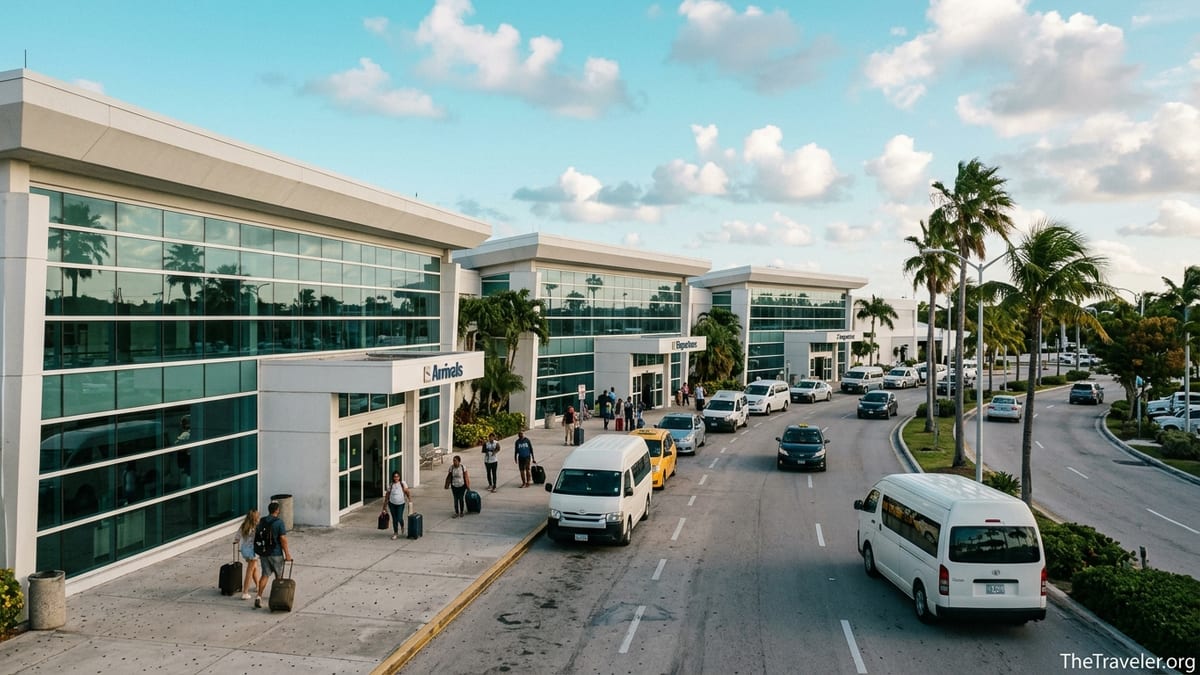
Lynden Pindling International Airport has three main terminal areas, usually referred to as Terminals A, B and C. Terminal C is dedicated to United States departures and houses U.S. Customs and Border Protection preclearance, Terminal B handles most international and U.S. arrivals, and Terminal A is used for domestic and some non-U.S. international departures. All three sit along the same curbfront, so you can walk between them outside in a few minutes, but they function as separate buildings with different security and check in zones.
In practical terms, if you are flying from Nassau to the United States, you will depart from the U.S. Departures terminal (Terminal C). If you are arriving into Nassau from overseas, including from the United States or Canada, you will almost always arrive into the International and U.S. Arrivals terminal (Terminal B). If you are flying between Nassau and another Bahamian island such as Exuma, Eleuthera or Abaco, or on certain regional services like Air Canada to Toronto, you will usually use the Domestic & International Departures terminal (Terminal A).
Because airlines serving multiple markets sometimes check in from different terminals, it is important to read your confirmation email and boarding pass carefully. For example, an American Airlines flight to Miami will use the U.S. terminal, while a Bahamasair flight from Nassau to George Town in Exuma will leave from the domestic side of Terminal A. Third party sites may label these areas differently, so always rely on the wording printed on your latest booking rather than an old blog post or social media tip.
Walking from one terminal to another is usually a matter of a few minutes on flat sidewalks, but there is no airside connection between domestic and U.S. areas. If you arrive at the wrong building, you must exit back to the curb and walk outside, which can cost you valuable time during busy afternoon departure waves.
U.S. Departures and Preclearance: What to Expect in Terminal C
Terminal C is where all scheduled passenger flights from Nassau to the United States depart. Airlines such as American, Delta, JetBlue, United, Southwest and some seasonal U.S. carriers use this building. The key feature here is U.S. border preclearance, meaning you clear U.S. immigration and customs in Nassau before boarding. When you land in destinations like Miami, Atlanta, Charlotte or New York, your flight is treated as domestic and you can often walk straight to your connecting gate instead of visiting a U.S. arrivals hall.
On the landside level of Terminal C, you find airline check in counters, bag drop, and security screening. Travelers are typically advised to arrive around two to three hours before departure for U.S. flights, with more time during peak periods such as Saturday afternoons or major holidays. After security, you enter the preclearance hall where U.S. Customs and Border Protection officers process passports and travel documents. This area works similarly to a U.S. arrivals facility, including automated kiosks for some travelers and secondary inspection rooms when needed.
Once you have cleared preclearance, you move into the U.S. departures gate area upstairs, which includes a mix of cafés, bars, duty free shops and grab and go food options. Many travelers choose to eat here, especially if they are flying to U.S. cities where onboard service is limited to drinks and light snacks. Airport feedback from recent passengers often mentions that queues at preclearance can build in the early and mid afternoon when several U.S. flights depart within a short window, so buying water and snacks after security can be a smart way to make any waiting time more comfortable.
Because you have already passed through U.S. immigration in Nassau, your luggage will be tagged through to your final U.S. destination in most cases. If you are connecting at a U.S. hub like Atlanta or Charlotte, you generally do not need to reclaim and recheck bags on arrival. Instead, your checked baggage is transferred behind the scenes, while you walk directly to your next gate inside the domestic terminal complex.
International and U.S. Arrivals: Navigating Terminal B and Baggage Claim
Most passengers first encounter Terminal B when they land in Nassau. This terminal handles international arrivals, including flights from the United States, Canada, Europe and some regional Caribbean routes. After disembarking, you follow signs for immigration, where Bahamian officers check passports and arrival documents. During busy periods, such as mid afternoon waves from U.S. and Canadian hubs, queues can form, but line management is usually clear and staff are used to processing large groups of resort and cruise package travelers.
Immediately after immigration, you proceed to the baggage claim hall. Carousels are grouped by arriving flight, with overhead screens displaying airline and origin city. For example, a JetBlue flight from Fort Lauderdale and an Air Canada flight from Toronto may be unloading at the same time on different belts, so checking the screen rather than simply following other passengers makes things easier. The baggage area also includes restrooms, ATMs from major banks, and a few kiosks offering SIM cards or transfer services.
Once you have collected your bags, you pass through customs, where you may be asked to declare items such as high value electronics, large amounts of cash or restricted food products. Officers frequently wave through visitors with nothing to declare, but they do conduct spot checks. After exiting customs, you step directly into the public arrivals area, where hotel desk representatives, prebooked transfer drivers and family members usually wait with signs. This is also where you will find the main taxi stand for rides into Nassau, Cable Beach, Paradise Island and other resorts on New Providence.
For travelers connecting onward to domestic flights, the exit from Terminal B is a key decision point. If you are booked on Bahamasair, Western Air or another local carrier to an out island such as Eleuthera or Long Island, you collect your bags in Terminal B, clear customs, exit into the arrivals hall, and then walk outside along the curb to the domestic departures entrance at Terminal A. Many people underestimate the time this takes, but in practice the transfer is straightforward as long as you allow enough buffer between flights.
Domestic and Non U.S. International Departures: Inside Terminal A
Terminal A serves passengers heading to other islands in the Bahamas and to some non U.S. international destinations. This is where you will check in for domestic services on carriers such as Bahamasair, Western Air and smaller regional airlines flying to places like Exuma, Abaco, Eleuthera and San Salvador. It is also used by certain international flights that do not use U.S. preclearance, for example some Air Canada services to Toronto or other seasonal routes to non U.S. cities.
The ground level of Terminal A contains airline ticket counters, baggage drop, a domestic security checkpoint and the entrance to the international departures area. Domestic check in here can feel more informal than in major North American hubs, and same day changes or rebooking may sometimes happen directly at the counter. Travelers have reported that early morning domestic departures can see long check in lines, especially around major Bahamian holidays or on days when multiple flights to popular islands leave within a short time window.
After security, the domestic departures lounge includes basic seating, restrooms and a few snack options. The atmosphere can feel relaxed and local, with Bahamian families, commuters and resort workers waiting for quick hops to their home islands. Aircraft types range from small regional jets to turboprops, so gate areas are typically smaller than those in the U.S. terminal. Many domestic flights board via walk out gates where passengers cross the apron to the aircraft by foot, adding to the island-hopping feel of the journey.
On the international side of Terminal A, you will find departure gates for non U.S. flights, such as services to Canada and some Caribbean destinations. Because these passengers clear immigration formalities in their destination countries rather than in Nassau, the process here looks more like a typical international departure from a midsized airport. Security screening is similar to other terminals, and a mix of duty free and travel retail is available once you are airside.
Ground Transport, Exits and Getting Between Terminals
All three terminal buildings at LPIA sit along the same access road, which means that ground transportation options are broadly shared. Outside the arrivals exit of Terminal B you will find the main taxi queue, where licensed taxis line up to serve incoming flights. Fares into central Nassau and Paradise Island are usually based on set zone pricing rather than meters, with additional charges for extra passengers or large pieces of luggage. Many resorts along Cable Beach and Paradise Island also coordinate shared shuttle vans that meet specific flights, so it is common to see hotel representatives holding branded signs in the arrivals area.
Ride share services that many U.S. travelers are used to, such as Uber and Lyft, do not operate in the Bahamas as of mid 2026. Visitors expecting to order a car through an app often discover this only after landing, so it is wise to plan on using taxis, hotel shuttles or prebooked private transfers instead. Several local transport companies offer prearranged airport to hotel services, which can be helpful for larger groups or travelers carrying sports equipment like golf bags or dive gear.
Walking between terminals is straightforward but can be confusing if you are stressed or short on time. From the arrivals exit of Terminal B, it generally takes only a few minutes to walk along the covered sidewalk to reach the domestic departures entrance of Terminal A or the U.S. departures drop off at Terminal C. Curbfront signage above the doors identifies each building as domestic and international departures, international arrivals, or U.S. departures. If you are uncertain, airport staff and security officers stationed outside are used to pointing passengers in the right direction.
For same day connections, a realistic timeline is important. A traveler arriving on a Bahamasair flight from Eleuthera into the domestic side, collecting bags, and then walking to Air Canada check in at Terminal A for a Toronto flight several hours later typically needs only a short transfer time once bags arrive. By contrast, a passenger arriving from an out island in the late morning and connecting to a packed U.S. afternoon departure from Terminal C needs to factor in domestic baggage claim, the outdoor walk, U.S. airline check in and the full preclearance process. Booking tight connections of less than two hours in these situations can feel stressful.
Common Wrong Terminal Mistakes and How to Avoid Them
Despite clear signage, one of the most common issues at LPIA is passengers being dropped at the wrong terminal. This often happens when travelers focus only on the airline name, not the destination. For example, an American Airlines passenger may tell a taxi driver they are “flying American,” and be dropped at the first American counter visible, which could be in Terminal A for some regional services, when in fact they need Terminal C for a U.S. departure to Miami.
Another frequent scenario involves domestic connections. A visitor may land from New York into the international arrivals hall at Terminal B, collect bags and then assume their short onward flight to Exuma will depart from the same building. In reality, they must exit to the curb and walk to the domestic departures entrance of Terminal A. Travelers who do not realize this until close to boarding time can find themselves jogging along the sidewalk with bags, hoping check in has not closed.
Third party booking sites can also add to the confusion by using outdated labels or generic wording like “Main Terminal.” A Canadian traveler connecting from a domestic Bahamas flight to an Air Canada service might see only “Nassau” listed for both flights and assume they depart from the same place. In practice, the domestic leg could arrive into the domestic side of Terminal A, while the Toronto flight departs from the international side of the same building, with a separate security checkpoint.
The easiest way to avoid wrong terminal mistakes is to confirm three pieces of information before you leave your hotel: your airline and flight number, your destination city, and the wording of your departure terminal as printed on your booking or airline app. When you tell your taxi driver, be as specific as possible, for example “Terminal C, U.S. departures to Atlanta” rather than simply “Delta.” If you arrive early and realize you are at the wrong building, do not panic; simply walk along the curbfront to the correct entrance and follow the departure signs inside.
Practical Tips for Smooth Transfers and Layovers
Many travelers use LPIA as a connection point between international flights and domestic island hops. Understanding a few timing and layout realities can make these transfers much smoother. For inbound international flights that are on separate tickets from onward domestic legs, allow generous buffer time. While some visitors have successfully made connections of about three hours between arriving from North America and departing to an out island, delays can and do happen, and domestic carriers may close check in well before departure.
If you land early in the morning from an out island and have a long wait for an afternoon international flight, you face a common travel day scenario. Some passengers choose to remain inside the departure lounge after checking in for their long haul flight, using the airport’s Wi Fi and food court. Others store bags with their airline and take a taxi to nearby beaches or cafes, keeping in mind you must still pass through security and, for U.S. flights, preclearance again on your return. Local drivers are usually candid about how much real off airport time you will get once traffic and check in windows are considered.
Families traveling with children should be especially mindful of the time needed to clear formalities. Strollers, car seats and extra bags can slow movement through corridors and elevators, and young travelers may need breaks during longer lines. Having snacks and bottled water handy, along with fully charged devices, makes the process more bearable for everyone. Many parents find it easier to arrive on the early side and let kids stretch their legs around the gate area rather than sprinting through the airport against the clock.
For those connecting onward after arriving into the United States from Nassau, it is important to remember that your flight is treated as domestic on arrival when you have used preclearance. At hubs such as Atlanta or Charlotte, you will usually disembark into a regular concourse and can walk directly to your next gate. Baggage should be tagged through to your final destination, so you only retrieve it there unless you are required to collect and recheck for specific reasons such as changing airlines on separate tickets.
The Takeaway
Lynden Pindling International Airport is more straightforward than it first appears once you understand that it effectively contains three linked but distinct terminals. The U.S. Departures building with its preclearance facilities, the International and U.S. Arrivals hall with baggage claim and customs, and the Domestic & International Departures terminal all play different roles but are connected by short walks along the same curbfront.
For most travelers, the keys to an easy experience are reading your boarding pass carefully, stating both airline and destination when speaking with taxi drivers, and allowing realistic time for transfers, especially when changing between domestic and U.S. flights. Remember that ride share apps do not operate at LPIA, that you must often reclaim bags and recheck when moving between international and domestic legs, and that U.S. preclearance in Nassau can significantly simplify your arrival in the United States.
With those details in mind, LPIA becomes a manageable and even pleasant part of a Bahamas trip rather than a source of stress. Whether you are heading straight for a resort on Paradise Island, connecting to an out island beach escape, or flying home via a U.S. hub, understanding how the terminals connect will help you spend less time worrying about logistics and more time enjoying the islands.
FAQ
Q1. Which terminal do I use for flights from Nassau to the United States?
For flights from Nassau to U.S. cities such as Miami, Atlanta or New York, you use the U.S. Departures terminal, commonly labeled Terminal C, which includes U.S. preclearance facilities.
Q2. Where will I arrive if I am flying into Nassau from the United States or Canada?
Most international and U.S. flights arrive into the International and U.S. Arrivals terminal, often referred to as Terminal B, where you clear Bahamian immigration, collect baggage and pass through customs.
Q3. Which terminal is for domestic flights to other Bahamian islands?
Domestic flights to islands such as Exuma, Eleuthera, Abaco and others typically depart from the Domestic & International Departures terminal, usually called Terminal A, which also hosts some non U.S. international services.
Q4. Can I walk between the terminals at Lynden Pindling International Airport?
Yes, all three terminals are linked along the same curbfront and you can walk between them on sidewalks in a few minutes, but you must exit security to do so.
Q5. How early should I arrive before a U.S. departure from Nassau?
Many airlines and recent travelers suggest arriving about two to three hours before U.S. flights, and longer during peak afternoon periods or busy holiday seasons to allow for preclearance.
Q6. Do I need to pick up my checked bags when connecting from an international flight to a domestic island flight?
Yes, you generally collect your bags in the international arrivals hall, clear customs, then walk to the domestic departures terminal and recheck them with your domestic airline.
Q7. Are Uber or Lyft available at Nassau’s airport?
No, ride share services like Uber and Lyft do not operate at LPIA, so you should plan to use taxis, hotel shuttles or prebooked private transfers instead.
Q8. If I preclear U.S. immigration in Nassau, do I go through customs again when I land in the United States?
In most cases you do not. After preclearance in Nassau, your flight is treated as domestic on arrival in the United States and you can usually go directly to your connecting gate or baggage claim.
Q9. What happens if I am dropped at the wrong terminal?
If you reach the wrong terminal, simply walk along the curbfront outside to the correct building. There is no internal shuttle, so allow a few extra minutes to move between entrances.
Q10. Is there food and shopping available after security in the terminals?
Yes, all terminals offer a mix of cafés, bars and shops after security, with the U.S. Departures terminal providing the widest range, including duty free and several sit down or grab and go options.