


Landing at Lynden Pindling International Airport in Nassau is usually the exciting part of a Bahamas trip. The confusing part often comes next: figuring out the best way to get from the terminal to your resort or cruise ship without overpaying, wasting time, or stressing about luggage and kids. This guide walks through your real-world options in 2026, from official taxis and ride apps to private transfers, shared shuttles and hotel pickups, with examples tailored to Paradise Island, Baha Mar, downtown Nassau and cruise passengers.
Get the latest updates straight to your inbox!
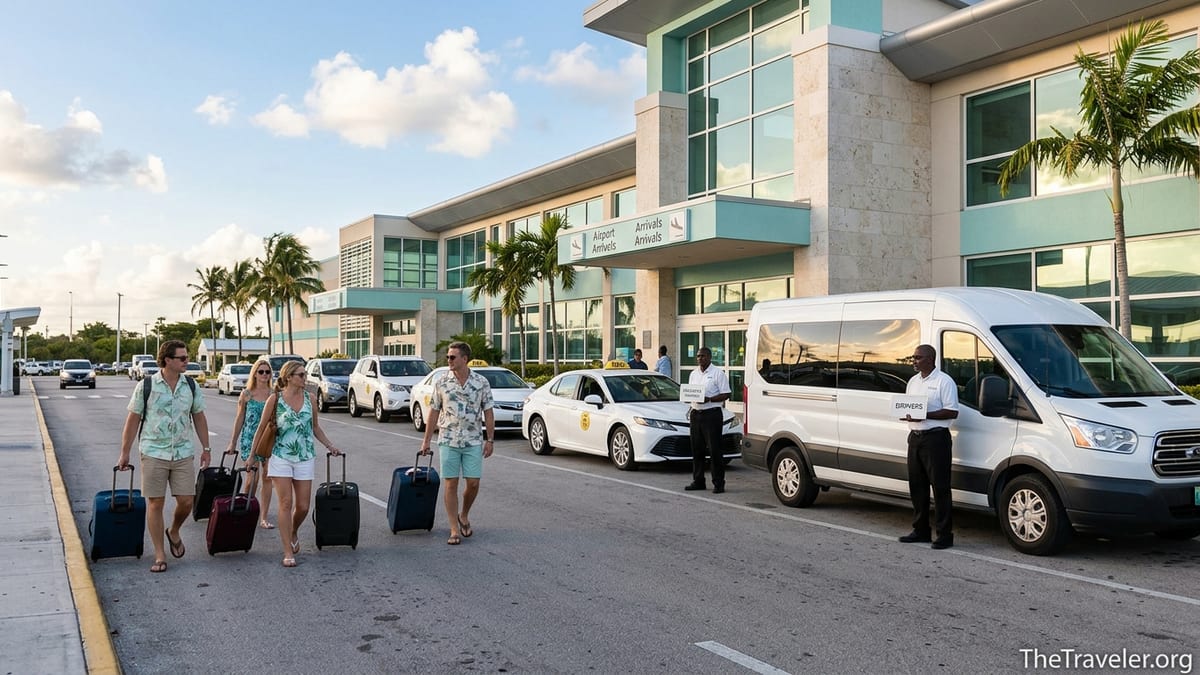
How Airport Transfers Work at Lynden Pindling International (NAS)
Lynden Pindling International Airport sits on the western side of New Providence Island, roughly a 20 to 30 minute drive from most major resort areas like downtown Nassau, Cable Beach and Paradise Island, depending on traffic. There is no rail service, and public buses do not run into the secure terminal area, so virtually all visitors rely on taxis, pre-booked transfers, hotel-arranged transport or, increasingly, local ride apps and private drivers.
The arrivals process is straightforward. After clearing immigration and customs, you exit into a public hall where you will see official taxi dispatchers, tour desks and some transfer companies holding name signs. Outside the doors there is a clearly marked taxi rank serving the US, international and domestic terminals. If you have pre-booked a private transfer, your confirmation will usually tell you whether a driver will meet you inside with a sign or at a designated curbside point just beyond the taxi line.
Ground transport pricing in Nassau is different from many US cities. Taxis do not run on a visible meter for airport trips. Instead, the airport and the Bahamas Taxi Cab Union publish zone-based fares from Lynden Pindling to common areas such as downtown Nassau, Cable Beach, Paradise Island and Prince George Wharf, with fixed prices that cover the vehicle and the first two passengers. This system makes it easier to know what you should pay in theory, but in practice visitors still report big variations depending on how busy the airport is and whether they ask the fare in advance.
There are also a growing number of private transfer companies that focus on airport to resort runs with advance reservations, plus hotel-operated or hotel-contracted shuttles for large properties such as Atlantis Paradise Island and Baha Mar. These can be shared or private, often priced per person, and may be bundled into package holidays. Understanding when those options make sense, especially for families or groups of four or more, is key to choosing the right transfer for your budget and travel style.
Official Taxis and Ride Apps: Fast, Flexible, Not Always Cheapest
For most first-time visitors, the path of least resistance is the official taxi rank directly outside the terminal doors. Licensed cabs line up, and a dispatcher helps match you with a car or van depending on your group size. As of mid 2026, published airport guidance and independent transport resources indicate approximate zone fares of around 29 to 30 US dollars to Cable Beach, 36 US dollars to downtown Nassau, and about 45 US dollars plus a 2 dollar bridge toll to Paradise Island for up to two passengers, with each additional passenger around 5 dollars and small children usually riding free or discounted.
In reality, visitors frequently report paying higher end-of-day totals after adding luggage surcharges, bridge tolls and tips, especially in high season. A couple traveling from Lynden Pindling to a Paradise Island resort might expect an official base fare near the mid 40 dollar mark but end up handing over 55 to 60 dollars once tolls, bags and a standard 10 to 15 percent tip are included. Larger groups using a van taxi will often negotiate a flat price for everyone; for example, a family of five heading from the airport to Baha Mar on Cable Beach might agree on around 60 to 70 dollars all-in, which can be economical compared with per-person shuttle charges.
Traditional ride-hailing brands familiar to US travelers, like Uber and Lyft, do not currently operate in Nassau. Instead, Nassau residents use local app-based services, the most prominent of which is HOP, a Bahamas ride app that advertises airport transfers on fixed routes such as Lynden Pindling to Atlantis Paradise Island, Baha Mar, downtown Nassau and the cruise port. As of 2026, HOP lists typical airport transfers starting in the mid 30 dollar range to central Nassau and creeping higher for Paradise Island, but exact pricing varies with vehicle type and time of day.
The advantage of taking a standard taxi or app-based ride from the airport is speed and flexibility: you can decide on the spot, there is usually no long wait, and you go directly to your hotel without intermediate stops. The downside is cost unpredictability and the potential for price inflation in peak holiday weeks, when some visitors report being quoted well above the official zone fares unless they confirm the price up front. For that reason, it is wise to ask for the total fare to your specific hotel including tolls and luggage fees before you put your bags into the trunk.
Private Car Transfers: When Paying More Upfront Buys Peace of Mind
Private transfers are pre-booked vehicles, usually sedans, SUVs or small vans, that meet you on arrival and take only your party directly to your accommodation. Several Nassau-based operators, such as long-running local tour and transfer firms, advertise fixed rates from Lynden Pindling to popular resorts like Atlantis Paradise Island, Baha Mar, Sandals Royal Bahamian, the Ocean Club and downtown hotels, with drivers holding a sign in the arrivals hall and helping with luggage.
Pricing for private transfers in Nassau typically falls within the same broad range as taxis for small parties and becomes more attractive for groups. For example, a couple traveling in a private sedan to Atlantis might pay somewhere in the 80 to 110 US dollar range for a return (round-trip) transfer booked directly with a reputable operator, compared with perhaps 120 dollars or more in separate taxi rides plus tips. A family group of six sharing a private van could pay around 130 to 160 dollars total for round-trip airport transport to Baha Mar, including meet-and-greet support and space for luggage, which works out to 20 to 27 dollars per person.
Resort-linked transfer services also blur the line between private and semi-private options. Atlantis offers pre-arranged transportation between Lynden Pindling International Airport and its Paradise Island properties, with options ranging from shared minibus shuttles to private vans for up to ten guests. Baha Mar on Cable Beach similarly works with preferred transport partners to provide airport transfers that can be added to room bookings or inclusive packages. These services generally cost more per person than flagging a cab, but they add certainty: you know the price before you land, and your driver is expecting you even if your flight is delayed.
Private transfers especially appeal to travelers arriving late in the evening, those carrying golf bags or multiple suitcases, and guests who value a smoother start to a honeymoon or multi-generational family trip. Instead of navigating the taxi queue, they walk straight to a waiting driver. The downsides are higher upfront cost and the need to book and manage changes in advance. In low season, when taxis are plentiful and queues are short, many budget-conscious couples prefer to rely on the taxi rank, while larger groups and travelers on tight schedules often find the premium for private service justified.
Shared Shuttles and Hotel Buses: Budget-Friendly but Slower
Shared airport shuttles are another option, especially for solo travelers and couples staying at big resorts. These are typically minibuses or coaches that collect several passengers arriving on similar flights and then drop them at a sequence of hotels, often focusing on one cluster such as Paradise Island or Cable Beach. Packages sold through tour operators and online travel agencies sometimes include these shared transfers by default, so it is worth checking your booking documents before paying separately for a taxi.
On the Paradise Island run, for instance, it is common to see shuttle services that charge a per-person fee. In 2026, travelers report shared shuttle rates in the region of 30 to 40 dollars per person one way between Lynden Pindling and Atlantis, the Ocean Club or nearby resorts, sometimes discounted slightly if purchased as a round-trip package. A couple could thus pay around 70 to 80 dollars total for a shared shuttle, compared with perhaps 55 to 60 dollars for a taxi if fares track the official zone rates closely. For solo travelers, the equation looks different: 35 dollars for a seat in a shuttle can be cheaper than taking an entire taxi alone.
Shuttle timing is the main trade-off. Because vehicles wait for multiple passengers and stop at multiple hotels, travel time from wheels-down to hotel check-in can be significantly longer than a direct taxi or private car. If your flight lands at 1 p.m. and your shuttle operator estimates departures every 30 minutes, you might sit at the curb until the bus fills, then spend another half hour or more dropping other guests at hotels before reaching your own. In contrast, a taxi or private transfer could have you at Baha Mar in roughly 15 to 20 minutes of driving.
Hotel-branded buses and contracted shuttle services are particularly common for cruise extension packages and all-inclusive resort stays. For example, a North American couple who book a Nassau resort stay through a tour operator might find that their package includes round-trip airport transfers on a shared coach, with representatives waiting just outside customs holding company signs. These packages are often good value, but they rarely support significant customization such as grocery stops or detours, and travelers with evening arrivals should confirm that their shuttle runs for late flights before assuming it will be available.
Transfers for Families, Groups and Child Seats
Families and groups face slightly different transfer questions than solo travelers or couples. Squeezing four or five people plus luggage into a standard taxi sedan can be cramped and may not even be allowed if seat belts cannot be used safely. In those cases, Nassau taxi dispatchers will usually call a larger minivan taxi, which may come at the same zone fare with an added per-person supplement, or at a negotiated flat price that reflects the bigger vehicle and number of passengers.
Pre-booking a private van or SUV can make sense for family groups of four or more, multi-generational trips, or friends traveling with golf clubs, strollers and beach gear. For example, a group of eight heading from Lynden Pindling to a vacation rental near Cable Beach might secure a private van transfer for around 150 to 200 dollars round-trip, which comes out to under 25 dollars per person and gives everyone their own seat and space for bags. The same group relying on ad hoc taxis might need two smaller cabs at roughly 30 dollars each per direction, plus tips, which narrows the price gap while sacrificing the convenience of traveling together.
Child seats are another key consideration. Bahamas law requires that children be properly restrained in vehicles, but enforcement and availability vary. Standard airport taxis do not routinely carry infant seats or high-back boosters; if you need one, you should not assume it will be available at the taxi rank. Some private transfer companies, particularly those that cater to North American families, offer pre-bookable child seats for an extra fee or sometimes as a complimentary service, as long as you specify the age and weight of each child in advance.
A practical example: a family of four from the United States arrives with a 2-year-old and a 6-year-old to start a week at Atlantis. If they pre-book a private SUV transfer that includes both rear-facing and booster seats, they might pay around 120 to 140 dollars for a round-trip airport run, including the necessary safety equipment. If they try to rely on taxis alone, they could spend 50 to 60 dollars each way while also needing to bring and install their own portable car seats, which can be cumbersome after a long flight. For many parents, the extra cost of a family-focused transfer service is worth the reduced stress.
Cruise Passengers, Late Flights and Tight Connections
Nassau is one of the busiest cruise ports in the Caribbean, and many visitors combine a cruise with pre- or post-sail hotel nights on New Providence or Paradise Island. Cruise passengers flying into Lynden Pindling on the same day their ship departs usually prioritize reliability and speed over small price differences. In those cases, a pre-booked private transfer to Prince George Wharf, the main cruise port, can provide extra reassurance, especially if your flight is scheduled to land less than four hours before embarkation begins.
The drive from the airport to the cruise terminal typically takes 25 to 35 minutes in normal traffic, but congestion around downtown Nassau can add delays during afternoon peak hours or when several large ships are in port. A private driver who tracks your flight and knows cruise schedules can help cushion against that risk. Some cruise lines and third-party shore excursion providers also bundle airport transfers with cruise packages, allowing you to move from plane to ship without negotiating with local drivers. These packages may cost slightly more than arranging your own taxi but simplify logistics.
Late-night and very early-morning flights present another challenge. While Lynden Pindling is not a 24-hour hub, there are arrivals and departures outside typical daytime hours, particularly on weekends and during peak season. Taxis are usually still available, but the queue can be less predictable, and some shared shuttles or hotel buses may not operate after a certain time in the evening. Travelers arriving after 9 or 10 p.m., or departing on very early flights, often find that a pre-booked private transfer is the most reliable option, even if it costs more than a daytime taxi ride.
Connections to inter-island flights or private charters raise similar issues. If you are landing at Lynden Pindling and then need to cross the island to a domestic terminal or small charter base for a flight to one of the Out Islands, you may have only a narrow time window to make the transfer. In those cases, booking a driver who knows your onward flight details and builds in buffer time can make the difference between an easy connection and an expensive rebooking.
When Pre-Booking Is Worth It (and When a Taxi Is Fine)
Pre-booking transfers is not mandatory in Nassau, but it can tip the balance in your favor depending on your itinerary and risk tolerance. For many travelers, especially those visiting in shoulder season and staying at centrally located resorts, taking a standard airport taxi will be the most straightforward and cost-effective solution. The key is to walk past any unofficial solicitors, head directly to the official taxi rank, and confirm the destination and total fare with the driver before stowing your luggage.
In contrast, there are several scenarios where arranging a private car or confirmed shuttle in advance is genuinely worth it. These include late-night arrivals, early-morning departures, tight schedules linked to cruise sailings, large groups needing a van or mini-coach, families requiring guaranteed child seats, and travelers who dislike the uncertainty of negotiating prices after a long flight. For example, a group of ten friends arriving on a Friday evening for a long weekend at Baha Mar may find that a reserved private mini-bus costs only slightly more per person than splitting into multiple taxis while ensuring that everyone and their luggage arrive together.
Pre-booking can also help you control costs in busy holiday periods, when some travelers report being quoted heavily inflated rates at the airport taxi line. By locking in a fare in advance with a reputable operator, you know the price you will pay even if your flight is delayed or the arrival hall is crowded. Some transfer companies monitor flights and automatically adjust pickup times for delays, which can be especially valuable during winter storm season for North American visitors.
On the other hand, if you are a solo traveler staying at a downtown Nassau hotel on a midday arrival, a taxi is usually the most sensible option. You walk out, take the next car in line, and pay roughly the published zone fare without needing to plan ahead. Similarly, budget-conscious backpackers or students splitting costs with friends may prefer the flexibility of taxis or the cheapest available shared shuttle, saving their cash for excursions once they reach their accommodation.
Practical Tips for a Smooth Lynden Pindling Airport Transfer
A few simple habits can make your arrival experience much smoother. First, decide on your preferred transfer type before you land. If you have chosen a taxi, familiarize yourself with approximate zone fares to downtown Nassau, Cable Beach, Paradise Island and the cruise terminal so that you have a rough reference range in mind. If you have booked a private car or shuttle, screenshot your confirmation and instructions in case mobile data is slow in the arrivals hall.
Second, carry small denominations in US dollars for taxis and tips. The Bahamian dollar is pegged 1 to 1 with the US dollar, and taxi drivers commonly accept US currency, but change can be limited, especially in the first hours after your arrival. Handing over exact or near-exact cash makes payment quicker and avoids awkward moments while the driver searches for change. In addition, while more drivers now accept cards or mobile payments, connectivity can be patchy, so plan for cash as a backup even if you expect to pay electronically.
Third, think about any special requirements in advance. If you would like to stop at a supermarket or liquor store on the way from the airport to your hotel, discuss this with your transfer provider before booking or with your taxi driver before departing the airport. Some private operators include a short grocery stop in their standard rates, while taxi drivers may request an additional fee or meter running time if you ask them to wait. Similarly, if accessibility is a concern, communicate mobility needs well ahead of time to ensure an appropriate vehicle is arranged.
Finally, keep your expectations realistic about timing and traffic. While published transfer times often quote 20 to 30 minutes between Lynden Pindling and central Nassau or Paradise Island, this can stretch longer at peak periods, particularly on Saturdays and holidays when flight and cruise arrivals overlap. Building a buffer into your plans, whether that means scheduling dinner a little later on your first night or avoiding tight flight-to-cruise connections, will make your Bahamas arrival feel much more like the start of a vacation and less like a race against the clock.
FAQ
Q1. How much should I expect to pay for a taxi from Lynden Pindling Airport to Paradise Island?
Most visitors can expect to pay in the mid 40 US dollar range as a base fare plus a small bridge toll and tip, with the final total commonly landing around 55 to 60 dollars for two passengers with typical luggage.
Q2. Are there ride-hailing services like Uber or Lyft at Nassau’s airport?
Uber and Lyft do not operate in Nassau. Instead, travelers use official taxis from the airport taxi rank or local ride apps such as HOP, which offers pre-priced rides on common routes like Lynden Pindling to Atlantis or Baha Mar.
Q3. Is it necessary to pre-book an airport transfer in Nassau?
It is not strictly necessary because taxis are usually available, but pre-booking is recommended for late-night arrivals, large groups, families needing child seats, cruise passengers with tight schedules and anyone who prefers to lock in a price before landing.
Q4. Do hotels like Atlantis and Baha Mar offer their own airport shuttles?
Large resorts frequently work with dedicated transport partners and may offer shared shuttles or private vans that can be added to your booking or included in certain packages, especially for Atlantis Paradise Island and Baha Mar on Cable Beach.
Q5. What is the difference between a shared shuttle and a private transfer at Lynden Pindling?
A shared shuttle is a minibus or coach that carries multiple passengers to several hotels on a set route, usually at a per-person rate, while a private transfer is a reserved car or van for just your party, priced per vehicle, that goes directly from the airport to your accommodation.
Q6. Are child car seats available in Nassau airport taxis?
Standard airport taxis do not reliably carry child seats. Some private transfer companies can provide infant seats and boosters if requested in advance, but parents who rely on taxis often bring their own portable seats to ensure compliance with safety rules.
Q7. How long does it take to get from Lynden Pindling International Airport to downtown Nassau?
In normal traffic, the drive from the airport to downtown Nassau takes around 25 to 30 minutes, but it can be longer during peak hours, heavy cruise days or holiday periods, so allowing extra time is advisable.
Q8. Can I pay for my airport transfer with US dollars and credit cards?
US dollars are widely accepted and treated at par with the Bahamian dollar, so cash in small US denominations works well. Some drivers and transfer companies take credit cards, but connections can be unreliable, so it is wise to carry enough cash to cover your ride.
Q9. What is the best option for a solo traveler on a budget from the airport?
A solo traveler arriving during the day and staying at a major resort or downtown hotel will usually find the official taxi rank or an included shared shuttle through a tour package to be the most economical and straightforward options.
Q10. Should cruise passengers flying in on the same day as their sailing pre-book a transfer?
Yes, cruise passengers with same-day flights and departures generally benefit from pre-booking a private transfer or cruise-line-arranged shuttle to reduce the risk of delays, especially when their flight arrives less than four hours before embarkation.