


More news on this day
Finland’s air cargo network is set for a capacity boost as Qatar Airways Cargo launches a dedicated freighter service to Helsinki, strengthening the country’s role in Nordic logistics and linking Finnish exporters more directly with global supply chains via Doha.
Get the latest news straight to your inbox!
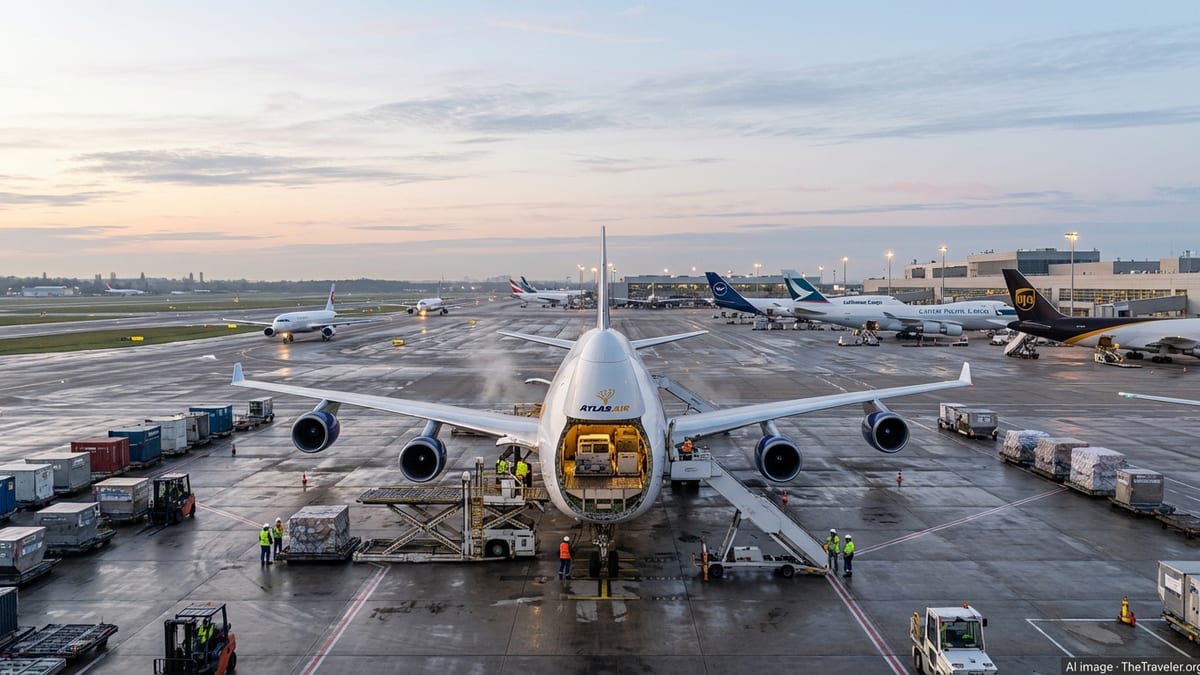
New Freighter Route Links Helsinki to Global Cargo Network
Qatar Airways Cargo has introduced a new freighter connection to Helsinki, adding Finland’s main gateway to one of the world’s largest all-cargo networks. According to coverage in Finnish aviation media, the service provides more than 170 tonnes of weekly dedicated capacity between Helsinki and Doha, complementing the carrier’s bellyhold space on resumed passenger flights to the Finnish capital. The route is operated with widebody freighter aircraft routed through the airline’s Doha hub, where cargo can connect onward to Asia, the Middle East, Africa and the Americas.
Publicly available information on Qatar Airways’ cargo operations shows that the airline already serves over 60 freighter destinations worldwide and more than 170 bellyhold destinations, supported by a fleet dominated by Boeing 777 freighters. The addition of Helsinki creates a new Nordic spoke within this network, positioning Finland more firmly on key trade lanes for general cargo, e-commerce, pharmaceuticals and time-sensitive industrial shipments.
Industry analyses of Qatar Airways Cargo highlight that the carrier ranks among the top global air freight operators by tonne-kilometres flown. By linking Helsinki directly into this system, the new flight is expected to shorten transit times for Finnish exports headed to high-growth markets and provide additional options for import flows destined for Finland and the wider Baltic Sea region.
The dedicated freighter schedule is also being launched in parallel with the restoration of daily passenger services between Doha and Helsinki, as indicated in the airline’s own network announcements. Together, these developments mark one of the most significant expansions of long-haul connectivity to Finland since the disruption of traditional Asian routes following airspace restrictions over Russia.
Finland’s Air Cargo Market Shows Gradual Growth
Finland’s air freight volumes have been on a modest upward trajectory, even as passenger traffic has recovered more slowly than in much of Europe. Statistics Finland reports that freight and mail transported via Finnish airports reached roughly 176,000 tonnes in 2023, a slight increase on the previous year. Data for the first half of 2024 published by airport operator Finavia indicates that freight flows continued to rise, with volumes up around 6 to 7 percent compared with the same period a year earlier.
Finavia’s annual reporting for 2024 further notes that total cargo handled at its airports climbed to about 185,000 tonnes, pointing to steady growth from pre- and post-pandemic levels even as passenger numbers remained below the 2019 benchmark. The majority of this traffic is concentrated at Helsinki Airport, which functions as Finland’s primary hub for both bellyhold freight on long-haul passenger flights and dedicated freighter movements.
Separate analysis on Finland’s international transport connections suggests that at least three quarters of the country’s air freight has traditionally moved in the holds of passenger aircraft. This reliance on belly capacity left exporters exposed when long-haul passenger services were scaled back or rerouted in recent years. The addition of new, scheduled freighter capacity into Helsinki is therefore seen by Finnish trade and logistics observers as a way to diversify capacity sources and improve resilience.
Traffic statistics from Finavia show that, while total flight numbers and passenger volumes remain below pre-pandemic peaks due in part to the loss of direct Asian overflight routes, cargo has almost reached or exceeded pre-2020 levels. In that context, each new widebody freighter link into Helsinki can have an outsized impact on the available capacity for Finland’s export-driven industries.
Strategic Benefits for Finnish Exporters and Logistics Hubs
The new Helsinki freighter route is expected to be particularly significant for sectors that depend on fast and reliable global logistics. Finland’s export profile includes high-value technology and electronics, machinery, pharmaceuticals, forest products with tight delivery windows, and a growing volume of e-commerce parcels. Many of these flows benefit from the temperature control and speed of modern air freight networks.
According to industry data compiled on Finland’s international freight links, air cargo plays a disproportionately large role in the country’s export value, even if its share of total tonnage remains small compared with maritime transport. Air freight is often used for components and finished products that feed just-in-time production chains in Europe and Asia or meet short delivery deadlines in North America and the Middle East.
By connecting Helsinki with Qatar Airways Cargo’s Doha hub, Finnish shippers gain more direct access to long-haul lanes serving the Gulf states, Indian Subcontinent, East and Southeast Asia, as well as key destinations in Africa and Latin America that may be harder to reach via traditional European hubs. Logistics companies have indicated in earlier market studies that such diversification of routings can reduce dependency on a limited number of transit points and offer more flexibility in times of disruption.
The freighter service may also enhance the role of Helsinki Airport as a distribution point for Nordic and Baltic cargo. With suitable trucking connections, the additional capacity can serve flows originating in Sweden, Estonia, Latvia and Lithuania, which may be consolidated in Helsinki for onward air shipment. Finavia’s published strategy documents describe efforts to promote Finnish airports as competitive nodes for both passenger and freight traffic, and the new route aligns with those ambitions.
Competition and Network Effects in the Nordic Air Cargo Market
Helsinki’s new connection with Qatar Airways Cargo arrives amid intensifying competition between major Gulf and European carriers for Nordic freight. Other airlines have recently expanded all-cargo and express operations through Finnish airports, including new logistics facilities and additional freighter services announced for Helsinki by rival cargo operators. Reports in Finnish trade media have highlighted plans for new logistics centers at or near Helsinki Airport, reflecting broader confidence in Finland’s role as a regional gateway.
Within the Nordic market, Helsinki competes with airports such as Stockholm Arlanda, Oslo Gardermoen and Copenhagen for cargo flows. Qatar Airways Cargo’s presence in Helsinki adds another option for freight forwarders who might otherwise truck shipments to these hubs for long-haul uplift. The ability to originate cargo directly from Finland on a high-frequency freighter route can reduce lead times and potentially lower overall logistics costs on certain lanes.
At the same time, the new route strengthens network effects for Qatar Airways Cargo in Northern Europe. Industry publications tracking the airline’s fleet and performance note that the carrier has steadily increased its freighter operations in Europe and has achieved substantial revenue growth in its cargo division in recent financial years. Adding Helsinki to the freighter map creates opportunities to balance flows, reposition aircraft efficiently and capture additional volumes of higher-yield Nordic exports.
Analysts observing the European air cargo landscape have pointed out that capacity additions in secondary hubs can also relieve congestion at larger Western European gateways, where slots and ground handling resources may be constrained at peak times. In this sense, Helsinki’s expanded role may form part of a broader pattern in which airlines spread their cargo operations across more airports to optimize networks and improve reliability.
Outlook for Finland’s Air Cargo Connectivity
Recent statistics released by Finavia and Statistics Finland indicate that air freight volumes at Finnish airports are on track to edge higher again in 2025 and 2026, in line with broader European cargo growth. While passenger traffic in Finland continues to recover more slowly than in much of Europe, the cargo segment appears to be benefiting from stable demand in export-oriented industries and the expansion of e-commerce.
Finavia’s reporting for the first half of 2024 highlighted that overall freight volumes were growing even as the closure of Russian airspace limited some long-haul passenger operations. In this environment, scheduled freighter services such as the new Qatar Airways Cargo route provide an alternative pathway for maintaining and expanding long-distance connections, independent of fluctuations in passenger demand.
Policy and industry documents on Finland’s international transport connectivity have underscored the importance of reliable air links for the country’s competitiveness, given its geography at the northern edge of the European Union. Additional long-haul freighter capacity is cited as a way to anchor value-added logistics activities in Finland, from cold chain handling to high-tech component distribution, which can in turn support employment and investment around key airports.
Looking ahead, observers of the Nordic air freight market will be monitoring how quickly the new Helsinki freighter operation ramps up, how forwarders and exporters integrate it into their routing choices, and whether further capacity additions follow. For now, the launch of Qatar Airways Cargo’s Helsinki service marks a notable step in Finland’s evolving air cargo story, signaling renewed confidence in the country’s role as a northern gateway for global trade.
Sources: flightnews.fi report on Qatar Airways Cargo Helsinki service; Qatar Airways network announcement for Helsinki; Finavia Business Review January–June 2024; Statistics Finland air transport statistics 2023