


More news on this day
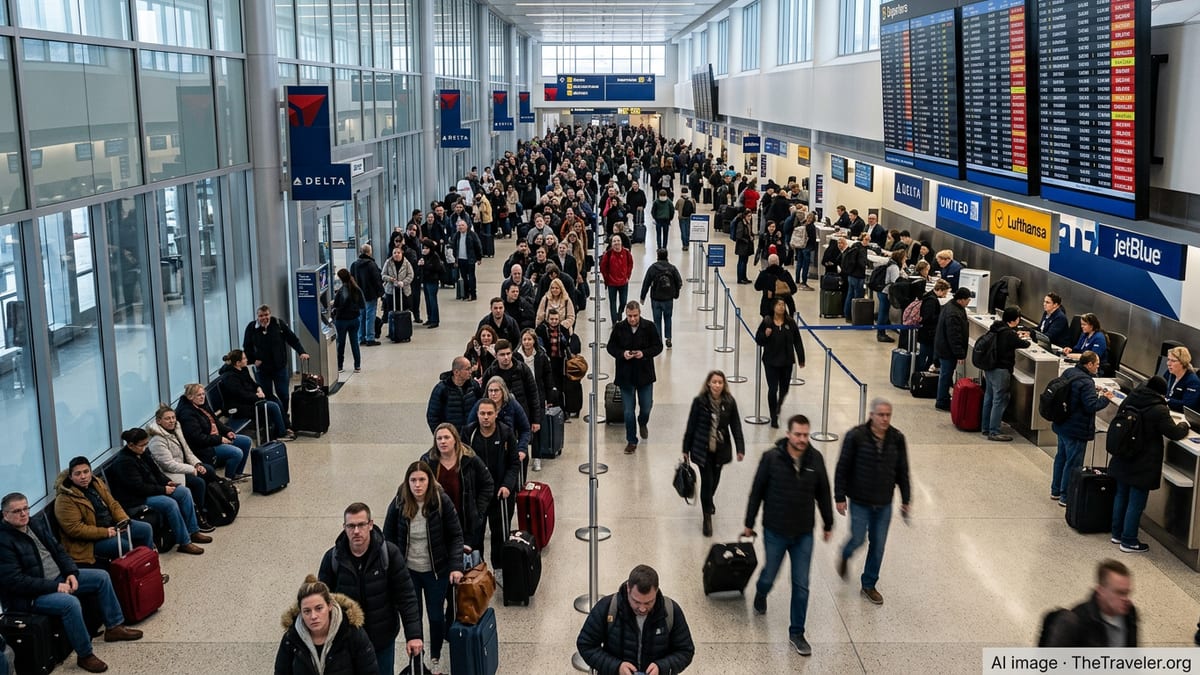
Travelers moving through Minneapolis–Saint Paul International Airport on June 29 are facing widespread delays as major U.S. carriers absorb a fresh wave of operational disruptions rippling across the national air network.
Get the latest news straight to your inbox!
Dozens of Flights Affected Across Major Carriers
Publicly available tracking data on June 29 shows a sharp uptick in late departures and arrivals at Minneapolis–Saint Paul International Airport, with dozens of flights affected across Delta Air Lines, United Airlines, American Airlines and their regional partners. While precise totals continue to fluctuate through the day, the pattern reflects an airport operating under heavy strain at the height of the summer travel period.
Recent flight history for services touching Minneapolis indicates that late operations are not confined to a single airline or route. A regional American Airlines service into the Twin Cities recorded a departure delay of nearly 90 minutes on June 28, and multiple Delta and United flights have posted extended ground times or late arrivals in recent weeks, according to online performance dashboards that compile Transportation Department and real-time data.
Minneapolis–Saint Paul serves as a major hub for Delta and an important station for other large carriers, which means that even a modest number of delayed flights can have outsized effects. When aircraft and crews arrive late from other parts of the country, turnarounds in Minneapolis lengthen, connection windows shrink, and subsequent departures are pushed back, creating the type of rolling disruption that passengers are now experiencing.
Published coverage earlier in June highlighted one such episode, when nearly 70 flights were delayed and several were canceled in a single day at Minneapolis–Saint Paul, primarily hitting Delta, United and regional operator SkyWest. The current pattern of delays appears less concentrated but similarly illustrates how fragile tightly scheduled hub operations can become during peak travel weeks.
National Network Pressures Fuel Local Disruptions
The latest problems in Minneapolis are unfolding against a backdrop of broader turbulence in the U.S. aviation system. On multiple days in June, industry trackers and news outlets have reported hundreds of delays and dozens of cancellations across key hubs such as Denver, New York and Boston, as airlines contend with convective storms, air traffic control constraints and a network that is already running near capacity.
One major disruption at Denver in mid-June, for example, left nearly 70 aircraft lined up on taxiways awaiting departure, with average waits of three quarters of an hour or more. Aviation specialists note that events of that scale tend to trigger a chain reaction, scattering late aircraft and crews around the country and making it more difficult for airlines to restore normal operations quickly at secondary hubs like Minneapolis–Saint Paul.
Separate reporting on June 28 described more than 600 delays and dozens of cancellations nationwide, particularly at coastal gateways. Those issues, while geographically distant, can still ripple into the Upper Midwest when flights bound for Minneapolis from affected cities depart late, or when aircraft scheduled to operate Twin Cities routes are reassigned to recover other parts of the network.
Analysts who track airline punctuality point out that carriers have improved their headline on-time performance since the worst disruptions of recent years, with Delta frequently ranking above peers. Even so, chronic air traffic control bottlenecks, constrained staffing and increasingly tight schedules leave less margin to absorb shocks, increasing the odds that a busy summer weekend will tip into systemwide delays such as those now evident at Minneapolis–Saint Paul.
Weather, Infrastructure and Ground Operations Under the Microscope
While thunderstorms and turbulent weather along major corridors remain a familiar culprit for schedule problems, operational data and expert commentary increasingly emphasize structural issues. Congested airspace, aging infrastructure and high demand on popular routes can all combine to slow traffic even when conditions above Minneapolis are relatively stable.
Travelers and aviation enthusiasts posting publicly about Minneapolis–Saint Paul this year have described instances where local weather appeared clear, yet arriving flights from other hubs were significantly late because of earlier ground holds or routing constraints elsewhere. Those accounts mirror government and industry analyses that portray delays as a network-wide phenomenon, rather than the product of a single bottleneck at any one airport.
On the ground in Minneapolis, summer construction and transit changes are adding an extra layer of complexity. Metro Transit has begun a planned shutdown of portions of the Blue Line light rail between downtown Minneapolis and the Mall of America from late June into August, replacing trains with buses. Although the airport remains accessible, the temporary change adds time and uncertainty for passengers who rely on rail to reach the terminals, especially when trying to recover from tight or rebooked itineraries.
Airport planning documents for Minneapolis–Saint Paul have long warned that growth in passenger traffic, coupled with constrained airspace and security screening capacity, could translate into more frequent delays if not carefully managed. While current disruptions appear to stem primarily from national network pressures, the present situation is serving as a live test of how well local facilities, ground transport and staffing can handle sustained peaks in demand.
Passenger Impact: Missed Connections and Crowded Terminals
For travelers, the operational story is most visible at departure boards and gate areas. Reports from June 29 describe clusters of delayed flights to and from major business and leisure destinations, periods of heavy queuing at customer service desks and crowded seating areas as passengers wait out rolling schedule changes.
Missed connections are an especially acute risk at a hub like Minneapolis–Saint Paul, where many itineraries rely on tight transfer windows. When an inbound flight arrives even 30 to 45 minutes late, passengers on shorter layovers may find rebooking their only option. Online tools that alert users when an airport’s average delay exceeds a set threshold have recently flagged Minneapolis, indicating that the local situation has deteriorated compared with more typical days.
Published consumer guidance for similar disruption events urges travelers to monitor their flight status directly through airline apps, which often refresh more quickly than terminal displays, and to make use of self-service change tools as soon as a significant delay is posted. At hub airports, where seats on alternative departures can disappear quickly, those who can rebook fastest often have the broadest choice of routings and departure times.
For those already at Minneapolis–Saint Paul, airport and airline websites provide updated information about security screening wait times, terminal services and transportation options into the Twin Cities, which can help passengers make informed decisions about whether to remain airside, seek hotel accommodations, or adjust ground transportation plans as delays accumulate.
What Travelers Through Minneapolis–Saint Paul Can Expect Next
Looking ahead through the rest of the weekend, publicly available forecasts for the national aviation system point to continued vulnerability rather than immediate relief. Summer convection patterns remain active, and staffing and air traffic control capacity issues show little sign of easing in the short term, suggesting that delays may continue to outnumber outright cancellations as airlines try to keep as many flights operating as possible.
Industry observers note that carriers have become more inclined to tolerate extended delays instead of preemptively canceling flights, in part to avoid the logistical and financial complexity of reaccommodating large numbers of passengers. That approach can keep more options technically on the table for travelers but also leads to long waits on the ground and frequent gate changes, conditions that many passengers at Minneapolis–Saint Paul are currently navigating.
Travel planners recommend that anyone scheduled to depart from or connect through Minneapolis–Saint Paul in the coming days build additional time into their itineraries, particularly if they have onward rail or bus segments, hotel reservations with restrictive change policies, or events that depend on precise arrival times. For those booking new trips, choosing earlier departures, avoiding very short connections and considering routes with multiple daily frequencies can modestly improve the chances of a smoother journey.
As airlines work through the current backlog and adjust schedules for the height of the summer season, Minneapolis–Saint Paul International Airport is likely to remain a closely watched barometer of how well major U.S. carriers can manage high demand under persistent operational strain.