


More news on this day
Air travelers moving through Ronald Reagan Washington National Airport on May 14 faced extensive disruption, with publicly available tracking data indicating 156 delayed flights and three cancellations affecting routes to and from New York, Boston, Chicago and other major U.S. cities.
Get the latest news straight to your inbox!
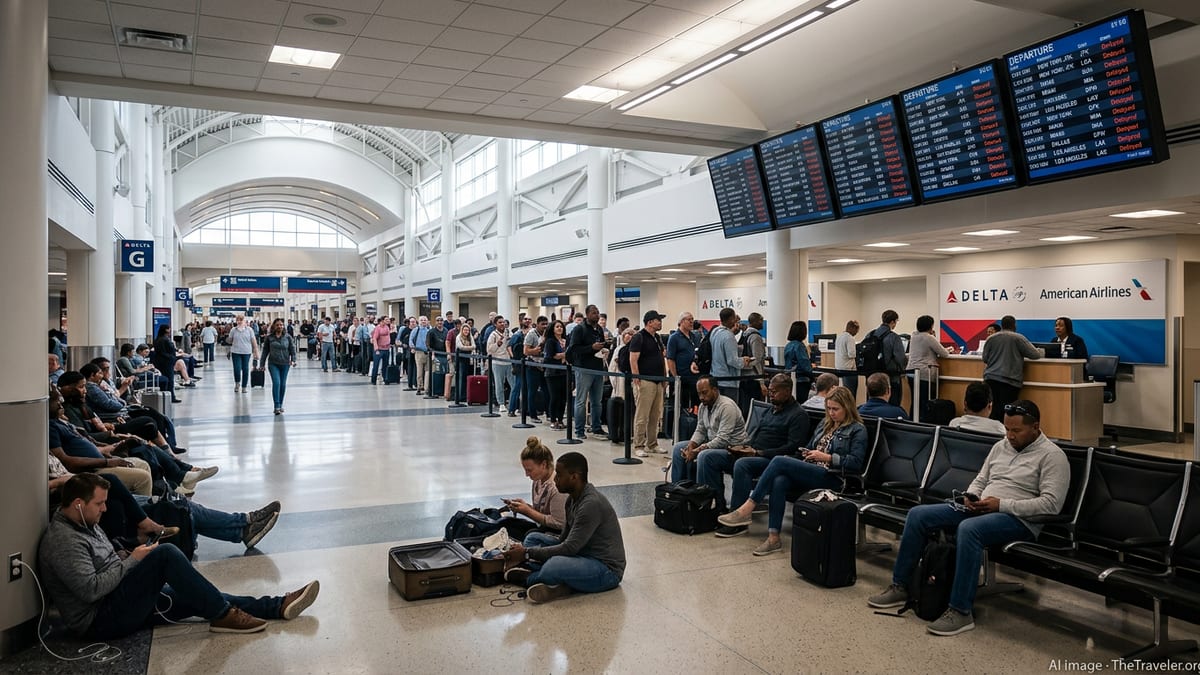
Widespread Operational Disruptions at DCA
Flight-status dashboards for Reagan National on May 14 showed a heavy concentration of delayed departures and arrivals throughout the day, pointing to a strained operating environment at one of the nation’s busiest close-in airports. The pattern included late-running morning flights that cascaded into the afternoon and evening schedule, leaving aircraft and crews out of position and complicating connections across the domestic network.
The 156 delays and three cancellations reflected a broad mix of carriers and destinations rather than a single isolated issue. Services operated by PSA Airlines on behalf of American, along with flights by JetBlue, Delta Air Lines, Southwest Airlines and several regional affiliates, all appeared among the affected operations. The resulting backlog left some aircraft waiting for gate access while others held on taxiways as the airport worked through the disrupted bank of flights.
Reagan National is a key node in short-haul traffic along the Northeast and Mid-Atlantic corridors, which means irregular operations there tend to spread quickly through surrounding hubs. Disruptions at DCA often ripple to airports such as New York LaGuardia, Boston Logan and Chicago O’Hare, amplifying knock‑on delays for passengers who never set foot in Washington but rely on connections through the region.
While exact causes can vary by flight, recent traffic patterns at major U.S. airports highlight how a combination of congested airspace, tight turnaround schedules and seasonal weather can quickly turn routine slowdowns into multi-hour delays. Even a modest ground hold or flow restriction at one point in the day can reverberate across a tightly timed schedule, creating the scale of disruption seen at Reagan National.
Impact on Key Carriers and Shuttle-Style Routes
The disruption hit several of the airport’s most prominent operators. PSA Airlines, which flies regional jets on behalf of American Airlines, saw delays on a number of its short-haul departures that feed the carrier’s national network. These flights are critical connectors, and delays on regional segments can strand passengers awaiting onward service to the Midwest, South and West Coast.
JetBlue and Delta, both significant players on routes linking Washington to New York and Boston, also appeared among the delayed services. These shuttle-style flights typically operate at high frequency, catering to business and government travelers who depend on predictable, near-hourly schedules. When one departure falls behind, aircraft rotations and crew assignments can cause subsequent flights along the same corridor to depart late, eroding the time savings that make shuttle routes attractive.
Southwest, which uses Reagan National to connect Washington with cities such as Chicago and points across the central United States, experienced knock‑on effects as well. With many travelers relying on same-day connections via Chicago or other mid-continent hubs, even moderate delays at departure can jeopardize onward legs, forcing rebookings and last-minute itinerary changes.
Publicly available performance analyses for 2026 show that U.S. carriers have been contending with elevated delay rates compared with pre-pandemic norms, with some low-cost and hybrid airlines posting higher proportions of late operations. In that environment, a day with heavy disruption at a constrained urban airport like DCA can quickly test already thin buffers in airline scheduling.
Ripple Effects Across New York, Boston, Chicago and Beyond
The Reagan National disruptions resonated most visibly along the busy Northeast and Midwest corridors. Flights linking Washington with the New York City area experienced schedule pressure as aircraft arriving late from DCA turned to operate subsequent legs. This pattern is particularly evident on routes to LaGuardia, where tightly stacked departure banks leave little room to absorb operational hiccups.
Boston Logan, which on the same day recorded well over one hundred delayed flights of its own according to separate tracking tallies, felt additional strain as late inbound aircraft from Washington compressed turnaround times. The combination of local weather, congested airspace and delayed arrivals contributed to a patchwork of schedule changes that affected both domestic and transborder services.
Chicago’s major airports also figured into the network of affected routes. Reagan National’s links to Chicago O’Hare serve as an important bridge between the political center of Washington and one of the largest connecting hubs in the country. When departures from DCA slipped behind schedule, the implications extended to passengers relying on O’Hare for onward connections across the Midwest and to the West Coast.
Beyond these marquee city pairs, travelers heading to secondary destinations such as smaller Midwestern and Southern cities encountered residual delays as aircraft rotated through Washington. In many cases, the original source of a late arrival may have been far upstream, but the visible bottleneck at Reagan National highlighted how interconnected the domestic flight network has become.
Passenger Experience and Travel Guidance
For passengers on the ground, the operational statistics translated into longer waits at gates, shifting departure boards and, in some instances, missed connections and unplanned overnight stays. Crowded seating areas, extended lines at customer service counters and heightened competition for alternative itineraries are common features of such disruption days, particularly at constrained airports where expansion options are limited.
Travel advocacy groups and consumer-focused analyses consistently emphasize the importance of proactive planning on days when irregular operations are likely. Recommendations typically include checking flight status repeatedly on the day of departure, enabling airline app notifications, and considering earlier flights on critical travel days to preserve connection buffers. In hub‑and‑spoke networks, those extra margins can make the difference between a successful same-day connection and a forced rebooking.
Financial protections also come into sharper focus during widespread delays. Travel insurance policies, credit card trip-interruption benefits and airline-specific vouchers can help mitigate unexpected costs such as hotel stays or meals, but coverage terms vary significantly. Passengers are frequently advised to familiarize themselves with these provisions before traveling, rather than trying to interpret them while already dealing with a disruption.
Analysts note that under current federal rules, many U.S. flight delays do not automatically trigger cash refunds, particularly when the cause falls outside an airline’s direct control. As a result, the onus often falls on travelers to document their situation carefully, retain receipts and pursue available options for reimbursement or compensation after the fact.
Broader Context for U.S. Air Travel Reliability
The difficulties at Reagan National form part of a broader pattern of operational volatility across the U.S. air travel system in 2026. Recent tallies of nationwide flight activity show thousands of delays on busy days, underscoring how susceptible the network is to pressure from weather systems, staffing challenges and infrastructure constraints at key hubs.
Capacity-tight urban airports such as DCA, LaGuardia and Boston Logan remain particularly exposed to these strains. Their limited runway configurations, noise restrictions and slot controls can make it difficult to recover quickly once delays begin to mount. Even incremental schedule growth each season can stretch existing infrastructure, leaving little slack when unexpected events occur.
Industry observers point out that airlines, regulators and airport operators are experimenting with a range of mitigation strategies, from adjusted scheduling at peak hubs to enhanced air traffic management tools. While such efforts may reduce the frequency or scale of severe disruptions over time, the experience of passengers at Reagan National on May 14 illustrates that significant vulnerability persists, especially on heavily traveled business routes.
For many travelers, days like this serve as a reminder that even in an era of high-frequency shuttle service and sophisticated operational planning, the U.S. air system remains complex and sensitive to compounding pressures. As summer travel demand builds, the performance of key nodes such as Reagan National will remain a closely watched indicator of how resilient the network can be under stress.