


More news on this day
Hundreds of flights across Asia and the Gulf were cancelled or heavily delayed this week, as regional data pointed to at least 313 cancellations and 4,020 delays affecting major carriers including Air China, IndiGo, Citilink, Jetstar Japan and FlyDubai at hubs from Jakarta and Kuala Lumpur to Bangkok, Dubai and Jeddah.
Get the latest news straight to your inbox!
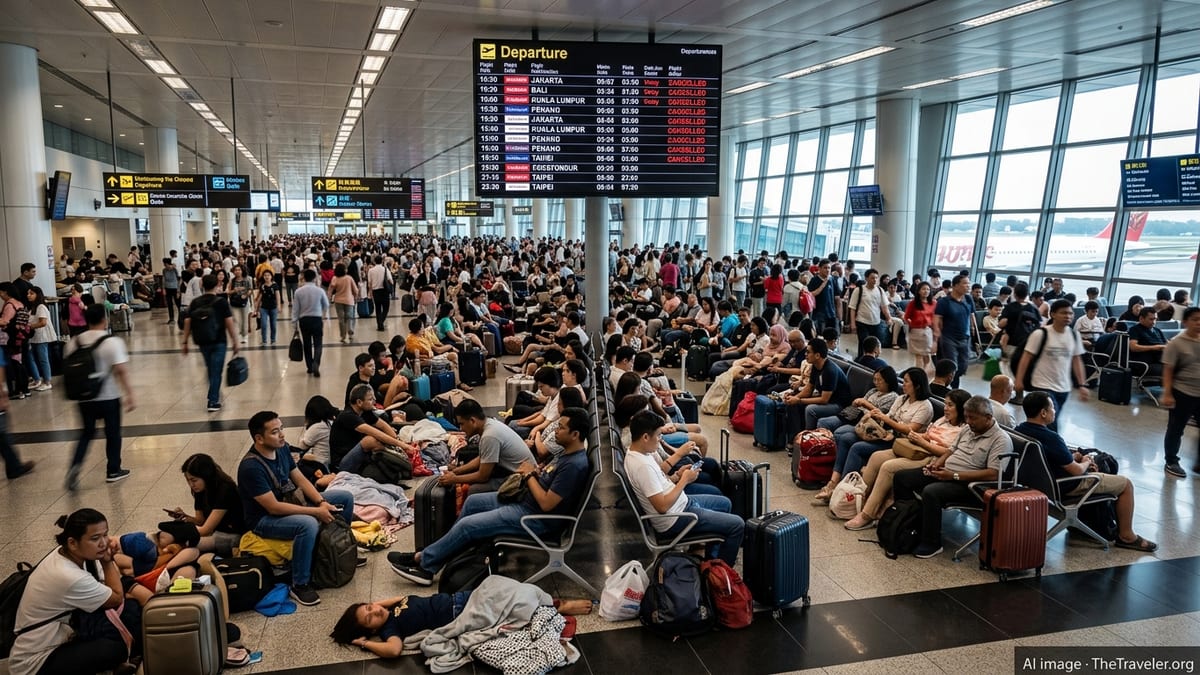
Data Shows Broad Disruption Across Asia and the Middle East
Publicly available disruption trackers and aviation data platforms show an unusually heavy wave of operational problems across multiple Asian and Middle Eastern air corridors over recent days. Figures compiled from regional summaries indicate that at least 313 flights were cancelled and a further 4,020 were delayed, concentrated around Indonesia, Malaysia, Thailand, the United Arab Emirates and Saudi Arabia, with spillover into neighboring markets.
These numbers follow a pattern of elevated disruption already visible earlier in the week, when separate datasets logged hundreds of cancellations and thousands of delays in a single day at airports in India, China, Japan, the UAE, Malaysia and Saudi Arabia. The new figures suggest that what began as a bad day for travelers has evolved into a broader, multi day episode of schedule instability across much of the region’s network.
While the precise breakdown by airport varies by source and time window, the heaviest impacts appear clustered at some of Asia’s and the Gulf’s busiest hubs, including Jakarta Soekarno Hatta, Kuala Lumpur International, Bangkok’s Suvarnabhumi and Don Mueang, Dubai International and Jeddah’s King Abdulaziz International. Secondary airports in Indonesia and Thailand have also reported knock on effects as aircraft and crews are repositioned.
Analysts following the data note that no single factor fully explains the pattern. Instead, the disruption reflects a combination of weather related constraints, ongoing airspace restrictions linked to Middle East tensions and tight airline operating margins after several seasons of rapid capacity growth.
Air China, IndiGo, Citilink and Jetstar Japan Among Most Affected
The latest disruption tallies indicate that a broad mix of full service and low cost carriers has been caught up in the cancellations and delays. Regional data and published overviews of affected routes consistently highlight Air China, IndiGo, Citilink and Jetstar affiliated brands in the lists of airlines with the highest number of impacted flights on key Asia Asia and Asia Gulf sectors.
For Chinese carriers, constraints on regional airspace and congestion at major hubs have added to an already complex operating environment. Publicly available information shows that Air China and other mainland airlines have been adjusting schedules on China Japan and China Southeast Asia routes since earlier this year, leaving little slack when weather or air traffic control measures squeeze available capacity.
IndiGo, now one of Asia’s largest low cost operators, has simultaneously been adding new international routes while working through its own network constraints. Previous filings and regulatory disclosures show that the carrier has at times struggled with crew and slot availability on busy days, making it more vulnerable when regional airspace restrictions or knock on delays ripple across India Middle East and India Southeast Asia corridors.
Citilink and Jetstar Japan, both active in short haul leisure and regional markets, have also appeared frequently in disruption tables over the past several days. Their networks are closely tied to tourism flows into and out of Indonesia, Thailand and Japan, where demand has recovered strongly but infrastructure and staffing remain under pressure during peak travel periods.
FlyDubai, Gulf Carriers and Jeddah Routes Face Added Strain
The Gulf region’s role as a bridge between Asia and Europe has magnified the impact of disruptions at Dubai and Jeddah. Earlier this year, flight tracking data and published coverage documented occasions when carriers at Dubai International, including Emirates and FlyDubai, were forced to suspend or curtail operations as regional airspace closures and conflict related restrictions disrupted normal routing across parts of the Middle East.
Although current operations at Dubai have not reached the complete standstill seen during those earlier episodes, the latest figures indicate that FlyDubai and several other carriers serving the UAE and Saudi Arabia have again been forced into significant rescheduling. Delays on trunk routes linking Dubai and Jeddah with cities in South and Southeast Asia are feeding into missed connections and forced overnight stays for transit passengers.
Services to and from Jeddah have been particularly sensitive. The city is a key gateway for religious travel and a major transfer point between Asia and Africa. Even relatively small schedule changes can quickly cascade into larger disruption when aircraft and crews are scheduled tightly around peak travel waves. Public compensation trackers and passenger forums show a rising number of reports from travelers facing missed onward flights or rebookings through alternative hubs such as Doha, Abu Dhabi and Istanbul.
Airlines in the region continue to steer passengers toward mobile apps and digital channels for rebooking and status updates, reflecting lessons learned from earlier disruption waves when airport counters and call centers quickly became overwhelmed.
Volcanic Ash and Weather Complicate Operations in Indonesia and Thailand
The timing of the latest disruption coincides with renewed volcanic and meteorological challenges in parts of Southeast Asia. Satellite monitoring agencies and scientific observatories have recently highlighted a large ash cloud from the ongoing eruption of Indonesia’s Dukono volcano, which sent ash high into the atmosphere in early May. Aviation advisories in recent years have repeatedly warned that even distant ash plumes can force temporary rerouting or grounding of flights as a precaution.
Indonesia’s location along the Pacific Ring of Fire means that its airspace is periodically affected by volcanic activity near key tourist destinations and air corridors. Travel industry reports from earlier this month already described cancellations of flights to and from Bali due to ash from Indonesian volcanoes, underscoring how quickly such events can ripple into schedules at Jakarta and other domestic hubs.
Thailand, meanwhile, has faced bouts of severe weather and capacity adjustments that have tightened margins at Bangkok’s airports. Local airline announcements in recent weeks show reductions and temporary suspensions on selected routes for cost and demand reasons, which can exacerbate the impact when storms or upstream delays hit Bangkok originating or connecting flights.
With Indonesia, Malaysia and Thailand sharing dense cross border traffic, any localized weather or volcanic event tends to spill into neighboring airspace. Kuala Lumpur in particular often serves as an alternative gateway when Indonesian airports face operational constraints, which can strain its own ability to absorb unscheduled arrivals and departures.
Travelers Urged to Monitor Status and Expect Rolling Knock On Effects
Consumer advocates and travel risk specialists say the latest figures on cancellations and delays suggest that passengers should plan for rolling disruption across Asia and Gulf routes in the coming days, even if airports and airlines avoid headline grabbing shutdowns. Publicly available guidance from aviation regulators and meteorological agencies continues to emphasize a conservative approach to volcanic ash and severe weather, leaving carriers limited flexibility when safety advisories are issued.
Travel industry briefings recommend that passengers on itineraries involving Jakarta, Kuala Lumpur, Bangkok, Dubai or Jeddah build in additional time for connections, check in online where possible and monitor airline notifications closely on the day of travel. Given the mix of operational drivers, from airspace restrictions to volcanic ash and tight crew scheduling, delays can materialize with relatively little advance warning.
Experts also note that the 313 cancellations and 4,020 delays captured in the latest counts represent only a snapshot of a broader pattern of strain in the region’s aviation network. Persistent high demand, infrastructure constraints and climate related weather volatility are combining to make Asia Middle East routes more vulnerable to disruption than before the pandemic era.
For now, there are no indications of a prolonged shutdown of any single hub, but the experience of recent days suggests that travelers crossing Asia and the Gulf should be prepared for short notice changes, extended ground times and, in some cases, involuntary overnight stays as airlines work to rebalance stretched fleets and crews.